


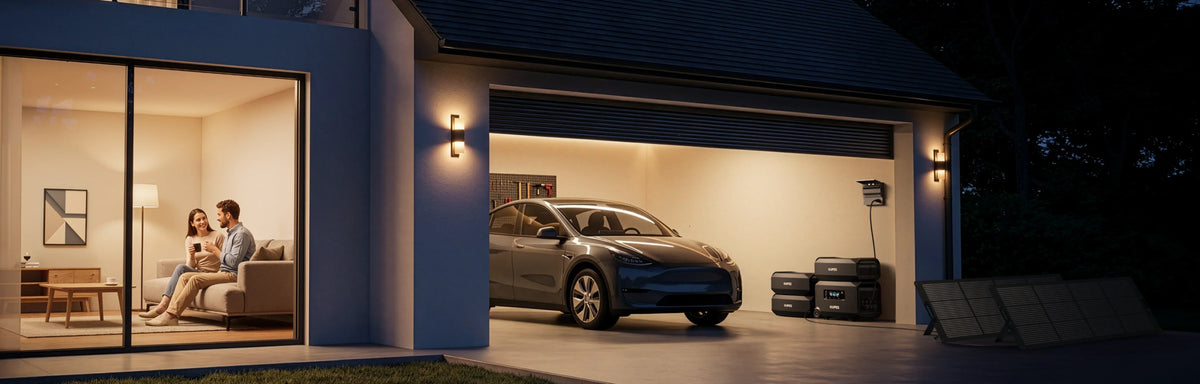
Why Are Electric Bills Usually Higher in Summer?
Many households notice the same problem every summer: even when daily habits do not seem to change much, the electric bill rises noticeably.
The reason is not simply “hot weather.” It is because the household electricity structure changes during summer.
In spring and fall, most household electricity use may come from lighting, refrigerators, televisions, computers, washing machines, and other daily devices. But once summer arrives, air conditioners, refrigerators, freezers, dehumidifiers, pool pumps, EV charging, fans, and home entertainment devices are used more frequently, causing total electricity consumption to rise quickly.
During heatwaves, central air conditioning may run for hours or even throughout the entire day. Refrigerators and freezers may also start their compressors more frequently because indoor temperatures are higher. For households on TOU, or time-of-use electricity rates, if these high-power appliances run during afternoon or evening peak-rate hours, the cost pressure can become even more obvious.
So, if you want to lower summer electricity costs, the first step is not blindly using less electricity. Instead, you need to understand:
- Which appliances have high wattage?
- Which appliances run for long hours?
- Which devices are suitable for off-peak use?
- Which appliances should receive priority backup power during an outage?
How to Understand Appliance Wattage and Electricity Use
When judging whether an appliance uses a lot of electricity, many people first look at its “wattage,” which means how much power the device requires while running. The unit is usually watts, or W.
Simply put:
The higher the wattage, the more power the appliance consumes at a given moment. The longer it runs, the higher the total electricity consumption.
However, high wattage does not always mean a higher monthly electric bill. What truly determines electricity cost is:
Wattage × Running Time.
For example, a microwave may use 1200W, but it usually runs for only a few minutes each time. A refrigerator may use around 150W, but it needs to run throughout the day. As a result, the monthly electricity use of a refrigerator can still be significant.
How Do You Calculate Appliance Electricity Use?
The formula is simple:
Electricity Use (kWh) = Appliance Wattage (W) ÷ 1000 × Running Time (Hours)
If a window air conditioner uses 1200W and runs for 6 hours per day:
1200W ÷ 1000 × 6 hours = 7.2kWh/day
If the electricity rate is $0.20/kWh, the daily electricity cost is approximately:
7.2 × $0.20 = $1.44/day
Monthly cost is approximately:
$1.44 × 30 = $43.2/month
This is why electric bills can rise noticeably once air conditioners begin running longer in summer.
For easier estimation, this article uses $0.20/kWh as a sample residential electricity rate. This is close to the average U.S. residential electricity rate, but actual costs vary by state, utility provider, season, and electricity plan.
Top 10 Household Appliances to Watch in Summer
The wattage ranges below are for reference only. Actual wattage varies depending on brand, model, energy efficiency, operating mode, and usage environment.
| Rank | Appliance | Common Wattage Range | Why It Matters in Summer |
|---|---|---|---|
| 1 | Central Air Conditioner | 3000W–5000W+ | High wattage and long runtime make it one of the biggest drivers of summer electricity bills. |
| 2 | Window / Portable Air Conditioner | 800W–1800W | Frequently used for room cooling, and long runtime leads to noticeable power consumption. |
| 3 | Refrigerator / Freezer | 100W–400W | Needs 24-hour power, and compressors start more often in summer. |
| 4 | Dehumidifier | 300W–700W | May run for long hours in humid regions. |
| 5 | Pool Pump | 800W–2500W | Pool maintenance demand increases in summer, and pump runtime can be long. |
| 6 | Electric Fan / Air Circulator | 30W–100W | Low wattage per unit, but often used for many hours and in multiple rooms. |
| 7 | TV and Home Entertainment Devices | 50W–300W+ | Indoor time increases in summer, raising usage frequency. |
| 8 | Dishwasher | 1200W–1800W | Heating water and drying cycles use more electricity. |
| 9 | EV Charging | 1400W–7000W+ | Charging requires large amounts of electricity and is suitable for off-peak scheduling. |
| 10 | Computer, Router, and Home Office Devices | 10W–500W+ | Wattage varies widely, but summer remote work and home entertainment can increase runtime. |
1. How Many Watts Does a Central Air Conditioner Use?
Central air conditioning is usually one of the most power-hungry appliances in a household during summer.
In general, a home central air conditioner may use around 3000W–5000W or more while running. Larger homes or higher-capacity systems may require even more power. Air conditioners may also produce higher surge power during startup.
If a central air conditioner is rated at 4000W and runs for 6 hours per day:
4000W ÷ 1000 × 6 hours = 24kWh/day
If the electricity rate is $0.20/kWh, the daily cost is approximately:
24 × $0.20 = $4.8/day
Monthly cost is approximately:
$4.8 × 30 = $144/month
This is why central air conditioning is often the main reason electric bills rise sharply in summer.
When outdoor temperatures are high, the difference between indoor and outdoor temperatures becomes larger, so the air conditioner must run longer to maintain the set temperature. During heatwaves, it may run from afternoon into the evening, which often overlaps with peak-rate hours under time-of-use pricing.
Energy-saving tips:
- Set the temperature to a comfortable but not excessively low level.
- Clean filters regularly.
- Close curtains during the day to reduce direct sunlight.
- Use ceiling fans or air circulators to support cooling.
- If your area uses TOU rates, a home battery system can store electricity during off-peak hours and power air conditioning during peak-rate hours.
2. How Many Watts Does a Window or Portable Air Conditioner Use?
Window air conditioners and portable air conditioners usually use less power than central air conditioning, but if they run for many hours every day, their electricity use can still be significant.
Common window or portable air conditioners usually use around 800W–1800W, depending on cooling capacity, energy efficiency, and operating mode.
If a window air conditioner uses 1200W and runs for 8 hours per day:
1200W ÷ 1000 × 8 hours = 9.6kWh/day
At $0.20/kWh, the daily cost is approximately:
9.6 × $0.20 = $1.92/day
Monthly cost is approximately:
$57.6/month
Many households use window or portable air conditioners in bedrooms, apartments, garages, home offices, or specific rooms. Although a single unit may use less power than central AC, long runtime can still add up.
Energy-saving tips:
- Cool only the room being used.
- Use a fan to improve cool air circulation.
- Close doors and windows to reduce cold air loss.
- Choose a unit properly sized for the room.
- Avoid long operation during peak-rate hours.
3. How Many Watts Does a Refrigerator or Freezer Use?
A standard household refrigerator usually uses around 100W–300W while running. Large refrigerators, double-door refrigerators, garage refrigerators, or older models may use more power.
A freezer usually uses around 150W–400W.
However, refrigerators and freezers do not always run at full power. Their compressors cycle on and off, so actual electricity use depends on compressor frequency, ambient temperature, and appliance efficiency.
If a refrigerator averages 150W and effectively runs for 10 hours per day:
150W ÷ 1000 × 10 hours = 1.5kWh/day
At $0.20/kWh, the daily cost is approximately:
1.5 × $0.20 = $0.30/day
Monthly cost is approximately:
$9/month
In summer, higher indoor temperatures cause refrigerators to start their compressors more frequently to maintain low internal temperatures. If a refrigerator or freezer is placed in a garage, direct sunlight, or a poorly ventilated area, electricity use can increase further.
Energy-saving tips:
- Avoid opening the refrigerator door frequently.
- Do not place hot food directly into the refrigerator.
- Keep the back and surrounding area well ventilated.
- Clean condenser dust regularly.
- During an outage, keep refrigerator and freezer doors closed as much as possible.
Although refrigerators are not the highest-wattage appliances, they need to operate 24 hours a day. That makes them one of the most important appliances to prioritize during summer power outages.
4. How Many Watts Does a Dehumidifier Use?
Dehumidifiers are very common in hot and humid regions during summer.
A typical home dehumidifier usually uses around 300W–700W. The larger the capacity and the longer the runtime, the more electricity it consumes.
If a dehumidifier uses 500W and runs for 8 hours per day:
500W ÷ 1000 × 8 hours = 4kWh/day
At $0.20/kWh, the daily cost is approximately:
4 × $0.20 = $0.80/day
Monthly cost is approximately:
$24/month
The higher the humidity, the harder it is for the human body to cool itself through sweating, and indoor air can feel more uncomfortable. Many households run dehumidifiers for long periods, especially in basements, laundry rooms, storage rooms, and coastal homes.
Energy-saving tips:
- Set a reasonable humidity target and avoid over-dehumidifying.
- Close doors and windows to avoid constantly bringing in humid air.
- Clean filters regularly.
- Use it only in areas that need dehumidification.
- Combine it with air conditioning and ventilation for better humidity control.
5. How Many Watts Does a Pool Pump Use?
A pool pump is one of the high-power appliances many homeowners easily overlook.
A typical home pool pump usually uses around 800W–2500W, depending on pump size, pool capacity, and operating mode.
If a pool pump uses 1500W and runs for 6 hours per day:
1500W ÷ 1000 × 6 hours = 9kWh/day
At $0.20/kWh, the daily cost is approximately:
9 × $0.20 = $1.8/day
Monthly cost is approximately:
$54/month
Pool usage increases during summer, and pumps need to run more frequently to maintain water quality. If the runtime is set too long, or if the pump runs entirely during peak-rate hours, electricity costs can rise noticeably.
Energy-saving tips:
- Use a timer to control runtime.
- Run the pump during off-peak hours whenever possible.
- Clean the filtration system regularly.
- Adjust runtime based on actual water quality.
- Avoid unnecessary all-day operation.
6. How Many Watts Does an Electric Fan or Air Circulator Use?
Electric fans and air circulators are used very frequently during summer.
A standard electric fan usually uses around 30W–100W. Small desk fans may use only a few dozen watts, while larger standing fans, tower fans, or air circulators may approach 100W.
If a fan uses 60W and runs for 10 hours per day:
60W ÷ 1000 × 10 hours = 0.6kWh/day
At $0.20/kWh, the daily cost is approximately:
0.6 × $0.20 = $0.12/day
Monthly cost is approximately:
$3.6/month
A single fan is very energy-efficient. But in summer, many households may run multiple fans at the same time for long hours, so the total electricity use can still add up.
A fan does not lower room temperature like an air conditioner, but it improves air movement and makes the body feel cooler. When used together with air conditioning, it can also help distribute cool air more evenly throughout the room and improve overall cooling efficiency.
Energy-saving tips:
- Turn off fans when no one is in the room.
- Use fans with air conditioning to improve cool air circulation.
- Pay attention to ceiling fan direction.
- Use air circulators to reduce temperature differences within a room.
- During power outages, prioritize fan power to maintain basic cooling and airflow.
7. How Many Watts Does a TV and Home Entertainment System Use?
The wattage of a television depends on screen size, display technology, brightness settings, and connected external devices.
In general:
- Small LED TV: around 50W–80W
- 55-inch TV: around 80W–150W
- Large-screen or high-brightness TV: around 150W–300W
- When paired with a game console, sound system, or projector, total power consumption can be higher.
If a TV uses 120W and runs for 5 hours per day:
120W ÷ 1000 × 5 hours = 0.6kWh/day
If the electricity rate is $0.20/kWh, the daily cost is approximately:
0.6 × $0.20 = $0.12/day
Monthly cost is approximately:
$0.12 × 30 = $3.6/month
As a single device, a television is usually not one of the most power-hungry appliances in summer. But during hot weather, many families spend more time indoors, and TVs, game consoles, speakers, projectors, streaming devices, and routers may all run for longer periods, creating cumulative electricity use.
During heatwaves especially, family members are more likely to stay indoors, which can increase the usage frequency of entertainment devices.
Energy-saving tips:
- Lower screen brightness.
- Enable energy-saving mode.
- Turn the TV off completely when not watching instead of leaving it in standby mode for long periods.
- Turn off unnecessary game consoles, sound systems, and set-top boxes.
- Avoid letting TVs, projectors, or home theater devices run unnecessarily.
Although a TV uses far less power than central air conditioning, pool pumps, or EV charging equipment, it is still a frequently used device. During a summer outage, if backup power capacity is limited, TVs and entertainment devices should be lower priority. Refrigerators, fans, networking equipment, lighting, and medical devices should come first.
8. How Many Watts Does a Dishwasher Use?
A dishwasher usually uses around 1200W–1800W. The most power-consuming parts are typically water heating and high-temperature drying.
If a dishwasher uses 1500W and runs for 1.5 hours per cycle:
1500W ÷ 1000 × 1.5 hours = 2.25kWh/cycle
At $0.20/kWh, the cost per cycle is approximately:
2.25 × $0.20 = $0.45/cycle
If used 30 times per month, the monthly cost is approximately:
$13.5/month
Summer gatherings, barbecues, cold drinks, and increased kitchen use can lead to more dishwasher cycles. While it is not the most power-hungry appliance, it is easy to schedule, making it suitable for off-peak operation.
Energy-saving tips:
- Run full loads whenever possible.
- Use energy-saving mode.
- Turn off high-temperature drying.
- Run it at night or during off-peak hours.
- Avoid frequent small loads.
9. How Many Watts Does EV Charging Use?
EV charging power varies widely depending on charging method.
In general:
- 120V standard outlet charging: around 1400W
- 240V home charging: around 3000W–7000W+
- Higher-power charging equipment may use even more.
If a home EV charger uses 7000W and charges for 4 hours:
7000W ÷ 1000 × 4 hours = 28kWh
At $0.20/kWh, the cost for one charging session is approximately:
28 × $0.20 = $5.6
EV charging consumes a large amount of electricity per session, and charging time is relatively flexible. For households on TOU rates, charging an EV during off-peak hours is usually more economical than charging during peak hours.
Energy-saving tips:
- Set scheduled nighttime charging.
- Avoid afternoon and evening peak-rate periods.
- Check whether your utility offers EV-specific rate plans.
- Set a reasonable charging limit based on daily driving needs.
- If your home has solar or battery storage, combine low-cost grid electricity and solar energy for energy management.
10. How Many Watts Do Computers, Routers, and Home Office Devices Use?
In summer, it is not only air conditioners and refrigerators that use more electricity. Computers, routers, monitors, and home office devices may also run longer.
Common wattage ranges are roughly:
- Wi-Fi router: around 10W–30W
- Laptop: around 45W–100W
- Monitor: around 20W–80W
- Desktop computer: around 150W–500W+
- Printers, speakers, docking stations, and other peripherals vary widely.
If a router and home office setup average 150W and run for 8 hours per day:
150W ÷ 1000 × 8 hours = 1.2kWh/day
At $0.20/kWh, the daily cost is approximately:
1.2 × $0.20 = $0.24/day
Monthly cost is approximately:
$7.2/month
These devices may not use very high power individually, but they often run at the same time as air conditioning, lighting, TVs, and internet service. For remote work, summer study, or households with long entertainment hours, the cumulative electricity use is still worth noting.
Energy-saving tips:
- Turn off computers and monitors when not in use.
- Keep the router running only when necessary, and avoid leaving other peripherals in standby mode for long periods.
- Use a laptop instead of a high-power desktop when possible.
- Enable device energy-saving mode.
- During outages, prioritize power for routers, phones, and essential work devices.
The Core of Summer Energy Savings: Use Electricity Smarter, Not Simply Less
When people talk about saving electricity, they often think of using the air conditioner less or turning off more appliances.
But for modern households, many electricity needs cannot be avoided.
For example:
- Hot weather requires air conditioning.
- Refrigerators must keep running.
- Home internet needs to stay online.
- Medical devices cannot be disconnected casually.
- Electric vehicles need to be charged.
- Security systems need power.
Therefore, a truly effective summer energy-saving strategy should include:
First, reduce unnecessary waste.
Second, move flexible appliances to off-peak hours.
Third, store low-cost energy and use it during peak hours.
Fourth, keep critical loads running during outages.
This is why more and more households are paying attention to home battery storage systems.
Guardian 6000 V2: Smarter Energy Management for High-Use Summer Appliances
After understanding high-use summer appliances, one thing becomes clear:
Many devices cannot simply be turned off to save money.
Central air conditioning must run when the weather is hottest.
Refrigerators and freezers need 24-hour power.
Network equipment, lighting, and security systems cannot be disconnected casually.
Electric vehicles need regular charging.
Summer thunderstorms, heatwaves, and grid overloads can also cause sudden outages.
So the focus of summer household energy management is not just using less electricity, but arranging energy sources more intelligently.
The value of OUPES Guardian 6000 V2 is that it can serve not only as a home backup power source during outages, but also as a tool to help households manage high-use appliances more proactively in daily life.
Store Low-Cost Energy and Use It During Peak Hours
For households on TOU electricity rates, afternoon and evening hours are often more expensive. Unfortunately, these are also the hours when central air conditioning, refrigerators, kitchen appliances, lighting, and network equipment are often running at the same time.
Guardian 6000 V2 can help households store two types of low-cost energy:
First, free solar energy generated by solar panels during the day.
Second, cheaper grid electricity during nighttime or off-peak hours.
Through scheduled tasks, users can set charging and discharging strategies based on their local rate plan. For example:
- Automatically charge during nighttime off-peak hours.
- Store solar energy when sunlight is abundant during the day.
- Reduce purchases of expensive grid electricity during afternoon or evening peak-rate hours.
- Power air conditioning, refrigerators, lighting, network equipment, and critical loads when electricity is expensive.
- Continue serving as a home backup power source during outages.
When paired with a transfer switch, Guardian 6000 V2 can also connect more conveniently to key household circuits. As long as load power requirements are properly matched, users can use stored solar energy or off-peak electricity during peak hours to power key whole-home appliances, reducing reliance on expensive grid electricity.
What Problems Can Guardian 6000 V2 Solve for Top Summer Appliances?
| Common Summer Appliance | User Pain Point | Value of Guardian 6000 V2 |
|---|---|---|
| Central Air Conditioner | High wattage and expensive to run during peak hours | Can use stored power when load requirements are matched, reducing expensive peak electricity use |
| Window / Portable Air Conditioner | Needs continuous cooling during heatwaves or outages | Can provide backup power for room cooling during outages |
| Refrigerator / Freezer | Needs 24-hour operation; outages may cause food loss | Can prioritize backup power for protecting food and medicine |
| Dehumidifier | Long runtime in hot and humid regions | Can pair with off-peak electricity or solar to reduce peak-hour pressure |
| Pool Pump | High wattage and long runtime | Can optimize operating cost with scheduled tasks and off-peak strategy |
| Electric Fan / Air Circulator | Low wattage per unit but frequently used in summer | Can maintain basic cooling and airflow during outages |
| TV / Entertainment Devices | Used longer during summer indoor hours | Can be used as lower-priority loads depending on remaining battery power |
| Dishwasher | High power per cycle, but flexible timing | Better suited for off-peak scheduling to reduce peak electricity cost |
| EV Charging | Large electricity demand per charging session | Can support energy management with off-peak electricity and solar |
| Computer / Router / Office Devices | Communication and work devices need continuous power | Can maintain internet, communication, and basic work capability during outages |
Save Up to $179 Every Month
In addition to backup power, Guardian 6000 V2 can also participate in daily electricity bill optimization.
According to OUPES calculations, under specific assumptions related to solar charging, expansion battery capacity, off-peak electricity usage ratio, and peak/off-peak price differences, Guardian 6000 V2 can help households save up to about $179.28 per month on electricity bills.
This means annual savings can reach up to approximately:
$179.28 × 12 = $2,151.36
This savings logic mainly comes from two sources:
| Source of Savings | Explanation | Estimated Savings |
|---|---|---|
| Daytime Solar Charging | Store free solar energy during the day and use it during peak hours | About $41.04/month |
| Nighttime Off-Peak Charging | Store cheaper off-peak grid electricity and release it during peak hours | About $138.24/month |
| Total | Combined use of solar energy and off-peak electricity | About $179.28/month |
Actual savings vary depending on local electricity rates, peak/off-peak price differences, solar generation, expansion battery capacity, household loads, and usage habits.
But it highlights an important trend:
Guardian 6000 V2 is not only a backup power source for outages. It can also become a daily home energy management tool.
For households with high summer electricity use, frequent central AC operation, TOU electricity rates, or an existing solar system, Guardian 6000 V2 helps store low-cost energy and use it when electricity is most expensive and demand is highest.
This is the real core of lowering summer electricity costs while improving household energy security.

OUPES Guardian 6000 V2 Power Station
- 240V/120V Dual Voltage (6,000W): Powers heavy appliances like central AC and dryers.
- 3,600W Solar Input: Fully recharges via solar in just 84 minutes.
- 4.6–41.4 kWh Expandable Capacity: Provides 1 to 7 days of home backup power.
- 4,000+ LFP Battery Cycles: Offers over 10 years of safe, daily use.
Which Appliances Should Receive Priority Backup Power During a Summer Outage?
In addition to saving electricity, summer also brings outage risks.
Heatwaves, thunderstorms, hurricanes, and grid overloads can all cause summer power outages.
During an outage, the following appliances should receive priority backup power:
| Priority | Device | Reason |
|---|---|---|
| High | Refrigerator / Freezer | Protect food, medicine, and frozen items |
| High | Fan / Portable Air Conditioner | Reduce indoor heat risk |
| High | Phone / Wi-Fi Router | Maintain communication and weather information |
| High | Medical Devices | Support health and safety |
| Medium | Lighting | Nighttime safety |
| Medium | Microwave / Basic Kitchen Devices | Support basic meals |
| Medium | Security Devices | Maintain home security |
| Low | TV / Entertainment Devices | Non-essential load, depending on remaining battery power |
Planning backup power properly is not about running every appliance indefinitely. It is about protecting the most important electricity needs when it matters most.
FAQ: Common Questions About Summer Appliance Electricity Use
1. What household appliance uses the most electricity in summer?
Usually, central air conditioning. It has high wattage and long runtime, especially during heatwaves, making it one of the biggest reasons summer electric bills increase.
2. How many watts does a TV use?
A typical LED TV usually uses around 50W–150W. Large-screen or high-brightness TVs may use 150W–300W. A TV is usually not the most power-hungry appliance, but long viewing hours can create cumulative electricity use.
3. How many watts does a refrigerator use?
A standard household refrigerator usually uses around 100W–300W. Although it does not have the highest wattage, it needs to run all day, so it remains important to watch during summer.
4. Is a fan more energy-efficient than an air conditioner?
Yes. A fan usually uses only 30W–100W, much lower than an air conditioner. However, a fan mainly improves comfort through airflow and does not lower room temperature the way an air conditioner does.
5. Which appliances are suitable for nighttime use?
Dishwashers, washing machines, EV charging, and pool pumps are more suitable for off-peak operation because they use larger amounts of electricity and have more flexible operating times.
6. Can central air conditioning save money with home battery storage?
If your local area uses TOU electricity rates, a home battery system can store electricity during off-peak hours or when solar energy is available, then power air conditioning and key loads during peak-rate hours to reduce expensive electricity use.
7. Which appliances should be powered first during a summer outage?
Refrigerators, freezers, fans, portable air conditioners, phones, Wi-Fi routers, lighting, and medical devices should receive priority backup power.
8. Is home battery storage only useful during outages?
No. Modern home battery systems can be used not only for outage backup, but also for daily energy management, such as off-peak charging, peak-hour discharging, and storing solar energy.
9. Is Guardian 6000 V2 suitable for summer home energy management?
Yes. Guardian 6000 V2 can store solar energy and off-peak electricity, then use scheduled tasks or a transfer switch to power key household loads during peak-rate hours, helping users manage summer electricity use more flexibly.
10. Does using Guardian 6000 V2 guarantee electricity bill savings?
Not always. Actual savings depend on local electricity rates, peak/off-peak price differences, solar generation, household loads, expansion battery capacity, and usage habits. But for households with high peak rates, heavy summer AC use, and the ability to fully use solar energy and off-peak electricity, the savings potential can be more significant.
Conclusion: The Key to Summer Energy Savings Is Understanding Which Appliances Truly Use Power
Higher summer electric bills are not accidental. They are the result of air conditioners, refrigerators, dehumidifiers, pool pumps, EV charging, fans, TVs, and home office devices working together.
To lower electricity costs, you first need to understand which appliances use the most power. Then, shift flexible devices to off-peak periods whenever possible. Finally, if your home conditions allow, use solar energy and home battery storage to store low-cost energy and use it when electricity is most expensive.
For modern households, summer energy management is not only about saving money. It is also about comfort, safety, and outage preparedness.
A home energy storage system like OUPES Guardian 6000 V2 is designed to help users move from passive electricity consumption to active energy management. Whether for daily electricity savings or keeping critical appliances running during heatwaves, storms, and outages, it can provide more reliable and flexible energy support for the whole household.


Leave a comment
This site is protected by hCaptcha and the hCaptcha Privacy Policy and Terms of Service apply.