


Download list of essential items for a road trip
list of essential items for a road trip.PDF
Updated: 2026-03-12
Why More People Are Choosing Road Trips
The appeal of a road trip has never been just about “going from one place to another,” but about the freedom and sense of control you have along the way. You can decide when to leave, where to stop, whether to make a detour to a lake, valley, or coastline, and you can pull over whenever you see a great view, turning the journey itself into an important part of the trip.
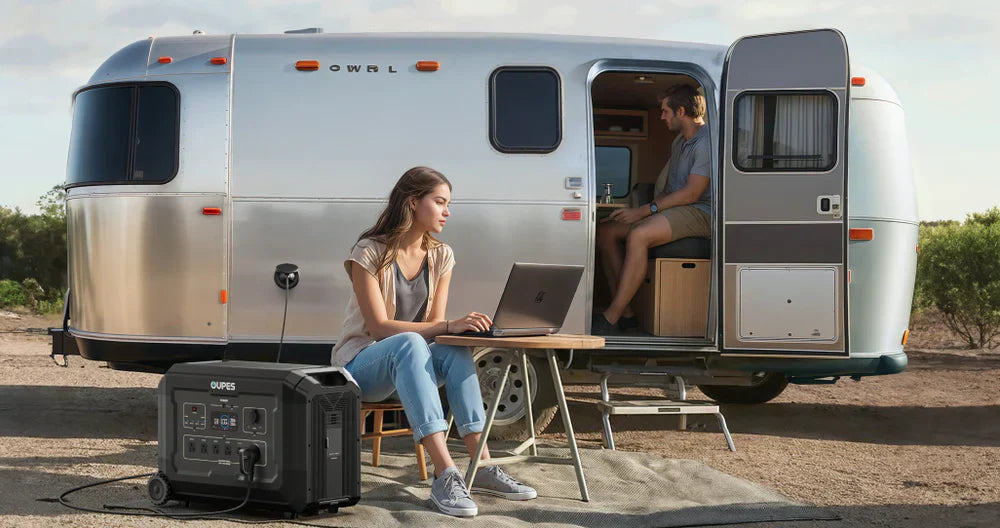
Compared with tightly scheduled group tours, a road trip is more like an intentionally chosen lifestyle. You might drive while listening to music, chatting, and enjoying the scenery, or park somewhere quiet in the evening, make a cup of coffee, and transfer the photos you took to your computer. Some people even combine road trips with camping, remote work, and content creation, giving one journey the meaning of relaxation, exploration, and everyday life at the same time. For this reason, modern road trips require very different gear and supplies than they did in the past. In the past, a road trip might simply mean “bring some water and snacks and go for a drive.” But now, more and more users bring additional electronics and comfort-oriented gear in the car, such as phone navigation, cameras, drones, laptops, car refrigerators, portable coffee makers, camp lights, fans, temporary work equipment, and small entertainment devices. As equipment increases and travel styles become more varied, power is no longer just a secondary issue. It has become an important part of the overall road trip experience. In the past, many people relied on the car’s original USB ports or cigarette lighter socket to charge devices, but this method is better suited for low-power, slow charging. When you need to power more devices or want to recharge a portable power station efficiently while driving, traditional in-car charging is often not efficient enough. For modern road trips, what matters more is no longer simply “whether you have power,” but “whether you can keep recharging on the road and use power immediately when you arrive.” That is why an 800W alternator charger + portable power station bundle is becoming a more suitable solution for road trips.
What Really Makes a Road Trip Different from a Regular Short Drive
Many people imagine their first road trip as being similar to a simple nearby outing: drive out, enjoy the scenery, have a meal, and come back. But a real road trip is usually not like that.
A regular short drive usually takes less time and involves simpler equipment needs. You may only need phone navigation, basic photography, and the car’s air conditioning to complete the trip. But once it becomes a true road trip, especially a journey lasting more than two days with multiple stops and multiple changing scenarios, your needs change quickly.
First, the route and pace become more complex. In a single day, you may pass several stopping points, including fuel stops, breaks, meals, sightseeing, photography, shopping, and even temporary route changes. Second, the ways you stop become more varied. You may not be moving only between standard hotels each day, but instead spend longer periods at campsites, lakeside parking areas, near national parks, or at midway stops on long-distance routes. Third, the car takes on more of a “living space” role. It is no longer just a means of transportation; it also serves as storage, a place to rest, a temporary supply station, a source of power, and even a space for entertainment.
Once the car starts taking on more and more of the function of a “living space during the journey,” the power system becomes especially important. You are not simply driving somewhere; you are maintaining the normal operation of multiple devices and scenarios throughout the trip.
What Usually Needs to Be Considered for a High-Quality Road Trip
When planning a road trip, many users first think only about routes and destinations. But if you want the experience to feel more complete, there are at least four things to consider: vehicle condition, travel rhythm, daily supplies, and energy preparation.
Vehicle condition is the foundation. Tires, brakes, wipers, engine oil, coolant, and emergency tools all determine whether you can get on the road smoothly. Especially for interstate travel, mountain roads, and long-distance routes, the stability of the vehicle itself always comes first.
Travel rhythm determines comfort. What people fear most on a road trip is not a long route, but a loss of rhythm. If you squeeze too many attractions into one day, the trip often changes from “free travel” into “rushing frantically.” A truly comfortable road trip usually leaves enough buffer time so you can stop calmly, restock supplies, eat, and take breaks.
Daily supplies affect the experience on the road. Water, snacks, cold drinks, hot drinks, light meals, warm clothing, and small comfort-oriented items may not look like “hard necessities,” but they directly determine how you feel in the car. Many people overlook these details during their first self-drive trip, only to realize once they are on the road that a road trip is not just about looking at scenery, but also about spending long periods with your own physical and mental state.
Energy preparation is what truly connects the previous three factors. If your phone runs out of power, navigation and communication are affected. If your camera, drone, and computer run out of power, content recording gets interrupted. If your refrigerator, lights, and coffee maker run out of power, travel comfort drops noticeably. For today’s road trips, power is not an extra—it is part of the basic experience.
Why Road Trips Need a More Complete Power Solution
Many road trip checklist articles tell you to prepare snacks, a first aid kit, spare clothes, car tools, and warm clothing. These are all important, of course. But from a real-world experience perspective, what often determines travel comfort is whether the power system is complete enough.
Modern self-driving travel is no longer as simple as “driving to your destination.” You may need to shoot content along the way and recharge drone batteries and camera batteries during the trip. You may also bring a car refrigerator to keep food and drinks stored. If you are traveling with multiple people or as a family, there may also be phones, tablets, fans, lighting, computers, and more. The more devices there are, the more stable and continuous the power supply needs to be.
So what a road trip really needs is not just a “self-drive essentials checklist,” but a power solution built for mobile scenarios.
The Most Easily Overlooked Pain Points During a Road Trip
Many users carefully plan their route before departure, but once they are actually on the road, what affects the experience is often not what appears on the map, but very specific small issues.
The first pain point is that “charging cannot keep up with usage.” Taking photos, using navigation, checking maps, updating family, connecting to the car system, editing video, and processing photos during the day can drain phones and all kinds of electronic devices much faster than expected. This is especially true when multiple people are traveling together, because the number of charging ports in the car and the charging speed can quickly feel insufficient.
The second pain point is “you realize you need power most when you stop.” Many devices are not most dependent on power while driving, but after you arrive at a scenic point, temporary parking area, lookout, or campsite. For example, car refrigerators, lights, coffee makers, laptops, drone chargers, and small fans all make the importance of post-stop power supply much more obvious.
The third pain point is “the longer the trip, the more anxious you feel about the power you will need later.” If all you have is a gradually draining pool of power, then every use is consuming not only the current moment but also the ease and flexibility of the next few hours or even the next day. Many people do not lack a power station—they simply do not feel comfortable using it freely, because they know the recharging conditions are unstable.
These problems reveal one important fact: power problems during a road trip are not just about capacity; they are also about recharging logic.
What Does an 800W Alternator Charger + Portable Power Station Bundle Actually Solve?
The traditional way of using a portable power station is usually this: charge it fully before departure, use it while traveling as the battery level gradually drops, and then look for a wall outlet at a campsite or hotel to recharge it. The problem with this approach is that the power station becomes more like a battery pack that is constantly being consumed.
The addition of an 800W alternator charger changes the entire power logic: the vehicle continuously recharges the power station while driving, and the power station then supplies power to different devices when you are parked, resting, taking photos, or camping.

In other words, you are no longer only “using power after you arrive.” Instead, you can truly achieve:
Recharge while driving, and use power the moment you stop.
This model is especially important for long-distance self-driving, multi-day travel, interstate routes, car camping, and family trips. That is because it significantly reduces dependence on fixed wall outlets, turning every segment of driving time during the trip into valuable recharging time.
The Most Common Power Usage Scenarios on a Road Trip
In an actual road trip, common power needs can generally be divided into the following categories.
The first category is basic communication and navigation devices, such as phones, in-car navigation, smartwatches, and camera battery chargers. These devices do not consume much power individually, but they are used extremely frequently and are active through almost the entire journey.
The second category is imaging and entertainment equipment, such as drones, action cameras, Bluetooth speakers, projectors, and tablets. For users who like documenting their travel content, this kind of power demand is very stable and usually cannot be interrupted.
The third category is small appliances that improve comfort, such as car refrigerators, portable coffee makers, fans, lighting, and water-heating devices. They make the journey feel more relaxed and more like everyday life, rather than simply rushing from place to place.
The fourth category is long-stop or light office scenarios, such as laptops, routers, and lighting systems. For users who need to handle work during the journey or who plan to stay somewhere for a longer period, stable power is almost essential.
Besides Power, What Else Matters During a Road Trip?
If you want this article to feel more like a complete road trip feature rather than just product-oriented content, there is one important point that can be stated clearly: what users care about during a road trip is never just “whether they have power,” but whether the entire journey feels smooth, comfortable, and under control.
Route flexibility is one key factor. Many people love road trips precisely because they allow last-minute changes. If you see a nice lookout on the road, you can stop. If you notice bad weather ahead, you can adjust your rhythm at any time. The more freedom a travel style offers, the more thoroughly prepared you need to be in terms of supplies and energy, so that you can truly “stop when you want and go when you want.”
Comfort is also important. A road trip often means sitting in the car for long periods, moving between different temperatures and weather conditions, and handling details like eating, resting, and organizing equipment. If you always have cold drinks in the car, hot coffee available, lights in the evening, and devices charging smoothly, the trip feels more like “living on the road” rather than simply “enduring the journey.”
Then there is the sense of security. What truly reassures people is not just having a car, but knowing that even during temporary stops, nighttime device use, or changing weather, you always have a stable power solution on hand. That sense of security often improves the overall travel experience in a very noticeable way.
What Are the Essential Items for a Road Trip?
From a more complete road trip perspective, essential items can generally be divided into several categories.
First are vehicle and safety items, such as a driver’s license, insurance documents, a first aid kit, flashlight, basic tool kit, spare tire-related tools, and navigation equipment. These determine whether you can get on the road with peace of mind.
Second are on-the-road supplies, such as drinking water, snacks, insulated cups, wet wipes, tissues, basic medicine, and a change of clothes. These directly affect your condition during long hours of driving.
Beyond that are comfort and lifestyle items, such as a car refrigerator, coffee gear, lighting equipment, folding tables and chairs, blankets, fans, and portable stoves. These are not mandatory for everyone, but they can significantly raise the upper limit of the road trip experience.
Finally, there is the power system: a portable power station, an 800W alternator charger, charging cables, and adapters for different devices. For today’s road trips, this part has gradually shifted from being an “optional item” to becoming a truly high-frequency need.
Which Road Trip Users Are Especially Suitable for This Kind of Bundle?
If you are a short weekend road trip user and your main needs are phones, photography equipment, lighting, and simple entertainment, then a small- to mid-capacity power station paired with an 800W alternator charger can already noticeably improve the experience.
If you are traveling as a family, that usually means more devices, more frequent charging needs, and greater reliance on refrigerators, tablets, and lighting. In this kind of scenario, a larger-capacity, higher-output bundle is more suitable.
If you are a multi-day long-distance driver, car camper, overlander, or cross-region traveler, the importance of recharging while driving becomes even more obvious. That is because you may not be able to connect to a fixed wall outlet every day, and your ability to recover power during the trip will directly affect the comfort and freedom of the entire journey.
Road Trip Recommendations: 800W Alternator Charger Bundle Solutions for Different Needs
To help different types of self-driving users find a power solution that suits them more easily, these product bundles can be understood according to travel intensity and equipment demand.
1. Lightweight Short Road Trips: Mega 1 + Alternator Charger
If your road trips are mainly short 1- to 2-day journeys and you usually only need to power phones, cameras, drones, small lights, and laptops, then the Mega 1 + Alternator Charger is a very lightweight and practical bundle.
It offers 1024Wh capacity and 2000W output, and supports 800W Fast Car Charging, allowing the unit to be fully charged in 1.5 hours. For weekend road trips, light camping, and city-outskirts travel, this type of bundle is already enough to cover most basic power needs while also being easier to carry and store.
2. Standard Road Trips: Mega 2 + Alternator Charger
If, beyond short trips, you also want to support a car refrigerator, more electronic devices, and multi-user charging needs, then the Mega 2 + Alternator Charger is a more balanced option.
It offers 2048Wh capacity and 2500W output, supports 800W Fast Car Charging, and can be fully charged in about 2.8 hours. Compared with an entry-level solution, it is better suited for two-person road trips, couples’ travel, and users with higher comfort expectations, while also handling small appliances and everyday high-frequency devices more effectively.
3. Multi-Day Travel and Upgraded Gear Needs: Mega 3 + Alternator Charger
For road trips lasting 2 to 4 days or even longer, especially if you bring a car refrigerator, coffee maker, more photography equipment, or have stronger content creation needs, the Mega 3 + Alternator Charger has greater practical value.
This bundle provides 3072Wh capacity and 3600W output, supports 800W Fast Car Charging, and can be fully charged in about 4 hours. It not only handles more complex equipment combinations more comfortably, but is also better for users who want a travel experience closer to home-level electricity use.
4. Family Long-Distance Travel and High-Comfort Needs: Mega 5 + Alternator Charger
If your road trip is more focused on family long-distance travel, multiple passengers, or running more high-power devices at the same time, then the Mega 5 + Alternator Charger is a stronger choice.
It offers 5040Wh capacity and 4000W output, supports 800W Fast Car Charging, and can be fully charged in about 7 hours. For long-distance travel, simultaneous charging for multiple devices, car-side cooking, lighting, and frequent use of comfort-oriented equipment, this bundle can noticeably reduce power anxiety and is better suited for users who truly turn road trips into a “mobile lifestyle.”
5. Higher-End Road Trips and High-Power Scenarios: Guardian 6000 + Alternator Charger
If your journey is no longer just a standard road trip, but includes heavy camping, long-term off-grid stays, high-power device operation, or even combines self-driving travel, camp life, and emergency power, then the Guardian 6000 + Alternator Charger belongs to a more advanced solution category.
This bundle features 240V & 120V Dual Voltage, 4608Wh capacity, and 6000W output, and it can be expanded up to 41.4kWh with 8 G5 units. At the same time, it includes 13 output ports, making it more suitable for powering multiple complex devices at once. The whole unit can be fully charged in about 6.5 hours. For users who need stronger output, greater expandability, and more ports, this is no longer just a road trip power solution, but a true mobile energy platform.
Why Is This Kind of Bundle More Valuable Than Bringing Only a Power Station?
Bringing a portable power station by itself is certainly much better than having no power station at all. But on a long road trip, it is still essentially an energy storage device that keeps draining. The more you depend on it, the more you have to worry about when and where to recharge it.
Once an 800W alternator charger is added, driving time is reused in a meaningful way. Every hour you spend on the road is no longer just about getting somewhere; it is also preparation for the stops, photography, meals, and rest that come next. For road trip users, that feeling that “the journey itself is part of the recharging process” is more persuasive than simply stacking specifications.
More importantly, it changes the state of the entire trip. You no longer need to constantly calculate “can I still use this right now?” Instead, it becomes easier to settle into a relaxed rhythm: stop when you see a great view, make coffee when you want, turn on the lights at dusk, and recharge devices when they run low. For people who truly love road trips, this sense of smoothness and control is often more appealing than simple large-capacity numbers.
Conclusion
A road trip has never been only about route planning and gear preparation. It is also a complete experience involving comfort, freedom, and energy management.
A truly good road trip is not just about arriving at the destination smoothly, but about always having room along the way: enough time to stop, the mood to enjoy the scenery, and the conditions to make life on the road a little more comfortable. To achieve that, in addition to routes, vehicles, and supplies, the power system is also a very important part.
If the trip is short and low intensity, traditional charging methods may still be enough. But for more and more modern road trip users, the truly efficient solution should be one that can both recover power during the drive and supply power immediately after stopping. An 800W alternator charger + portable power station bundle meets exactly that need.
Whether it is the lightweight short-trip Mega 1 + Alternator Charger, the more balanced Mega 2, the more advanced Mega 3, the family-friendly long-distance Mega 5, or the higher-end Guardian 6000 + Alternator Charger, they all solve the same core problem: making road trips not just powered, but genuinely more relaxed all the way through.
FAQ
1. Do you really need a portable power station for a road trip?
If you are only making a same-day round trip and carrying very few devices, the need may not be obvious. But as long as the trip involves long distances, multiple devices, overnight stays, or car camping, a portable power station will noticeably improve the experience.
2. Why pair it with an 800W alternator charger?
Because a power station alone can only store and discharge electricity, while an 800W alternator charger allows the power station to keep recharging while you drive, making available power throughout the trip more stable.
3. Which type of bundle is suitable for short road trips?
Generally speaking, lightweight short road trips are better suited to more flexible solutions such as the Mega 1 + Alternator Charger or Mega 2 + Alternator Charger.
4. Which option is more recommended for family road trips?
If you are traveling with more devices, multiple passengers, and plan to use a car refrigerator, lighting, or a coffee maker, the Mega 5 + Alternator Charger will feel more comfortable.
5. Who is the Guardian 6000 more suitable for?
It is more suitable for advanced users, people who stay off-grid for long periods, users running high-power devices, or those who want to combine road trips, camp life, and emergency power into one setup.



Leave a comment
This site is protected by hCaptcha and the hCaptcha Privacy Policy and Terms of Service apply.