




TL;DR / Key Takeaways
- Yes — since 2023 home battery storage systems generally qualify for the federal Residential Clean Energy Credit of **30%**.
- To qualify, the system must be installed at your U.S. residence and meet equipment requirements (e.g., new, battery capacity, etc.).
- Even if your system is not paired with solar panels, standalone battery systems may still qualify.
- Carefully document installation, costs, and compliance — tax laws change and professional advice is recommended.
How the Tax Credit for Home Battery Storage Works
The federal tax incentive primarily relevant for homeowners is the **Residential Clean Energy Credit** under Inflation Reduction Act (IRA). According to the Internal Revenue Service, "battery storage technology costs are allowed for the residential clean energy credit for expenses paid after December 31, 2022.”
Under this program homeowners can claim a credit of up to **30%** of the cost of new qualifying clean energy property installed in their home, including home battery storage systems.
The 30% credit rate applies for systems placed in service from 2022 through 2032. For systems placed in service in 2033, the rate drops to 26 %, and 22 % in 2034.
Who Qualifies and What Equipment Counts
Residential Location & Ownership
The credit is available for **homes located in the United States** that you own and occupy at least part of the year. Rental properties or non-residential installations typically do not qualify under this residential credit.
Qualifying Equipment and Conditions
For a battery storage system to qualify:
- The equipment must be new and first used by you.
- It must be installed at your home and operate in conjunction with your residence.
- For certain states of guidance, battery systems must have a storage capacity of at least **3 kWh** to count.
- The installation costs and labor for bringing the system online (wiring, attachments) typically count toward the cost basis.
Is Pairing with Solar Required?
A key recent change: even **standalone battery storage systems** (not paired with new solar panels) can qualify for the 30% credit, as long as they meet other criteria.
How to Claim the Credit: Steps and Tips
- Install the system and obtain documentation — invoice, receipts, model numbers, date of installation.\
- Fill out IRS Form 5695 — “Residential Clean Energy Credit” form. The instructions specify battery storage qualifies.
- Calculate eligible cost — include eligible equipment plus installation labor; exclude rebates or other excluded incentives.
- Apply the credit — the credit reduces your federal income tax dollar-for-dollar. Note: It’s non-refundable (cannot reduce tax below zero).
- Keep records — for tax years to come, in case of IRS inquiry or when applying state/local incentives.
What This Means for Your Portable Power Station or Home Backup
If you are considering a home battery backup system or a high-capacity portable power station (for example, to use with solar panels or for emergency backup), the tax credit can significantly reduce your upfront cost and improve your return on investment.
For example, if you buy a power station and installation for \$10,000, a 30% credit would reduce your tax liability by \$3,000. That improves the economics of investing in resilient, clean energy solutions.
When choosing equipment, ensure your system meets the qualification rules: new equipment, installed at your residence, and capacity meets minimum thresholds. Also check state and local incentives which may stack with the federal credit.
Federal Credit Details Table
| Parameter | Detail |
|---|---|
| Federal Credit Rate | 30% for qualified battery storage installed 2022-2032. |
| Minimum Battery Capacity | Often 3 kWh or greater for standalone battery storage systems. |
| System Ownership | Owner‐occupied U.S. residence. |
| Solar Panel Requirement | No—standalone batteries qualify if other requirements met. |
| Expiry / Phase-down | After 2032 credit drops to 26% (2033) and 22% (2034). |
Example: OUPES Power Stations and Tax Credit Potential
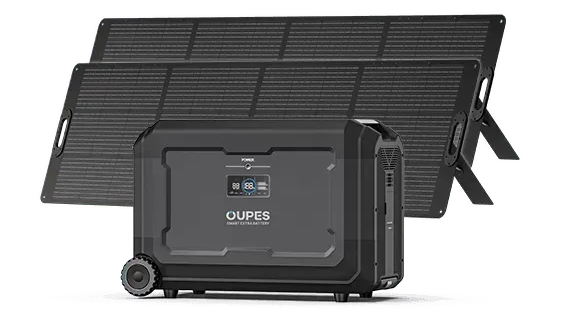
Our brand, OUPES, offers high-capacity portable power stations and integrated home battery systems that are potential candidates for the 30% Residential Clean Energy Credit—provided they meet eligibility criteria (such as capacity, installation at primary or secondary U.S. home, new equipment, etc.).
By reducing the net cost through tax savings, using the credit makes investing in resilient home backup systems far more cost-effective. Pairing an OUPES station with solar panels or using it as the core of a battery-backup setup can improve both energy security and financial returns.
FAQ
1. Do I need to install solar panels to get the battery tax credit?
No, you do not. Standalone battery storage systems qualify for the credit—solar panels are not required.
2. Is there a dollar cap on the battery storage tax credit?
Typically no dollar cap is specified for the federal residential clean energy credit when applied to battery storage. The 30% credit applies to eligible costs.
3. Can renters claim the credit if they install battery backup?
Only homeowners (or part-owners) of a qualifying residence may claim the credit. Renters generally do not qualify unless they own the tax‐home and the system is installed at their home of record.
4. How long does the installation need to be in service to claim the credit?
The system must be placed in service during the tax year you claim the credit (i.e., installation complete and equipment energized). You then claim the credit the same year.
5. Are there state or local incentives in addition to the federal credit?
Yes—many states and utilities offer rebates or incentives for battery storage or solar plus storage systems. You should check your state and local programs to stack savings.