




Table of Contents
- Introduction: Why Lifespan Matters for Portable Power Stations
- Battery Types and Their Expected Lifespan
- Key Factors That Influence a Portable Power Station’s Lifespan
- Understanding Battery Cycles and Degradation
- Signs Your Power Station Is Reaching End of Life
- Lifespan of OUPES Portable Power Stations
- Battery Performance Comparison Table
- Tips to Extend the Life of Your Portable Power Station
- Real Scenarios: How Long Power Stations Last in Different Use Cases
- FAQ
Introduction: Why Lifespan Matters for Portable Power Stations
Portable power stations have become essential tools for home backup, outdoor adventures, RV life, off-grid living, and emergency preparedness. When investing in one, a key question many buyers ask is: How long will it last?
The answer depends largely on battery chemistry, usage habits, charging frequency, environmental conditions, and maintenance.
Typically, high-quality portable power stations last between 5 to 10 years—sometimes longer if equipped with advanced LiFePO4 batteries and managed properly.
Battery Types and Their Expected Lifespan
The type of battery inside the power station is the biggest factor in determining how long it lasts. Below is a breakdown of the most common chemistries.
1. LiFePO4 (Lithium Iron Phosphate)
- Cycle Life: 3,000–6,500 cycles
- Typical Lifespan: 8–15 years
- Advantages: High stability, excellent thermal safety, long life, minimal degradation
2. Lithium-ion (NMC or LCO)
- Cycle Life: 500–1,000 cycles
- Typical Lifespan: 3–5 years
- Advantages: Lightweight, affordable, high energy density
3. Lead-acid (rare in modern portable power stations)
- Cycle Life: 200–500 cycles
- Typical Lifespan: 1–3 years
- Disadvantages: Heavy, sensitive to deep discharge, short lifespan
Key Factors That Influence a Portable Power Station’s Lifespan
1. Battery Chemistry
LiFePO4 batteries last significantly longer than lithium-ion or lead-acid alternatives due to their robust molecular structure and stable operating temperature.
2. Charge and Discharge Habits
Frequent deep discharging (0–10%) shortens battery life, while maintaining usage in the 20–80% range increases longevity.
3. Charging Speed and Heat
Fast charging is convenient, but excessive heat accelerates chemical degradation. Smart Battery Management Systems (BMS) help regulate temperature and prevent damage.
4. Storage Conditions
Power stations last longest when stored in cool, dry environments—not in hot garages or cold sheds.
5. Frequency of Use
Contrary to popular belief, using the power station regularly is healthier than long-term inactivity. Idle batteries degrade faster.
Understanding Battery Cycles and Degradation
A battery “cycle” occurs when the battery is drained and recharged from 0% to 100%. A 50% discharge twice equals one cycle.
Most LiFePO4 power stations retain:
- 80% capacity after 3,500 cycles
- 70% capacity after 5,000+ cycles
This means after many years of regular use, your power station may not fail—but it will store less energy.
Signs Your Power Station Is Reaching End of Life
- Noticeably reduced battery capacity
- Slower charging speed
- Rapid power drain under normal loads
- Frequent overheating or BMS shutdowns
- Inconsistent or fluctuating voltage output
Lifespan of OUPES Portable Power Stations
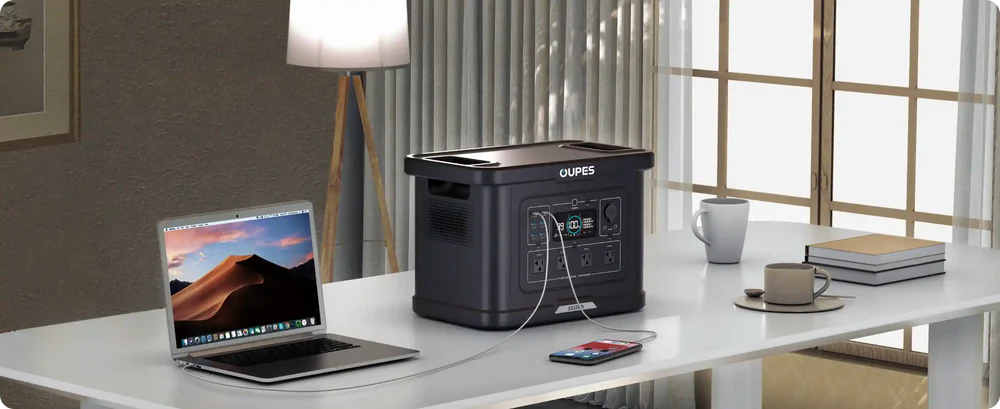
OUPES power stations are engineered with LiFePO4 battery technology, providing high safety and long operational lifespan.
- Cycle Life: 3,500+ cycles
- Estimated Lifespan: 10 years or more with proper maintenance
- Rigid BMS protection ensures stable performance across temperature ranges
Battery Performance Comparison Table
| Battery Type | Cycle Life | Expected Lifespan | Heat Tolerance | Degradation Rate |
|---|---|---|---|---|
| LiFePO4 | 3,000–6,500 | 8–15 years | Excellent | Slow |
| Lithium-ion (NMC/LCO) | 500–1,000 | 3–5 years | Medium | Moderate |
| Lead-acid | 200–500 | 1–3 years | Poor | High |
Tips to Extend the Life of Your Portable Power Station
1. Avoid Full Discharges
Try to keep the battery level between 20% and 80% for optimal longevity.
2. Store in a Climate-Controlled Environment
Ideal storage temperature is 50°F–80°F (10°C–27°C).
3. Use the Correct Charger
Using non-approved chargers may damage the battery or bypass protective circuitry.
4. Keep Firmware Updated
Many modern power stations allow firmware updates that improve battery management.
5. Use Load Within Rated Limits
Overloading the AC output repeatedly reduces battery health and stresses internal components.
6. Clean Ports and Ventilation Areas
Dust accumulation can cause overheating and airflow obstruction.
7. Recharge Every 3–6 Months When Not in Use
Letting a battery sit empty can cause irreversible damage.
Real Scenarios: How Long Power Stations Last in Different Use Cases
1. Occasional Camping Trips
If used several times per year, a LiFePO4 power station can last over 12 years with minimal degradation.
2. RV or Van Life
Daily cycling reduces lifespan slightly, but a 3,500-cycle unit can still last 8–10 years easily.
3. Home Emergency Backup
With infrequent use, these units may last 10–15 years or more.
4. Off-Grid Living
Daily solar charging and discharging will age the battery faster, but LiFePO4 models still outperform all other chemistries.
FAQ
1. Do portable power stations lose capacity over time?
Yes. All batteries degrade gradually, but LiFePO4 systems degrade much slower than lithium-ion.
2. Do portable power stations last longer if used less?
Not necessarily. Batteries should be exercised periodically to maintain health.
3. When should I replace a portable power station?
Replacement is needed when capacity drops below your practical usage requirements.
4. Can my power station last more than 10 years?
Yes, especially if it uses LiFePO4 cells and is properly maintained.
5. Does temperature affect lifespan?
Yes. Heat accelerates chemical breakdown, while extreme cold reduces discharge efficiency.
6. Why do some power stations degrade faster?
Suboptimal charging habits, poor storage conditions, and heavy load usage contribute to faster aging.
7. Is it safe to use an older power station?
Yes, if it still operates within safe voltage and temperature limits, thanks to built-in BMS protection.
8. How do I check the health of my power station?
Monitor capacity changes, charge duration, heat levels, and runtime under normal loads.