




Solar generators are no longer niche emergency gadgets — they have become practical power solutions for everyday use, backup during outages, and sustainable energy support for homes and outdoor lifestyles. If you’re considering one, it’s important to understand what they can do, how they fit with your energy needs, and how different configurations match real scenarios.
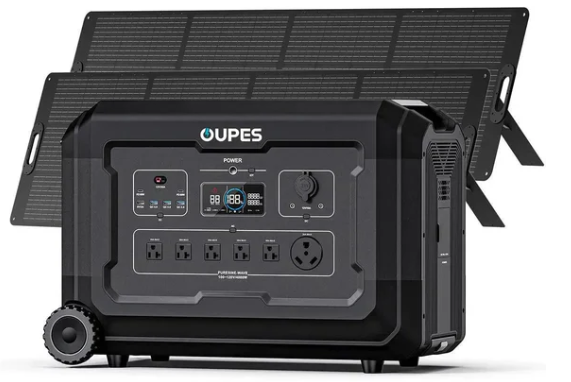
This guide focuses on the educational aspects of solar generators and uses two ready-to-use solar generator bundles as real examples: the OUPES Mega 5 + 2×240W Solar Panel and the OUPES Guardian 6000 + 2×240W Solar Panel. We’ll explain what a solar generator actually provides, when it makes sense to buy one, and how these bundles fit different household needs.
Quick Navigation
- What is a Solar Generator?
- Why People Buy Solar Generators
- How Solar Generators Work
- Solar Bundle Example 1: Mega 5 + 2×240W Solar Panel
- Solar Bundle Example 2: Guardian 6000 + 2×240W Solar Panel
- Who Should Buy a Solar Generator?
- FAQ
1. What Is a Solar Generator?
A solar generator combines a battery-based power station with solar panels to collect and store energy from the sun. Unlike traditional gas generators, it operates quietly, requires no fuel, and produces no emissions — making it suitable for indoor use and residential environments.
The solar panels convert sunlight into electricity, which charges the battery. Later, the stored energy can power household devices and essential loads when grid power is unavailable or during planned off-grid use.
2. Why People Buy Solar Generators
There are several motivations for buying a solar generator:
- Emergency backup power — Keep essential devices running during grid outages.
- Energy independence — Use renewable energy to reduce reliance on the grid.
- Off-grid or outdoor use — Power an RV, cabin, or camp setup without noise or fuel requirements.
- Cost predictability — Reduce energy bills by supplementing daytime solar charging.
However, solar generators are not universal replacements for all energy needs. They are most effective when paired with thoughtful load planning and realistic expectations.
3. How Solar Generators Work
At its core, a solar generator system has two main components:
- Solar panels — Capture sunlight and convert it into electrical energy.
- Battery power station — Stores energy and provides stable AC/DC output for appliances and devices.
During daylight hours, solar panels can recharge the battery. Later, when the sun is down or cloudy, the stored energy powers your loads. This dynamic allows for extended use beyond a single charge and reduces the need for grid or fuel-based backup.
4. Solar Bundle Example 1: Mega 5 + 2×240W Solar Panel
This bundle is designed for households that want a balance between portability, capacity, and solar recharging ability for essential power needs.
Core features
- Battery capacity: 5040Wh
- Output power: 4000W continuous (7000W surge)
- Solar input: Support for up to 2×240W panels
This configuration is particularly suited for:
- Running TVs, routers, and lighting during outages
- Charging phones, tablets, and laptops
- Supporting small appliances in off-grid or outdoor settings
The Mega 5’s capacity makes it a practical choice for medium-length outages and everyday supplementary power. With solar panels, the system can recharge during daylight to extend usable energy.
5. Solar Bundle Example 2: Guardian 6000 + 2×240W Solar Panel
This bundle is designed for homes with higher power needs or users who want broader coverage during outages.
Core features
- Battery capacity: 4608Wh base (expandable)
- Output power: 6000W continuous (7200W boost)
- Solar input: Support for up to 2×240W panels
The Guardian 6000’s higher output makes it suitable for:
- Powering larger devices and multiple circuits simultaneously
- Household backup during extended outages
- Supporting essential and moderately high-demand loads
The addition of solar panels allows the system to recharge during the day, helping maintain battery levels without relying solely on grid or fuel-powered support.
6. Who Should Buy a Solar Generator?
Deciding whether to buy a solar generator comes down to how and why you plan to use it.
Solar generators are a strong choice if you:
- Live in an area with frequent or extended power outages
- Want to supplement your energy use with renewable sources
- Travel or camp off-grid with power needs (RV, cabin, etc.)
- Need quiet, fuel-free backup power that can operate safely indoors
They may be less suitable if your priority is powering high-demand systems like central HVAC or heavy appliances for long periods, which typically require larger stationary systems.
FAQ
Q1: Can a solar generator replace a traditional generator?
For essential loads and moderate power needs, yes. Solar generators provide quiet, emission-free backup power. For very high-demand continuous loads, additional infrastructure may still be required.
Q2: Do I need solar panels with my generator?
Solar panels extend runtime by recharging the battery during daylight hours. Without solar input, the generator still works but will rely solely on its stored capacity.
Q3: How long will a solar generator run my devices?
Runtime depends on the number and type of devices you power and your usage patterns. Estimating total energy needs helps determine how long a system will last on a single charge.
Q4: Are solar generators safe for indoor use?
Yes. Solar generators use battery power and do not produce exhaust, making them safe for indoor operation when used according to instructions.
Q5: Should I buy one now or wait?
If your priority is energy preparedness, reducing outage risks, or increasing renewable energy use, investing in a solar generator now can provide long-term benefits and peace of mind.