




If you’re planning to use solar energy—whether for home backup, off-grid living, RV travel, or emergency preparedness—you’ll quickly face a key decision: should you buy a solar panel kit, or build a custom solar setup?
Both options can deliver clean, renewable energy, but they serve very different types of users. The “right” choice depends less on technical specs and more on how you plan to use solar power in real life.
This guide breaks down the differences in a practical, scenario-driven way, helping you choose the option that fits your needs, experience level, and long-term goals.
What Is a Solar Panel Kit vs a Custom Solar Setup?
What Is a Solar Panel Kit?
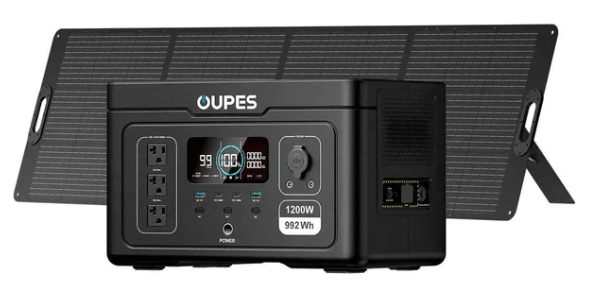
A solar panel kit is a pre-configured package that typically includes:
- Solar panels
- Charge controller
- Wiring and connectors
- Sometimes a power station or battery
Everything is selected to work together out of the box.
What Is a Custom Solar Setup?
A custom solar setup is built piece by piece. You choose each component individually:
- Panel type and quantity
- Charge controller specifications
- Battery capacity
- Inverter size
This approach offers maximum control—but also more responsibility.
Core Differences at a Glance
| Aspect | Solar Panel Kit | Custom Solar Setup |
|---|---|---|
| Ease of use | Very high | Low to moderate |
| Flexibility | Limited | Very high |
| Setup time | Fast | Longer |
| Technical knowledge | Minimal | Required |
| Risk of incompatibility | Very low | Higher |
Who Solar Panel Kits Are Best For
Solar panel kits are designed for simplicity and reliability.
Ideal Users
- First-time solar users
- Homeowners wanting backup power
- Campers and RV travelers
- Emergency preparedness households
Why Kits Make Sense
- No component matching required
- Lower risk of wiring errors
- Faster deployment in emergencies
If you want solar power without a learning curve, kits remove most barriers.
Who Custom Solar Setups Are Best For
Custom setups are for users who want precision and control.
Ideal Users
- Technically experienced users
- Off-grid homesteads
- Large-scale or permanent installations
- Users with unusual power requirements
Why Go Custom?
- Exact system sizing
- Optimized for specific loads
- Maximum expandability
Custom setups reward expertise—but punish mistakes.
Installation and Setup Complexity
Solar Panel Kit Installation
- Pre-matched connectors
- Clear setup instructions
- Minimal electrical knowledge required
Custom Setup Installation
- Manual wiring and configuration
- Voltage and current calculations
- Higher chance of setup errors
In time-sensitive situations, simplicity matters.
Performance and Flexibility
This is where custom setups shine—but not always by much.
Solar Panel Kits
- Optimized for typical use cases
- Predictable performance
- Balanced system design
Custom Solar Setups
- Highly optimized for specific goals
- Can exceed kit performance
- Require careful planning
For most users, kit performance is more than sufficient.
Scalability and Future Expansion
Kit Scalability
Many modern kits allow limited expansion, but within predefined limits.
Custom Scalability
Custom setups can be expanded almost indefinitely—if designed correctly from the start.
If future growth is critical, planning matters more than the initial choice.
Cost: Upfront vs Long-Term Value
| Cost Factor | Solar Panel Kit | Custom Setup |
|---|---|---|
| Upfront cost | Predictable | Variable |
| Hidden costs | Low | Possible |
| Time investment | Low | High |
For many users, time and reliability outweigh marginal cost savings.
Real-World Use Scenarios Compared
Scenario 1: Emergency Power Outage
Solar panel kits win due to fast setup and guaranteed compatibility.
Scenario 2: Camping and RV Use
Kits offer portability and ease, while custom setups may be bulky.
Scenario 3: Off-Grid Home
Custom setups allow tailored, large-scale solutions.
Scenario 4: Seasonal Backup Power
Kits provide sufficient capacity with minimal complexity.
A Simple Decision Framework
Ask yourself the following:
- Do I want simplicity or full control?
- Is this for emergencies or permanent living?
- Am I comfortable with electrical system design?
If you answered “simplicity” more than once, a kit is likely the better choice.
How OUPES Balances Kits and Customization
OUPES solar solutions are designed to offer the best of both worlds.
OUPES Design Philosophy
- Pre-matched, ready-to-use systems
- Expandable battery options
- Flexible solar input support
| OUPES Model | System Type | Best Fit User |
|---|---|---|
| OUPES Mega 1 | Kit-based | Emergency backup beginners |
| OUPES Mega 2 | Expandable kit | Home and RV users |
| OUPES Mega 3 | Modular system | Advanced backup planning |
| OUPES Mega 5 | High-capacity modular | Long-term resilience users |
This approach minimizes complexity while preserving flexibility.
Frequently Asked Questions
1. Are solar panel kits less powerful?
No, they are designed to meet common real-world needs.
2. Can I customize a kit later?
Many systems allow limited expansion.
3. Are custom setups cheaper?
Sometimes, but not always after time and errors are considered.
4. Which is better for emergencies?
Solar panel kits are usually better.
5. Do kits limit solar input?
They follow defined input ranges for safety.
6. Is technical knowledge required for custom setups?
Yes, especially for safe operation.
7. Can kits support daily use?
Yes, especially for backup and supplemental power.
8. What’s the biggest mistake people make?
Overestimating how much customization they actually need.