




Introduction
Solar power generators with built-in battery storage offer an efficient and reliable solution for clean, portable energy whether you're at home, traveling in an RV, preparing for emergencies, or powering tools off-grid. With growing concerns about grid instability and rising energy costs, more people are searching for top-rated solar generators that can keep essential devices running without relying on fuel or noisy traditional generators.
This guide helps you understand how solar generators with battery storage work, which features are most important, and how OUPES products compare to help you choose the ideal model for your needs.
1. Why Battery Storage Matters in a Solar Generator
A solar generator without sufficient battery storage cannot provide consistent power, especially during nighttime or cloudy conditions. The battery system determines:
- How long the generator can run appliances
- How many devices can operate simultaneously
- Emergency outage reliability
- Nighttime or low-sun power availability
How Solar + Battery Storage Works
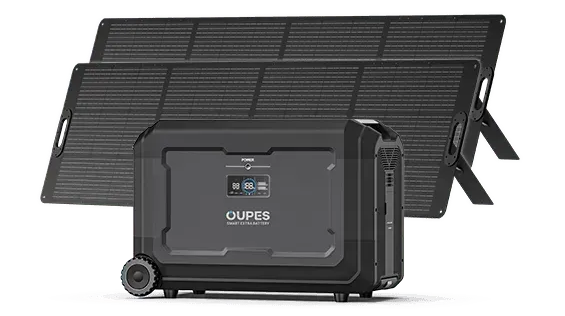
Solar panels gather sunlight and convert it into electricity, which is stored in the generator’s internal battery. The inverter then converts that energy into usable AC power for home appliances, tools, and electronics.
Higher-capacity battery storage ensures longer runtimes and more flexibility across different scenarios—from running a refrigerator during a power outage to charging multiple RV appliances.
2. Best Use Scenarios for Solar Generators with Battery Storage
Home Backup Power
Solar generators with battery storage are ideal for running critical appliances during outages. Refrigerators, medical equipment, lights, routers, and small appliances can operate reliably without fuel.
RV & Van Life
Portable solar generators make off-grid travel easier with quiet operation, quick charging, and the ability to power mini-fridges, induction cookers, heaters, laptops, and water pumps.
Outdoor Camping & Recreation
Battery-powered solar generators offer silent, emission-free power for lighting, electric grills, speakers, projectors, and portable coolers.
Construction Sites & Off-Grid Work
Their high output power enables operation of professional tools such as drills, saws, and compressors without relying on gas generators.
Emergency Disaster Preparedness
With extreme weather and outages on the rise, a solar generator can be a lifeline—providing power for communication, heating, lighting, and refrigeration.
3. Key Features to Look for in a Solar Generator
- Battery Capacity (Wh): Determines runtime and total energy storage.
- Output Power (W): Determines which appliances can be powered.
- Battery Type: LiFePO4 is preferred for long lifespan (3,000+ cycles).
- Solar Input Wattage: Higher input allows faster recharging.
- Expandable Capacity: Useful for whole-home backup or RV boondocking.
- Port Variety: AC outlets, USB-A, USB-C, carport, Anderson ports.
- UPS/EPS Function: Ensures uninterrupted power during outages.
4. Comparison of OUPES Solar Generators with Battery Storage
Here is a detailed comparison of OUPES' top-rated solar generators optimized for long battery life, high output power, and reliable storage capacity:
| Model | Battery Capacity | Output Power | Max Expandability | Best For |
|---|---|---|---|---|
| Mega 1 | 1,024Wh | 2,000W | Up to 5.12kWh | Essential home circuits, RV appliances, light power tools |
| Mega 2 | 2,048Wh | 2,500W | Up to 10.24kWh | Longer outages, multi-device RV setups, off-grid cabins |
| Mega 3 | 3,072Wh | 3,600W | Up to 15.36kWh | Heavy-duty appliances, power tools, extended boondocking |
| Mega 5 | 5,040Wh | 4,000W | Up to 45.36kWh | Whole-home backup, high-demand usage, emergency resilience |
Each model uses long-life LiFePO4 batteries, offers multiple fast-charging options, and supports solar recharging for sustainable off-grid power.
5. How to Choose the Best Model for Your Needs
For Home Backup
Choose: Mega 3 or Mega 5
These models offer high output wattage and expandable capacity for multi-appliance coverage.
For RV & Van Life
Choose: Mega 2 or Mega 3
These systems provide robust power while remaining portable enough for travel.
For Camping & Outdoor Use
Choose: Mega 1
Lightweight yet powerful enough for portable appliances and entertainment.
For Long-Term Off-Grid Living
Choose: Mega 5
Its expandable battery system makes it ideal for continuous, sustainable energy independence.
6. Tips for Maximizing Solar + Battery Performance
- Use high-efficiency solar panels for faster recharging.
- Charge the generator fully before travel or storms.
- Avoid draining the battery to 0% frequently.
- Operate appliances within the rated output range.
- Store the generator in a temperature-stable environment.
- Add expansion batteries for longer runtimes.
FAQ
- How long do solar generators with battery storage last?
OUPES LiFePO4 systems last 3,000–6,000 cycles, equating to 10+ years of use. - Can solar generators replace home backup generators?
Yes, larger models like Mega 5 can support whole-home powering when paired with expansion batteries. - Do solar generators require maintenance?
No oil changes or engine upkeep—only battery care and occasional dust cleaning. - How long does it take to recharge with solar panels?
Depending on solar input, 3–8 hours is typical for mid-size systems. - Can I run high-wattage appliances?
Models with 2,500W–4,000W output can run power tools, heaters, microwaves, and more. - Are they safe to use indoors?
Yes—solar generators produce zero emissions and no harmful fumes. - Can they power an RV air conditioner?
Large models like Mega 3 or Mega 5 can operate smaller RV AC units. - Do they work during cloudy weather?
The battery continues supplying power even when solar charging slows.