




Many homeowners want lower electric bills, but the answer is not always using less electricity overall. In many cases, it is also about when you use it. Electricity prices can change throughout the day depending on how your utility charges for power. That means running the same appliance at one hour may cost more than running it later that evening or overnight.
This is why more people are asking a simple but important question: when is it cheapest to use electricity? The answer depends on your utility plan, your region, and whether your home is on a time-based rate such as time-of-use pricing. In general, electricity is often cheapest during low-demand hours, especially late at night, early in the morning, or other off-peak periods when fewer people are using power at the same time.
In this article, we will explain how electricity pricing works, why some hours are cheaper than others, how to identify the best time to use major appliances, and how energy storage can help households shift power use more efficiently. The goal is education first: helping users understand the logic behind electric rates so they can make smarter choices without sacrificing comfort or reliability.
Why Electricity Prices Change Throughout the Day
Electricity demand does not stay the same all day. It rises and falls based on how people live. In the morning, homes begin using lights, kitchen appliances, water heaters, and HVAC systems. Demand often increases again in the late afternoon and early evening, when families return home, cook dinner, do laundry, watch television, charge devices, and adjust indoor temperatures.
Utilities must balance supply and demand continuously. When more people need power at the same time, the grid is under greater pressure. Meeting that higher demand may require more expensive generation resources or additional grid management. Because of this, many utilities charge higher rates during busy periods and lower rates during quieter periods.
This pricing structure is designed to encourage users to shift some of their electricity use away from the busiest hours. If more households run major appliances during off-peak times instead of peak times, grid stress can be reduced and the overall system can operate more efficiently. For consumers, that often translates into a simple opportunity: use electricity during low-demand hours and pay less.
When Is Electricity Usually Cheapest?
In general, electricity is usually cheapest during off-peak hours. These are the times of day when overall demand is lower. In many areas, that often means late at night, overnight, or early in the morning. Midday can also be cheaper in some regions depending on local generation patterns and rate design, but the most common low-cost period for household users is still outside the busy evening window.
A practical way to think about it is this: electricity tends to cost less when fewer people are actively using large amounts of it. That often happens when people are asleep, away from home, or not running multiple appliances at once. By contrast, the most expensive hours are often when large numbers of homes are cooling or heating indoor spaces, cooking meals, and using high-power devices at the same time.
However, there is one important limitation. There is no single universal schedule that applies everywhere. One utility may define off-peak hours as overnight and early morning. Another may include parts of the late morning or weekend hours. Some plans have seasonal variations, meaning summer peak periods may differ from winter peak periods. That is why it is best to understand the general principle first and then confirm the exact schedule on your own electricity plan.
Peak, Off-Peak, and Shoulder Hours Explained
To understand when electricity is cheapest, it helps to know three common pricing terms: peak, off-peak, and shoulder.
Peak Hours
Peak hours are the most expensive periods. These are the times when electricity demand is highest. In many residential settings, peak hours often happen in the late afternoon or evening, when households are active and the grid is heavily used.
Off-Peak Hours
Off-peak hours are the least expensive periods. Demand is lower, so electricity is cheaper. These hours are commonly overnight, late evening, or early morning, though exact times vary by utility.
Shoulder Hours
Shoulder hours sit between peak and off-peak periods. Rates during these times are usually moderate. They are not as cheap as off-peak hours, but they are less expensive than peak hours.
For homeowners, this structure matters because many everyday energy tasks are flexible. Dishwashers, laundry machines, EV charging, battery charging, and sometimes water heating can often be shifted into cheaper periods with little inconvenience. Once you understand the time categories on your electricity plan, you can start using your home more strategically.
Why Nighttime Electricity Is Often Cheaper
Nighttime electricity is often cheaper because residential demand usually falls after the busiest household hours are over. Lights turn off, kitchen equipment stops running, air-conditioning demand may soften, and appliance use decreases. As demand drops, the grid becomes easier and less expensive to serve.
That is why overnight charging has become such an important part of energy-saving habits. It applies not only to electric vehicles, but also to battery systems, home electronics, and any appliance that can safely operate on a delayed schedule. From a consumer point of view, nighttime can be one of the most practical windows for lowering energy costs without reducing comfort.
Still, users should avoid assuming that “late night is always cheapest” in every single case. Some utilities structure rates differently, and some households are not on time-based pricing at all. If you are on a flat-rate electricity plan, then using electricity at midnight may cost the same as using it at 6 p.m. But if you are on a time-of-use plan, the timing can make a meaningful difference over weeks and months.
How to Know the Cheapest Hours in Your Area
The most reliable way to know when electricity is cheapest for your home is to review your utility bill or utility account details. Look for terms such as time-of-use, TOU, peak pricing, off-peak pricing, or demand response. These indicate that your cost depends on the time electricity is used.
When reviewing your plan, pay attention to:
- The exact start and end times of peak and off-peak periods
- Whether weekends follow a different schedule
- Whether summer and winter rates change
- Whether certain holidays are treated as off-peak days
- Whether your home is on a flat-rate or time-based billing structure
This step matters because energy-saving advice only works well when it matches the plan you actually have. The most common mistake is following general energy tips without checking whether your utility charges by time of use. Good energy management is not only about using less electricity. It is also about matching your habits to your rate structure.
How to Save More by Shifting Energy Use
Once you know the cheapest hours, the next step is simple: shift as many flexible loads as possible into those periods. This practice is often called load shifting. It means moving energy use away from expensive times and into lower-cost times.
Common examples include running the dishwasher later at night, doing laundry early in the morning, charging devices overnight, and pre-cooling or pre-heating the home before peak pricing begins if your comfort and equipment allow it. Some homes also use smart plugs, timers, or app-based scheduling to automate these changes.
The advantage of load shifting is that it usually does not require a major lifestyle sacrifice. You may still wash clothes, charge batteries, or run equipment as usual. The only difference is timing. Over time, that timing can help lower electric bills, especially in homes with multiple high-use devices.
That said, shifting appliance use alone is not always enough. Some household loads happen during peak hours no matter what, such as evening lighting, cooking, internet use, or climate control. That is where energy storage becomes especially useful.
Using Home Battery Storage to Take Advantage of Lower Rates
Battery storage can make electricity timing much more flexible. Instead of using grid power only when demand is highest and prices are highest, a home battery can be charged during lower-cost periods and then discharged later when rates increase. This allows a household to reduce reliance on expensive peak-hour electricity without giving up access to power.
From an energy-management perspective, this is one of the smartest ways to use time-based pricing. Rather than changing every household habit, you can store cheaper electricity when rates are low and use that stored power when rates are high. This approach can be especially valuable in homes where evening usage is unavoidable.
It also adds another benefit beyond cost savings: resilience. If a battery system is also designed for home backup, it can provide electricity during outages while still supporting daily energy management. That combination of savings and reliability is why more households are interested in energy storage, even when their first goal is simply lowering monthly bills.
A Practical Example: OUPES Guardian 6000
For users who want to combine home backup capability with smarter electricity timing, the OUPES Guardian 6000 fits well into this conversation.
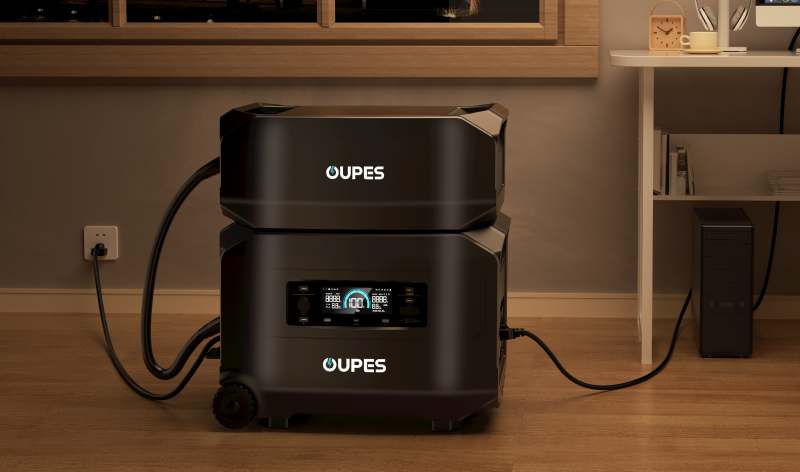
The OUPES Guardian 6000 is a high-capacity portable power station designed for home backup and energy storage use. It offers 6144Wh capacity and 6000W output, making it suitable for supporting a wide range of household loads depending on the devices being used and the overall power demand. For users thinking beyond simple emergency backup, that kind of capacity also opens the door to more intentional daily energy management.
One especially relevant benefit is this: the Guardian 6000 can be charged during off-peak electricity hours and then supply power to your home during peak-rate periods. This kind of efficient energy management can help reduce electricity costs without sacrificing reliability. Instead of drawing expensive grid power during the most costly part of the day, the system allows you to rely on stored electricity that was charged when rates were lower.
That makes the Guardian 6000 more than just a backup solution. In the right household setup, it can also support a practical cost-saving strategy. For users on time-of-use electricity plans, charging during low-rate hours and using that stored energy during high-rate hours is one of the clearest ways to turn electricity timing into real value. The result is a smarter balance between household comfort, cost control, and energy security.
Of course, the effectiveness of this approach depends on your local electricity tariff, your daily load profile, and how your home uses power across the day. But as a general principle, storing lower-cost electricity and using it later during expensive hours is a highly relevant idea for homeowners trying to manage both savings and reliability.
Common Mistakes to Avoid
When trying to lower electricity costs, many users focus only on total consumption and ignore timing. That can leave savings on the table. But there are also a few other mistakes worth avoiding.
Assuming Every Utility Uses the Same Schedule
Peak and off-peak hours vary. What is cheap in one service area may not be cheap in another.
Ignoring Seasonal Rate Changes
Some utilities adjust peak periods in summer and winter. A schedule that saves money in one season may not be the most efficient in another.
Shifting Small Loads but Ignoring Big Ones
Phone charging is easy to move, but larger appliances and HVAC habits usually matter more for the bill.
Not Matching Storage Strategy to Actual Usage
A battery system is most useful when it is charged and discharged according to your home’s real peak usage pattern, not just general assumptions.
Final Thoughts
So, when is it cheapest to use electricity? In most cases, the cheapest time is during off-peak hours, especially when grid demand is low, such as late at night, overnight, or early in the morning. But the exact answer depends on your utility plan, whether you are on time-of-use pricing, and how your provider defines peak and off-peak periods.
The most important takeaway is that electricity cost is often about timing as much as it is about volume. Households that understand their rate structure can shift flexible energy use into cheaper periods, reduce dependence on expensive peak hours, and make more informed choices about storage and backup solutions.
For users who want both reliability and smarter bill management, the idea is simple but powerful: charge when electricity is cheap, use stored power when electricity is expensive. That principle helps explain why energy storage is becoming an increasingly practical part of modern home energy planning.
FAQ
1. Is electricity always cheapest at night?
Not always, but nighttime is often one of the cheapest periods on many time-of-use plans because overall demand is lower.
2. What are off-peak hours?
Off-peak hours are the lower-cost periods when electricity demand is lower and utilities often charge reduced rates.
3. What time is electricity usually most expensive?
It is often most expensive during peak hours, which commonly occur in the late afternoon or evening when household demand is highest.
4. How do I know if my home has time-of-use pricing?
Check your utility bill or account details for terms like time-of-use, TOU, peak pricing, or off-peak pricing.
5. Can changing when I use appliances really lower my bill?
Yes. Shifting flexible appliance use into cheaper hours can reduce costs, especially if your plan charges different rates by time of day.
6. What appliances are easiest to shift to off-peak hours?
Dishwashers, laundry machines, device charging, EV charging, and some water-heating or scheduled home systems are common examples.
7. How can battery storage help with electricity costs?
Battery storage can charge during low-rate hours and provide power during expensive peak periods, helping reduce reliance on higher-cost grid electricity.
8. Is the OUPES Guardian 6000 only for emergencies?
No. In addition to backup use, it can also support a daily energy strategy by charging during off-peak hours and supplying power during peak-rate periods.