




TL;DR / Key Takeaways
- There is no single “best” solar generator; the best choice depends on your use case (home backup, RV, camping, work, etc.).
- For most people, battery capacity (Wh/kWh), inverter output power (W), and solar input (W) are the three most critical specs.
- Lithium iron phosphate (LiFePO₄ or LFP) batteries offer longer cycle life and higher safety, making them ideal for home backup and frequent use.
- To size a system, estimate your daily energy use (Wh), then match it with battery capacity and solar panel power that can realistically recharge it.
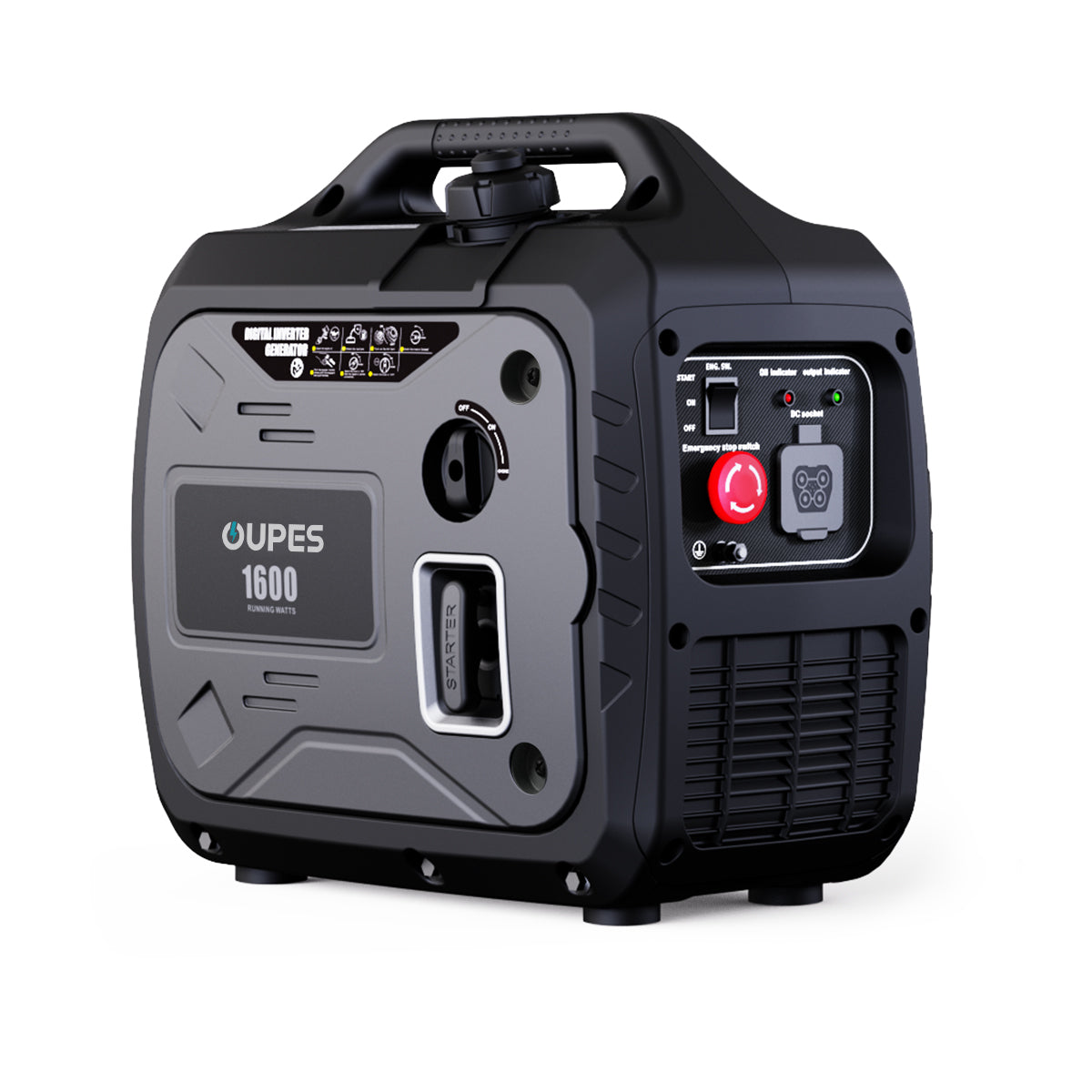
- OUPES portable power stations are designed as all-in-one systems (battery + inverter + solar charging) for home backup, RV living, and off-grid use.
What “Best Solar Generator” Really Means
Solar generator vs. portable power station
In most consumer conversations, a “solar generator” is not a fuel-burning generator. It is a portable power station with a built-in battery and inverter, usually paired with solar panels for charging. It typically includes:
- A rechargeable battery (often lithium-based, such as LFP)
- AC inverter to run household devices (110–120V in North America)
- Solar charge controller (often MPPT) for efficient PV charging
- DC ports and USB ports for low-voltage loads
When people ask, “Which solar generator is best?”, they are really asking: Which portable power station (with solar) matches my power needs, safety requirements, and budget?
Why “best” depends on your situation
A small 300–500W unit can be “best” for a minimalist camper, but completely inadequate for someone trying to run a refrigerator and medical equipment during a multi-day outage. On the other hand, a large 3–5kWh system might be overkill for someone who just wants to keep phones, laptops, and small appliances running.
That’s why the first step is not to look at product names, but to define where and how you will use the system.
Step 1: Define How You’ll Use a Solar Generator
Home backup during grid outages
If your main concern is power outages from storms, wildfires, or grid instability, you should focus on:
- Enough capacity to run essential loads (fridge, lights, Wi-Fi, medical devices) for at least 8–24 hours
- Inverter power that can handle the starting surge of refrigerators, pumps, or small space heaters
- High solar input so you can recharge during daytime outages
The U.S. Energy Information Administration (EIA) has found that average residential electricity use is around 899 kWh per month, or about 30 kWh per day, but that includes all loads (HVAC, cooking, etc.). For backup, most households only need a fraction of that—typically 2–6 kWh per day for essentials.
RV, van life, and off-grid cabins
For mobile or off-grid setups:
- Refrigeration (12V fridge), lighting, fans, laptop, router, maybe induction cooking
- Daily demand often falls in the 1–4 kWh/day range, depending on climate and lifestyle.
- Solar is often the primary charging method, so panel wattage and MPPT performance matter a lot.
Studies of off-grid households and RV users commonly report significantly lower daily consumption than grid-tied homes, because users actively manage loads and avoid high-draw appliances such as electric resistance heaters.
Camping, tailgating, and outdoor events
For weekend camping or outdoor events, you typically care about:
- Quiet operation (no fuel generator noise)
- Enough power for coolers, phones, lights, small projectors, and music systems
- Portability—weight and form factor matter more than extreme capacity
Here, “best” might be a mid-size portable power station with 500–1500Wh capacity, 500–1500W output, and foldable solar panels for topping up during the day.
Work sites and professional use
If you want to power tools, network equipment, or professional gear:
- Inverter power (W) and surge capacity are critical—many tools draw 2–3× their rated running watts at startup.
- You may need a pure sine wave inverter to protect sensitive electronics.
- Durability and cycle life are important if you will charge/discharge daily.
Step 2: Key Specs That Actually Decide “Best”
Battery capacity (Wh / kWh)
Capacity is measured in watt-hours (Wh) or kilowatt-hours (kWh). For example, a 2000Wh (2kWh) system could theoretically power a 200W load for 10 hours:
Runtime (hours) ≈ Battery capacity (Wh) ÷ Load (W)
In reality, you should assume about 80–90% usable capacity to account for inverter losses and battery management system overhead.
Inverter output power (W) and surge
The inverter rating tells you the maximum continuous power you can draw from AC outlets:
- 1000–1500W: lights, laptops, TV, small kitchen appliances
- 2000–3000W: refrigerators, microwaves, power tools, small space heaters (carefully)
- 3000–4000W+: partial home backup, RV air conditioners, well pumps (with proper wiring)
Many appliances, especially those with motors or compressors, have surge currents 2–3× higher than their running wattage. A “best” solar generator for home backup will therefore have a surge rating that comfortably covers refrigerator or pump startups.
Battery chemistry: LFP vs other lithium
Modern solar generators mostly use either:
- Lithium iron phosphate (LiFePO₄ / LFP) – high cycle life, excellent thermal stability, slightly heavier per kWh.
- Other lithium-ion chemistries – higher energy density (lighter), but often fewer cycles and lower thermal stability.
| Feature | LiFePO₄ (LFP) | Other Lithium-Ion (e.g., NMC) |
|---|---|---|
| Typical cycle life (to ~80% capacity) | 3000–6000+ cycles | 500–2000 cycles |
| Thermal stability / safety | Very high, more tolerant to abuse | Lower, more sensitive to overheating |
| Energy density | Lower (heavier for same kWh) | Higher (lighter for same kWh) |
| Best use cases | Home backup, daily cycling, off-grid | Weight-critical applications |
Research and field data show that LFP batteries can provide thousands of cycles with minimal degradation, making them ideal for solar-plus-storage systems that cycle frequently.
Solar input and charging speed
A “solar generator” is only as good as how fast it can be recharged. Important parameters include:
- Maximum solar input (W) – higher values allow faster charging in good sun.
- Input voltage/current range – must match the solar panel array.
- MPPT controller quality – good MPPT tracking can improve harvest by 10–20% vs. basic controllers.
For example, if you have a 2kWh battery and 800W of solar in full sun, ideal charging time is roughly 2–3 hours, but in real conditions it may be closer to 3–5 hours due to weather and system losses.
Ports, UPS function, and smart features
Other factors that influence which system feels “best” in daily use:
- Number of AC outlets and whether it includes RV-style outlets (like TT-30)
- High-power USB-C (PD) ports for laptops and fast charging
- UPS/EPS functionality – the ability to switch to battery instantly when the grid fails
- Smart monitoring via app (Wi-Fi/Bluetooth) to track input, output, and battery health
Step 3: How to Size a Solar Generator Correctly
1. List your critical loads
Start by listing the devices you want to power and their wattage:
- Refrigerator: 80–150W running (higher surge)
- Wi-Fi router: 10–20W
- LED lights (3–5 rooms): 20–60W total
- Laptop: 40–80W while charging/working
- CPAP or medical device (if needed): 40–100W
2. Estimate daily energy use
Multiply the wattage by the hours of use per day to get watt-hours:
Energy (Wh) = Power (W) × Time (hours)
3. Size battery and solar accordingly
For a typical “essential loads” setup, you might end up around 1500–4000Wh per day. A “best fit” system could be:
- Battery: 2–5 kWh, depending on how many days of autonomy you want
- Solar: 600–2000W, depending on your location, roof/ground space, and weather
As a rough guideline, many off-grid designers aim for solar sized so that, on an average day, you can recharge at least 70–100% of your daily consumption in 4–6 hours of good sun.
Comparison Table: Best Type by Scenario
| Scenario | Recommended Capacity | Recommended Inverter Output | Solar Input | Main Benefits |
|---|---|---|---|---|
| Short grid outages (urban/suburban) | 1–3 kWh | 1500–2500W | 600–1200W | Keep fridge, lights, internet, and electronics running. |
| Multi-day home backup (critical loads only) | 3–6 kWh (expandable) | 2500–4000W | 1200–2000W | Supports fridge, communications, some cooking & small heaters carefully. |
| RV / van life | 1–4 kWh | 1500–3000W | 600–1600W roof + portable | Runs 12V fridge, fans, laptops, small AC or induction (short periods). |
| Camping / tailgating | 0.5–1.5 kWh | 500–1500W | 200–600W portable | Quiet, portable, powers lights, speakers, coolers, devices. |
| Work sites & tools | 2–5 kWh | 2500–4000W | 800–2000W | Powers tools, networking gear, and laptops without fumes. |
Where OUPES Portable Power Stations Fit In
OUPES as an example of high-capacity solar generators
OUPES focuses on high-capacity portable power stations that can be paired with solar panels for home backup, RV use, and off-grid living. Many models use LiFePO₄ batteries rated for thousands of cycles, with pure sine wave inverters and robust solar input, making them suitable for daily cycling and long-term reliability.
For example:
- A mid-range OUPES unit around 2 kWh can be ideal for small homes, apartments, and RV setups focused on essential loads.
- Larger OUPES systems in the 3–5 kWh range are better suited for whole-home “critical loads” backup or power-hungry RVs and cabins.
When evaluating whether an OUPES portable power station is “best” for you, compare its capacity, inverter power, solar input, and battery chemistry against the scenario-based table above, rather than just looking at price alone.
FAQ: Choosing the Best Solar Generator
1. Is there a single “best” solar generator on the market?
No. The best solar generator for a weekend camper is not the same as the best for a family wanting multi-day home backup. Focus on your daily energy needs, peak power requirements, and charging options, then choose a system that fits those numbers.
2. How many kWh do I need for basic home backup?
If you only want to run essentials—refrigerator, Wi-Fi, some lights, phone and laptop charging—many households can manage on about 1.5–4 kWh per day. For overnight plus daytime use, a 3–5 kWh system with solar recharging often hits a sweet spot for resilience.
3. Is an LFP-based solar generator really better?
For most home backup, off-grid, and RV applications, yes. LFP batteries offer:
- Thousands of cycles at moderate depth of discharge
- Better thermal stability and safety margin
- More predictable aging behavior
They are usually slightly heavier per kWh than other lithium chemistries, but for stationary or semi-mobile systems (home/RV), the benefits usually outweigh the weight penalty.
4. How much solar do I really need to pair with a generator?
As a starting point, many solar designers suggest sizing your solar so that, in an average day, you can generate at least 50–100% of your daily consumption. In sunnier regions, 600–1200W of solar can work well with a 2–3 kWh battery; in cloudier regions or for higher loads, 1200–2000W may be more appropriate.
5. Are solar generators a good long-term investment?
For households facing frequent outages, living off-grid, or spending significant time in RVs, a well-chosen solar generator can:
- Reduce reliance on fuel and noisy gas generators
- Provide clean backup for sensitive electronics
- Offer thousands of cycles over 5–10+ years if based on LFP batteries
Combined with sensible energy use and adequate solar, a high-quality portable power station from a brand like OUPES can be a core piece of a resilient, low-carbon energy setup.