




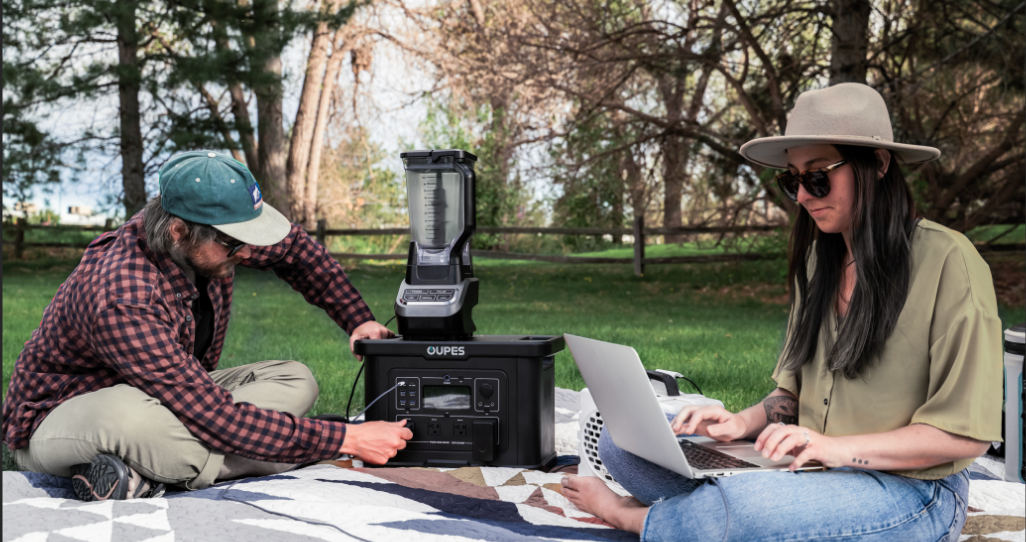
As the weather gradually warms up, spring becomes one of the best seasons of the year for camping. Whether it’s a weekend getaway, family camping trip, or an RV road adventure, more people are heading outdoors during the spring season.
Compared with summer camping, spring camping offers several advantages:
- More comfortable temperatures
- Richer natural scenery
- Less crowded campsites
However, spring camping also comes with certain challenges, such as large temperature differences between day and night, rapidly changing weather, and campsites that may be far from city power infrastructure. Because of this, having a well-prepared camping gear setup and a reliable outdoor power system becomes especially important.
This guide will help you understand:
- How to prepare equipment for spring camping
- The power requirements for different camping scenarios
- How to choose the right camping power station
- The estimated runtime of common camping devices
Whether you are new to camping or an experienced outdoor enthusiast, this guide can help you better plan your spring camping adventure.
Why Spring Camping Is Becoming More Popular
Over the past few years, camping has become one of the fastest-growing outdoor activities. More and more people are choosing to leave the city and relax in natural environments.
Spring camping is especially popular for several reasons.
More Comfortable Weather
Spring temperatures typically range between 10°C and 25°C (50°F to 77°F), making it ideal for outdoor activities. Compared with the intense heat of summer, camping in spring is often more comfortable and relaxing.
Richer Natural Scenery
Spring is the season when nature comes back to life. Many camping areas feature:
- Blooming wildflowers
- Green forests and mountains
- Revitalized lakes and rivers
These natural landscapes make spring camping a particularly enjoyable experience.
More Diverse Outdoor Activities
Camping in spring is not just about setting up a tent. Many outdoor activities can be combined with camping, such as:
- Hiking
- Fishing
- Road trips
- RV travel
Many campers also enjoy photography, drone filming, or outdoor cooking during their trips.
Modern Camping Equipment
Modern camping is no longer limited to simple tents and sleeping bags. Many campers now bring a variety of electronic devices, including:
- Portable car refrigerators
- Drones
- Outdoor projectors
- Coffee makers
- LED camping lights
All of these devices require stable power support. As a result, a portable power station has become an essential piece of equipment for modern camping.
Power Needs for Different Camping Styles
Before choosing a camping power station, it’s important to understand the electricity requirements of different camping styles.
Tent Camping
Tent camping usually focuses on lightweight gear and basic comfort. Many campers hike to their campsite or carry only essential equipment.
Common devices include:
- LED camping lights
- Phones and cameras
- Drones
- Headlamps
- Small portable speakers
Because the equipment is relatively simple, the power demand is typically low.
Estimated daily power usage: 200Wh – 600Wh
Car Camping
Car camping is currently the most common camping style and usually involves more equipment. Campers drive directly to the campsite and park near their tents, allowing them to bring additional gear.
Common devices include:
- 12V car refrigerators
- Coffee makers
- Outdoor projectors
- Small electric fans
- LED lighting systems
Because more electrical devices are used, the power demand increases significantly.
Estimated daily power usage: 600Wh – 1500Wh
Family Camping
Family camping typically involves even more equipment, such as:
- 12V car refrigerator
- Outdoor cooking equipment
- Electric kettle
- Lighting systems
A portable car refrigerator typically consumes around 40–60W and may use more than 500Wh of electricity per day.
This scenario usually requires a power station with 1500Wh or more capacity.
RV Camping
RV camping usually has the highest power requirements.
Common appliances include:
- Refrigerators
- Induction cookers
- Coffee makers
- Outdoor kitchen equipment
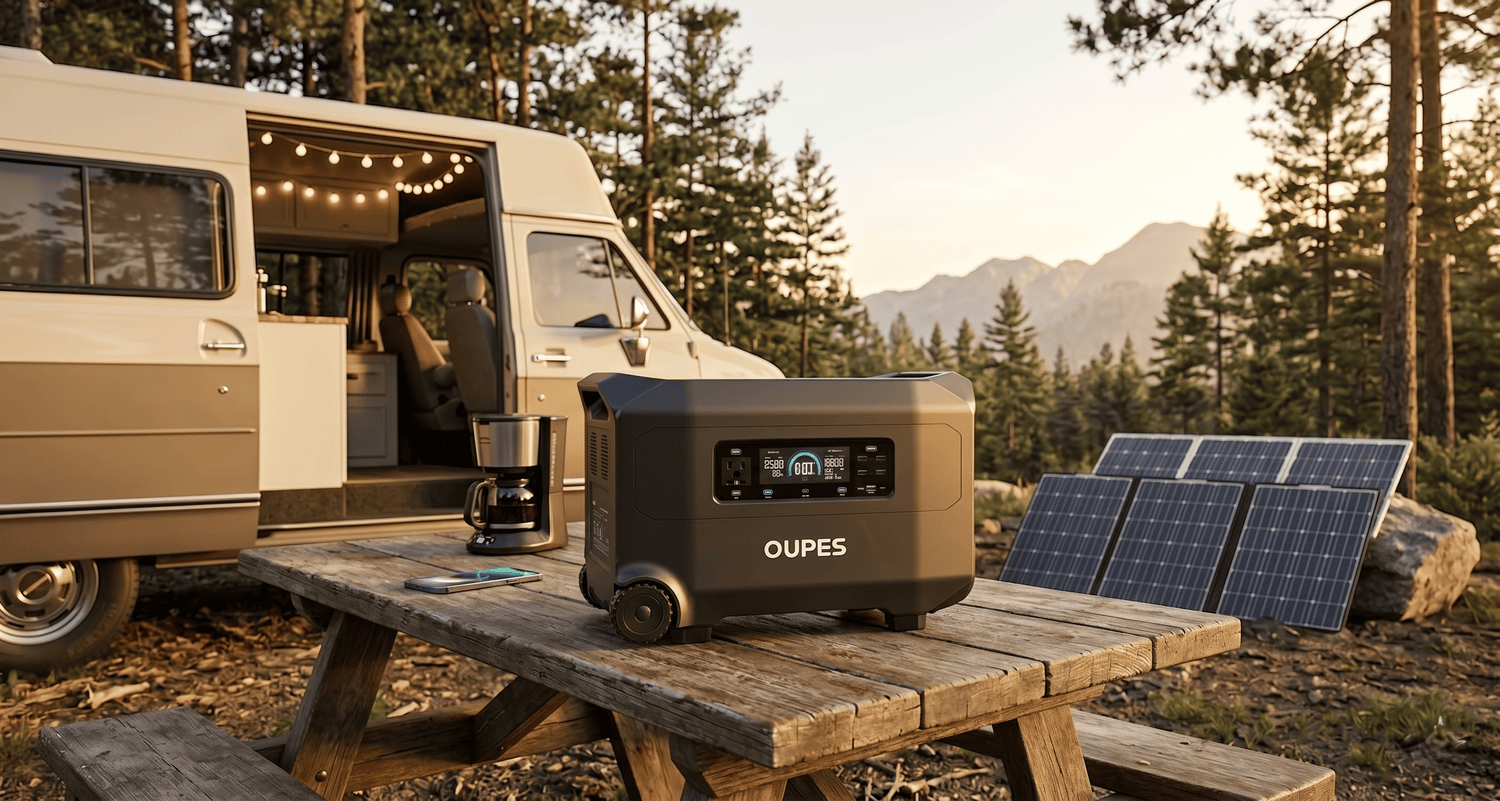
This type of camping often requires a power station with 2000Wh or more capacity to meet extended power needs.
Recommended Portable Power Stations for Spring Camping
Based on different camping scenarios, here are several portable power stations suitable for spring camping.
Mega 1 — Ideal for Weekend Camping and Car Camping
The Mega 1 balances power and portability, making it an excellent option for weekend camping or car camping trips.
Main Specifications:
- Capacity: 1024Wh
- Output Power: 2000W
- Battery Type: LiFePO4
- Cycle Life: 3500+ cycles
Its 2000W pure sine wave inverter can power various camping devices such as:
- Coffee makers
- Projectors
- Electric fans
- Camping lights
The Mega 1 also supports battery expansion, increasing capacity up to 5.12kWh to support multi-day camping trips.

OUPES Mega 1 Power Station
- 1024Wh Capacity | 2000W AC Pure Sine Wave Inverter (4500W Surge)
- LiFePO4 Battery with 3,500+ Life Cycles to 80%
- Expandable Up to 5.12kWh with B2*2
- Supports fast charging up to 2200W (AC+PV), fully charging in just 36 minutes.
Exodus 1200 — Personal Camping and Light Power Use
The Exodus 1200 is a compact portable power station suitable for light camping needs.
Main Specifications:
- Capacity: 992Wh
- Output Power: 1200W
- Battery Type: LiFePO4
It can power a variety of camping devices, including:
- Phones
- Cameras
- Drones
- Small projectors
If your camping mainly involves car camping or short trips, the Exodus 1200 can easily meet basic power needs.

OUPES EXODUS 1200 Power Station
- 992Wh Capacity | 1,200W AC Pure Sine Wave Inverter
- supporting up to 840W (AC+PV) to fully charge in just 72 minutes
- Exodus 1200 Net Weight: 23.15 lbs
Exodus 1500 — Family Camping
The Exodus 1500 offers a great balance between capacity and output power, making it ideal for family camping.
Main Specifications:
- Capacity: 1488Wh
- Output Power: 1500W
- Boost Power: 1700W
This power station can run most camping appliances, such as:
- Car refrigerators
- Coffee makers
- Electric kettles
- Electric fans
For a camping group of 2–4 people, this capacity can typically support a full day of outdoor electricity usage.

OUPES EXODUS 1500 Power Station
- Exodus 1500: 1,488Wh Capacity | 1,500W AC Pure Sine Wave Inverter
- 1,280W Max. Input charging speed (AC + Solar)
- Exodus 1500 Net Weight: 30.5 lbs
Exodus 2400 — RV and High-Power Camping
The Exodus 2400 is designed for higher power demands and longer outdoor trips.
Main Specifications:
- Capacity: 2232Wh
- Output Power: 2400W
It can power higher-wattage devices such as:
- Induction cookers
- Electric kettles
- Rice cookers
- Refrigerators
If you plan to go RV camping or stay outdoors for extended periods, the Exodus 2400 can provide more stable and reliable power.

OUPES EXODUS 2400 Power Station
- Exodus 2400: 2,232Wh Capacity | 2,400W AC Pure Sine Wave Inverter (2,600W Boost Mode)
- 2,200W Max. Input charging speed (AC + Solar)
- Exodus 2400 Net Weight: 45.2 lbs
Spring Camping Gear Checklist
To ensure a smooth camping experience, it is recommended to prepare a complete equipment list in advance.
Basic Gear
- Tent
- Sleeping bag
- Sleeping pad
- Folding table and chairs
Cooking Equipment
- Camping stove
- Gas canisters
- Cookware
- Tableware
Lighting Equipment
- LED camping lights
- Headlamps
- Flashlights
Power Equipment
- Portable power station
- Solar panels
- Charging cables
3. Essential Power Checklist for Spring Camping
OUPES Spring Camping Checklist.PDF
Updated: 2026-03-04
Camping Device Runtime Reference
The runtime of a portable power station can be estimated using the following formula:
Runtime = Battery Capacity × 80% ÷ Device Power
| Device | Power | Mega 1 (1024Wh) | Exodus 1200 (992Wh) | Exodus 1500 (1488Wh) | Exodus 2400 (2232Wh) |
|---|---|---|---|---|---|
| LED Camping Light | 10W | 82h | 79h | 119h | 178h |
| Phone Charging | 12W | 68 charges | 66 charges | 99 charges | 148 charges |
| Drone Charging | 90W | 9h | 8.8h | 13h | 19h |
| Car Refrigerator | 50W | 16h | 15.8h | 23.8h | 35.7h |
| Projector | 100W | 8h | 7.9h | 11.9h | 17.8h |
This table helps campers better understand the power supply capability of different portable power stations.
How to Choose the Right Camping Power Station
If you only go camping occasionally on weekends, a power station with around 1000Wh capacity is usually sufficient.
For family camping trips, it is recommended to choose a power station with 1500Wh or more capacity.
For RV camping or long-term outdoor use, a power station with 2000Wh or higher capacity is generally recommended.
You should also consider several key factors:
- Battery capacity
- Output power
- Charging methods
- Weight and portability
- Solar charging capability
Choosing the right power equipment can make camping more comfortable and convenient.
FAQ: Common Questions About Camping Power Stations
Can you bring a camping power station on an airplane?
Most camping power stations exceed 100Wh capacity, which usually means they cannot be carried on airplanes.
Can camping power stations be charged with solar panels?
Yes. Most portable power stations support solar charging and can operate off-grid when paired with solar panels.
Can a camping power station run a refrigerator?
Yes. If the refrigerator consumes around 50W, a 1000Wh power station can typically run it for about 15–16 hours.
Are camping power stations safe?
Modern portable power stations usually use LiFePO4 batteries, which offer high safety and long lifespans.
What size power station is needed for camping?
A general recommendation is:
- Light camping: 500–1000Wh
- Standard camping: 1000–1500Wh
- RV camping: 2000Wh or more

Leave a comment
This site is protected by hCaptcha and the hCaptcha Privacy Policy and Terms of Service apply.