










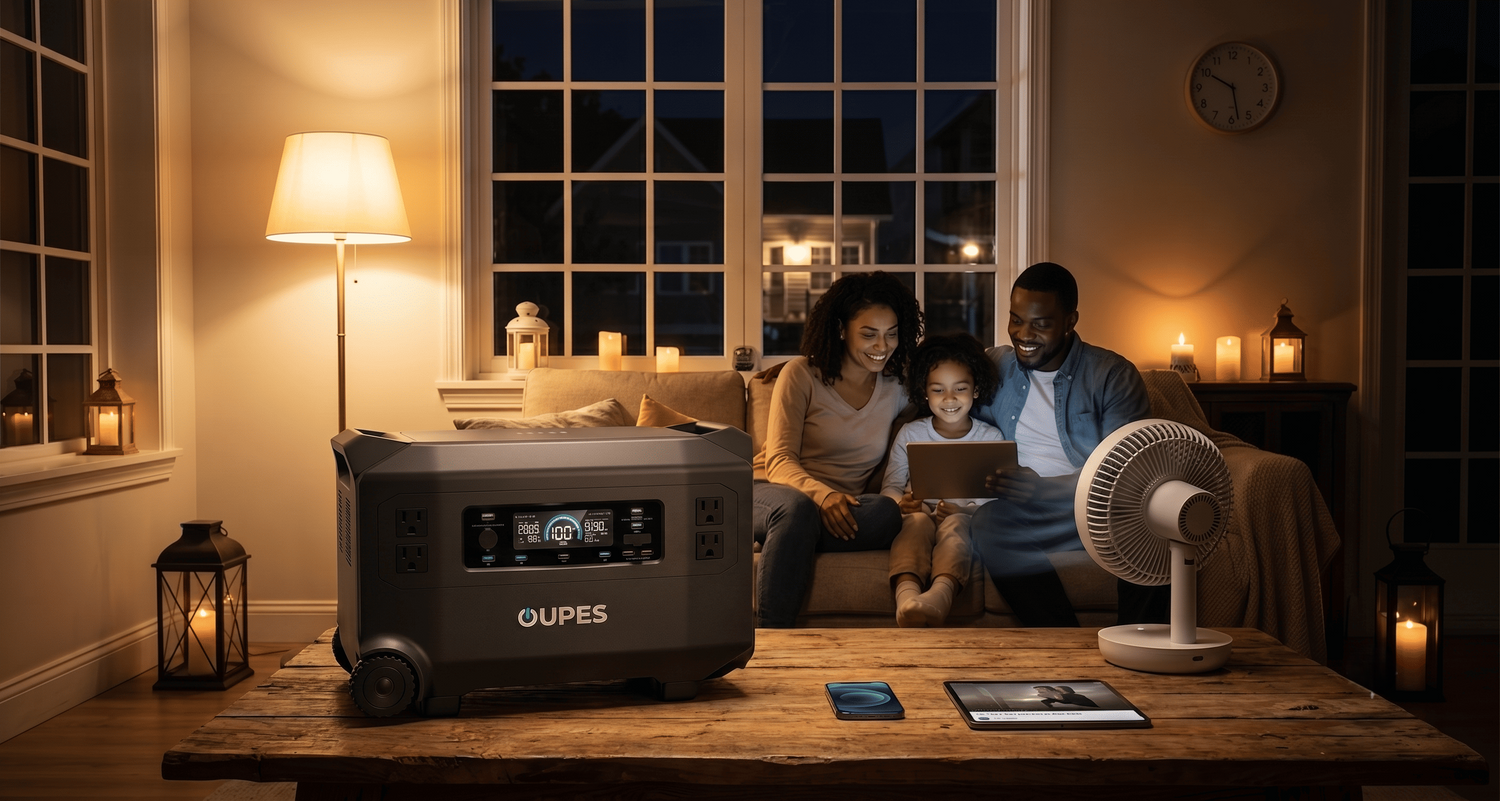
A heat advisory sounds like a weather alert for people, but in real life it is also a warning for the electrical grid. When dangerous heat arrives, millions of homes and businesses increase cooling demand at nearly the same time. Air conditioners, refrigerators, fans, freezers, pumps, and electronics all stay active longer, and that pushes local distribution systems and regional supply harder than usual. If the heat is severe enough, the grid does not just serve more electricity. It has to do so while the infrastructure itself is operating under harsher conditions.
That is why heat-advisory outages happen. They are not random failures. They are usually the result of a pressure cycle: demand spikes, wires and transformers run hotter, equipment loses operating margin, and any weak point in the system becomes more likely to fail. For homeowners, this creates two urgent questions: why does the grid fail during extreme heat, and how can you protect your home when it does?
The answer begins with preparation. A heat-advisory outage is not just a comfort problem. It can affect food safety, communications, home working, refrigeration, medicines, and the basic habitability of indoor space. The best response is not only to understand the grid, but also to know which appliances matter most and how long you can realistically keep them running.
Table of Contents
- What a heat advisory really means
- Why the grid fails during extreme heat
- Why a heat-outage is so dangerous at home
- How to save your home before the outage happens
- How to calculate appliance runtime during an outage
- Runtime table for refrigerators, fans, and portable ACs
- Detailed OUPES options for home heat-outage backup
- What to do when the power actually goes out
- Bottom line
- References
- FAQ
What a heat advisory really means
A heat advisory is not just a reminder that summer feels uncomfortable. It means conditions are dangerous enough that people need to actively protect themselves. During these periods, the biggest household risk is often not heat alone, but heat combined with electrical dependence. Modern homes rely on electricity to remove heat, circulate air, preserve food, power internet connections, charge phones, and support health-related equipment.
That is why a heat advisory should trigger more than hydration and shade. It should also trigger a home-resilience mindset. If the grid becomes unstable, the same appliances that make a home livable in extreme heat may all become unavailable at once. The result is not only inconvenience. It can quickly become a safety issue, especially for children, older adults, pets, and anyone with medical sensitivity to heat.
Why the grid fails during extreme heat
The first reason is simple: cooling demand rises fast. Air conditioning is one of the most electricity-intensive categories in U.S. homes, and household electricity use tends to peak in the hottest months. When outdoor temperatures climb, many homes run cooling equipment for longer cycles or at lower thermostat settings. Even homes without central air often add portable air conditioners, window units, or multiple fans.
The second reason is less obvious but just as important: the grid itself performs worse under heat stress. High temperatures can reduce the efficiency of generation and transmission systems. Power lines heat up and sag more. Transformers and distribution equipment have to carry heavier loads for longer periods. If the heat wave is widespread, neighboring regions may also be under stress, which limits how easily power can be imported from elsewhere.
In practical terms, a heat-advisory outage usually comes from one of three situations:
| Grid Stress Pattern | What Happens | Why It Leads to Outages |
|---|---|---|
| Demand spike | Cooling loads surge across homes and businesses | Supply and local distribution equipment are pushed closer to limits |
| Equipment overheating | Transformers, lines, and local infrastructure run hotter than normal | Weak components are more likely to trip or fail |
| Widespread regional heat | Large areas need more power at the same time | There is less flexibility to balance shortages using neighboring regions |
This is why some outages are brief and local while others become wider and longer. The exact trigger may differ, but the underlying cause is usually the same: extreme heat narrows the system’s operating margin.
Why a heat-outage is so dangerous at home
A winter outage is dangerous because of cold. A heat outage is dangerous because homes can trap heat very quickly, especially in upper floors, apartments, and spaces with direct afternoon sun. The loss of cooling can also combine with the loss of refrigeration, communications, and lighting, which makes the home harder to manage even before it becomes unsafe.
For many households, the biggest immediate problem is not running every appliance. It is maintaining the minimum set of devices that preserve safety and comfort:
- refrigerator or freezer support to protect food and temperature-sensitive items
- fans for air circulation
- portable AC or limited-room cooling when conditions are severe
- router, phone charging, and lighting
- basic work or communication equipment
That is why runtime planning matters so much. During a heat-advisory outage, most people do not need to power the whole house. They need to power the right loads for the right amount of time.
How to save your home before the outage happens
The smartest protection happens before the power fails. Start by lowering heat gain inside the house. Close blinds and curtains on sun-facing windows. Avoid using ovens, dryers, and other heat-producing appliances during the hottest part of the day. Cool the home earlier if possible, so the building starts from a lower indoor temperature before the grid is under maximum strain.
Then reduce unnecessary electrical load. Turn off nonessential devices, lights, and standby equipment. This helps in two ways: it lowers indoor heat generation, and it reduces the size of the backup system you may later need.
Finally, identify your priority loads. In a heat outage, it is usually better to save one room well than the entire house poorly. If your backup energy is limited, a dedicated “cool room” strategy is often more practical than trying to support every appliance.
| Pre-Outage Step | Why It Helps |
|---|---|
| Pre-cool the home | Slows the indoor temperature rise if the outage begins later |
| Close blinds and curtains | Reduces solar heat gain through windows |
| Charge phones and batteries | Protects communications and alerts |
| Reduce nonessential loads | Lowers heat generation and conserves backup energy |
| Choose priority appliances | Makes backup runtime planning realistic and targeted |
How to calculate appliance runtime during an outage
For practical backup planning, a useful formula is:
Estimated Runtime (hours) = Battery Capacity × 0.8 ÷ Appliance Wattage
The 80% factor is a realistic planning rule. It helps account for inverter losses, system overhead, heat conditions, and the fact that real-world output is rarely the same as ideal label math.
This method works best for constant or near-constant loads. But for appliances such as refrigerators and portable air conditioners, actual runtime can be longer than the simple formula suggests because compressors usually cycle on and off instead of drawing full power every minute. That means the tables below should be treated as illustrative planning estimates, not guaranteed run times.
Runtime table for refrigerators, fans, and portable ACs
The table below uses four OUPES models and three practical appliance assumptions:
- Refrigerator: 150W planning load
- Fan: 50W planning load
- Portable AC: 700W for light cooling support, 1000W for heavier cooling support
These are simplified planning figures for outage use. Real refrigerators and portable ACs usually cycle, so actual runtime may be longer than the continuous-draw estimate.
| OUPES Model | Rated Capacity | Usable Capacity (80%) | Refrigerator 150W | Fan 50W | Portable AC 700W | Portable AC 1000W |
|---|---|---|---|---|---|---|
| Mega 1 Lite | 1024Wh | 819Wh | 5.46 hours | 16.38 hours | 1.17 hours | 0.82 hours |
| Mega 2 Pro | 2048Wh | 1638Wh | 10.92 hours | 32.77 hours | 2.34 hours | 1.64 hours |
| Exodus 2400 | 2232Wh | 1786Wh | 11.90 hours | 35.71 hours | 2.55 hours | 1.79 hours |
| Guardian 6000 | 4608Wh | 3686Wh | 24.57 hours | 73.73 hours | 5.27 hours | 3.69 hours |
That table makes the trade-offs clear. A compact power station can keep a fan running for a long time, but portable AC support drains battery much faster. Refrigerators fall somewhere in between, though in real usage they often cycle and may stretch farther than the continuous-load estimate suggests.
To make the table more practical, here is how the appliance categories usually fit a real heat-outage plan:
| Appliance | Best Use in a Heat Outage | Backup Strategy |
|---|---|---|
| Refrigerator | Food safety and medicine storage | Prioritize door discipline and intermittent support |
| Fan | Air circulation and comfort | Best runtime-per-watt option during extended outages |
| Portable AC | Cooling one room or one priority area | Use selectively rather than trying to cool the entire house |
Detailed OUPES options for home heat-outage backup
OUPES Mega 1 Lite: compact essentials and fan-first backup
The OUPES Mega 1 Lite is listed at 1,024Wh capacity with a 2,000W pure sine wave inverter, 4,500W surge, 800W max solar input, and fast AC charging. OUPES also highlights more than 3,500 cycles to 80% and a listed weight of 26.8 lbs. It is the most portable option in this group and is best suited to communications, lighting, fans, laptops, and shorter refrigerator support windows.[1][2]
For a heat-outage scenario, Mega 1 Lite works best when your goal is to preserve a small set of critical loads rather than full-room cooling for long periods. It is especially practical if your heat strategy is built around fans, phones, routers, and selective appliance use.
OUPES Mega 2 Pro: the strongest all-around middle ground
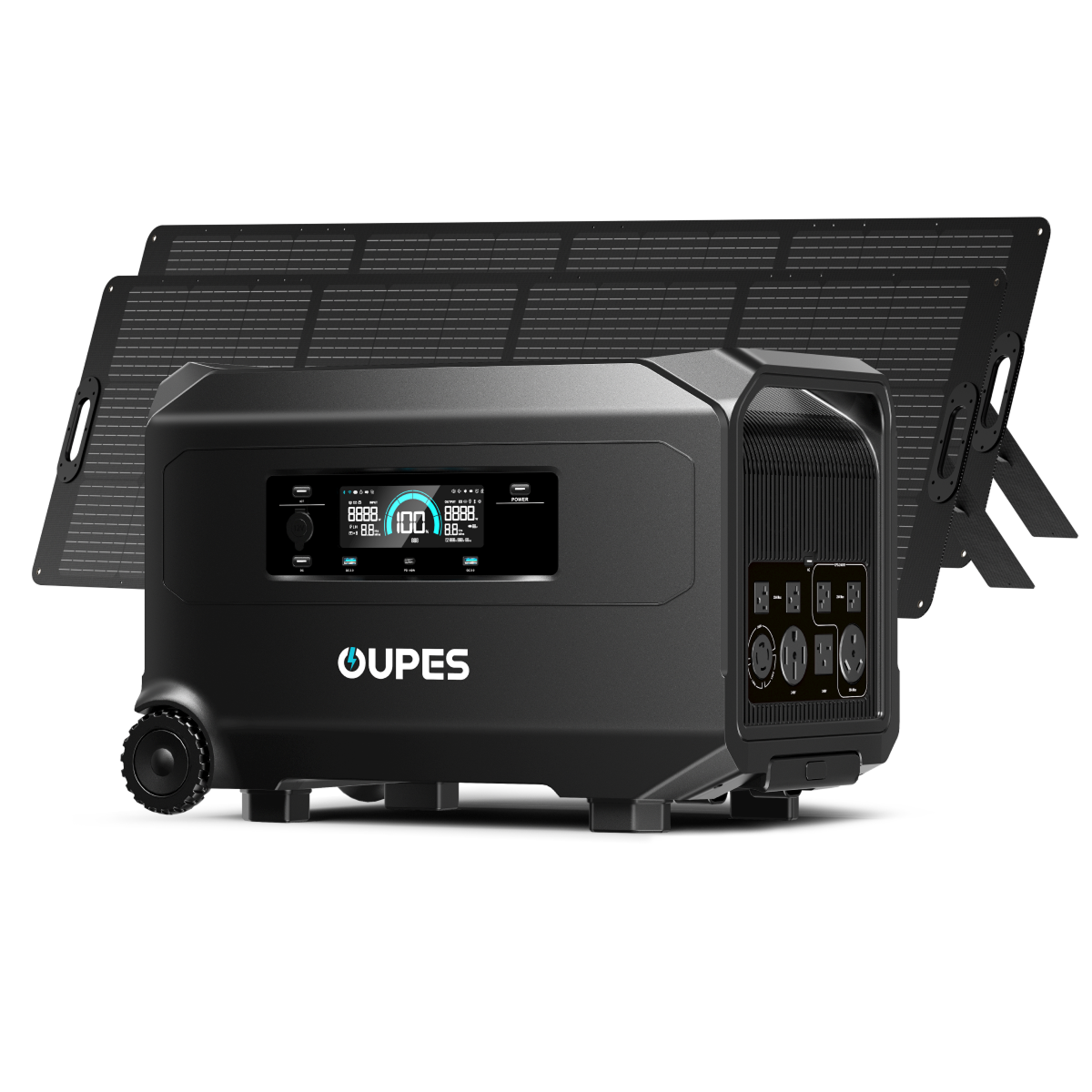
The OUPES Mega 2 Pro is listed at 2,048Wh capacity, 2,500W output, and 3,600W Boost, with expansion up to 10.24kWh. The product page also highlights fast recharging and stronger DC capability for higher-draw applications. This makes it a much better fit for users who want a larger refrigerator window, longer fan support, or limited-room portable AC use without stepping into a much larger platform.[3]
In practical home-backup terms, Mega 2 Pro is the best fit for many households because it balances output, battery size, and flexibility. It is large enough to feel genuinely useful during a heat emergency, but still much easier to place and move than a heavy dual-voltage system.
OUPES Exodus 2400: a runtime-first balance
The OUPES Exodus 2400 is listed at 2,232Wh capacity, 2,400W AC pure sine wave output, 2,600W Boost Mode, more than 3,500 cycles to 80%, and a listed weight of 45.2 lbs. For homeowners who value more stored energy than Mega 2 Pro but still want a manageable mid-size unit, Exodus 2400 is a strong “less compromise” option for heat-advisory outages.[4]
It is especially well suited when the heat-outage strategy includes multiple overlapping needs such as router support, fan runtime, fridge protection, and a longer resilience window overnight.
OUPES Guardian 6000: the serious cooling and home-backup platform
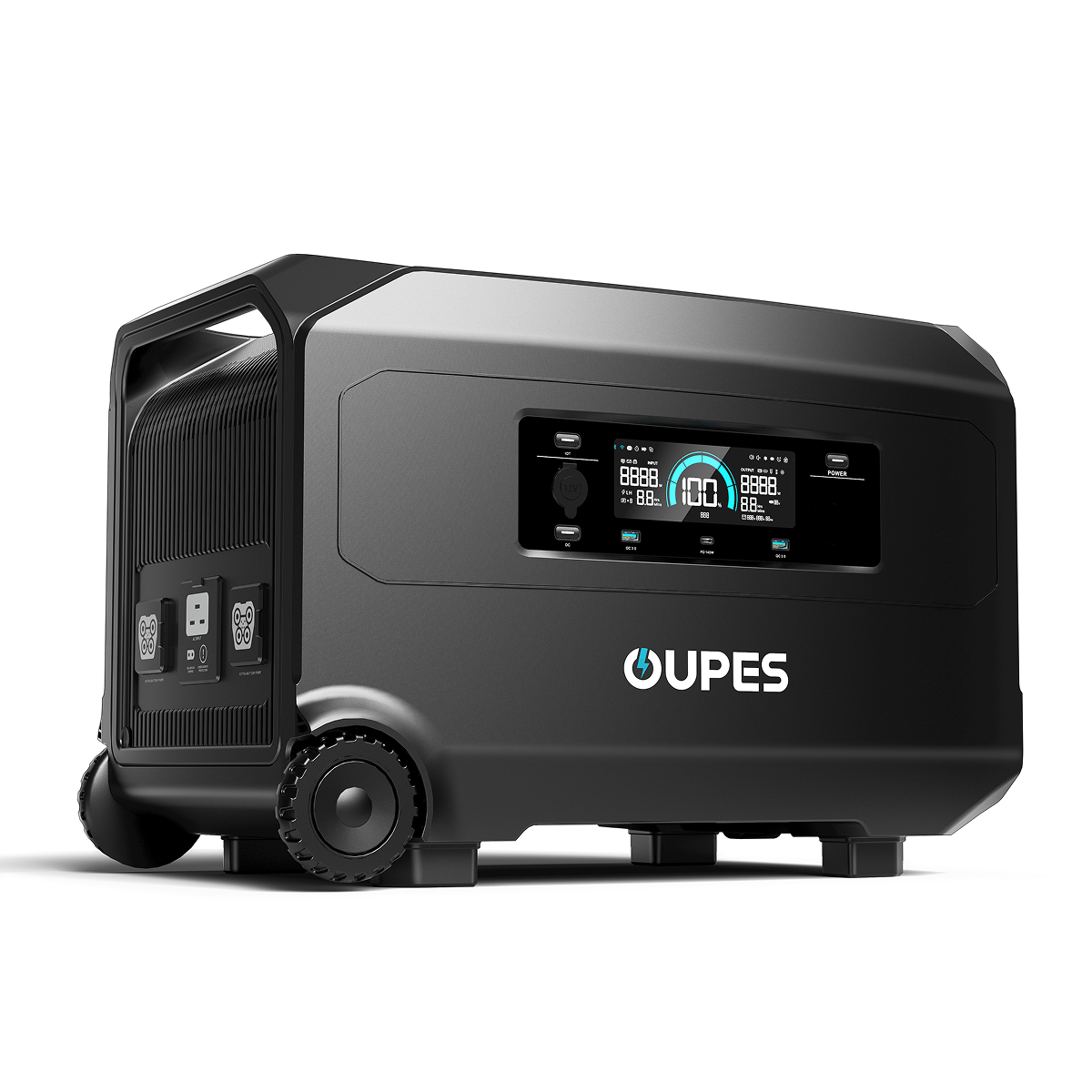
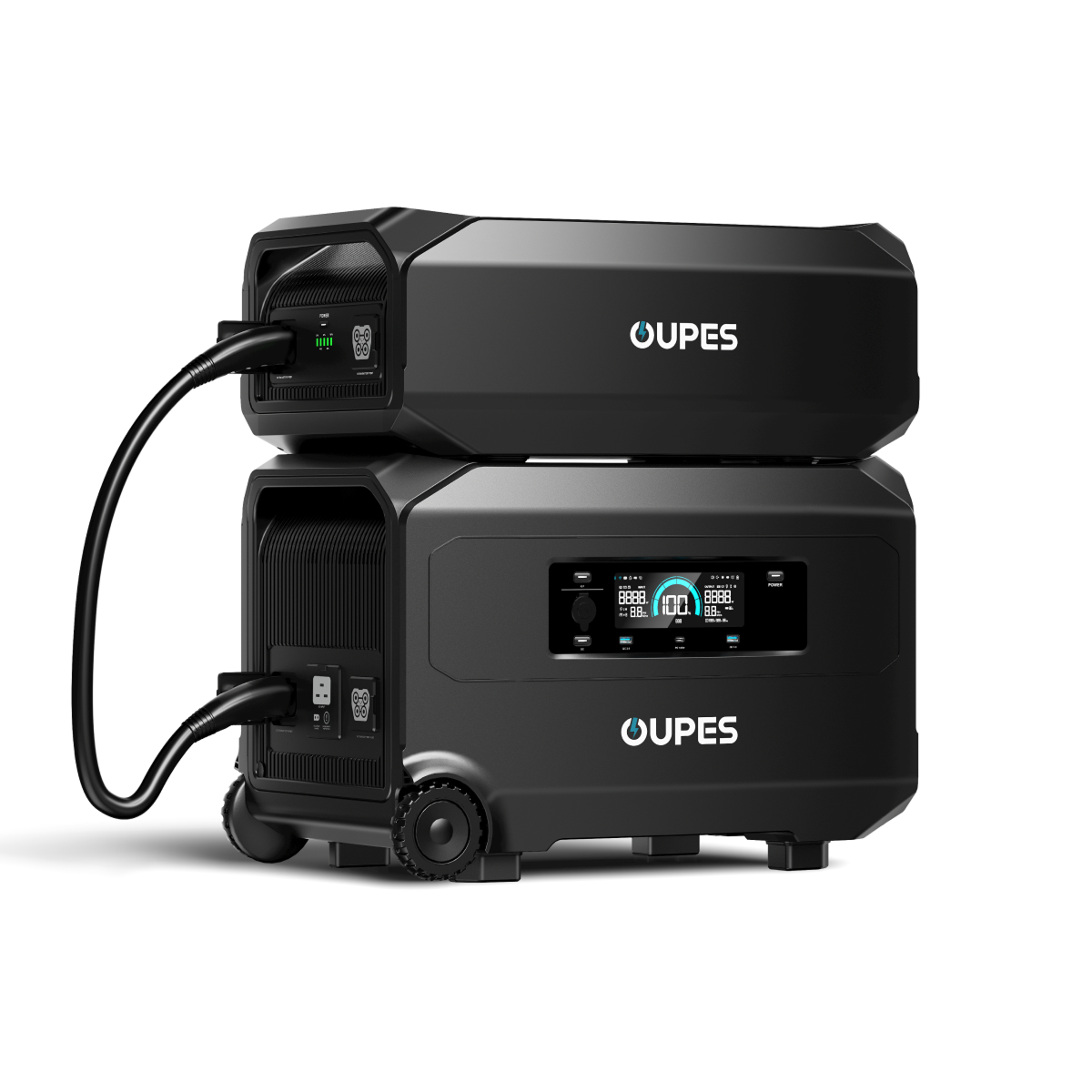
The OUPES Guardian 6000 is listed at 4,608Wh basic capacity, expandable to 41.4kWh, with 240V/6,000W and 120V/3,600W output in one unit. OUPES also lists more than 4,000 cycles to 80%, strong solar input capability, and fast 240V 3,600W AC charging. This places it in a completely different backup tier from the other three models.[5]
Guardian 6000 is the option for households that do not want just a minimal outage plan. It is the strongest choice here for serious refrigeration support, longer portable AC windows, and broader home resilience where cooling, food safety, and electrical continuity all matter at once.
What to do when the power actually goes out
Once the outage begins, the goal is to use your backup energy intelligently. Keep refrigerator and freezer doors closed as much as possible. Run fans where people actually are, not in empty rooms. If you have portable AC support, use it to protect one room rather than trying to cool the whole house. Preserve phone battery and communications. And if the home is becoming dangerously hot, relocate vulnerable people to a safer cooled location instead of relying only on equipment.
A good heat-outage response is not about pretending the home is unaffected. It is about stretching limited energy into the highest-value uses.
Bottom line
Heat-advisory outages happen because extreme heat stresses the grid from both sides at once: demand rises as cooling loads surge, while the grid itself runs under worse operating conditions. For homeowners, the smartest response is to prepare early, reduce indoor heat gain, identify the appliances that matter most, and use a runtime-based backup plan instead of guessing.
The runtime table above makes the priority clear. Fans deliver the longest comfort support per watt. Refrigerators are essential but need disciplined use. Portable AC can make a huge difference, but it consumes battery quickly and should be used strategically. For some homes that means a compact system like Mega 1 Lite. For many, Mega 2 Pro or Exodus 2400 is the better balance. For serious resilience and cooling support, Guardian 6000 is the strongest option of the group.
References
- OUPES Mega 1 Lite Official Product Page
- OUPES Mega 1 Lite — capacity, output, fast charging, solar input, and cycle details
- OUPES Mega 2 Pro Official Product Page
- OUPES Exodus 2400 Official Product Page
- OUPES Guardian 6000 Official Product Page
- National Weather Service — Understanding Heat Alerts
- U.S. Department of Energy — Extreme heat and grid strain
- U.S. Energy Information Administration — Energy use in homes
- U.S. Energy Information Administration — Cooling electricity use
- Ready.gov — Be Prepared for a Power Outage
FAQ
1. Why do heat advisories increase the risk of power outages?
Because extreme heat raises cooling demand sharply while also making grid infrastructure operate under more stressful conditions.
2. Which appliance should I prioritize during a heat outage?
That depends on your household, but in many homes the first priorities are refrigeration, fans, communications, and one limited cooling strategy rather than whole-house comfort.
3. Why does a fan run so much longer than a portable AC?
Because fans usually draw far less power. A portable AC removes heat but uses much more electricity to do it, so battery runtime falls much faster.
4. Are the runtime numbers in the table exact?
No. They are planning estimates based on continuous draw and the 80% usable-capacity rule. Real refrigerators and portable ACs often cycle, so actual runtime can be longer.
5. Is Mega 1 Lite enough for a refrigerator?
For short support windows, yes, it can help. But for longer refrigerator coverage during a heat event, larger-capacity models such as Mega 2 Pro, Exodus 2400, or Guardian 6000 are more forgiving.
6. Which OUPES model is best for portable AC backup?
For short or selective cooling support, Mega 2 Pro and Exodus 2400 are much more realistic than a compact unit. For longer cooling windows and broader backup plans, Guardian 6000 is the strongest option.
7. What is the biggest mistake people make during heat-related outages?
Trying to power everything at once instead of prioritizing the appliances that matter most and using backup energy strategically.

Leave a comment
This site is protected by hCaptcha and the hCaptcha Privacy Policy and Terms of Service apply.