




Table of Contents
- TL;DR / Key Takeaways
- Understand Winter Weather Alerts (and why they matter)
- Top Winter Outage Risks You Can Actually Plan For
- How to Right-Size a Portable Power Station for Winter
- Realistic Runtime Planning in Cold Weather
- Can Solar Help in Winter? Yes—with the right setup
- Comparison: Portable Power Station vs Gas Generator (Winter Use)
- Cold-Weather Setup, Placement, and Safety Checklist
- Build a 72-Hour Home Resilience Kit (power included)
- Why consider OUPES for winter readiness
- FAQ
TL;DR / Key Takeaways
- Winter weather alerts (Watch, Warning, Advisory) signal different risk levels. Learn the differences and act early—especially for power backup.
- Most winter outages stem from heavy snow/ice loading and wind. A portable power station keeps critical loads (heat pumps on low, space heaters intermittently, fridge, phones) running safely indoors.
- Right-size by watts (instant power), watt-hours (energy), and surge. In cold weather, expect reduced usable capacity—plan 20–30% headroom.
- Solar still works in winter, but days are shorter and the sun’s lower. Angle panels steeply, keep them clear of snow, and add capacity to compensate.
- Follow generator/backup safety guidance: never run combustion engines indoors; place any fuel generators 20+ feet away. Battery power stations can be used indoors.
- Build a 72-hour kit: water, food, meds, light, power, and a communication plan.
Understand Winter Weather Alerts (and why they matter)
“Winter weather advisory” doesn’t mean “small deal.” Advisory, Watch, and Warning each carry different lead times and severity. A Winter Storm Warning often means heavy snow or damaging ice is imminent; a Blizzard Warning signals prolonged whiteout conditions with strong winds. These alerts correlate strongly with outage risk—ice adds weight to lines and trees; wind brings branches down. Track alerts early to pre-charge your power station and top up any extra batteries.
Top Winter Outage Risks You Can Actually Plan For
1) Ice Accumulation
Even a quarter-inch of glaze can snap branches and down lines. Expect longer restoration times if roads are iced over—utilities prioritize safety first.
2) High Wind + Snow Loading
Heavy, wet snow plus gusts creates sustained stress on distribution infrastructure and trees. That’s when multi-hour or multi-day outages become more likely—historically reflected in reliability indices like SAIDI/SAIFI (average duration/frequency of outages).
3) Extreme Cold
Cold snaps bring peak demand (heating) while hampering crews and equipment. Keep essentials powered indoors with battery storage—no exhaust, no fumes.
How to Right-Size a Portable Power Station for Winter
Choosing capacity starts with two numbers: W (watts) = how much power your appliances draw at once; Wh (watt-hours) = how long you can run them. In winter, add a buffer because batteries deliver less in the cold and because heating loads spike.
Step 1 — List critical loads
- Heat: space heater (intermittent), heated blanket, or mini-split (low setting/eco mode)
- Safety & comms: modem/router, phone charging, lights, CO detector
- Food: refrigerator/freezer (duty cycle ~30–40%)
- Medical devices: CPAP, nebulizer (if applicable)
Step 2 — Sum watts and multiply for surge
Example concurrent draw: fridge (150 W avg), LED lights (20 W), router (10 W), phone/laptop charging (60 W), space heater cycling (750–1500 W). You might see 1,000–1,700 W peaks. Choose an inverter rating comfortably above that and ensure surge handling.
Step 3 — Translate to energy (Wh) for hours of coverage
If your average draw is 400 W (fridge cycling + lights + router + device charging), a 2,000 Wh station might provide ~4 hours at room temp. In cold (e.g., near freezing), plan a 20–30% de-rate. That same pack might deliver closer to ~3 hours unless kept warm.
Step 4 — Add headroom for cold & inefficiencies
Keep the power station indoors (above freezing) to maintain usable capacity and higher charging efficiency.
Realistic Runtime Planning in Cold Weather
Intermittent heating is your friend. Rather than running a 1500 W heater continuously, heat a small, well-insulated room to a safe temperature, then coast while wearing layers. A heated blanket (typically 60–120 W) plus weather-stripping and draft stoppers can dramatically reduce energy draw. For refrigeration, keep doors closed and consider moving the unit to a cooler space to reduce duty cycle (but not below safe food storage limits).
Sample winter runtime snapshot (illustrative)
- 2,000 Wh station + 750 W space heater (cyclic use): ~1.5–2.5 hours of heater runtime spread over several hours of comfort if you zone heat a small room.
- Fridge/freezer: often 50–80 W average across the day (short compressor bursts). A 2,000 Wh station could cover many hours of refrigeration + lights/comms.
- Networking + lighting (50–80 W total): full evening coverage on modest capacity.
Tip: pre-warm the room while grid power is available, then switch to battery power to maintain temperature. Use door snakes, towels at thresholds, and cover north-facing windows to cut losses.
Can Solar Help in Winter? Yes—with the right setup
Shorter days and lower sun angles reduce harvest, but solar still works in winter if you optimize placement:
- Steeper tilt (often close to latitude + 10–15°) improves low-sun capture.
- Clear snow fast; even partial coverage dramatically cuts output.
- Avoid shading from trees/buildings that lengthen winter shadows.
- Over-paneling: use more watts of PV to offset reduced irradiance.
Pairing a portable power station with foldable or rigid panels lets you trickle-recharge during daylight, then use stored energy at night. In extended storms, rely on conservation (zoned heating, LED lighting) to stretch reserves.
Comparison: Portable Power Station vs Gas Generator (Winter Use)
| Factor | Portable Power Station (Battery) | Gas Generator (Combustion) |
|---|---|---|
| Indoor use | Safe for indoor use (no exhaust) | Never indoors; place 20+ ft away to avoid CO poisoning |
| Cold start | Instant; keep unit warm for best capacity | Hard starts in freezing temps; fuel issues and carb icing possible |
| Noise | Very low (silent except for fans) | Loud; can disturb neighbors/rest |
| Maintenance | Minimal (battery health, firmware) | Regular oil, filters, fuel stabilization |
| Fuel logistics | Recharge from grid/solar/car | Store gasoline/propane safely; supply disruptions common in storms |
| Emissions | Zero at point of use | CO/NOx emissions; strict placement rules |
| Best use | Indoor critical loads, medical devices, electronics | Whole-home high-draw loads when used outdoors safely |
Cold-Weather Setup, Placement, and Safety Checklist
Placement & Ventilation
- Keep battery power stations indoors above freezing; avoid placing them directly on concrete floors—use a mat.
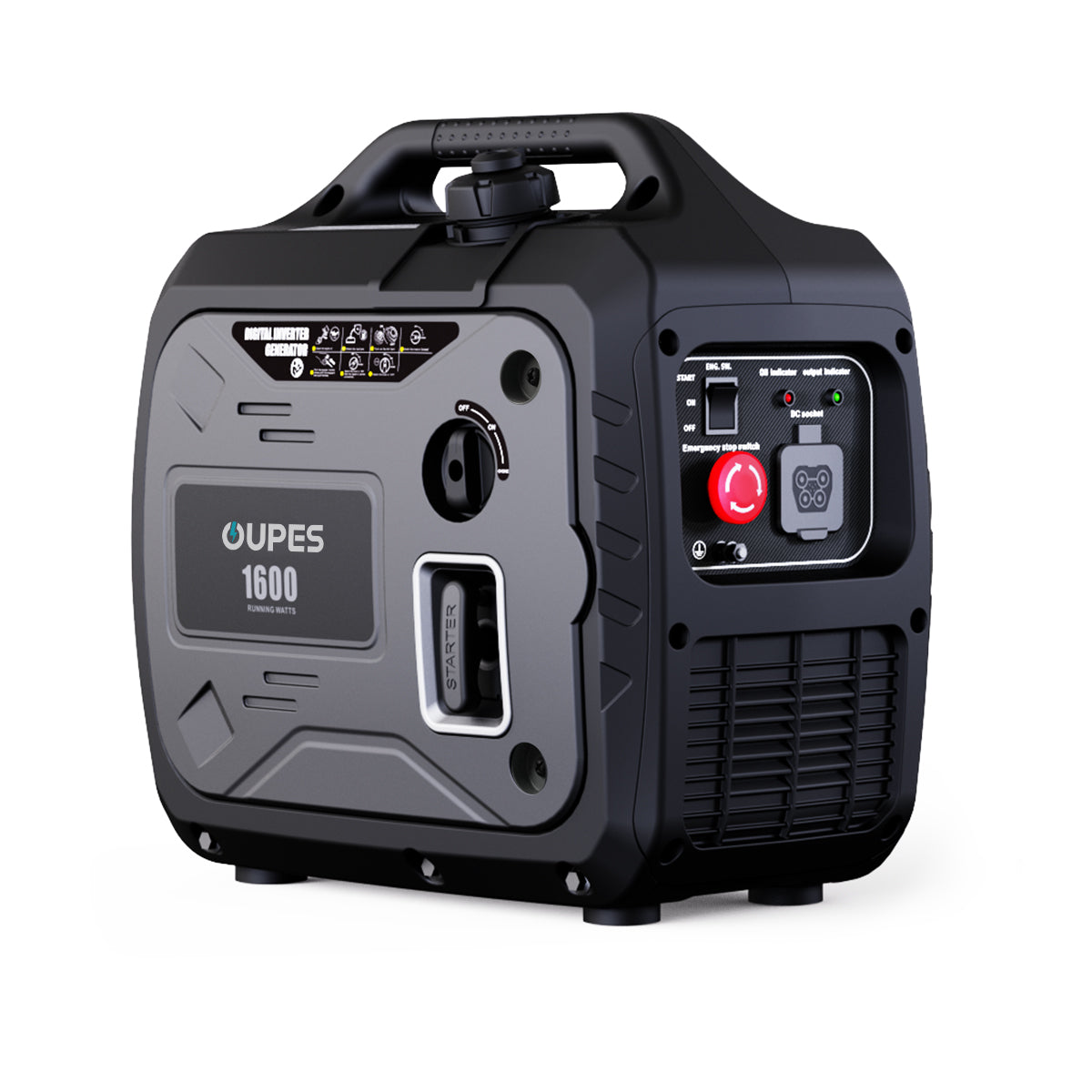
- If you also own a fuel generator, run it outside and 20+ feet from doors/windows/vents; never in garages, basements, or enclosed porches.
Cord Management
- Use heavy-duty, outdoor-rated cords for any devices run from outdoors to indoors; avoid backfeeding outlets.
- For battery stations, plug appliances directly or through manufacturer-rated power strips.
CO & Fire Safety
- Install CO detectors with battery backup; test monthly.
- Keep a Class ABC fire extinguisher handy.
Grid Restoration Expectations
Utilities report reliability using SAIDI/SAIFI (average outage duration/frequency). Major winter storms push these indices higher—plan for multi-hour outages and possible multi-day restorations in severe events.
Build a 72-Hour Home Resilience Kit (power included)
Preparedness agencies recommend water, shelf-stable food, meds, light, and communication tools for at least three days. Add a charged portable power station and spare cables so you can keep essentials running.
- Water: ~1 gallon per person per day; pet water too
- Food: 3-day supply; manual can opener
- Medications & first aid; backup copies of prescriptions
- Lighting: headlamps/flashlights + extra batteries
- Power: portable power station + solar panels or car charging cable
- Comms: battery/hand-crank radio; phone power budget in outage plan
- Warmth: blankets, sleeping bags, layered clothing
Why consider OUPES for winter readiness
OUPES portable power stations use LiFePO₄ battery chemistry (LFP) known for stability at elevated temperatures and long cycle life. For winter, the key is indoor-safe power, fast AC charging before a storm, optional solar input to extend autonomy, and uninterruptible/backup features for sensitive electronics. If your priority loads include a refrigerator, lighting, networking, CPAP, and intermittent space heating in a small room, choose an inverter sized above your peak watts (often 1500–2500 W for typical “critical loads”) and energy capacity that matches your outage risk window (e.g., 1–3 kWh for overnight resilience; 3–5+ kWh for multi-day events with conservation).
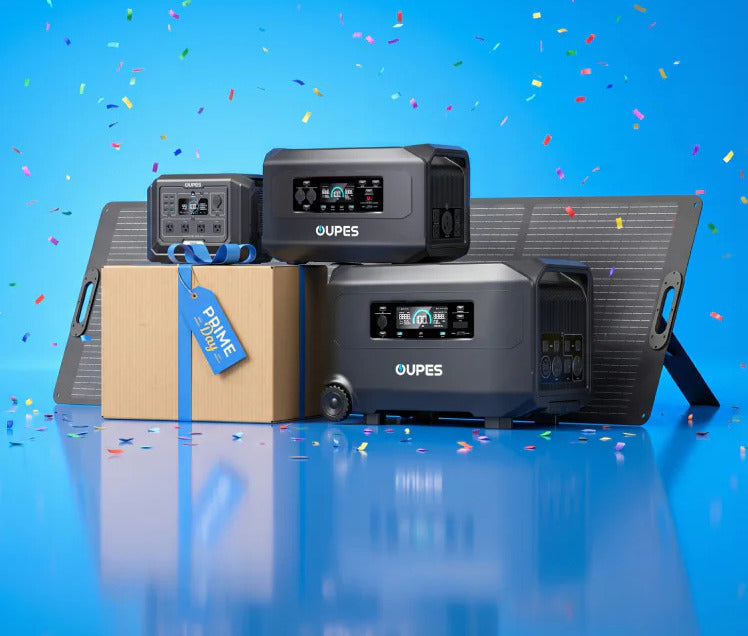
Explore the OUPES Mega Series for Reliable Winter Backup
When selecting a portable power station for cold-weather readiness, capacity and reliability matter most. OUPES offers a Mega Series lineup tailored to different household and outdoor needs:
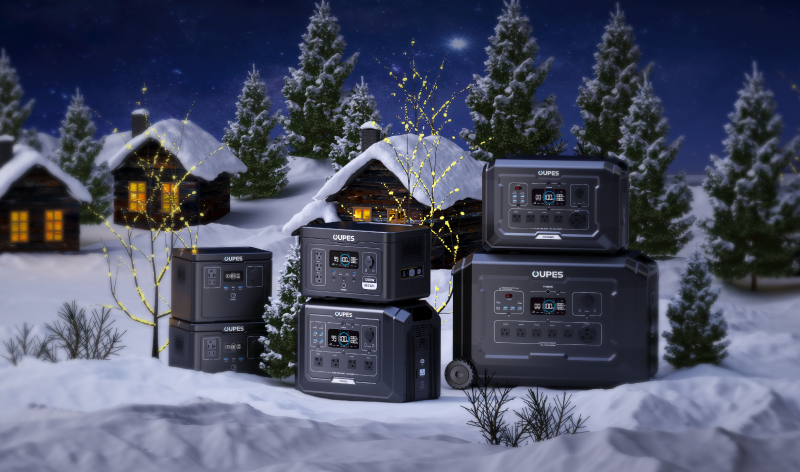
- OUPES Mega 2 — Compact yet powerful, featuring a 2048Wh capacity and 2500W output, ideal for keeping your fridge, router, and lighting on during short-term outages.
- OUPES Mega 3 — Designed for longer blackouts, with 3072Wh capacity and 3600W output. It can expand up to 15.36kWh with extra batteries, supporting multiple appliances simultaneously.
- OUPES Mega 5 — The ultimate home backup solution, offering 5120Wh capacity and 4000W (7000W surge) output. Perfect for maintaining heat, refrigeration, and essential electronics throughout multi-day winter outages.
Each model uses LiFePO₄ batteries for safety, long cycle life, and excellent cold-weather performance. Combined with solar panels, these units can form a sustainable energy ecosystem for off-grid or emergency use.
FAQ
Will a portable power station run a space heater?
Yes—intermittently. A typical heater draws 750–1500 W. Check your station’s continuous and surge ratings. For longer comfort, heat a small, sealed room, use a heated blanket, and rotate the heater on/off to conserve energy.
Can I charge the power station and use it at the same time during an outage?
Many models allow pass-through or UPS/EPS-style operation. When safe grid power returns (or when solar is available), they can recharge while supplying loads. Always follow the user manual for power limits.
Does solar work in winter?
Yes, though harvest is reduced. Use a steeper tilt, keep panels clear of snow, and add panel wattage to offset shorter days. Expect solar to “extend” battery life rather than fully replace high-draw heating loads in mid-winter.
How long do outages typically last in severe winter storms?
It varies by region and storm intensity. Reliability metrics (SAIDI/SAIFI) summarize average outage duration/frequency annually, but major storms can push well beyond averages—plan for 24–72 hours of self-reliance.
Is it safe to use a gas generator in a garage with the door open?
No. Never run combustion generators indoors or near openings. Operate them outside at least 20 feet away from windows/doors/vents to prevent carbon monoxide buildup. Battery power stations are safe for indoor use.
What should be in my winter emergency kit besides power?
Water, food, meds, warm clothing/blankets, lights, first aid, and a communications plan. Keep the power station charged, with spare cables and a way to recharge (AC, car, or solar).

Leave a comment
This site is protected by hCaptcha and the hCaptcha Privacy Policy and Terms of Service apply.