




Table of Contents
- Why Flood Preparedness Matters (With Official Data)
- Understanding Your Flood Risk
- Flood Preparedness Checklist (Before the Flood)
- What to Do During a Flood
- Flood Recovery Checklist (After the Flood)
- Backup Power Strategy for Flood Emergencies
- OUPES Power Station Recommendations
- Runtime & Scenario Comparison
- FAQ
Why Flood Preparedness Matters (With Official Data)
Flooding is the most common natural disaster in the United States. According to the Federal Emergency Management Agency (FEMA), floods account for the majority of disaster declarations nationwide. Even more important, FEMA reports that just one inch of floodwater can cause up to $25,000 in property damage.
The National Weather Service (NWS) also emphasizes that more than 50% of flood-related fatalities occur when people attempt to drive through flooded roads. These statistics highlight a key reality: floods are not just inconvenient—they are life-threatening and financially devastating.
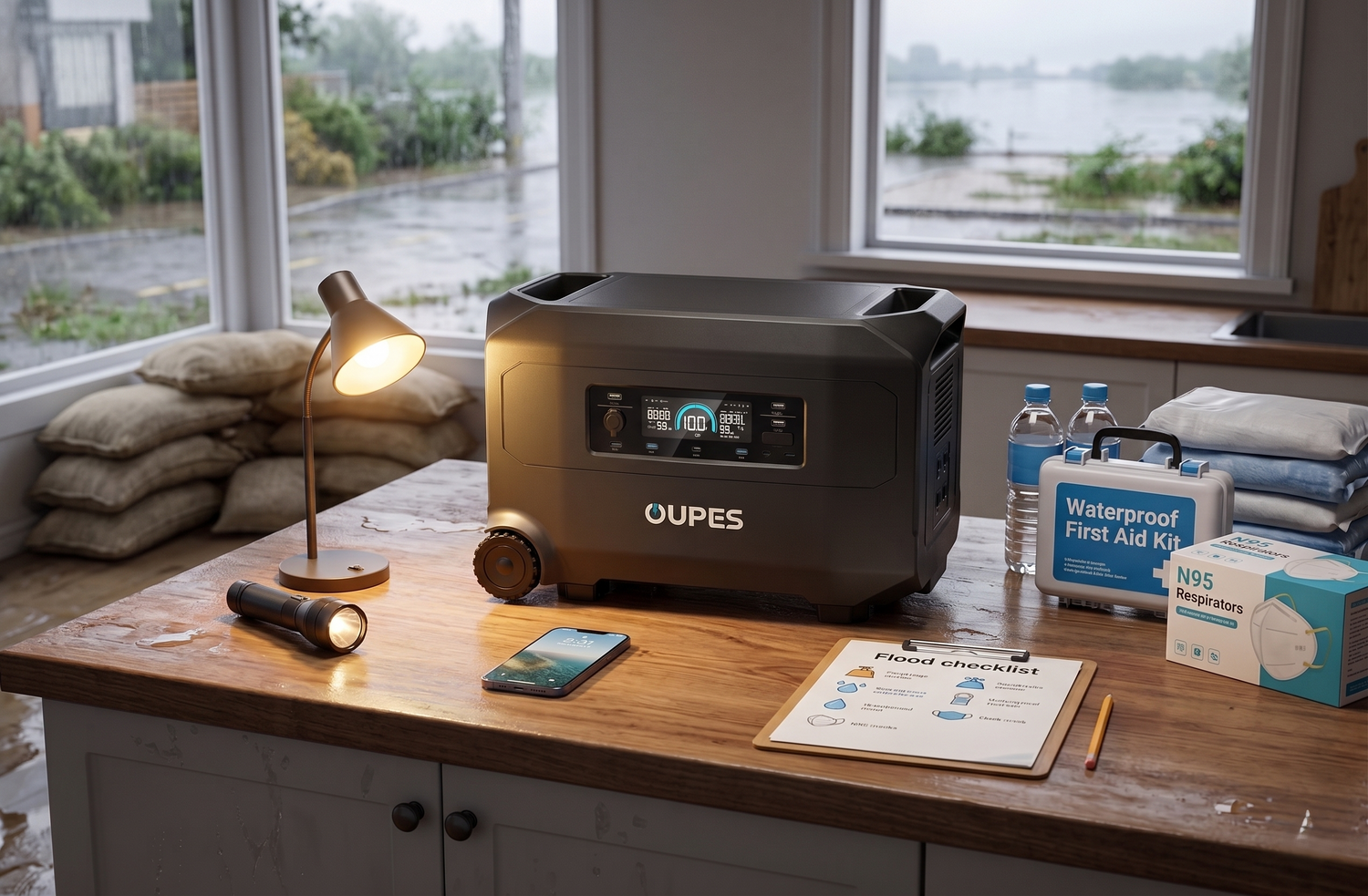
From a preparedness perspective, most users underestimate one critical factor: power loss. Floods frequently damage electrical infrastructure, leaving homes without electricity for extended periods. This directly affects refrigeration, communication, lighting, and medical equipment—making backup power an essential part of any flood preparedness checklist.
Understanding Your Flood Risk
Before preparing, you need to understand your exposure. FEMA flood maps and local government resources can help determine whether you live in a high-risk flood zone.
- Coastal areas: High risk from hurricanes and storm surges
- Urban areas: Flash floods due to poor drainage
- Rural areas: River overflow and dam failures
Even if you are outside a designated high-risk zone, FEMA notes that over 20% of flood insurance claims come from moderate-to-low-risk areas. This means preparedness should not be limited to “high-risk” households.
Flood Preparedness Checklist (Before the Flood)
1. Build a Scenario-Based Emergency Plan
Your plan should address multiple scenarios: sudden flash floods, slow-rising floods, and evacuation situations. Include:
- Evacuation routes and backup routes
- Emergency contact list
- Meeting points for family members
- Special plans for children, elderly, and pets
2. Prepare a 72-Hour Emergency Supply Kit
According to Ready.gov, every household should prepare at least three days of supplies. However, in flood scenarios, 5–7 days is more realistic due to infrastructure disruption.
| Category | Recommended Items |
|---|---|
| Water | 1 gallon per person per day |
| Food | Non-perishable items (canned, dry food) |
| Medical | First aid kit, prescription medications |
| Tools | Flashlights, batteries, multi-tool |
| Power | Portable power station, charging cables |
3. Protect Your Home Infrastructure
- Install backflow valves to prevent sewage backup
- Elevate electrical panels and appliances
- Seal walls and foundations
- Clear gutters and drainage systems
4. Prepare for Extended Power Outages
The U.S. Department of Energy highlights that severe storms and flooding are leading causes of prolonged outages. In many cases, restoration can take several days depending on infrastructure damage.
This is why backup power is no longer optional—it is a core survival tool. Without it, even basic needs like lighting, communication, and food preservation become difficult.
What to Do During a Flood
1. Follow Official Alerts
Always follow instructions from local authorities and the National Weather Service. Do not rely on assumptions—flood conditions can change rapidly.
2. Avoid Floodwaters
The CDC warns that floodwater may contain hazardous materials, including sewage, chemicals, and debris. Avoid all direct contact whenever possible.
3. Move to Higher Ground
If evacuation is not possible, move to the highest level of your home, but avoid enclosed attics where you could become trapped.
4. Maintain Power for Critical Devices
Use portable power stations to keep essential devices running:
- Phones for emergency communication
- Medical devices (CPAP, oxygen concentrators)
- Lighting for safety
Flood Recovery Checklist (After the Flood)
1. Inspect Before Entering
Check for structural damage, gas leaks, and electrical hazards before entering your home.
2. Document Damage
FEMA recommends documenting all damage before cleanup for insurance purposes.
3. Clean and Sanitize Thoroughly
The CDC advises disinfecting all surfaces and discarding contaminated food and water.
4. Restore Power Gradually
Avoid reconnecting to the grid until it is confirmed safe. Portable power stations can provide stable electricity during this transition period.
Backup Power Strategy for Flood Emergencies
A well-prepared flood plan includes a clear energy strategy. Unlike fuel generators, portable power stations are:
- Safe for indoor use (no emissions)
- Quiet and maintenance-free
- Rechargeable via solar panels
They are particularly effective in flood scenarios where fuel access is limited or unsafe.
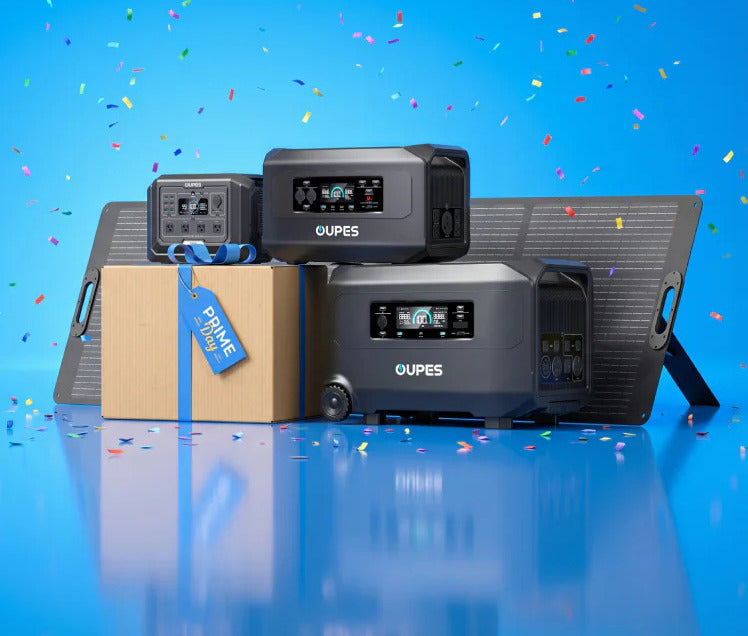
OUPES Power Station Recommendations
Different flood scenarios require different levels of power capacity and output. Below is a structured breakdown:
| Model | Capacity | Output | Best Use Case |
|---|---|---|---|
| Exodus 1200 | 992Wh | 1200W | Emergency kit, short outages |
| Mega 2 | 2048Wh | 2500W | Home backup (fridge, router, lights) |
| Mega 5 | 5040Wh | 4000W | Multi-day outages, family use |
| Guardian 6000 | 4608Wh | 6000W (240V) | Whole-home backup, heavy appliances |
Why These Models Matter in Flood Scenarios
Flood outages are not just about duration—they are about uncertainty. You may not know how long restoration will take, so choosing scalable and reliable capacity is critical.
- Exodus 1200: Ideal for emergency kits and mobility-focused users
- Mega 2: Balanced solution for most households
- Mega 5: High-capacity solution for extended outages
- Guardian 6000: Supports 240V appliances and full-home scenarios
Runtime & Scenario Comparison
Runtime estimates are calculated using 80% usable capacity for real-world accuracy.
| Device | Power | Mega 2 | Mega 5 |
|---|---|---|---|
| Refrigerator | 150W | ~10.9 hrs | ~26.8 hrs |
| WiFi Router | 10W | ~163 hrs | ~400 hrs |
| CPAP | 40W | ~41 hrs | ~100 hrs |
These estimates align with real-world emergency usage, helping users understand how long critical devices can remain operational.
FAQ
1. What is the most important item in a flood emergency kit?
Water, followed by backup power and communication tools.
2. How long do flood power outages typically last?
From several hours to multiple days, depending on infrastructure damage.
3. Can portable power stations replace generators?
Yes, especially for indoor-safe, low-noise emergency use.
4. What size power station is best for flood preparedness?
2000Wh+ is recommended for home backup scenarios.
5. Is solar charging practical after a flood?
Yes, especially during recovery when sunlight is available.
6. Can a power station run medical devices?
Yes, most models support CPAP and similar devices.
7. How do I protect electronics from flood damage?
Store them in waterproof containers and elevated locations.
8. Should I evacuate or stay during a flood?
Always follow official evacuation orders.

Leave a comment
This site is protected by hCaptcha and the hCaptcha Privacy Policy and Terms of Service apply.