




Table of Contents
- What Makes a Great Easter Egg Hunt?
- Step-by-Step Planning Guide
- Creative Ideas to Make It More Fun
- Safety Tips You Should Not Ignore
- How to Prepare Equipment and Power Needs
- Recommended Outdoor Power Solutions
- FAQ
What Makes a Great Easter Egg Hunt?
An Easter egg hunt is more than just hiding eggs—it is an interactive outdoor experience that combines play, exploration, and family bonding. A well-organized hunt creates excitement, encourages movement, and builds lasting memories.
According to event planning guides, a successful Easter egg hunt typically includes:
- Clearly defined play areas
- Age-appropriate difficulty levels
- Enough eggs per participant
- Safe and supervised environment
Experts suggest preparing approximately 12 eggs per child for optimal engagement. This ensures everyone has a fair and enjoyable experience.
Step-by-Step Planning Guide
1. Choose the Right Area in Your Garden
Select a space that is open, visible, and easy to supervise. Avoid uneven ground, thorny plants, or hazardous areas.
Before the event, inspect your yard carefully for:
- Holes or uneven surfaces
- Sharp branches or tools
- Areas near roads or water
This step is essential for preventing injuries.
2. Divide the Hunt by Age Groups
Not all participants have the same ability level. Consider dividing your garden into zones:
| Age Group | Difficulty Level | Hiding Strategy |
|---|---|---|
| Toddlers (2–4) | Easy | Visible, ground-level eggs |
| Kids (5–8) | Medium | Behind objects, under bushes |
| Older Kids (9+) | Hard | Hidden with clues or puzzles |
Using color-coded eggs can also help ensure fairness among participants.
3. Decide What to Put Inside the Eggs
You can customize your egg hunt based on your audience:
- Candy and chocolates
- Small toys or stickers
- Coins or small prizes
- Clue cards for scavenger hunts
Many hosts also include a “golden egg” with a special reward to increase excitement.
4. Set Rules Before the Hunt Begins
Clear rules prevent chaos and improve the experience:
- Define boundaries
- Limit the number of eggs per child
- Explain start and end signals
Establishing rules helps maintain safety and fairness.
Creative Ideas to Make It More Fun
1. Add Clues or Treasure Hunt Elements
Instead of simply hiding eggs, turn your event into a scavenger hunt. Use riddles or clues to guide children to hidden eggs. This adds problem-solving and adventure elements.
2. Create Themed Zones
Divide your garden into themed areas such as:
- “Bunny Forest”
- “Candy Garden”
- “Golden Egg Zone”
3. Use Decorations to Enhance Atmosphere
Decorations can transform a simple backyard into a festive environment:
- Pastel banners
- Balloons and ribbons
- Artificial flowers
Even simple decorations significantly improve engagement and visual appeal.
4. Add Mini Games or Challenges
Introduce activities like:
- Egg-and-spoon races
- Obstacle courses
- Puzzle-solving stations
These activities extend the event beyond just collecting eggs.
Safety Tips You Should Not Ignore
Safety is one of the most important aspects of organizing an Easter egg hunt.
Key Safety Considerations
- Always supervise children
- Avoid hiding eggs in unsafe areas
- Check for food allergies
- Use plastic eggs if outdoors for long periods
Food safety experts recommend not leaving real eggs outside for more than two hours to avoid contamination risks
How to Prepare Equipment and Power Needs
Modern Easter egg hunts often include more than just eggs. Many families now incorporate:
- Outdoor speakers for music
- String lights or decorative lighting
- Projectors for evening activities
- Charging stations for phones and cameras
This is where portable power becomes important, especially for outdoor environments without easy access to electricity.
Typical Power Needs for an Outdoor Easter Setup
| Device | Power (W) | Estimated Usage Time |
|---|---|---|
| LED Lights | 10–20W | 5–10 hours |
| Bluetooth Speaker | 20–50W | 4–8 hours |
| Mini Projector | 100W | 2–5 hours |
| Phone Charging | 10W | Multiple cycles |
Recommended Outdoor Power Solutions
For a smooth outdoor experience, having a reliable power source can significantly enhance your event.
OUPES Mega 1 Lite (New Product)
The OUPES Mega 1 Lite is designed for lightweight outdoor use. With a 1024Wh capacity and 2000W output, it can handle most small devices used during an Easter event.
Using the practical calculation method (80% usable capacity):
1024Wh × 80% ≈ 819Wh usable energy
Estimated runtime examples:
- 20W lights → ~40 hours
- 50W speaker → ~16 hours
- 100W projector → ~8 hours
This makes it ideal for weekend garden activities and small gatherings.
OUPES Exodus 1500
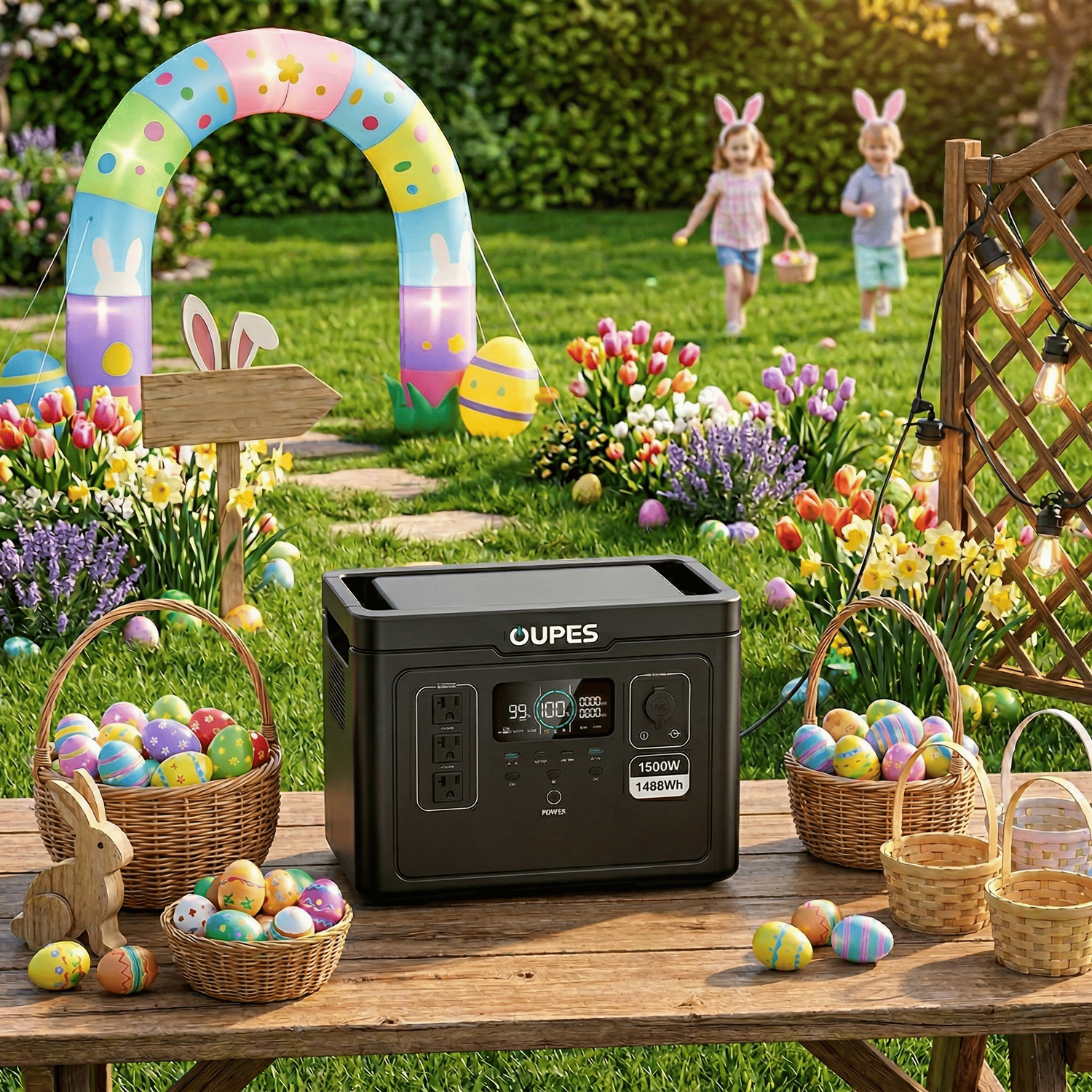
For larger events or extended usage, the Exodus 1500 provides higher capacity (1488Wh) and stronger output.
Usable energy:
1488Wh × 80% ≈ 1190Wh
Estimated runtime:
- Lighting + speaker combo → full-day coverage
- Projector → ~10–12 hours
This makes it suitable for longer outdoor events or multi-day setups.
FAQ
1. How many eggs should I prepare per child?
Typically 10–15 eggs per child is recommended to ensure everyone has a good experience.
2. Should I use real eggs or plastic eggs?
Plastic eggs are safer for outdoor hunts, especially in warm weather.
3. How do I make the hunt fair for different ages?
Divide participants into groups and use color-coded eggs or separate zones.
4. What is the best time to host an Easter egg hunt?
Morning or late afternoon is ideal to avoid strong sunlight and heat.
5. Do I need a power station for a simple egg hunt?
Not necessarily, but it enhances the experience if you plan to add music, lighting, or extended activities.
6. How can I make the event more memorable?
Add themes, games, and interactive elements like clues or golden eggs.


Leave a comment
This site is protected by hCaptcha and the hCaptcha Privacy Policy and Terms of Service apply.