




A flash flood warning means dangerous flash flooding is already happening, is about to happen, or is highly likely in a specific area. In plain language, it is not a “heads-up” message. It is an urgent message telling you to take action now. The National Weather Service explains that flash flood warnings are issued when flash flooding is in progress, imminent, or highly likely, and that these warnings are urgent because dangerous flooding can develop very rapidly and threaten life and property.[1]
That distinction matters because many people confuse a flash flood warning with a flood watch. A watch means conditions are favorable and you need to be prepared. A warning means the threat has become real enough that delay can put you in danger.[2][3] If you live in a flood-prone area, a flash flood warning is the point where you should stop “monitoring” and start acting.
Flash floods are especially dangerous because they happen fast. The National Weather Service glossary defines a flash flood as a rapid and extreme flow of high water into a normally dry area, or a rapid water rise in a stream or creek, beginning within six hours of the causative event.[4] In some cases, flooding begins within three hours or even less, which is why warnings often come with very little decision time.[5]
Table of Contents
- What a flash flood warning actually means
- Flash flood warning vs. flood watch
- Why flash floods are so dangerous
- What to do immediately when a warning is issued
- Why driving is often the biggest mistake
- How to prepare before a warning ever happens
- What to do after the warning or after flooding
- Why backup power matters during flood emergencies
- Detailed OUPES options for flood-season preparedness
- Bottom line
- References
- FAQ
What a flash flood warning actually means
A flash flood warning is an action alert, not just a forecast note. The National Weather Service says a flash flood warning is issued to inform the public, emergency management, and partner agencies that flash flooding is in progress, imminent, or highly likely.[1] Another NWS safety page phrases it even more directly: a flash flood warning means a flash flood is imminent or occurring, and if you are in a flood-prone area you should move immediately to high ground.[2]
The most important word in that definition is immediately. Flash flooding is not the slow-rising kind of water many people imagine when they hear the word “flood.” It can hit roads, underpasses, creeks, campgrounds, low-water crossings, neighborhoods, and parking lots with very little lead time. NOAA’s flood basics page says flash floods are the most dangerous kind of floods because they combine the destructive power of flooding with incredible speed, and they can happen within minutes of the causative rainfall.[6]
Flash flood warning vs. flood watch
A lot of flood-related mistakes happen because people respond to a warning as if it were only a watch. The difference is simple:
| Alert Type | What It Means | How You Should Respond |
|---|---|---|
| Flood Watch / Flash Flood Watch | Conditions are favorable for flooding or flash flooding | Stay alert, review your plan, prepare to move if needed |
| Flash Flood Warning | Flash flooding is happening, is imminent, or is highly likely | Take action now, move to higher ground, avoid floodwaters |
The National Weather Service explains that a flash flood watch means the occurrence is neither certain nor imminent, while a flash flood warning means the event is effectively upon you or highly likely very soon.[1][3] That is why a warning should trigger immediate protective action.
There is also an added layer to some warnings. The NWS has moved flash flood warnings into an impact-based format, and some warnings may carry stronger tags such as Considerable or Catastrophic to signal unusually dangerous impacts. NWS guidance also notes that Wireless Emergency Alerts are forwarded only for warnings tagged as considerable or catastrophic.[7][8] So if your phone sounds off with a flash-flood-related emergency alert, treat it very seriously.
Why flash floods are so dangerous
Flash floods are dangerous because they rise quickly, hit specific low-lying areas hard, and often arrive when visibility is poor or people are on the move. The National Weather Service says flash flooding generally begins within six hours of heavy rainfall, often within three hours, and may happen from intense rain, dam or levee failure, or debris flow.[5] Another NOAA page notes that flash floods can occur when heavy rainfall exceeds the ability of the ground to absorb it, or when enough water accumulates for creeks and streams to rise rapidly over their banks.[6]
The speed of the water is what makes these events so lethal. The NWS “Turn Around Don’t Drown” campaign says just six inches of fast-moving floodwater can knock over an adult, twelve inches can carry away most cars, and two feet can carry away SUVs and trucks.[9] Those numbers explain why flash flood warnings are treated as life-safety alerts rather than simple weather inconveniences.
| Flash Flood Risk | Why It Escalates Fast |
|---|---|
| Road flooding | Drivers may not see water depth or damaged pavement in time |
| Urban flooding | Storm drains can overflow quickly during intense rain |
| Creeks and arroyos | Normally small channels can become violent torrents |
| Campgrounds and low-lying recreation areas | People may be far from permanent shelter and close to fast water |
| Nighttime flooding | People often underestimate the danger when they cannot see the terrain |
What to do immediately when a warning is issued
If you receive a flash flood warning, your first goal is to get yourself out of danger, not to protect property. The NWS says if you are in a flood-prone area, move immediately to higher ground.[2] Another NWS emergency-preparedness page says that when flooding is occurring or imminent, a flood or flash flood warning means you need to implement your plans to protect yourself, and if you are under a warning you should find shelter right away and move to higher ground or a higher floor.[10]
That usually means:
- leave low-lying areas immediately
- stay out of creeks, drainage ditches, underpasses, and flooded roads
- do not wait to see whether the water gets worse
- keep your phone with you and monitor official updates
- if local officials advise evacuation, go without delay
If you are at home and the water threat is rising, move to higher ground or a higher floor, but do not trap yourself in a sealed attic with no escape route if flooding could continue rising.[10] Your actions should be simple, fast, and focused on life safety.
Why driving is often the biggest mistake
Many flash flood deaths happen in vehicles. The NWS is extremely direct on this point: never drive around barriers blocking a flooded road, and never drive or walk into floodwaters.[9] Flash flood water can hide collapsed pavement, drainage washouts, debris, open manholes, and current strong enough to move your vehicle even if the water does not look dramatic.
The NWS flood-safety guidance says never drive your car into water of unknown depth, and if your vehicle stalls in floodwater, abandon it immediately and seek higher ground.[11] Another preparedness page notes that if electric power is cut off, gas stations may not be able to operate pumps for several days, which is one more reason to keep your vehicle fueled during flood season.[12]
How to prepare before a warning ever happens
The best flash flood response starts before the warning is issued. Ready.gov says flood preparation should include learning and practicing evacuation routes, shelter plans, and flash flood response, and gathering supplies including water, non-perishable food, and cleaning supplies.[13] Ready.gov’s preparedness guidance also recommends building an emergency kit with the items you need to survive on your own for several days after a disaster.[14]
A practical pre-warning flood plan should include:
- knowing whether your home, workplace, or campsite sits in a flood-prone area
- saving multiple ways to receive local weather alerts
- identifying the fastest route to higher ground
- keeping flashlights, chargers, food, water, and medications ready
- protecting important documents in a waterproof container
If you live in an area that floods often, it also helps to think beyond evacuation. Ask yourself how you will manage power, phone charging, lighting, refrigeration, and communication if roads are blocked or service is interrupted for part of a day or overnight.
What to do after the warning or after flooding
Even after water starts to recede, flood danger is not automatically over. FEMA and the NWS both emphasize safety during cleanup and return. FEMA says that before entering a home after disaster damage, you should look outside for damaged power lines, gas lines, foundation cracks, and other exterior damage.[15] Another FEMA guidance item says electricity and gas should be confirmed off before cleanup to avoid fire or injury, and an electrician should inspect the house before power is restored if the system may have been affected.[16]
The NWS also warns that after a flood you need to make sure water is safe for drinking and cleaning, and that power outages create extra hazards such as unsafe generator use and carbon monoxide exposure.[17] In other words, the “after” stage is often a power-management problem as much as a cleanup problem.
Why backup power matters during flood emergencies
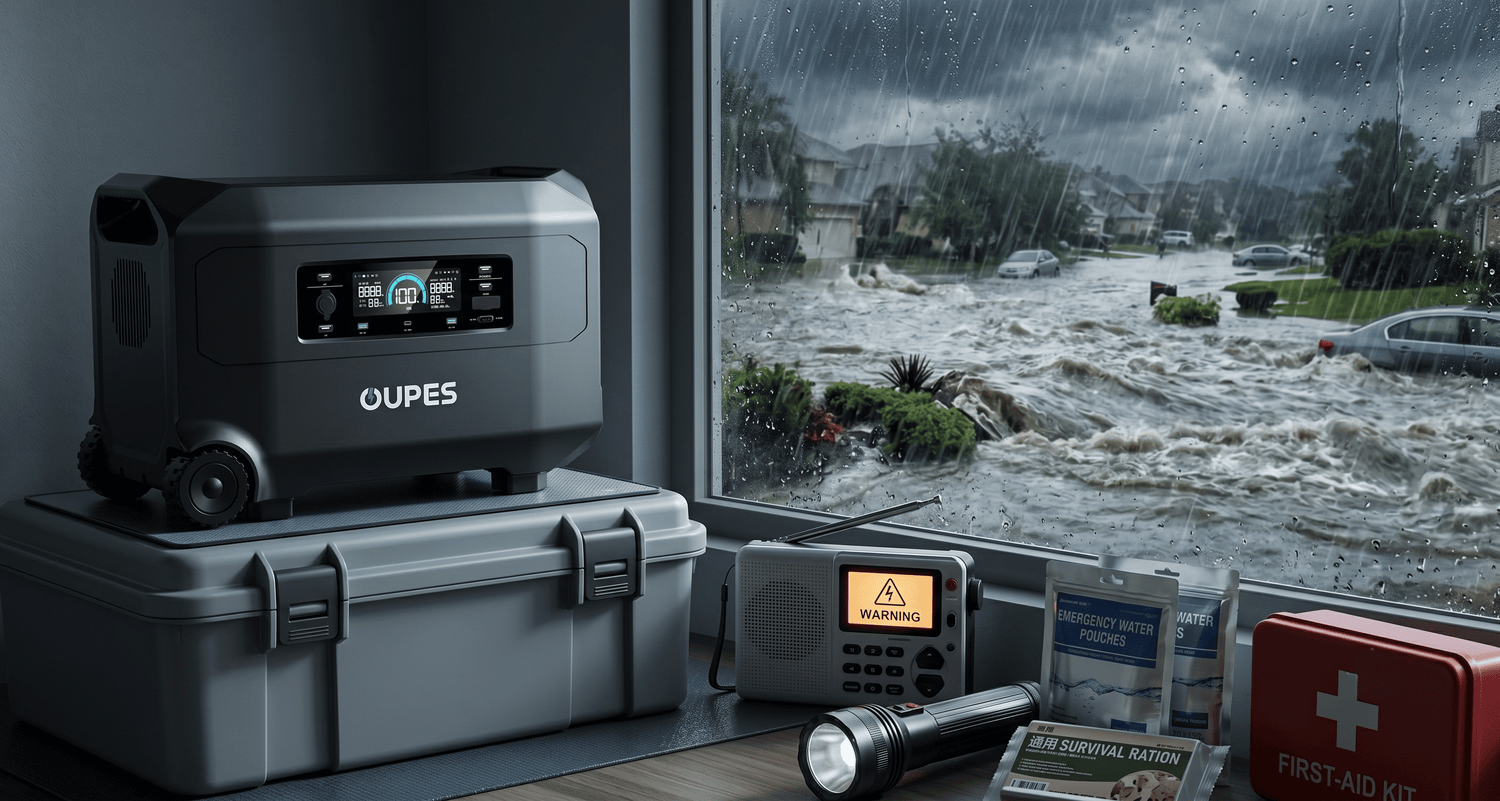
A flash flood warning is fundamentally a life-safety warning, but many households also face a practical continuity problem once the immediate danger has passed. Flooding and severe storms can disrupt electricity, internet access, phone charging, refrigeration, lighting, and essential home devices. That is why backup power becomes useful not as a luxury, but as part of a broader resilience plan.
For some people, backup power means keeping a phone and a flashlight going. For others, it means running a router, charging multiple devices, keeping medication-related equipment supported, or maintaining a more serious home-backup setup during an outage. The right size depends on the role you want it to play.
Detailed OUPES options for flood-season preparedness
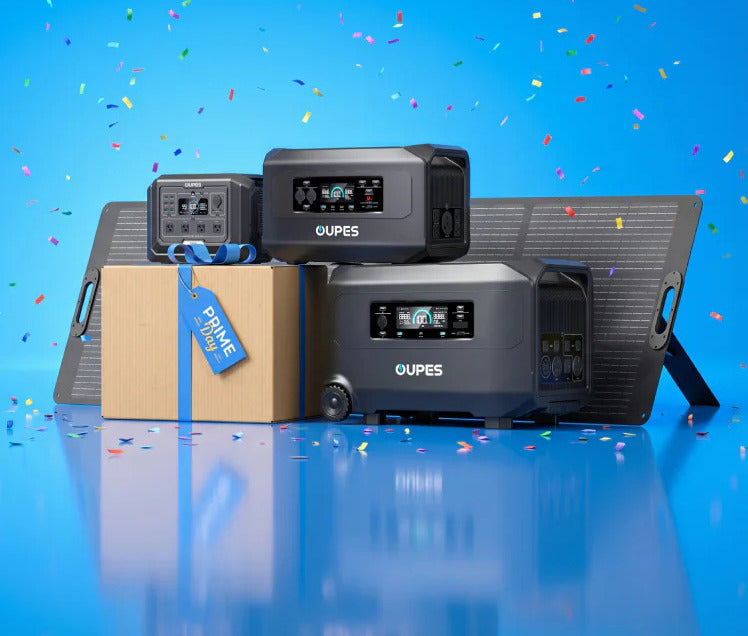
If you want to match a portable power station to flood-season readiness, the most practical way is to think in tiers: essentials backup, mid-range outage support, and serious whole-home or high-load flexibility.
| Model | Rated Capacity | Rated Output | Best Fit for Flood Preparedness |
|---|---|---|---|
| OUPES Mega 1 Lite | 1,024Wh | 2,000W | Phones, lights, radio, router, compact essentials backup |
| OUPES Mega 2 Pro | 2,048Wh | 2,500W | Longer outage support, RV use, broader household essentials |
| OUPES Exodus 2400 | 2,232Wh | 2,400W | Balanced larger-backup role with strong runtime and portability |
| OUPES Guardian 6000 | 4,608Wh | 6,000W at 240V / 3,600W at 120V | High-demand home backup, larger appliances, longer outage plans |
OUPES Mega 1 Lite: the agile essentials-backup choice
The Mega 1 Lite is built around a 1,024Wh LiFePO4 battery with 3,500+ cycles to 80%, a 2,000W pure sine wave inverter with 4,500W surge, 1,400W fast AC charging, 800W solar charging, 2,200W max AC + solar charging, dual 140W USB-C ports, 9 total outputs, and a listed weight of 26.8 lbs.[18]
This is the most practical fit for households that mainly want to keep communication and basic safety gear running. It is especially well suited to phones, small lights, radios, laptops, routers, and other compact emergency loads. If your flood-prep goal is “keep the essentials alive and mobile,” Mega 1 Lite is the easiest entry point.

OUPES Mega 1 LITE Power Station
- Powerful Output: 2,000W AC (4,500W surge) via 9 ports; powers 99% of appliances.
- 46-Min AC Recharge: 0 to 100% in just 46 minutes via 1,400W input.
- Fast Solar Charging: Full charge in 69 minutes with 800W max solar input.
- OTA Updates: Remote firmware updates for optimized performance and new features.
OUPES Mega 2 Pro: the flexible middle tier
The Mega 2 Pro steps up to 2,048Wh, 2,500W AC output with 3,600W Boost, TT-30R RV output, dual 140W USB-C ports, 1,800W AC charging, 1,000W max solar charging, 2,800W max AC + solar charging, WiFi/Bluetooth connectivity, and a listed weight of 48.8 lbs. The page also lists 3,500+ cycles to 80% and expansion support up to 10.24kWh with extra batteries.[19]
For flood-season use, Mega 2 Pro makes sense when your definition of “essentials” is broader. It gives you more runtime cushion, stronger appliance headroom, and more flexibility for RV evacuation use, temporary relocation, or longer weather-related outages.

OUPES Mega 2 Pro Power Station
- 2048Wh Capacity, expandable up to 10.24kWh
- LiFePO4 Battery with 3,500+ Life Cycles to 80%
- 5 Ways to Power Up: Ultimate Flexibility Anywhere
- Smarter APP Control
OUPES Exodus 2400: balanced capacity for larger backup roles
The Exodus 2400 is listed at 2,232Wh capacity, 2,400W AC pure sine wave output, 2,600W Boost Mode, 3,500+ life cycles to 80%, 13 outputs, four recharge methods, UPS backup under 20ms, 2,200W max input charging speed, and a net weight of 45.2 lbs.[20]

OUPES EXODUS 2400 Power Station
- Exodus 2400: 2,232Wh Capacity | 2,400W AC Pure Sine Wave Inverter (2,600W Boost Mode)
- 2,200W Max. Input charging speed (AC + Solar)
- Exodus 2400 Net Weight: 45.2 lbs
In flood preparation terms, this is a strong “less compromise” option. It is useful when you want more runtime than a 1kWh- or 2kWh-class unit can comfortably give, but you do not need the larger 240V-oriented platform of the Guardian 6000.
OUPES Guardian 6000: the serious home-backup platform
The Guardian 6000 is designed for a much larger role. OUPES lists it at 4,608Wh basic capacity, expandable to 41.4kWh, with dual-voltage 240V and 120V output in one unit, 6,000W rated 240V output with 7,200W Boost and 9,000W surge, 3,600W rated 120V output, 2,100W max solar charging, 3,600W max 240V AC charging, more than 4,000 cycles to 80%, UPS/EPS under 20ms, and multiple high-load outlet types including L14-30R, 14-50R, and 6-20R.[21]
This is the option for people who want flood preparedness to overlap with real home-backup capability. If your emergency plan includes longer outages, higher-demand appliances, or a more complete household resilience strategy, Guardian 6000 is the model in this group that starts to behave like a genuine power platform rather than a portable accessory.

OUPES Guardian 6000 Power Station
- 240V/6,000W(Boost 7,200W) & 120V/3600W dual-voltage output
- Basic Capacity 4608 Wh, Expandable Capacity Up to 41.4 kWh With 8 x G5 batteries
- 240V 3,600W Max for 84 min; 120V 1,800W Max for 3 Hours
Bottom line
A flash flood warning means you need to act, not wait. It means dangerous flash flooding is occurring, imminent, or highly likely, and the correct response is to get out of flood-prone areas, move to higher ground, and stay out of floodwaters.[1][2] If you build your preparedness around that principle, the rest becomes clearer: learn the difference between a watch and a warning, never drive through water, prepare a kit before storm season, and think in advance about how you will handle power, communication, and basic home continuity if flooding disrupts normal services.
That combination of life safety and practical backup planning is what turns flood awareness into real preparedness.
References
- National Weather Service — Flood Related Products
- National Weather Service — Flood Warning vs. Watch
- National Weather Service Glossary — Flood / Flash Flood Watch and Warning terms
- National Weather Service Glossary — Flash Flood
- National Weather Service — Flash Flooding Definition
- NOAA National Severe Storms Laboratory — Flood Basics
- NOAA NSSL — Flood FAQ and impact-based flash flood warnings
- National Weather Service — Impact-Based Flash Flood Warnings and Wireless Emergency Alerts
- National Weather Service — Turn Around Don’t Drown
- National Weather Service — Emergency Preparedness: Flooding
- National Weather Service — Flood Safety
- National Weather Service — Flash floods and preparedness basics
- Ready.gov — Floods
- Ready.gov — Build A Kit
- FEMA — Tips for Returning Home Safely After a Disaster
- FEMA — How to Document Damages After Severe Weather Events
- National Weather Service — After a Flood
- OUPES Mega 1 Lite Official Product Page
- OUPES Mega 2 Pro Official Product Page
- OUPES Exodus 2400 Official Product Page
- OUPES Guardian 6000 Official Product Page
FAQ
1. Does a flash flood warning mean flooding is definitely happening?
It means flooding is happening, imminent, or highly likely. Either way, it should be treated as an immediate action alert rather than a passive update.[1]
2. Is a flash flood warning more serious than a flood watch?
Yes. A watch means conditions are favorable. A warning means the threat is real enough that you need to act now.[2][3]
3. What should I do first when I get a flash flood warning?
Move to higher ground immediately if you are in a flood-prone or low-lying area, and stay away from floodwaters and flooded roads.[2][10]
4. Can I drive through shallow floodwater if I know the road?
No. The NWS says never drive into floodwaters. Depth, current, and road condition can be impossible to judge accurately in the moment.[9][11]
5. Why do flash floods happen so quickly?
Because they often follow intense rainfall that overwhelms the ground, drainage system, or nearby streams in a very short time window, often within hours or even minutes.[4][5][6]
6. What should be in a flood emergency kit?
At a minimum, water, non-perishable food, flashlights, chargers, medications, and other essentials for several days. Ready.gov recommends building a kit before disaster strikes.[13][14]
7. Which OUPES model is best for flood preparedness?
It depends on your goal. Mega 1 Lite is a strong essentials-backup option, Mega 2 Pro and Exodus 2400 cover broader outage support, and Guardian 6000 is the most capable choice for a larger home-backup role.[18][19][20][21]

Leave a comment
This site is protected by hCaptcha and the hCaptcha Privacy Policy and Terms of Service apply.