




As more households and businesses turn to solar power, designing a system that is efficient, affordable, and suited to real-world needs has become a central issue. Among the many design principles, the "20% rule" is widely regarded as a practical guideline — helping users strike the right balance between efficiency and cost.
This article will help you fully understand what this rule means, why it matters, and how it influences your solar system design.
1. What Is the 20% Rule?
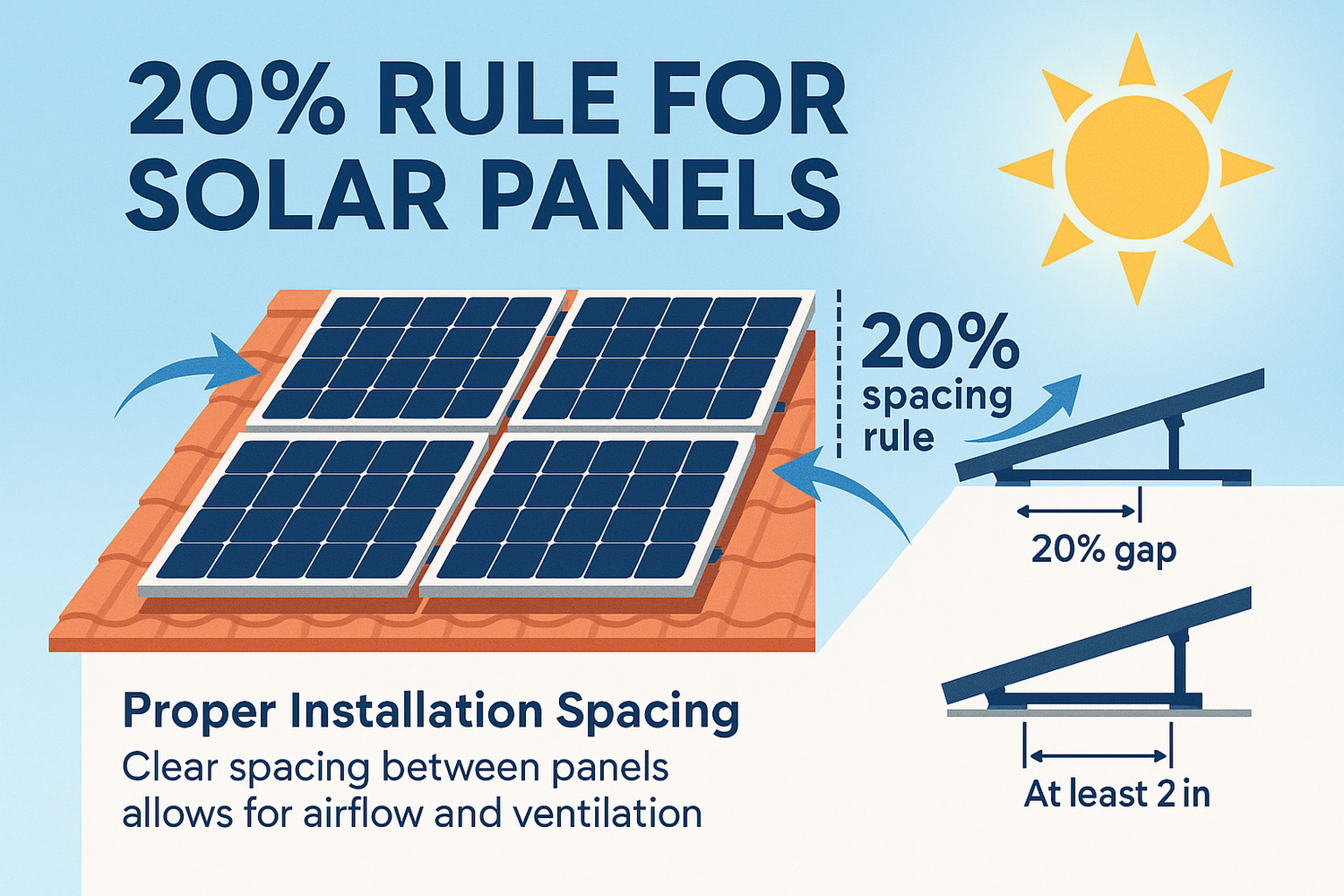
The "20% rule" is a practical guideline in the solar industry. It means that when designing a solar system, you should aim for solar power generation to cover about 80% of your total energy consumption, leaving the remaining 20% as a buffer for energy losses or unforeseen demand.
In other words, the goal is not to cover 100% of your energy usage but to take a realistic approach that considers:
- Energy loss during transmission and conversion;
- Reduced efficiency caused by shading, dust, or imperfect panel angles;
- Seasonal or weather variations that affect energy production.
Therefore, a system designed according to the 20% rule can meet most daily electricity needs while avoiding overinvestment.
2. Why Is This Rule So Important?
Following the "20% rule" offers three major benefits:
- Ensures system efficiency: Solar systems experience real-world losses due to inverter inefficiency, line resistance, or environmental factors. The 20% buffer helps offset these effects.
- Saves costs: Oversizing the system means paying for capacity you rarely need. The 20% rule ensures better cost-performance balance.
- Improves practicality: It allows system designers to accurately assess your energy usage and create an optimized solution that's both efficient and economical.
3. How Does the 20% Rule Affect System Design?
When designing a solar system, this rule directly influences several aspects:
System Capacity Calculation
For example, if your annual power consumption is 6,000 kWh, your solar system should be designed to produce about 4,800 kWh per year. This allows room for efficiency losses and sudden increases in electricity demand.
Panel Quantity and Efficiency
Different types of solar panels (monocrystalline or polycrystalline) vary in efficiency. The 20% rule helps designers strike a balance between budget and energy generation goals.
Energy Usage Habits
If your household uses energy-intensive appliances such as air conditioners, electric heaters, or EV chargers, the system may need to cover more than 80% of your usage — meaning the rule can be adjusted accordingly.
4. Key Factors Influencing the 20% Rule
The 20% rule doesn't apply identically in every scenario. Several conditions may require adjustments:
- Geographic location: Areas with abundant sunlight can generate more power, while cloudy or rainy regions may require larger systems.
- Roof conditions: Roof orientation, angle, and potential shading have a major impact on production.
- Storage system configuration: If battery storage is included, excess energy can be stored for later use, reducing dependence on the 20% margin.
5. When Can You Deviate from the 20% Rule?
There are situations where strictly following the 20% rule is not the best option:
- If you expect future increases in electricity use (for example, buying an electric vehicle), you can scale the system slightly larger.
- Users who experience frequent blackouts or want complete energy independence often prefer systems that cover 100% of their needs.
- Environmentally conscious users may invest more to achieve a higher level of self-consumption and sustainability.
6. Relationship Between the 20% Rule, Incentives, and ROI
The 20% rule is not only a technical guideline but also a financial consideration:
- Avoids overinvestment: A properly sized system reduces upfront costs and shortens the payback period.
- Maximizes incentive benefits: Many government incentives are based on system capacity. The 20% rule ensures your design meets eligibility requirements without wasting subsidy potential.
- Stabilizes long-term returns: A system that's neither too large nor too small maintains efficiency and delivers better overall value.
7. Is the 20% Rule Right for Everyone?
While the "20% rule" is an excellent starting point, it isn't universally applicable. For some users, a professional energy audit or a customized plan will yield more accurate results. In particular, users with fluctuating energy consumption or plans for future expansion should have their systems designed based on actual data rather than rigidly following the rule.
8. Conclusion
The solar "20% rule" is a key principle that balances efficiency and affordability. It reminds us to consider losses, local conditions, and future changes when designing solar systems. However, since every home or business has unique energy needs, working with an experienced installer to create a tailored plan is the best path to achieving sustainable energy savings and long-term investment returns.
Frequently Asked Questions (FAQ)
What does the 20% rule mean?
It means designing your solar system to cover about 80% of your energy consumption, leaving the remaining 20% as a margin for losses and unexpected demand.
Do I need to rely entirely on solar energy?
Not necessarily. If cost efficiency is your goal or you live in an area with a stable power grid, 80% coverage is often enough. For complete independence, you can design a 100% system.
How does the 20% rule affect battery storage design?
It helps determine appropriate battery capacity. For example, to prepare for cloudy days, you might design your storage to provide 20% more energy than your daily usage.
Can following the 20% rule save money?
Yes. It prevents overdesigning the system, reducing panel and installation costs, and improving overall return on investment.
When can I break the 20% rule?
If you plan to ap more electrical devices, live in an area with frequent power outages, or want complete off-grid capability, you may consider expanding your system beyond the 20% guideline.
portable solar panel, Portable Solar Panels, solar panel, solar panel for camper, solar panels,




Leave a comment
This site is protected by hCaptcha and the hCaptcha Privacy Policy and Terms of Service apply.