




Table of Contents
Introduction: The Puzzle of High Electricity Costs
Have you ever opened your electric bill and thought, “Why is this so high?” Many homeowners and renters find themselves puzzled by soaring bills, even when their habits haven’t substantially changed. The truth is, a variety of factors—some hidden, some obvious—combine to power your electricity usage. Understanding them is the first step toward reducing costs. In this article, we’ll explore what raises your bill most, what you can do about it, and how tools like solar generators and portable power stations may help ease the burden.
Major Factors That Drive Up Your Electric Bill
Electric bills are influenced by several core variables. Let’s look at the big-picture contributors:
1. Total Usage (Kilowatt-Hours)
Your bill is ultimately based on how much energy you use, measured in kilowatt-hours (kWh). Each appliance, gadget, and system contributes to the total.
2. Rate per kWh & Tiers
The price per kWh varies depending on your utility’s rate structure, time-of-use pricing, tiered billing, or demand charges. Higher usage often places you in more expensive tiers.
3. Fixed Charges and Fees
Most bills include non-energy charges: grid maintenance, connection fees, taxes, and delivery costs. These fixed costs can make your bill look high even at moderate usage.
4. Time-of-Use & Peak Demand
Some utilities charge more during peak hours. If many of your high-power devices run during peak times, it can multiply your costs.
How Appliance Usage Impacts Your Bill
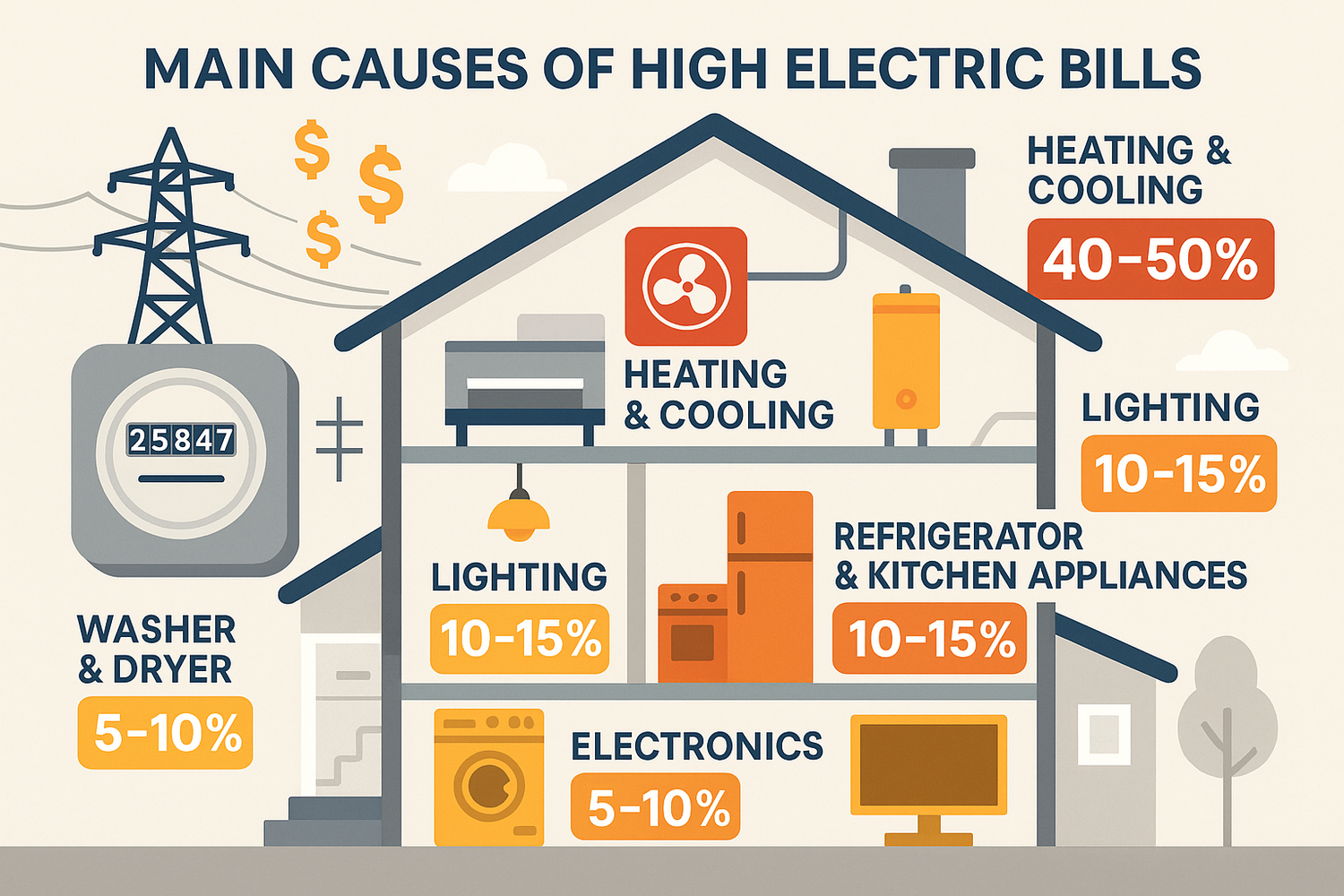
Individual appliances account for most of your energy usage. Understanding which ones draw the most power helps you control consumption.
High-Energy Appliances
- Heating systems, central a/c, or heat pumps
- Electric water heaters
- Clothes dryers
- Ovens, stoves, and microwaves
- Refrigerators/freezers (especially older models)
Comparison: Typical Appliance Power Use
| Appliance | Power Use (Watts) | Hours of Use per Day | Estimated kWh per Day |
|---|---|---|---|
| Central Air Conditioner (2-ton) | 2,500 W | 8 h | 20.0 kWh |
| Electric Water Heater | 4,000 W | 1 h | 4.0 kWh |
| Clothes Dryer | 3,000 W | 1 h | 3.0 kWh |
| Refrigerator | 150 W (average) | 24 h | 3.6 kWh |
| Lighting (LED) | 20 W total | 6 h | 0.12 kWh |
As you see, HVAC and water heating dominate. Even devices that seem small add up over time.
Heating, Cooling & HVAC Loads
In many places, your heating or cooling system dominates your monthly energy usage. Let’s dig deeper.
Air Conditioning
On hot days, your air conditioner may run continuously. During this time, its compressor, fans, and pumps consume significant electricity—often more than all other appliances combined.
Heating Systems
Electric heating systems (baseboards, heat pumps) can draw large amounts of power, especially in cold climates. Even supplementary electric heating (like space heaters) can escalate the bill quickly.
HVAC Efficiency & Maintenance
Clogged filters, poor insulation, or aging systems reduce efficiency, causing more electricity use to reach the same comfort level. Regular maintenance is key to control costs.
Phantom Loads & Standby Power
Even when appliances appear "off," many continue drawing small amounts of power—called standby or phantom loads. Over weeks and months, these add up.
Common Culprits
- Chargers left plugged in
- Smart TVs, set-top boxes, and game consoles on standby
- Phantom draw from microwaves, coffee makers, or small kitchen appliances
Unplugging devices or using smart power strips can help cut these hidden drains.
Electric Rate Structures & Fees
Your utility’s billing structure can significantly influence your total cost, independent of how much energy you use.
Tiered Rates
Some utilities charge lower rates for the first block of consumption and higher rates as usage increases. Once you cross a threshold, additional usage becomes expensive.
Time-of-Use (TOU) Rates
Electricity costs more during peak hours (e.g., late afternoon to evening). Running heavy appliances outside those windows reduces cost.
Demand Charges
Some commercial or large residential customers pay based on peak demand in kW during a billing period. A single spike can drive up costs significantly.
Fixed & Distribution Charges
Regardless of usage, fixed monthly fees cover infrastructure, maintenance, and grid access. These can make your bill feel high even with modest consumption.
Energy Inefficiencies and Losses
Not all electricity consumed is converted to useful work—some is lost due to inefficiencies.
Heat Loss in Wiring & Equipment
Poorly sized wiring or loose connections lead to resistive losses. That inefficiency shows up as wasted electricity.
Poor Insulation and Envelope Losses
If your home leaks heat in winter or cool air in summer, HVAC systems run harder to compensate, driving up energy consumption.
Poor Appliance Efficiency
Older appliances or models without energy-saving features are less efficient. Replacing them with high-efficiency versions can reduce usage dramatically.
Seasonal Variations & Weather Effects
Electric bills often spike with seasonal extremes—hot summers or cold winters. Here’s how weather adds to your costs:
- Hot summers = heavy A/C use
- Cold winters = heating load (especially if electric)
- Long daylight or extended cloud cover affect solar generation for homes with supplemental solar
How to Use Solar Energy to Reduce Your Electric Bill
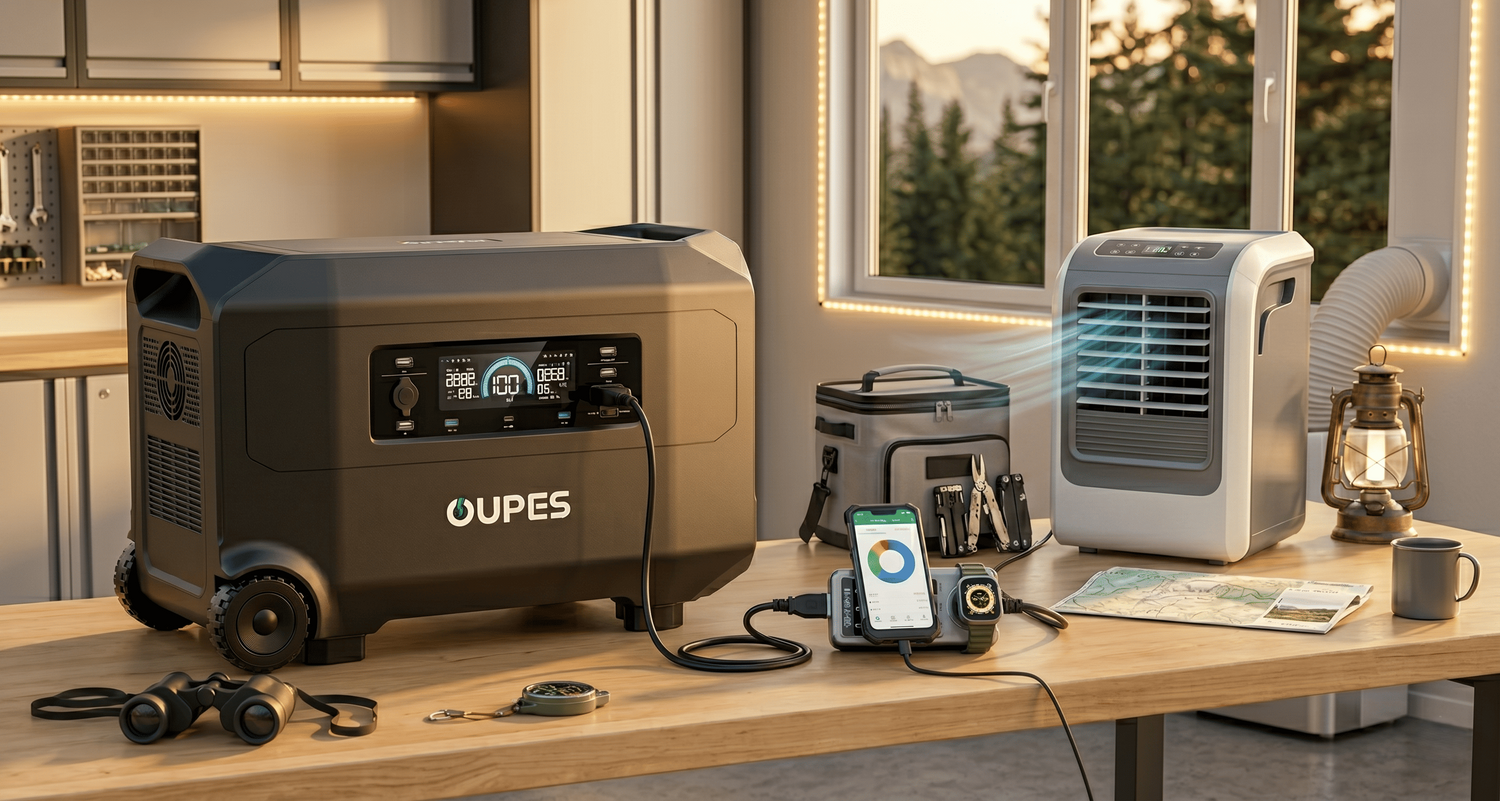
Solar energy offers one of the most effective ways to lower your monthly electricity expenses. By generating your own clean power, you can offset grid consumption, reduce peak-hour costs, and gain greater energy independence. Below are several ways solar generators and portable power stations can help you save.
Offset Daily Grid Consumption
Using solar panels to charge a portable power station during the day allows you to use that stored electricity at night, when utility rates are typically higher. This simple shift helps reduce overall kWh drawn from the grid.
Peak Shaving and Load Shifting
If your utility has time-of-use pricing, you can use your stored solar power during peak demand periods — when electricity rates are highest — and recharge the system during off-peak or sunny hours. This technique, called “load shifting,” is a proven strategy for cutting costs.
Backup Power That Saves Money Long-Term
A solar generator or power station not only provides backup power during outages but also helps you avoid costly generator fuel expenses. Over time, this reduces both your operational and energy costs.
Reducing Dependence on the Grid
Even partial reliance on solar energy lowers your overall utility dependence. For households in sunny regions, using solar power for 20–40% of total electricity needs can significantly decrease annual bills while promoting a sustainable lifestyle.
Example Calculation
Suppose your monthly electricity use is 900 kWh and your solar setup offsets 200 kWh each month. At an average U.S. rate of $0.17/kWh, that’s a **$34 monthly savings**, or over **$400 per year**—without any behavioral changes.
Practical Tips to Lower Your Electric Bill
- Run high-wattage appliances at off-peak hours whenever possible.
- Upgrade to LED lighting and energy-efficient appliances.
- Unplug devices or use smart strips to reduce phantom load.
- Seal and insulate your home to minimize HVAC waste.
- Use shades, blinds, or window films to reduce heat gain.
- Maintain HVAC systems and change filters regularly.
- Install a solar generator or portable power station to offset grid consumption.
- Monitor usage through smart meters or energy monitoring devices.
FAQ
1. Why is my electric bill so high this month?
Seasonal changes, increased HVAC use, rate hikes, or appliance malfunctions may drive up your bill. Check usage patterns and rate changes to pinpoint the cause.
2. How much can solar generators reduce my bill?
It depends on how much solar energy you can generate and store. Even offsetting a few kWh per month can produce meaningful savings.
3. What is phantom load and can it be significant?
Yes — many devices draw standby power even when off. Over time, this adds up. Unplugging or using smart strips helps reduce it.
4. Is upgrading appliances a good way to lower bills?
Definitely. High-efficiency appliances can reduce power draw substantially — especially for HVAC and water heating.
5. What role do utilities’ rate structures play?
Rate structures like tiered pricing, time-of-use, or demand-based billing can dramatically affect your final cost—even without increased usage.
6. Should I get a solar generator just for bill reduction?
If your energy usage and sunlight availability align, a solar generator can pay for itself over time while providing backup power as a bonus.
7. How can I find where most of my electricity is going?
Use an energy monitor to track appliance-level consumption. Most modern utility meters or smart plugs offer that functionality.
8. What’s a realistic percentage of savings from solar supplementation?
Savings vary widely—some homeowners offset 20–50% of usage depending on system size, location, and usage patterns.


Leave a comment
This site is protected by hCaptcha and the hCaptcha Privacy Policy and Terms of Service apply.