


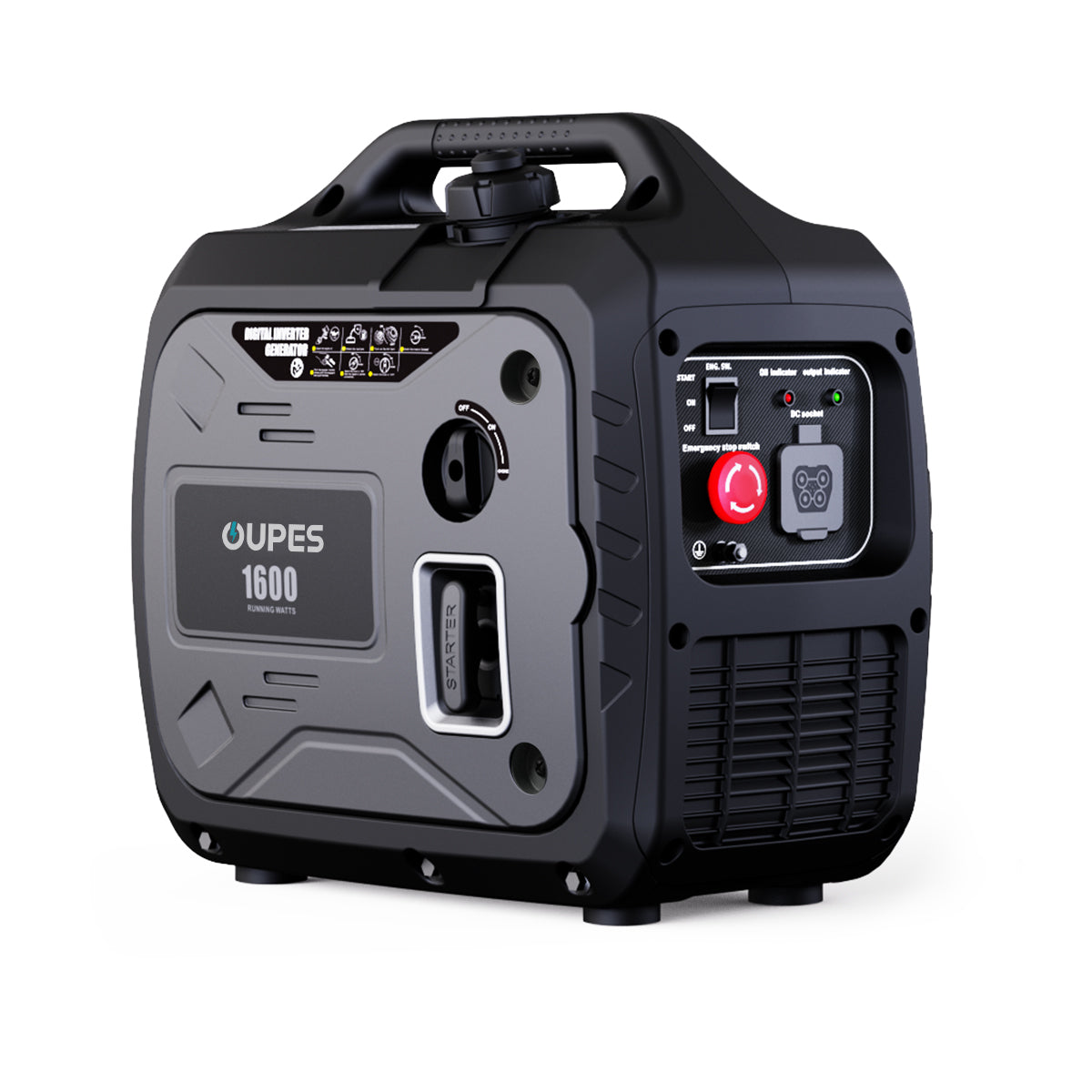


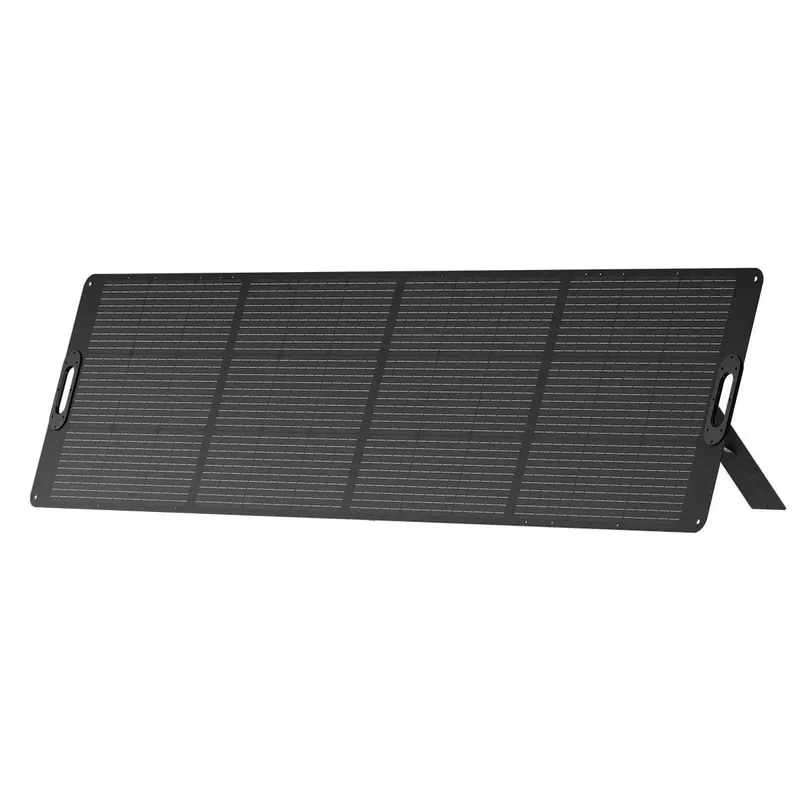
Best Camping Solar Panel at a Glance
The best solar panels for camping are not simply the highest-watt models you can carry. They must fit the campsite, match the power station’s solar-input voltage and current limits, survive transport, and replace enough daily energy for the loads that matter. A 100W panel may be ideal for phones and lights, while refrigeration, CPAP equipment, tools, or air conditioning can justify several hundred watts or more.
| Camping load profile | Practical panel class | Battery class | Primary goal |
|---|---|---|---|
| Phones, lights, camera | 60–120W | Small portable battery | Replace modest daily use |
| 12V refrigerator plus electronics | 200–400W | About 1,000Wh | Recover daytime consumption with reserve |
| Long-stay vehicle camping | 400–1,000W | 1,000–2,000Wh | Support several appliances and cloudy-day margin |
| RV cooling or cabin loads | Site-specific large array | 3,000Wh and above | Serve sustained high-power demand |
These are planning classes, not guarantees. Begin with watt-hours consumed per day, then size the array around local sunlight and the battery station’s accepted input.
Folding, Rigid, or Rollable?
| Panel type | Advantages | Tradeoffs | Best use |
|---|---|---|---|
| Folding monocrystalline | Portable, efficient, fast campsite deployment | Hinges and fabric require care; wind can move it | Car camping and temporary camps |
| Rigid framed | Durable glass surface and stable long-term mounting | Bulky and heavier | RV roofs, cabins, and repeat base camps |
| Flexible or rollable | Low weight and conforms to some surfaces | Heat buildup and repeated flexing can shorten life | Weight-sensitive specialized installations |
| Solar blanket | Compact storage and broad deployed area | Often costly per watt and vulnerable to abrasion | Overlanding where storage volume is limited |
For most vehicle campers, a folding monocrystalline panel offers the simplest balance. Rigid modules make more sense when they can remain securely installed and properly ventilated.
Calculate the Panel Wattage You Need
Build a daily energy budget in watt-hours. Multiply each appliance’s average operating watts by hours used, then add the results. Refrigerator compressors and air conditioners cycle, so measure actual daily energy when possible.
| Illustrative load | Average watts | Daily use | Daily energy |
|---|---|---|---|
| 12V refrigerator | 45W while averaging its cycle | 12 equivalent hours | 540Wh |
| LED campsite lights | 12W | 5 hours | 60Wh |
| Laptop | 60W | 3 hours | 180Wh |
| Phones and small electronics | Combined allowance | Daily | 120Wh |
| Total | — | — | 900Wh/day |
A simple first estimate is: array watts = daily watt-hours ÷ peak-sun hours ÷ system factor. With 900Wh/day, five peak-sun hours, and a conservative 0.70 system factor, the result is about 257W; a 300–400W array provides more practical margin. Use NREL’s PVWatts calculator for location- and season-specific solar estimates rather than assuming five sun hours everywhere.
Check Electrical Compatibility
Connector shape alone does not prove compatibility. The array’s open-circuit voltage must stay below the station’s maximum input voltage, while operating voltage must fall inside its charging range. Current and total watts must also remain within limits.
| Specification | Where to find it | Why it matters |
|---|---|---|
| Panel open-circuit voltage (Voc) | Panel label and datasheet | Series wiring raises voltage; exceeding the station limit can cause damage |
| Maximum-power voltage (Vmp) | Panel datasheet | Must be usable by the station’s MPPT range |
| Short-circuit/current rating | Panel datasheet | Parallel wiring raises current |
| Station input window | Power-station manual | Defines accepted volts, amps, watts, and connectors |
| Polarity and adapter | Both manufacturers | A physically matching plug can still be wired incorrectly |
Never improvise series or parallel combinations. Use correctly rated cables and adapters approved for the equipment.
Understand Real-World Output
Panel nameplate watts are measured under standardized conditions. Campsite output falls with clouds, partial shade, poor angle, heat, dirty glass, long cables, and charge-controller limits. Even a narrow shadow across one section can reduce an entire panel’s output.
| Condition | Expected effect | Response |
|---|---|---|
| Midday full sun | Best production window | Face the panel toward the sun and adjust angle |
| Partial tree shade | Potentially large output loss | Move the portable panel while keeping camp shaded |
| Hot panel surface | Lower voltage and power | Allow rear airflow; never lay on insulating material if prohibited |
| Cloudy weather | Variable, often much lower output | Keep battery reserve and reduce nonessential loads |
Camping Solar Panel Buying Checklist
- Size from daily watt-hours and worst-season solar resource.
- Confirm voltage, current, wattage, polarity, and connector compatibility.
- Compare packed dimensions and weight, not deployed size alone.
- Choose kickstands or mounting points that allow angle adjustment.
- Look for weather-resistant construction, but do not assume the junction box or power station is waterproof.
- Use a cable long enough to put panels in sun while keeping the station shaded and dry.
- Check warranty coverage for cells, fabric, hinges, cables, and output degradation.
Match Panels to an OUPES Station
An OUPES solar generator setup combines compatible panels with LiFePO4 storage. Choose the station around stored energy and load power, then choose the array within the station’s documented input window.
| OUPES model | Capacity | Maximum solar input | Best camping role |
|---|---|---|---|
| Mega 1 Lite | 1,024Wh | 800W | Refrigeration, devices, and compact vehicle camps |
| Mega 2 Pro | 2,048Wh | 1,000W | Longer stays and shared campsite loads |
| Mega 3 | 3,072Wh | 2,100W | High-energy RV and base-camp use |
| Guardian 6000 V2 | 4,608Wh | Two solar inputs, up to 2,100W each | Large expandable cabin or backup system |
Battery-Life Comparison
| Battery | Published or typical life | Safety profile |
|---|---|---|
| OUPES LiFePO4 | 3,500+ cycles to 80% for Mega 1 Lite/Mega 3; 4,000+ for Mega 2 Pro/Guardian | Thermally stable phosphate cathode; severe thermal runaway is difficult to initiate under normal use |
| Generic ternary lithium-ion | Often 500–800 cycles | Nickel-rich chemistry generally has lower thermal stability |
No battery is risk-free. Keep the station dry and ventilated, and follow all charging-temperature limits.
Safe Campsite Setup
Stake or weight panels only by approved points and prepare for wind. Avoid blocking roads or trails with cables. Keep connectors off wet ground, never handle damaged wiring, and disconnect the array before packing. The Department of Energy’s solar-energy resources provide broader background on photovoltaic technology and system integration.
Frequently Asked Questions
Is a 100W solar panel enough for camping?
It can cover phones, lights, and modest electronics, but refrigeration or medical equipment requires an actual daily watt-hour calculation.
How many watts of solar do I need for a camping fridge?
Measure the fridge’s 24-hour energy use, divide by local peak-sun hours and a conservative system factor, then add reserve.
Can I mix different solar panels?
Only when voltage, current, connectors, and the charge-controller design support the combination. Mismatched panels can waste power or exceed limits.
Do camping solar panels work in shade?
They may produce some energy, but partial shade can sharply reduce output. Put portable panels in sun while keeping the battery shaded.
Are portable solar panels waterproof?
Weather resistance varies by model and component. Never assume connectors or the power station can tolerate rain.
Can I leave a folding solar panel outside overnight?
Pack it away unless its manufacturer permits unattended outdoor exposure; dew, wind, theft, and wildlife are practical risks.