




Grounding is one of the most misunderstood topics when it comes to portable power stations with inverters. Many users worry about electrical safety, shock risks, and whether they need grounding rods, cables, or special setups. These concerns are valid—but the answers are often simpler than expected.
This article explains how portable power stations with inverters are grounded, using clear language and real-world scenarios. Whether you are using a power station at home, outdoors, or on the road, this guide helps you understand what grounding really means, when it matters, and how modern designs ensure safety without complicated installation.
Why Grounding Matters for Portable Power Stations
Grounding exists to protect people and equipment. In traditional electrical systems, grounding provides a safe path for fault currents, helping prevent electric shock, equipment damage, and fire hazards.
For users of portable power stations, grounding questions usually arise because:
- They use AC outlets similar to household power
- They operate indoors and outdoors
- They power sensitive or high-wattage devices
- They are not permanently installed systems
Understanding how grounding works in portable systems helps users operate them confidently and safely.
Grounding Basics: Simple Concepts Explained
In basic terms, grounding connects electrical systems to a reference point—usually the earth. This reference point helps stabilize voltage and provides a path for excess electricity during faults.
In household wiring, grounding is achieved through:
- Ground wires in outlets
- Grounding rods driven into the earth
- Bonding between neutral and ground
Portable power stations, however, are fundamentally different from fixed home electrical systems, which is why their grounding approach also differs.
How Inverters Are Grounded in Portable Power Stations
Portable power stations generate AC power using an internal inverter. This inverter converts battery DC power into usable AC electricity.
Unlike household systems, most portable power stations use a floating ground design. This means:
- The AC neutral is not bonded to earth ground
- The system operates independently of external grounding
- Electrical output remains isolated within the unit
This design significantly reduces shock risk in portable applications and eliminates the need for grounding rods in most everyday use cases.
Grounding in Real-World Usage Scenarios
Home Backup Power
When used indoors for home backup—powering appliances like refrigerators, lights, or routers— portable power stations do not require additional grounding.
Why?
- The system is isolated from the home’s fixed wiring
- Devices plug directly into the power station
- Built-in protection handles faults internally
As long as you are not backfeeding into household circuits, the power station operates as a self-contained electrical source.
Camping and Outdoor Use
Camping is one of the most common use cases—and one where grounding concerns are often overestimated.
In outdoor environments:
- Portable power stations sit on the ground or a table
- They are not connected to metal structures
- Loads are typically small appliances or electronics
Floating ground designs are ideal here, as they avoid ground loops and reduce shock risk even in damp or uneven terrain.
RV, Vanlife, and Mobile Worksites
In RVs and vans, grounding questions become more nuanced. Portable power stations are still floating systems, but the surrounding environment includes metal frames and vehicle grounds.
In these scenarios:
- The power station remains electrically isolated
- AC outlets power appliances directly
- No bonding to vehicle chassis is required
This isolation helps prevent unintended current paths between the inverter and vehicle electrical systems.
What Is a Floating Ground System?
A floating ground means that neither the AC hot nor neutral is tied to earth ground. Instead, the entire system “floats” relative to ground potential.
Benefits of floating ground systems include:
- Reduced shock risk in portable environments
- No need for external grounding rods
- Improved compatibility across locations
- Lower risk of ground faults caused by improper setup
This approach is widely used in portable, battery-powered equipment designed for flexible use.
When Additional Grounding Is or Isn’t Required
In most consumer use cases, additional grounding is not required. However, certain situations may involve different considerations.
Additional grounding may be considered when:
- Integrating with permanent electrical infrastructure
- Powering specialized industrial equipment
- Operating in regulated commercial environments
For typical home backup, camping, RV, and emergency use, portable power stations are designed to operate safely without user-installed grounding.
Built-In Safety and Protection Systems
Modern portable power stations rely on internal protection rather than external grounding. These systems typically include:
- Short-circuit protection
- Overcurrent protection
- Overvoltage and undervoltage protection
- Temperature monitoring
- Ground fault detection within the inverter
Together, these features ensure safe operation even in environments where traditional grounding is impractical.
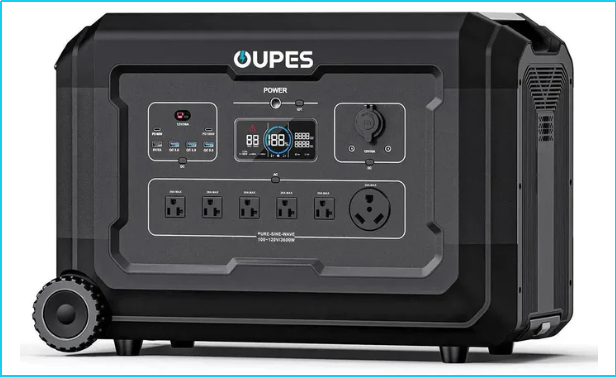
Grounding Design in OUPES Portable Power Stations
OUPES portable power stations are designed with safety-first inverter architecture. Their grounding approach focuses on isolation, stability, and user protection.
Key design principles include:
- Floating AC output for portable safety
- Fully isolated inverter systems
- Integrated battery management and protection
- Stable sine wave output for sensitive devices
This design allows OUPES power stations to be safely used across a wide range of scenarios without requiring users to manage grounding manually.
Grounding Approaches: Portable vs Fixed Systems
| System Type | Grounding Method | User Installation Required | Typical Use Case |
|---|---|---|---|
| Portable Power Station | Floating ground | No | Home backup, camping, mobile use |
| Household Electrical System | Earth-grounded | Yes | Permanent home wiring |
| Fixed Backup System | Bonded neutral-ground | Professional installation | Whole-home backup |
Common Grounding Myths and Misunderstandings
- Portable power stations always need grounding rods
- Floating ground systems are unsafe
- Indoor use requires earth grounding
- More grounding always means more safety
In reality, improper grounding can introduce risks rather than eliminate them. Portable systems are safest when used as designed.
Frequently Asked Questions
1. Do portable power stations need to be grounded?
No. Most use floating ground designs and do not require external grounding.
2. Is it safe to use indoors?
Yes. Battery-based power stations are emission-free and designed for indoor use.
3. Can I add a grounding rod for extra safety?
It is usually unnecessary and may create unintended electrical paths.
4. Are AC outlets grounded?
The ground pin is present, but it is internally managed within the inverter system.
5. Does grounding affect inverter performance?
No. Properly designed inverters operate safely without external grounding.
6. Is grounding different for RV use?
No. Portable stations remain isolated even inside vehicles.
7. What about sensitive electronics?
Pure sine wave output and internal protection ensure safe operation.
8. Should I consult an electrician?
Only if integrating with permanent home wiring or specialized systems.
Final Thoughts
Grounding portable power stations with inverters is far simpler than many users expect. Thanks to floating ground designs and advanced internal protection, modern portable power stations deliver safe, reliable AC power without complex grounding requirements. By understanding how these systems are designed to work, users can operate them confidently—at home, outdoors, or on the road—knowing safety is built in from the ground up.