




Earthquakes can disrupt the power grid in seconds. Downed lines, damaged substations, and automatic shutoffs to prevent fires can leave entire neighborhoods without electricity for hours or days. When that happens, power is no longer a convenience. It becomes a lifeline for communication, lighting, food safety, and medical needs.
This guide explains a practical, step-by-step approach to securing power after an earthquake, including how to prioritize essential loads, how to size a backup solution, and how OUPES systems such as Guardian 6000 and the MEGA series can support real household scenarios.
Quick Navigation
- Why earthquakes cause power outages
- What to power first in the first 24 hours
- Build a practical earthquake power plan
- Backup power solutions with OUPES systems
- Estimate runtime and manage loads
- Extend power with solar recharging
- Safety tips after an earthquake
- Earthquake power checklist
- FAQ
1. Why Earthquakes Cause Power Outages
Earthquakes damage infrastructure at multiple points simultaneously. Even if your home is structurally fine, utilities may cut power across a wider area to reduce fire risk and allow safe inspections.
- Downed transmission lines and damaged poles
- Substation and transformer failures
- Automatic grid shutdowns to prevent secondary hazards
- Delayed restoration due to aftershocks and access limitations
2. What to Power First in the First 24 Hours
In the initial hours after an earthquake, you should prioritize “essential loads” rather than trying to run everything. The goal is to keep your household informed, connected, and safe.
Essential loads to prioritize
- Communication: phones, power banks, radios, Wi-Fi router/modem (if internet is available)
- Lighting: LED lamps, flashlights, headlamps, emergency lights
- Food safety: refrigerator/freezer (intermittent operation when possible)
- Medical needs: CPAP and other critical devices
- Basic comfort: small fans, small heaters only if capacity allows
High-draw devices such as large electric heaters, ovens, and dryers can drain stored energy quickly. If you use them at all, do so intentionally and for short periods.
3. Build a Practical Earthquake Power Plan
A workable earthquake power plan answers three questions:
- What must stay powered? List essentials first (communication, lighting, food safety, medical devices).
- How long do you need power? Plan for at least 12–24 hours, and consider multi-day coverage if your area is high-risk.
- How will you replenish energy? Expansion batteries and solar charging reduce reliance on a single starting charge.
The goal is not to replicate normal household electricity. It is to maintain safety and continuity during the recovery window.
4. Backup Power Solutions With OUPES Systems
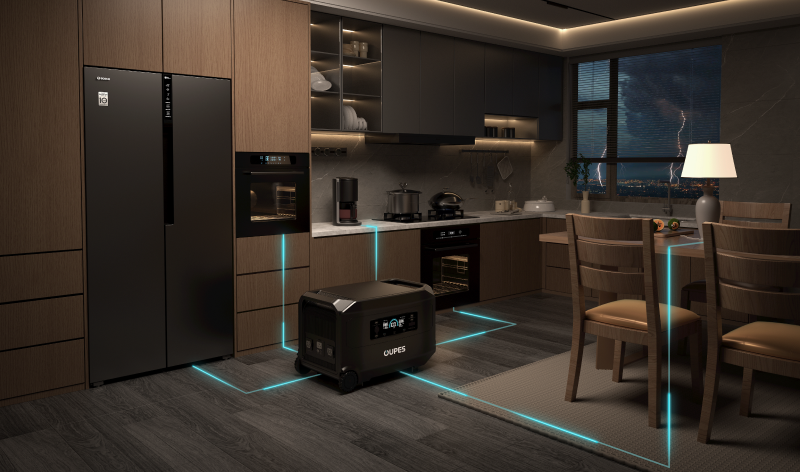
Battery-based power stations are well-suited for post-earthquake use because they can run indoors, operate quietly, and provide stable power for electronics. Below are practical ways OUPES systems can fit different household needs.
4.1 OUPES Guardian 6000 for critical home loads
If your priority is powering more household circuits and supporting higher-demand appliances, OUPES Guardian 6000 is built for home backup scenarios. It supports both 120V and 240V output, which can help cover a wider range of household equipment and critical loads.
- Base capacity: 4,608Wh
- Expandable capacity: up to 41.4kWh
- Output: 6,000W (7,200W Boost)
- Battery lifespan: 4,000 cycles to 80% capacity
- Solar input: up to 2,100W
Where this matters after an earthquake: you can prioritize refrigeration, communication, lighting, and other essential loads, while keeping enough overhead for short bursts of higher-demand usage when needed.
4.2 OUPES MEGA series for essential loads and flexible deployment
For households that want reliable essential power with flexible deployment around the home, the OUPES MEGA series is designed for practical everyday use and emergency coverage. The series includes:
- MEGA 1: 1024Wh capacity, 2000W output
- MEGA 2: 2048Wh capacity, 2500W output
- MEGA 3: 3072Wh capacity, 3600W output
- MEGA 5: 5040Wh capacity, 4000W output
In an earthquake outage, MEGA units are a strong match for essentials such as routers, lights, phones, laptops, and intermittent refrigerator support. If you expect longer outages, models that support expansion batteries can give you more buffer time.
5. Estimate Runtime and Manage Loads
To avoid surprises, estimate your runtime using a simple approach:
- List the devices you must run
- Note each device’s wattage
- Decide whether each device runs continuously or intermittently
- Use stored energy strategically: keep essentials continuous, run high-watt appliances in short bursts
Example essential-load strategy after an earthquake:
- Keep router and phones charging whenever needed
- Use LED lighting at night only
- Cycle the refrigerator (for example, short runs to maintain temperature)
6. Extend Power With Solar Recharging
After an earthquake, fuel availability and travel can be uncertain. Solar charging can help you extend your usable power window over multiple days. The key role of solar is not instant replacement of the grid, but gradual replenishment.
Both Guardian 6000 and many MEGA configurations support solar input. A solar-ready setup is especially valuable if:
- Restoration timelines are unclear
- You need multi-day coverage
- You are in an off-grid, RV, or temporary outdoor setup
7. Safety Tips After an Earthquake
Electric safety is critical after seismic events. Use backup power in ways that reduce risk, not increase it.
- Do not plug into damaged outlets or exposed wiring
- If you smell gas or suspect leaks, prioritize evacuation and safety protocols
- Use surge protection where possible when power returns
- Keep power stations ventilated and away from wet areas
- Avoid overloading circuits and run high-watt devices cautiously
8. Earthquake Power Checklist
- Fully charge your power station before emergencies whenever possible
- Prepare charging cables and spare adapters for phones and laptops
- Keep LED lights and headlamps ready (with rechargeable options)
- Identify essential appliances and note their wattage labels
- Plan for refrigeration management (door discipline and intermittent cycling)
- If multi-day coverage is needed, add an expansion battery and solar recharging plan
FAQ
Q1: What should I power first after an earthquake?
Start with communication and lighting, then protect food and medications with intermittent refrigeration, and prioritize any medical devices. Avoid high-watt appliances unless you have sufficient capacity.
Q2: Can OUPES systems power multiple devices at the same time?
Yes. Both OUPES Guardian 6000 and the MEGA series are designed for multi-device use. Choose based on your load profile: Guardian 6000 is suited for higher-demand home backup, while MEGA models are practical for essential loads and flexible placement.
Q3: How do I make my backup power last longer?
Use an essential-load strategy: keep communication and lighting stable, run refrigerators intermittently, and avoid long runs of high-watt devices. If you need multi-day coverage, add expansion batteries and use solar recharging to replenish energy.
Q4: Is solar recharging worth it after an earthquake?
Solar is especially valuable when restoration time is uncertain. Even moderate daily input can extend coverage over multiple days, reducing reliance on a single starting charge.
Q5: Should I use a backup power station if my home wiring might be damaged?
If you suspect wiring damage, do not use questionable outlets or circuits. Use devices directly from the power station outlets and prioritize safety inspections before reconnecting to household wiring.