




Table of Contents
- TL;DR / Key Takeaways
- Part 1: How to Save Electricity in Winter
- 1. Improve Heating Efficiency
- 2. Strengthen Home Insulation
- 3. Adopt Smart Energy Usage Habits
- 4. Use Portable Power Stations and Solar Generators
- 5. Energy Consumption Comparison Table
- Part 2: What Are the Incentives for a Battery Energy Storage System
- 1. Federal Incentives
- 2. State and Local Programs
- 3. How to Apply for Incentives
- 4. Example: OUPES Power Stations and Incentive Opportunities
- 5. Incentive Comparison Table
- FAQ
TL;DR / Key Takeaways
- Improving heating efficiency, insulation, and using smart appliances can save up to 30% of winter electricity bills (U.S. DOE data).
- Portable solar generators and power stations help reduce grid reliance and offer backup power during winter outages.
- Battery Energy Storage Systems (BESS) qualify for federal and state incentives, including a 30% tax credit under the Residential Clean Energy Credit (IRS.gov).
- Combining energy-saving measures with incentive-backed storage solutions can greatly enhance household resilience and savings.
Part 1: How to Save Electricity in Winter
Winter typically leads to higher electricity usage due to heating, longer nights, and increased indoor activity. According to the U.S. Energy Information Administration (EIA), residential energy consumption can rise by up to 25 % during winter months, primarily from heating and inefficient insulation. Strategic energy management and backup solutions can reduce these costs while maintaining comfort.
1. Improve Heating Efficiency
Heating systems account for ~45 % of winter electricity use. To improve efficiency:
- Set thermostats to 68 °F (20 °C) when home and lower them when away — every 1 °F reduction can save ~1 % of your bill (EnergyStar.gov).
- Replace or clean air filters monthly — clogged filters can raise consumption 5–15 %.
- Consider space heaters with energy-saving modes for small areas instead of heating the entire house.
2. Strengthen Home Insulation
The DOE estimates homeowners can save 10–20 % on heating bills by properly insulating walls, attics, and sealing air leaks. Focus on:
- Weather-stripping doors and windows
- Adding insulation to attics and basements
- Using thermal curtains to prevent heat loss
3. Adopt Smart Energy Usage Habits
Energy efficiency extends to daily routines:
- Use smart plugs and timers to control lights and space heaters.
- Run washing machines and dishwashers at off-peak hours (nighttime or weekends).
- Switch to LED bulbs — they use 75 % less energy and last 25× longer (Energy.gov).
4. Use Portable Power Stations and Solar Generators
During winter storms and blackouts, portable solar generators or power stations act as reliable emergency power sources. When combined with solar panels, they can recharge independently from the grid.
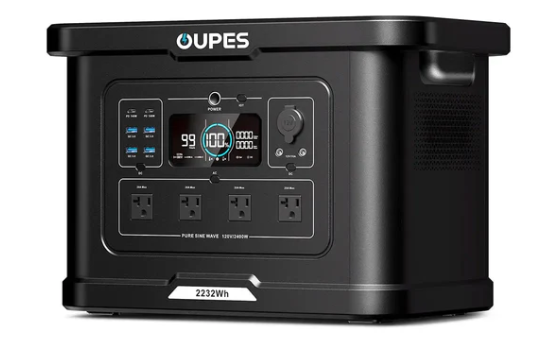
Modern LiFePO₄-based stations — such as those produced by OUPES — feature high energy density, low-temperature performance, and multiple outputs for appliances, ensuring continuity during power interruptions.
5. Energy Consumption Comparison Table
| Device / System | Average Winter Energy Use (kWh/month) | Recommended Efficiency Action | Potential Savings (%) |
|---|---|---|---|
| Electric Heater | 600–900 | Use programmable thermostat & zone heating | 15 % |
| Lighting & Electronics | 150–250 | Switch to LED & unplug idle devices | 10–20 % |
| Portable Power Station (used off-grid) | Variable | Recharge with solar to offset grid use | Up to 30 % |
Part 2: What Are the Incentives for a Battery Energy Storage System
Installing a Battery Energy Storage System (BESS) offers financial and environmental advantages. These systems store excess solar or off-peak electricity for later use, increasing resilience during blackouts and reducing grid dependence.
1. Federal Incentives
The Residential Clean Energy Credit under the Inflation Reduction Act provides a 30 % tax credit on eligible costs for home battery storage installed from 2022 through 2032 (IRS.gov). Even standalone battery systems — not connected to solar — qualify if they store at least 3 kWh of energy and are installed at a U.S. residence.
2. State and Local Programs
Several states offer additional rebates or performance-based incentives for home battery storage:
- Rebates & Grants – States like California and New York offer cash-back per kWh of installed storage capacity (National Renewable Energy Laboratory – NREL reports).
- Performance Payments – Some utilities pay owners for exporting energy during peak times (e.g., \$500–\$1,500 per year depending on region).
- Stacking Incentives – Federal tax credits can often be combined with state rebates for greater total savings.
3. How to Apply for Incentives
- Confirm eligibility and system capacity requirements (≥ 3 kWh).
- Keep purchase invoices and installation documents.
- File IRS Form 5695 for the federal tax credit.
- Submit applications to local utility or state energy offices for rebates if available.
4. Example: OUPES Power Stations and Incentive Opportunities
As a manufacturer of advanced portable and home backup power solutions, OUPES designs systems that align with battery storage incentive criteria — new, safe, high-capacity units capable of solar integration. Homeowners installing OUPES systems that meet capacity thresholds can potentially leverage the federal 30 % credit and state rebates, making clean energy adoption more affordable and sustainable.
5. Incentive Comparison Table
| Program Type | Benefit Level | Eligibility | Notes |
|---|---|---|---|
| Federal Residential Clean Energy Credit | 30 % of total cost | U.S. homeowners with new systems ≥ 3 kWh | Applies 2022–2032 (IRS.gov) |
| State Rebate Programs | \$200–\$1,000 / kWh of capacity | Varies by state (NREL database) | Often first-come basis |
| Utility Demand Response Payment | \$500–\$2,000 per year | Batteries participating in grid support | Requires enrollment with local utility |
FAQ
1. Can I claim the battery tax credit without solar panels?
Yes. Since 2023, standalone battery systems qualify for the 30 % credit if they meet capacity and installation requirements (IRS.gov).
2. Do portable power stations qualify for these incentives?
Generally, portable units used as independent backup sources do not qualify unless they are permanently installed and meet residential battery criteria. Always verify local rules.
3. How much can I save with a battery system plus incentives?
Savings vary by region and system size. Combining the federal 30 % credit and state rebates can cut total costs by 35–50 %.
4. Is winter a good time to install a battery storage system?
Yes. Winter is ideal for testing energy resilience and taking advantage of tax credits that apply to systems placed in service before year-end.
5. Can OUPES systems be paired with solar panels for credits?
Yes. OUPES portable power stations are compatible with solar inputs, allowing integration with home solar arrays to enhance credit eligibility and sustainability.