




Introduction
Portable power stations have rapidly grown in popularity as homeowners, campers, RV travelers, and emergency planners look for safe, silent, and renewable backup power solutions. But many users still wonder: “Is a portable power station just a battery?”
The short answer is: No. A portable power station includes a battery, but it is far more advanced than a simple battery pack. It’s a complete, self-contained energy system designed to power devices safely and efficiently—operating much like a mini power plant you can carry.
This article breaks down the difference between a portable power station and a battery, explains the internal components, compares them using data, and provides real-world use cases. You’ll clearly understand why a portable power station is more than just a battery—and why it has become the preferred choice for home backup and off-grid energy.
Portable Power Station vs. Battery: What’s the Difference?
The Simple Explanation
A battery stores energy. A portable power station stores, converts, regulates, and delivers energy in a safe and usable form. It includes multiple technologies that a standalone battery does not.
Key Differences Overview
| Feature | Battery | Portable Power Station |
|---|---|---|
| Stores Energy | Yes | Yes |
| Converts DC to AC Power | No | Yes (via inverter) |
| Provides AC Outlets | No | Yes |
| Regulates power safely | No | Yes (BMS) |
| Multiple charging methods | Usually only one | AC, solar, car, USB-C, etc. |
| User-friendly display | No | Yes |
| Designed for home backup | No | Yes |
As the table shows, the battery is just one component of what makes a power station functional.
What’s Inside a Portable Power Station?
A modern portable power station includes five major components that work together to deliver clean, smooth, and safe energy.
1. High-Capacity Battery Pack
This is the core energy storage system. Most quality portable power stations use LiFePO4 (lithium iron phosphate) batteries for long lifespan and thermal stability. These batteries can last over 3,000 cycles—far longer than typical lithium-ion batteries used in small power banks.
2. Power Inverter (DC to AC Conversion)
Most home appliances can’t run on battery DC power alone. The inverter converts stored DC power into 120V pure sine wave AC, the same type of power you get at home. This is essential for refrigerators, heaters, microwaves, and other sensitive electronics.
3. Battery Management System (BMS)
The BMS is the power station’s “brain.” It protects against:
- Overcharging
- Overheating
- Short circuits
- Over-discharging
- Voltage overload
This makes power stations far safer than standalone batteries.
4. Input Charging System
The charging controller allows multiple charging options:
- Solar panels
- Wall AC outlet
- Car port
- USB-C PD charging (on some models)
5. Output Ports
Portable power stations offer multiple outlets:
- AC outlets (for appliances)
- DC ports
- Car cigarette port
- USB and USB-C ports
These allow users to power laptops, CPAP machines, TVs, tools, medical equipment, and even refrigerators.
Why Not Just Use a Simple Battery Pack?
Standalone batteries cannot safely or effectively power appliances. Here are reasons why a portable power station is more efficient and user-friendly:
1. A Battery Cannot Power AC Appliances
Batteries only output DC power. Without an inverter, you cannot run microwaves, refrigerators, heaters, monitors, or other household devices.
2. No Power Regulation = Unsafe
A power station’s BMS prevents dangerous electrical failures. A raw battery pack cannot self-regulate, making it unsafe for high-load electronics.
3. Limited Charging Options
A typical battery can only be charged in one way. A portable power station supports wall charging, solar charging, car charging, and more.
4. No Runtime Monitoring
Portable power stations include LED or LCD screens showing:
- Remaining runtime
- Battery percentage
- Input/output wattage
A battery has no display—so you have no idea how much power remains.
Real-World Scenarios: When a Portable Power Station Matters
1. Winter Storm Power Outages
During outages, portable power stations support essential devices like:
- Heaters (low-wattage)
- Refrigerators
- Wi-Fi routers
- CPAP machines
- Phones and laptops
2. RV and Van Life
Without a power station, RV users would rely solely on vehicle alternators or noisy gas generators—neither ideal for long-term off-grid power.
3. Camping and Outdoor Recreation
Batteries cannot run portable fridges, cooking devices, or lighting systems. Power stations make outdoor trips comfortable and safe.
4. Home Office Backup
Keeping a laptop charged is easy with a battery, but powering monitors, routers, and printers requires a portable power station.
Which Portable Power Stations Use Advanced Batteries?
All OUPES portable power stations use high-quality LiFePO4 battery technology and include advanced safety systems, making them ideal for:
- Home emergency backup
- Off-grid living
- Travel and camping
- Worksite power
- RV and van power needs
Popular OUPES Models and Their Battery Capacities
| Model | Battery Capacity | Surge Output | Notable Features |
|---|---|---|---|
| Exodus 1200 | 992Wh | 3600W | Fast solar charging, 10 ports |
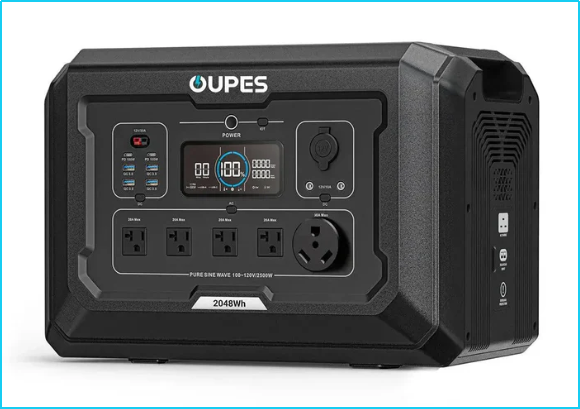
| Mega 2 | 2048Wh | 5400W | Expandable battery, AC + solar charging |
| Mega 5 | 5040Wh | 7000W | Whole-home backup capability |
These systems demonstrate how today’s power stations function as full energy ecosystems—not just standalone batteries.
FAQ
Is a portable power station basically a big battery?
No. It includes a battery, inverter, BMS, outlets, and charging system—making it a complete energy device.
Can a portable power station replace home backup power?
Yes, depending on capacity. Larger units can power refrigerators, medical devices, and essential rooms.
Are portable power stations safer than raw batteries?
Yes. They include protection systems that prevent overheating, overcharging, and electrical failure.
Can portable power stations power heaters or large appliances?
Yes, as long as the heater does not exceed the power station's output wattage.
Do portable power stations last long?
LiFePO4 power stations last up to 10 years with 3000+ cycles.
Are they suitable for indoor use?
Yes. They produce no fumes and work silently.
Can I charge a portable power station with solar panels?
Yes. Many models support fast solar charging using MPPT technology.
Conclusion
A portable power station is not just a battery—it is an advanced energy system designed to store, convert, and deliver clean power safely and conveniently. With integrated inverters, BMS protection, multiple charging options, and versatile outputs, portable power stations offer far more capability than a standalone battery. Whether you're preparing for emergencies, traveling off-grid, or powering appliances on the go, a portable power station provides reliable, user-friendly energy wherever you need it.