




Introduction
Portable power stations have become a reliable backup solution during winter storms, camping trips, RV travel, and emergency outages. One of the most common questions users ask is: “How long can a portable power station run a heater?”
Because heaters consume significant power, understanding runtime is critical for winter preparedness and safe indoor use. This article explains heater wattage ranges, how to calculate runtime accurately, real-world performance scenarios, and how OUPES power stations compare when powering heaters during emergencies or outdoor adventures.
Factors That Determine How Long a Portable Power Station Can Run a Heater
1. Heater Wattage
Most electric heaters fall within the following wattage ranges:
- Small ceramic / desk heaters: 150–300W
- Medium indoor heaters: 300–700W
- Standard space heaters: 1000–1500W
Higher wattage = faster heat output but shorter runtime.
2. Power Station Capacity (Wh)
Portable power stations are rated in watt-hours (Wh), which tells you how much energy the battery can store. For example:
- 1000Wh = 1 hour at 1000W
- 2000Wh = 2 hours at 1000W
3. Efficiency Loss (Typically 10–15%)
Due to inverter conversion, heat loss, and internal resistance, a portion of the battery capacity is not usable. Most portable power stations deliver around 85–90% usable energy.
4. Heater Power Setting
Most heaters allow switching between low, medium, and high power. Choosing a lower setting extends runtime significantly.
5. Ambient Temperature
Colder rooms require more heat to maintain warmth, causing heaters to run continuously rather than intermittently.
How to Calculate Heater Runtime
Use the formula below for a close estimate:
Runtime (hours) = Battery Capacity (Wh) × 0.85 / Heater Wattage
Example Calculation
If you use a 500Wh portable power station and a 300W heater:
Runtime = 500 × 0.85 / 300 = 1.41 hours
Basic Runtime Reference Table
| Heater Wattage | 1000Wh Power Station | 2000Wh Power Station | 3000Wh Power Station |
|---|---|---|---|
| 150W (low setting) | ≈ 5.6 hours | ≈ 11.3 hours | ≈ 17 hours |
| 300W (small heater) | ≈ 2.8 hours | ≈ 5.6 hours | ≈ 8.5 hours |
| 500W (mid-range heater) | ≈ 1.7 hours | ≈ 3.4 hours | ≈ 5.1 hours |
| 1500W (full-size heater) | ≈ 0.56 hours | ≈ 1.1 hours | ≈ 1.7 hours |
This table shows why choosing the right portable power station matters—especially when using mid- and high-wattage heaters.
Real-Life Scenarios: How Long Will a Portable Power Station Actually Last?
Runtime varies depending on whether you're indoors, outdoors, or in emergencies. Here are practical examples:
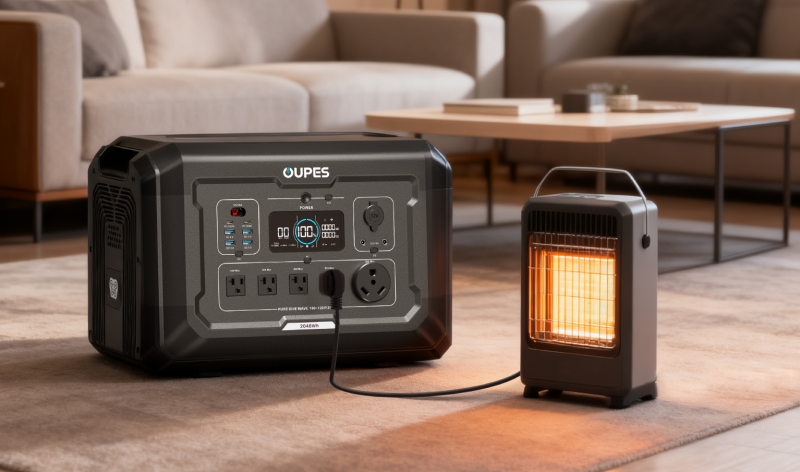
Scenario 1: Indoor Heating During a Winter Outage
A 300W heater paired with a 2000Wh unit may last around 5–6 hours. Most users run heaters intermittently, not continuously, often extending runtime to 8–10 hours.
Scenario 2: Heating a Small RV or Van
RV travelers often use 150–300W heaters. With a 3000Wh station, the heater could operate for 10–17 hours depending on settings.
Scenario 3: Emergency Heating in a Bedroom
A low-wattage 150W heater is safer and more energy-efficient. With a 2000Wh unit, you can heat the room for more than 11 hours nonstop, or overnight intermittently.
Scenario 4: Camping in Cold Weather
Using a 300W heater inside a tent or insulated shelter with a 1000Wh station gives about 2.5–3 hours of continuous heat—enough to warm the tent before sleep.
Runtime Estimates for OUPES Portable Power Stations
Below is a comparison of popular OUPES models and how long they can power heaters of different wattages.
| OUPES Model | Battery Capacity | Heater 150W | Heater 300W | Heater 500W | Heater 1500W |
|---|---|---|---|---|---|
| Exodus 1200 | 992Wh | ≈ 5.6 hours | ≈ 2.8 hours | ≈ 1.7 hours | Not recommended |
| Mega 2 | 2048Wh | ≈ 11.3 hours | ≈ 5.6 hours | ≈ 3.4 hours | ≈ 1.1 hours |
| Mega 3 | 3072Wh | ≈ 17 hours | ≈ 8.5 hours | ≈ 5.1 hours | ≈ 1.7 hours |
| Mega 5 | 5040Wh | ≈ 28 hours | ≈ 14 hours | ≈ 8.5 hours | ≈ 2.8 hours |
For whole-home or long-duration heating, the Mega 5 provides the most reliable heating support during outages or extreme winter weather.
Tips to Maximize Heater Runtime on a Portable Power Station
1. Use Low Power Mode
Switching from 1500W to 300W can increase runtime by up to 5×.
2. Insulate Your Room
Keep doors closed, use heavy curtains, and block drafts to retain heat.
3. Preheat the Room
Run the heater at a higher setting for 10–20 minutes, then switch to low mode.
4. Combine with Non-Electric Heat Sources
Thick blankets, insulated jackets, and thermal sleeping bags reduce dependency on electric heating.
5. Use Efficient Heaters
Some heaters cycle on/off automatically, saving battery power.
FAQ
Can a portable power station safely run a heater indoors?
Yes—OUPES portable power stations produce no fumes or emissions, making them safe for indoor use.
Can I plug a 1500W heater into a power station?
Only if the station’s output exceeds 1500W. High-wattage heaters drain batteries quickly.
Is it better to run a heater in low mode?
Yes. Low mode dramatically increases runtime and improves energy efficiency.
Can a portable power station heat an entire house?
It can heat individual rooms effectively, especially with insulation.
Will running a heater damage the power station?
No, as long as wattage remains within the power station’s limits.
How do I warm a room without draining the battery too fast?
Preheat, use insulation, run on low mode, and limit heat loss.
Do heaters cause power surges?
Most heaters have stable wattage. OUPES models include surge protection for safety.
Conclusion
Portable power stations can effectively run heaters for short to moderate periods depending on heater wattage and power station capacity. While high-wattage heaters drain batteries quickly, low- and medium-wattage heaters can run for many hours—especially when paired with high-capacity OUPES units. Understanding heater wattage, calculating runtime, and choosing the proper station ensures safe, warm, and reliable heating during outages, winter emergencies, camping, and off-grid living.