




TL;DR:
Whenever there is a power cut, you can keep your home running by using solar generators. Choosing the right generator relies on your energy requirements, budget and lifestyle. Find out how to select the most suitable solar generator for your home, and discover trusted options at OUPES.
Choosing the Right Solar Generator for Your Home
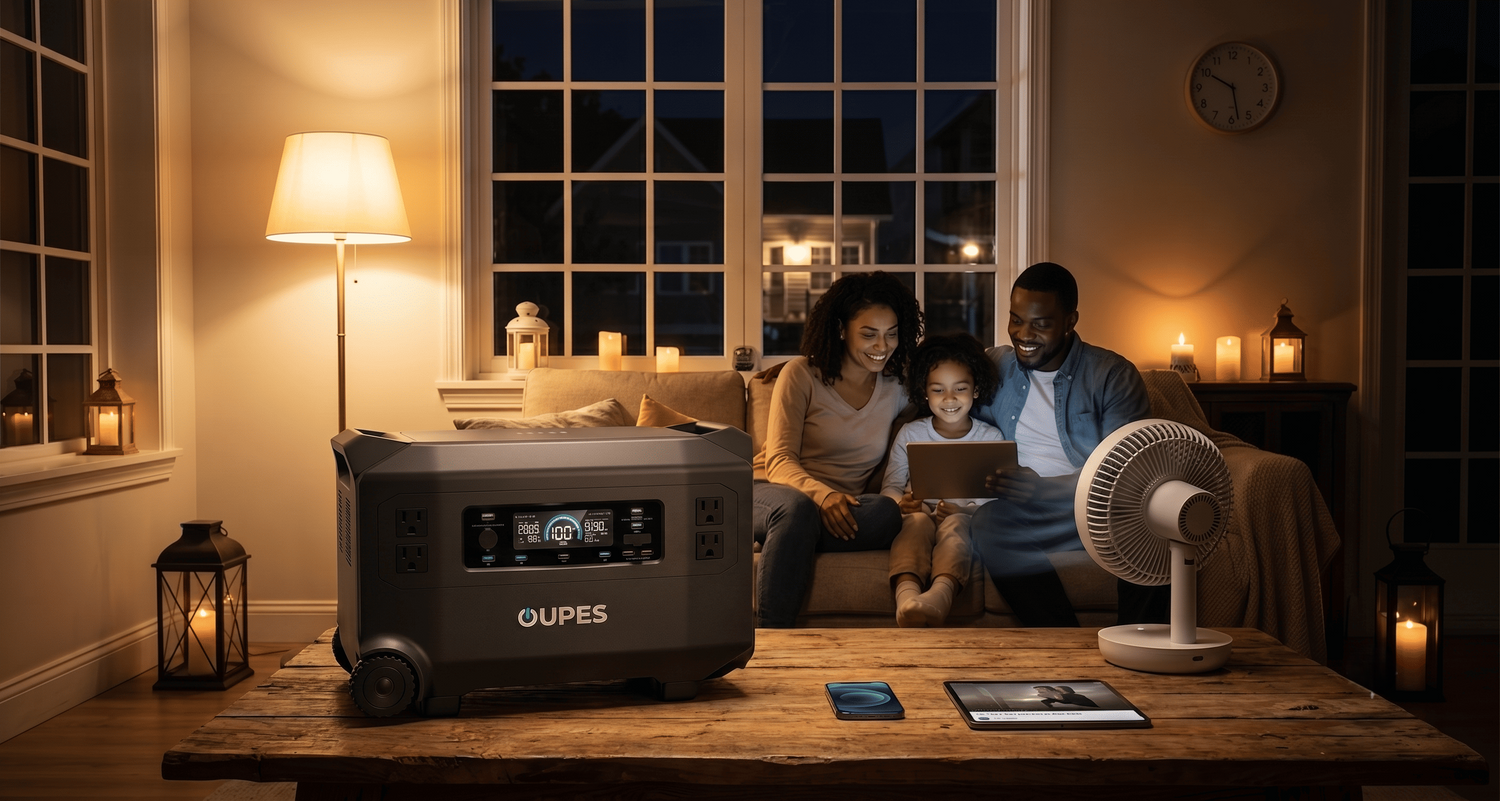
It’s a hot summer evening. You are sitting and enjoying your favourite show when the lights suddenly flicker and go off. The fan switches off, the fridge shuts down, and your mobile phone battery is already dead. You look out of the window, and the entire neighbourhood is black.
Rather than waiting in the darkness, imagine you can power on your lights and keep your food fresh: all of them by the sunlight. It is the magic of a solar generator. No darkness. No noise. Simply solar energy, pure and clean.
The share of solar electricity could grow from about 3% in 2020 to 40% by 2035.
Start with a scenario: what do you want to power?
Before you buy anything, imagine a realistic situation:
● The power grid fails for a few hours. What are the essentials you’d like to keep running? Perhaps the fridge, a few lights, your computer, and phone charger.
● The outage may last a day and you want the TV, washer/dryer, fan, and lights all working.
Write down the devices and how long you expect to run them. That will guide you to choose the right size and type of solar generator.
Choosing the Right Solar Generator: Understand the key numbers
Before you select a solar generator for your home, you must consider some factors to make the right choice:
1. Know Your Power Needs
Begin by writing down what you want to power. A small solar generator can serve the lights, phones, and laptops. The larger ones are able to power fridges, washing machines or even a heater.
The following is a simple method of calculation:
● Add the watts (W) of all the items you will be using.
● Multiply that by the number of hours that you will use them.
● Pick a generator with a capacity that can sustain 20-30% higher than this.
Assuming that you use 1,000 Wh a day, you will need at least 1,200-1,500 Wh of a solar generator.
2. Check the Battery Capacity
The size of battery is measured in watt-hours (Wh). The greater the number, the longer it will last. While there are numerous types of batteries available in the market, the most suitable are lithium iron phosphate (LiFePO4 ) batteries: they last longer, they charge faster and they are safer compared to the older types of battery.
Solar generators such as the OUPES Exodus 2400W use LiFePO4 batteries that can withstand more than 3,500 charge cycles, equivalent to years of service.
3. Look at the Charging Options
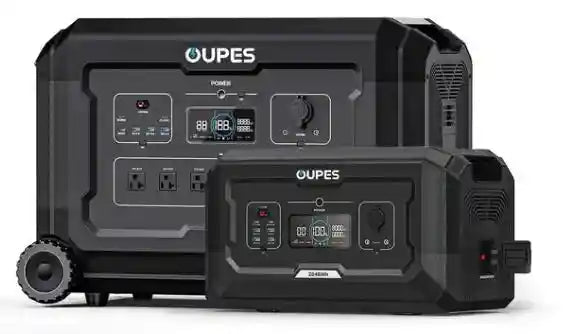
Some generators charge only from solar panels. Others can also charge from the wall outlet or even car. Models like the OUPES Mega 5 Home Backup System can recharge from solar and wall power simultaneously, making them faster to fill up.
4. Portability and Size
If you plan to move it around (RV trips or camping), pick a portable design with handles or wheels. If it’s for home backup, a larger one is fine.
Solar Generator Comparison Table
Let’s compare some solar generators to help you understand how they stack up. It will help you make the right choice.
|
Model |
Battery Capacity |
Output Power |
What It Can Run |
|
2,232 Wh |
2,400 W |
Full home backup of lights, fridge, tools during short outages |
|
|
5,040 Wh base (expandable up to >10,000 Wh) |
4,000 W |
Large‑home backup: supports most appliances for extended outages |
According to EnergySage, homeowners can save $10,000–$30,000 over 20 years by using solar energy systems.
Picking the right size for your home
Suppose you are in a small house, and you would like to keep running the following appliances during a blackout: fridge (150W), two lights (2 × 10W), phone charging (20W), and a fan (50W) for 6 hours.
Total approximate energy = (150W + 20W + 20W + 50W) × 6h = ~1,440 Wh.
Add 20% buffer, which means ~1,730 Wh.
So you may choose a solar generator with an approximate battery capacity of 2000 Wh and an inverter output of 1000W+.
When you are living in a bigger house with more appliances, you can scale up accordingly. Also, verify the number of hours of sunlight you receive and the charging rate.
Where to Buy Reliable Solar Generators
At OUPES, you can find high-performance options for camping, home use, and emergency backup.
In case it is your first generator, you should look at a model that is meant to be used as a home backup and not just camping: this way, you will have the heavy loads covered.
Final Thoughts
Choosing the right solar generator is not about purchasing the largest possible generator; it's about making right choice that fits the home, devices, lifestyle, and budget.
Begin small: choose what you would like the generator to provide in the event of an outage. Then calculate the size and the output you will need.
Having the right solar powered generator will make you less anxious when the power goes off, as you will know that your power, lights, fridge and other devices will not fail.
Do not wait till the next blackout. Think ahead, make a good choice, and keep your home appliances working.
FAQs
What's the lifespan of solar generator?
Most solar generators have a lifespan of 10 years or even more with proper care. Their batteries can be charged thousands of times before they start losing their power.
Can I power my whole house using a solar generator?
A large solar generator (2000W or 5000W) can power large appliances for a few hours. Smaller sizes can be used with phones, lights, or small fridges.
What happens when the sunlight is gone?
Solar power stations are configured to store power in batteries, and hence continue to operate in cloudy weather or at night. You can also recharge them with a wall plug or your car.
Can solar generators be used indoors?
Yes, they are absolutely safe inside since they do not produce gas or smoke as fuel generators.
backup generator for home, backup power, best generator for home backup power, home backup power, home battery backup, homebackup power, portable backup generator, solar generator for home,

Leave a comment
This site is protected by hCaptcha and the hCaptcha Privacy Policy and Terms of Service apply.