




Table of Contents
- Introduction: Rethinking the "Perfect" Mother's Day Gift
- The Reality of Power Outages: A Growing Challenge for Modern Families
- Educational Guide: What Exactly is a Portable Power Station?
- The OUPES Advantage: Core Technologies Ensuring Safety and Longevity
- Product Guide: Choosing the Right OUPES Power Station for Mom
- User Education: How to Maximize the Lifespan of Your Power Station
- Conclusion: The Gift of Uninterrupted Peace of Mind
- Frequently Asked Questions (FAQ)
Introduction: Rethinking the "Perfect" Mother's Day Gift
When Mother's Day approaches, the usual suspects immediately come to mind: a beautiful bouquet of flowers, a customized greeting card, sparkling jewelry, or perhaps a reservation at her favorite restaurant. While these traditional gifts are undoubtedly appreciated and bring immediate joy, they often lack a lasting, practical impact on her daily life. In an era where our homes and routines are intrinsically tied to electricity, and with the frequency of extreme weather events causing grid failures on the rise, a new, highly practical, and deeply meaningful gift is emerging: the portable power station.
Mothers are frequently the operational core of the household. When a sudden power outage strikes, they are often the ones bearing the brunt of the stress and anxiety. Picture the scenario: a refrigerator and freezer fully stocked with a week's worth of carefully planned meals and groceries suddenly at risk of spoiling; a baby's bottle warmer or soothing white-noise machine rendered useless in the dark; the vital Wi-Fi router cutting off remote work or family communication; and home security systems going blind. The emotional and financial toll of a prolonged blackout is significant.
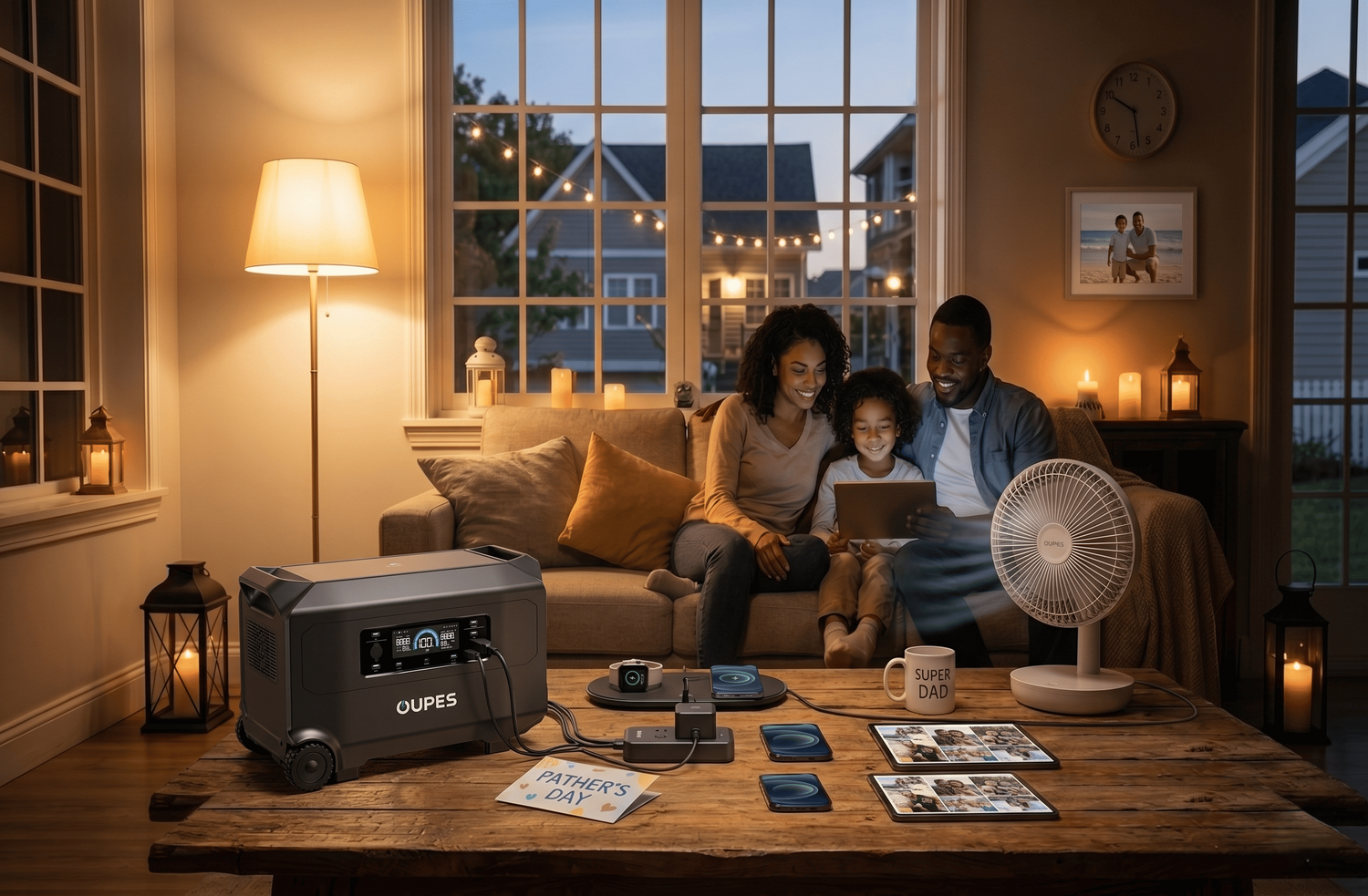
This Mother's Day, why not give the gift of genuine, unwavering reliability? An OUPES portable power station is far more than just a large battery; it is a steadfast promise of safety and continuity for mom and the entire family. This comprehensive guide will educate you on the critical need for home backup power, explain the underlying technology, and help you select the perfect OUPES system to ensure that, no matter what happens outside, the warmth and power inside your home remain uninterrupted.
The Reality of Power Outages: A Growing Challenge for Modern Families
To truly understand the value of investing in a portable power station, we must examine the current state of our electrical grid. According to data published by the U.S. Energy Information Administration (EIA), the average duration and frequency of power interruptions experienced by electricity customers have seen a concerning upward trend over the past decade. Aging grid infrastructure, combined with an increase in severe weather events—ranging from intense summer hurricanes and localized heatwaves to devastating winter blizzards and preventative power shutoffs due to wildfire risks—have made blackouts an unavoidable reality for millions of families.
Historically, families relied on traditional gas-powered generators to bridge the gap during these grid failures. However, from a practical and safety standpoint, gas generators are far from ideal, especially for a mother trying to manage a household during a storm. Gas generators are notoriously heavy and cumbersome to move. They require manual pull-starts which can be physically demanding. They are incredibly noisy, disrupting the peace of the neighborhood. Most importantly, they emit deadly carbon monoxide exhaust, meaning they can never be used indoors or near open windows. During a raging storm, someone must brave the elements to refuel and operate the noisy machine outside, running thick extension cords into the house.
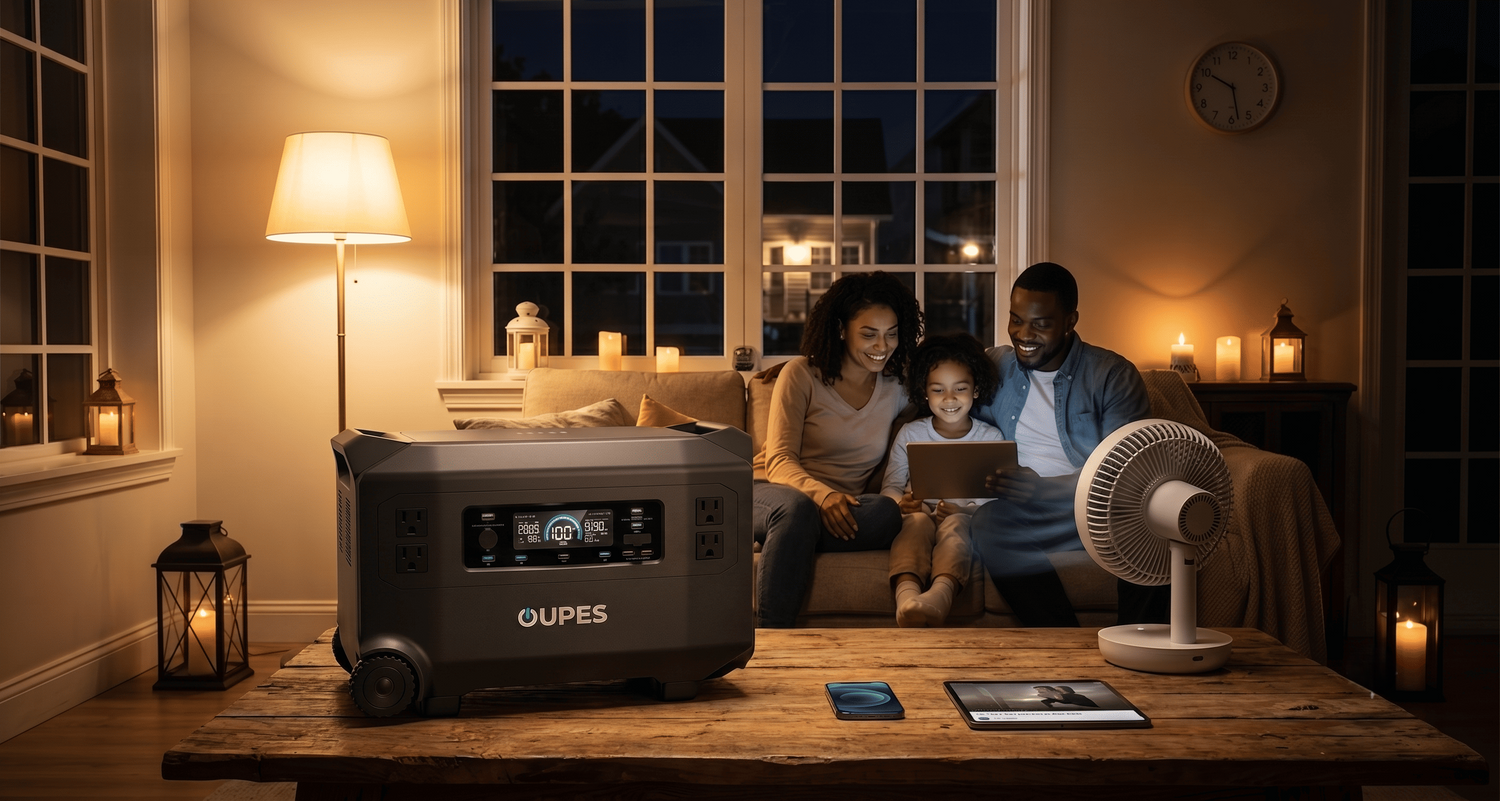
Portable power stations have revolutionized emergency preparedness. They are completely emission-free, operate in virtual silence, and are entirely safe to use directly inside the living room, kitchen, or bedroom. They are the ultimate "plug-and-play" solution, offering immediate relief without the hazards or hassles of fossil fuels.
Educational Guide: What Exactly is a Portable Power Station?
Before diving into specific OUPES models, it is crucial to establish a foundational understanding of the technology. What exactly is a portable power station, and how does it work?
In simple terms, a portable power station (PPS) is a high-capacity, highly intelligent rechargeable battery system. However, its architecture is vastly more sophisticated than a standard phone power bank. A quality PPS consists of three primary components:
- The Battery Pack: This is the heart of the unit, responsible for safely storing large amounts of electrical energy. The chemical composition of this battery dictates the unit's lifespan, weight, and safety profile.
- The Inverter: This is the critical conversion hub. Batteries store power as Direct Current (DC), but the vast majority of our household appliances (refrigerators, televisions, microwaves) run on Alternating Current (AC). The inverter's job is to efficiently transform the DC power from the battery into usable AC power for your home.
- Pure Sine Wave Technology: When evaluating a power station, the quality of the AC output is paramount. Premium devices, like the entire OUPES lineup, utilize "Pure Sine Wave" inverters. Cheaper alternatives often use "Modified Sine Wave" inverters, which produce a blocky, unnatural electrical current that can cause appliances to run hot, buzz loudly, or even suffer permanent damage. Pure sine wave technology produces a clean, smooth electrical current that is identical to—or sometimes even cleaner than—the power supplied by the city grid. This is absolutely essential for safely running sensitive electronics like laptops, medical CPAP machines, and smart home hubs.
The OUPES Advantage: Core Technologies Ensuring Safety and Longevity
With a flooded market of backup power options, why does OUPES stand out as the ideal, trustworthy gift for Mother's Day? The answer lies in their uncompromising approach to foundational technology, safety, and long-term durability:
1. The Unmatched Safety of LiFePO4 Chemistry
Many early-generation portable power stations utilized Lithium Nickel Manganese Cobalt (NMC) batteries—the same chemistry found in older electric vehicles. While energy-dense, NMC batteries carry a known risk of thermal runaway (catching fire) if punctured or exposed to extreme heat. Recognizing that these devices will be kept inside the family home, OUPES has fully embraced Lithium Iron Phosphate (LiFePO4) battery technology. From a chemical engineering perspective, LiFePO4 offers vastly superior thermal and chemical stability. It is virtually immune to catching fire or exploding under stress, providing the ultimate peace of mind when placed in a busy household environment with children and pets.
2. A Decade of Reliable Power (3500+ Lifecycles)
A home backup system is a significant, long-term investment. The LiFePO4 cells utilized by OUPES are renowned for their exceptional longevity. They are rated for over 3,500 complete charge and discharge cycles before the battery capacity drops to 80% of its original state. To put this into perspective, even if mom were to completely drain and recharge the OUPES unit every single day, it would continue to perform reliably for nearly a decade. This vastly outperforms traditional lithium-ion batteries, which often degrade significantly after just 500 to 800 cycles.
3. Automotive-Grade Battery Management System (BMS)
Beneath the sleek exterior of an OUPES unit lies a highly advanced Battery Management System (BMS). Think of the BMS as a vigilant, micro-processing brain that monitors the health of the battery array in real-time. It constantly checks the voltage, current, and temperature of every individual cell. If it detects any anomaly—such as a potential short circuit, overcharging, over-discharging, or extreme temperature fluctuations—the BMS instantly triggers safety protocols to shut the system down, preventing damage to the unit and ensuring the safety of the user. This means mom never has to worry about the technical details; she can simply plug in and power on.
Product Guide: Choosing the Right OUPES Power Station for Mom
Every family’s needs are unique, dictated by their geographical location, the frequency of local power outages, and their specific household appliances. OUPES offers a meticulously engineered range of products to fit every scenario. Here is a detailed breakdown to help you select the perfect model for your mother:
OUPES Mega 1 Lite: Lightweight Everyday Essential
- Core Specifications: 2000W AC Output / 1024Wh Battery Capacity
- Product Link: Explore the OUPES Mega 1 Lite
Educational & Scenario Analysis:
If your mother values portability, loves outdoor activities like weekend camping or tailgating, or if your neighborhood typically only experiences brief, localized power outages lasting a few hours, the Mega 1 Lite is an exceptional choice. It packs a surprising punch with a 1024Wh capacity (roughly 1 kilowatt-hour) and an impressive 2000W continuous output. This means it is light enough for mom to easily carry from the garage to the kitchen, yet powerful enough to run high-draw appliances like a coffee maker, a microwave, or a hair dryer during a morning outage. It will comfortably keep multiple smartphones, tablets, and laptops charged for days, ensuring the family remains connected and comfortable until the grid is restored.

OUPES Mega 1 LITE Power Station
- Powerful Output: 2,000W AC (4,500W surge) via 9 ports; powers 99% of appliances.
- 46-Min AC Recharge: 0 to 100% in just 46 minutes via 1,400W input.
- Fast Solar Charging: Full charge in 69 minutes with 800W max solar input.
- OTA Updates: Remote firmware updates for optimized performance and new features.
OUPES Exodus 2400: The Golden Balance of Capacity and Power
- Core Specifications: 2400W AC Output / 2232Wh Battery Capacity
- Product Link: Explore the OUPES Exodus 2400
Educational & Scenario Analysis:
The Exodus 2400 hits the "sweet spot" for medium-to-heavy emergency home backup. Its substantial 2232Wh capacity is designed to tackle one of the most stressful aspects of a blackout: food preservation. A standard, energy-efficient full-size home refrigerator typically consumes between 100W to 200W of power while the compressor is running. The Exodus 2400 can effortlessly keep a refrigerator running for 15 to 20 hours (depending on the fridge's efficiency rating and ambient temperature). Furthermore, its robust 2400W output means mom doesn't have to choose between saving the groceries and keeping the lights on; she can run the fridge, power LED lamps, keep the internet router active, and charge family devices all simultaneously. It is the cornerstone of a solid family emergency preparedness plan.

OUPES EXODUS 2400 Power Station
- Exodus 2400: 2,232Wh Capacity | 2,400W AC Pure Sine Wave Inverter (2,600W Boost Mode)
- 2,200W Max. Input charging speed (AC + Solar)
- Exodus 2400 Net Weight: 45.2 lbs
OUPES Mega 2 Pro: The Heavy-Duty Home Backup Hub
- Core Specifications: 2500W AC Output / 2048Wh Battery Capacity
- Product Link: Explore the OUPES Mega 2 Pro
Educational & Scenario Analysis:
For families residing in areas prone to severe storms or multi-day outages, the Mega 2 Pro is engineered for resilience. It features a formidable 2500W AC output, specifically designed to handle appliances with high starting surges, such as window air conditioning units, heavy-duty power tools, or water pumps. What truly sets the Mega 2 Pro apart in emergency situations is its advanced fast-charging architecture. When paired with OUPES portable solar panels, this unit transforms into a self-sustaining solar generator. Mom can set up the panels in the backyard during the day to rapidly recharge the unit using free, clean energy from the sun, ensuring the house has ample power ready for the long night ahead. It provides a level of off-grid independence that traditional batteries cannot match.

OUPES Mega 2 Pro Power Station
- 2048Wh Capacity, expandable up to 10.24kWh
- LiFePO4 Battery with 3,500+ Life Cycles to 80%
- 5 Ways to Power Up: Ultimate Flexibility Anywhere
- Smarter APP Control
OUPES Guardian 6000: The Ultimate Whole-House Solution
- Core Specifications: Ultimate High-Power Output / Micro-Grid Level Home Backup
- Product Link: Explore the OUPES Guardian 6000
Educational & Scenario Analysis:
If you want to give the ultimate gift of absolute normalcy during a crisis, the Guardian 6000 is the pinnacle of home power solutions. This system transcends the concept of a "portable battery" and acts more like a personal, quiet micro-grid. Designed for seamless integration with your home's main electrical panel (via a manual transfer switch), the Guardian 6000 can power heavy 240V appliances like electric dryers, well pumps, or central heating systems. When the grid fails, a simple switch ensures the entire house remains powered. Mom won't have to run extension cords or decide which appliances to plug in; the home's existing outlets and light switches will simply continue to work. It is an impenetrable fortress of electrical security for the family.

OUPES Guardian 6000 Power Station
- 240V/6,000W(Boost 7,200W) & 120V/3600W dual-voltage output
- Basic Capacity 4,608 Wh, Expandable Capacity Up to 41.4 kWh With 8 x G5 batteries
- 240V 3,600W Max for 84 min; 120V 1,800W Max for 3 Hours
User Education: How to Maximize the Lifespan of Your Power Station
To guarantee that the OUPES power station you gift your mother this year continues to perform flawlessly for the next decade, please follow these battery maintenance best practices recommended by engineers:
- Avoid Long-Term Storage at 0% or 100%: The golden rule of lithium battery care is avoiding extremes when the device is not in active use. If mom plans to store the power station in a closet as an emergency backup for months at a time, she should aim to store it with a battery charge between 50% and 80%. Storing it completely dead can cause deep-discharge damage, while storing it at a continuous 100% can slowly degrade the internal cell chemistry over time.
- Perform Routine Maintenance Cycles: A battery is like a muscle; it needs occasional exercise. We highly recommend taking the OUPES unit out of storage every 3 to 6 months to perform a maintenance cycle. Simply use it to power some appliances until the battery drops to around 20%, and then recharge it back up to the optimal 80% storage level. This keeps the internal chemical compounds active and recalibrates the BMS display.
- Mind the Temperature and Environment: While LiFePO4 batteries are incredibly tough, extreme ambient temperatures accelerate aging. Never store the power station in a freezing outdoor shed in winter or a baking car trunk in summer. The optimal storage temperature is a dry, indoor environment between 68°F and 86°F (20°C - 30°C). Furthermore, ensure the cooling fans on the side of the unit are never blocked by blankets or walls during operation to prevent overheating.
Conclusion: The Gift of Uninterrupted Peace of Mind
This Mother’s Day, step away from the fleeting and the conventional. Investing in an OUPES portable power station is an investment in the safety, comfort, and resilience of the family she works so hard to care for. Whether it is the nimble Mega 1 Lite for weekend adventures, the steadfast Exodus 2400 to keep the kitchen running, the solar-ready Mega 2 Pro, or the uncompromising Guardian 6000 for whole-house defense, OUPES transforms a stressful, dark blackout into a minor inconvenience. It is a gift that silently says, "I want you to be safe, comfortable, and stress-free, no matter the circumstances." Let reliable power be your most thoughtful expression of gratitude this year.
7. Frequently Asked Questions (FAQ)
Are OUPES portable power stations genuinely safe to operate indoors?
Yes, absolutely. Unlike gas-powered generators that rely on combustion and produce lethal carbon monoxide emissions, OUPES power stations operate purely on advanced battery technology. They emit zero fumes, require no ventilation, and run low noise. They are perfectly safe to place right next to the bed, in the kitchen, or in a child's playroom during a storm.
My mother relies on a medical CPAP machine at night. Can an OUPES unit power it safely?
Yes. In fact, it is one of the most critical use cases for our products. Because all OUPES power stations feature Pure Sine Wave inverters, they deliver smooth, grid-quality electricity that will not damage sensitive medical equipment. Depending on the model and whether the CPAP humidifier/heater is turned on, an OUPES unit can power a CPAP machine for multiple consecutive nights on a single charge.
How long will the OUPES Exodus 2400 run a standard kitchen refrigerator during a blackout?
A standard, full-size refrigerator usually requires between 100W and 200W of power, but the compressor cycles on and off based on the internal temperature. With its 2232Wh capacity, the Exodus 2400 can comfortably run a standard home refrigerator for 15 to 20 hours. You can extend this time significantly by keeping the fridge door closed as much as possible and connecting solar panels to the OUPES unit during daylight hours.
Should I leave the power station constantly plugged into the wall so it's always at 100% for an emergency?
While the advanced OUPES Battery Management System (BMS) prevents overcharging, battery experts advise against leaving lithium batteries in a constant state of "float charge" at 100% for years on end, as this can marginally reduce the overall lifespan. The best practice is to charge it to 80%-100%, unplug it, store it in a cool, dry place, and check the battery level every few months.
If a natural disaster causes a grid failure lasting several days, how can we recharge the OUPES battery?
OUPES power stations offer true off-grid independence through solar compatibility. By connecting OUPES portable solar panels to the unit, you can harness the sun's energy to recharge the battery during the day. Depending on the wattage of the solar panels and the intensity of the sunlight, you can fully recharge the unit in just a few hours, providing an infinite loop of clean energy for your family until the municipal grid is repaired.

Leave a comment
This site is protected by hCaptcha and the hCaptcha Privacy Policy and Terms of Service apply.