




Article Summary
As portable power stations shift from single-purpose power supply devices to multi-scenario application tools, OTA (Over-The-Air updates) has gradually become a feature that more users pay attention to. However, in actual use, user experiences with OTA can vary significantly. Some people believe it can continuously optimize device performance, while others remain cautious due to the update process or uncertainty.
This article will start from real usage scenarios, compare different user perspectives, analyze common OTA experience issues in portable power stations, and further explore the key factors that influence user choice. It will also briefly introduce the design thinking behind Mega2 Pro in this direction, as well as the upcoming product launch information from May 11 to June 10.
Article Navigation
- Why OTA Has Started to Enter the Power Station Discussion
- How Users View OTA: Where Experience Differences Come From
- Why Many Users Remain Cautious About OTA
- The Practical Meaning of OTA in Long-Term Use
- What Really Affects the Experience?
- Mega2 Pro’s Design Thinking
- Launch Information
- Conclusion
- FAQ
1. Why OTA Has Started to Enter the Power Station Discussion
In the past, a portable power station was more like a standardized hardware device. Users mainly focused on capacity, output power, and port configuration. These specifications directly determined the basic usability of the device.
But as usage scenarios continue to expand, a power station is no longer just a simple energy storage and output device. It is beginning to handle more complex tasks, such as switching between different input methods, power distribution strategies, thermal management, and load scheduling when multiple devices are used at the same time.
These changes lead to one clear result: device performance is no longer determined entirely by hardware. It increasingly depends on system-level control logic.
Against this background, OTA has gradually entered users’ attention. What it represents is not just the update function itself, but the ability to give the device room for adjustment during use.
2. How Users View OTA: Where Experience Differences Come From
In actual use, users’ attitudes toward OTA are often not consistent.
| Team Pro-OTA | Team Anti-OTA |
|---|---|
| Wait, you mean I can fix the fan noise with a software update? Great! 😎 | It’s a power station, not a social media app. Keep it simple and offline. |
| Finally! No more shipping the whole unit back just to fix a tiny display bug. | I bought this for a blackout. If my Wi-Fi is down, is this thing a brick? |
| Tech moves fast. OTA keeps my gear from becoming a dinosaur in two years. | I prefer physical buttons I can trust, not a 'Cloud' that might disappear. 😟 |
| If the engineers find a way to squeeze 5% more efficiency, I want it NOW. ❤️ | If I’m off-grid, I’m OFF-GRID ❌. I don’t want to hunt for a signal to update my BMS. |
From user expressions, we can see a typical difference:
Some users care more about whether the device can be continuously optimized and hope that updates can keep improving the experience. Other users are more inclined to maintain stability and avoid uncertainty caused by updates.
This difference is not just a difference in understanding. To a greater extent, it comes from actual usage experience.
In other words, users’ views on OTA largely depend on whether they have experienced a smooth update process.
3. Why Many Users Remain Cautious About OTA
In many cases, users are not completely against OTA. They are more likely to treat it cautiously.
This attitude usually comes from several practical reasons.
1. Usage Scenarios Make Stability the Priority
Typical use cases for portable power stations often involve environments with higher stability requirements, such as outdoor camping, RV living, or home backup during outages.
In these situations, users care more about whether the device can provide continuous and stable power, rather than whether its functions change.
Therefore, when a device involves an “update” action, users naturally become more cautious.
2. If the Update Process Is Not Smooth, It Affects the Overall Experience
If the OTA update process is relatively complicated, such as requiring repeated device connections, multiple operation steps, or long waiting times, users can easily see it as an extra burden.
When the upgrade process itself is not smooth enough, users often reduce update frequency or even stop using OTA altogether.
3. Update Results Are Not Always Easy to Notice
Many OTA updates are system-level optimizations, such as adjusting power strategies or improving operating stability. Although these optimizations are valuable, they are often hard to perceive clearly in a short period of time.
When users cannot directly feel the change, they may lower their expectations for OTA.
4. Caution Toward Changes in Device Behavior
For power supply devices, stability is one of the core values. Compared with frequent changes, many users prefer the device to maintain consistent performance.
This emphasis on “predictability” is an important factor that affects user attitudes.
4. The Practical Meaning of OTA in Long-Term Use
Although concerns exist, from a long-term use perspective, OTA can indeed help in some ways.
1. Improving Detailed Experience
In daily use, some issues are not hardware failures, but details related to experience. For example, fan strategy, power fluctuation, or interface prompts.
These issues can often be gradually improved through system optimization.
2. Adapting to Diverse Usage Environments
A power station may be used outdoors, indoors, or under different temperature conditions. Different scenarios have different requirements for device performance.
System-level adjustments can help the device maintain more stable performance in different environments.
3. Adapting to Changing Device Needs
As users update the devices they use, such as high-power port devices or new types of electrical appliances, power stations also face new compatibility challenges.
OTA can, to a certain extent, help reduce the impact of these changes.
5. What Really Affects the Experience?
Overall, what users care about is not simply whether OTA is available, but whether the overall experience is reliable.
Whether users support OTA or remain cautious about it, their core concern is actually the same:
The device should be stable, easy to use, and trustworthy.
When OTA can improve the experience, it will be recognized. When OTA brings uncertainty, users naturally become concerned.
Therefore, the key factor influencing user choice is not the feature itself, but whether the experience is mature enough.
6. Mega2 Pro’s Design Thinking
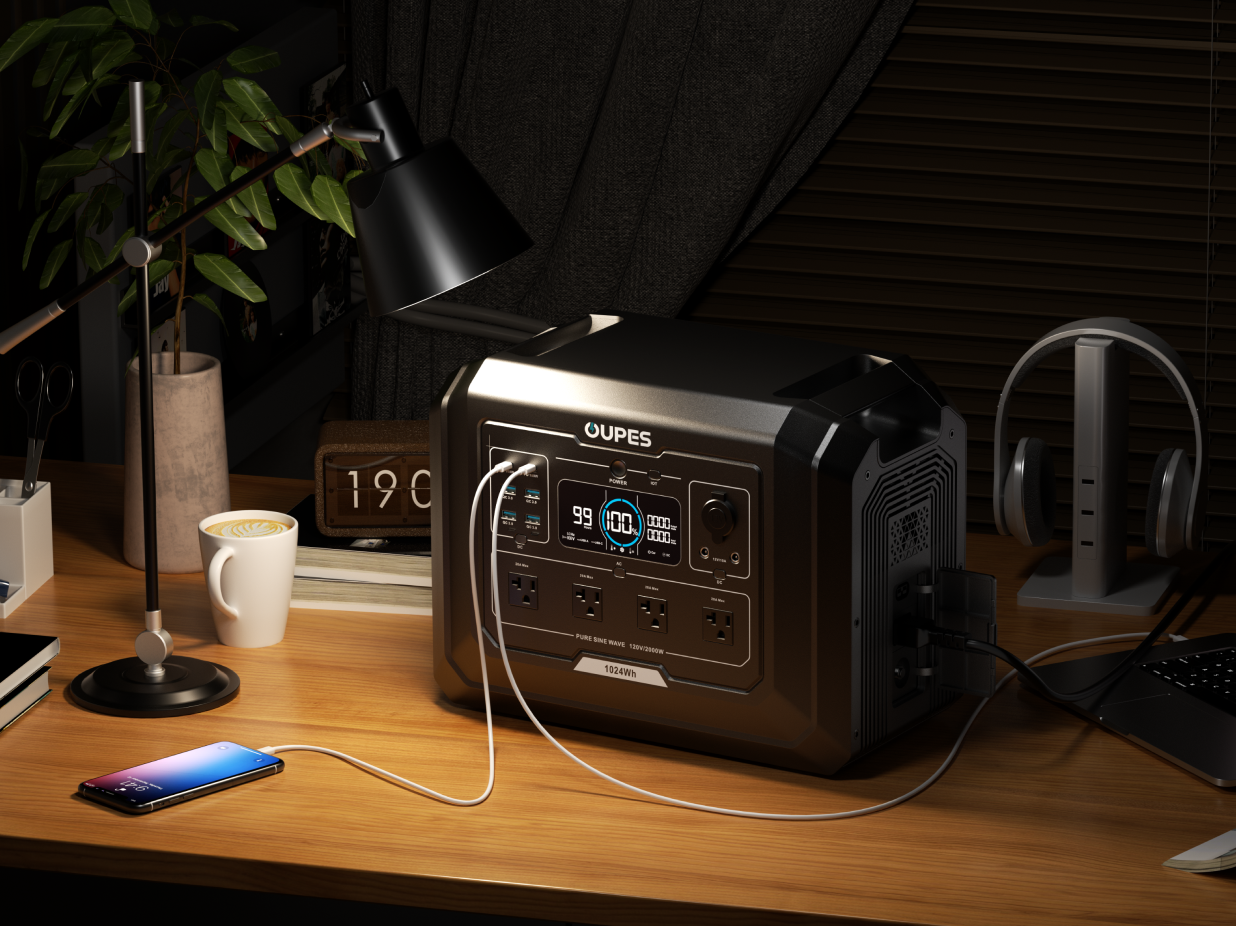
Mega2 Pro also introduces OTA functionality.
In terms of design thinking, the focus is not placed on the number of functions, but more on the actual user experience.
The overall direction mainly includes the following aspects:
First, reduce the impact on user operation as much as possible, making the update process more intuitive and simple.
Second, maintain a consistent experience across different usage scenarios and avoid letting functions affect normal use.
Third, use OTA as a method for long-term optimization rather than a frequently changing feature.
This design thinking is closer to treating OTA as an “assistive capability” rather than a core operation process.
7. Launch Information
Mega2 Pro will officially launch soon, with the launch period from:
May 11 to June 10
As a new-generation product, while maintaining basic performance, it also makes some new attempts in the overall user experience, including further optimization of OTA functionality.
8. Conclusion
For portable power stations, OTA is not a decisive factor, but it does represent a development direction.
As usage needs change, users are starting to pay more attention to the device’s long-term performance, not just its initial specifications.
Different users may have different views on OTA, but what can be seen is that products are gradually shifting from single hardware devices toward a direction that pays more attention to the overall experience.
FAQ
1. Does a portable power station definitely need OTA?
Not necessarily. For basic use, a device without OTA can still work normally. But for users with more usage scenarios or longer-term use, OTA may provide some room for optimization.
2. Will OTA updates affect device stability?
The goal of OTA is usually to optimize the experience, but the actual effect depends on the product design. Users care more about whether the update process is stable.
3. Does OTA need to stay connected to the internet all the time?
In general, continuous internet connection is not required. A connection is usually only needed when checking for updates or performing an update.
4. Are OTA updates complicated?
It depends on the specific implementation. If the process is simple, the user burden is lower. Otherwise, it may increase the cost of use.
5. What problems does OTA mainly solve?
OTA is mainly used to optimize system performance, improve detailed experiences, and adapt to different usage scenarios, rather than simply adding features.
6. Can the device be used normally without OTA updates?
Yes. The basic functions of the device will not be affected, but users may not receive later optimizations.




Leave a comment
This site is protected by hCaptcha and the hCaptcha Privacy Policy and Terms of Service apply.