




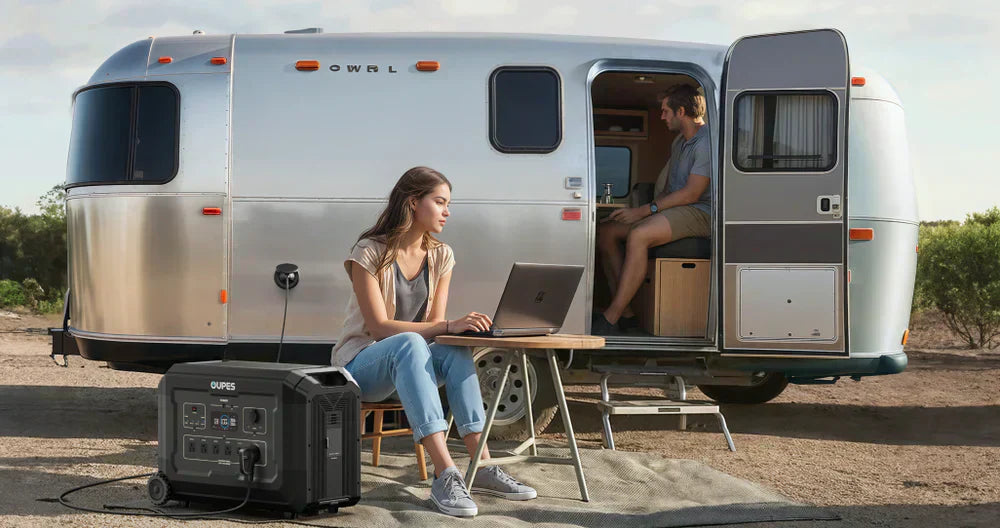
For many people planning a road trip, RVs and campers may both seem like outdoor travel options, but the logic behind their power usage is not on the same level. Campers lean more toward powering lightweight equipment, while RVs are closer to a complete mobile living system. Different onboard setups and different devices ultimately determine that what you need is not the “same type of power source,” but different levels of outdoor power solutions. Based on the official OUPES product pages, the Exodus 1200, Exodus 1500, Exodus 2400, Mega 1, and Guardian 6000 form a relatively clear progression in terms of capacity, power, ports, and application scenarios, making them suitable for different needs ranging from light camping to high-load RV use.
Article Navigation
- The Difference Between RVs and Campers
- RV vs Camper Power Demand Comparison
- How Runtime Is Calculated
- Which Power Stations Are Suitable for Campers
- Why Guardian 6000 Is More Suitable for RVs
- Product Comparison Table
- FAQ
The Difference Between RVs and Campers
The core of an RV is a “living system,” while the core of a camper is “travel equipment.” RVs are usually equipped with air conditioners, refrigerators, kitchen appliances, hot water systems, and a more complete AC power structure, so their power usage is closer to a home environment. Campers, on the other hand, are more common in Car Camping, Van Life, or lightly modified setups, where the most frequently used devices are lights, phones, cameras, drones, mini fridges, projectors, and similar equipment. In other words, a camper is more about solving device-level power needs, while an RV is more about solving the power needs of an entire lifestyle system.
Core Differences Between RVs and Campers
| Comparison Item | Camper | RV |
|---|---|---|
| Usage Positioning | Lightweight travel and camping experience | Mobile living space |
| Power Logic | Device-level power supply | Lifestyle-level power supply |
| Power Structure | Single device or a small number of devices used in rotation | Multiple devices running in parallel |
| Common Devices | Lights, phones, cameras, drones, projectors, mini fridges | Air conditioner, refrigerator, kitchen appliances, water heater, vehicle-wide outlets |
| Power Demand | Low to medium (10W–1000W) | High (1000W–6000W+) |
RV vs Camper Power Demand Comparison
Typical camper power use is generally concentrated on digital devices, lighting, and a small number of compact appliances. In a common example, a car refrigerator at around 50W running for 10 hours consumes about 500Wh. Add lighting and charging for phones, cameras, and drones, and total consumption usually falls between 300Wh and 1500Wh. Within this range, a portable power station of around 1000Wh to 2000Wh can usually cover most needs.
RVs are different. High-load devices in an RV increase significantly, such as air conditioners, refrigerators, microwaves, induction cookers, and electric kettles, and many of these devices often run in parallel.
Typical Scenario Power Consumption Comparison
| Scenario | Common Devices | Estimated Daily Power Use |
|---|---|---|
| Light Camping | LED lights, phones, cameras, drones | 300Wh–800Wh |
| Family Camping | Mini fridge, projector, lights, coffee maker, digital devices | 800Wh–1500Wh |
| Extended Camping / Van Life | Refrigerator, boiling water, simple cooking, computer, network equipment | 1500Wh–3000Wh |
| RV Living | Air conditioner, refrigerator, kitchen appliances, hot water, multiple appliances running together | Above 5kWh |
How Runtime Is Calculated
Device runtime = power station capacity × 80% ÷ device wattage
The 80% here is not an arbitrary reduction; it is used to better reflect real usable energy. For example, a power station rated at 1000Wh will usually not convert its entire rated capacity into fully lossless usable power on the device side in real-world use. Therefore, using 80% as a standardized estimate in this article is more reasonable than directly dividing the rated capacity by the device wattage. All examples below follow this logic. This is a general estimation method, and actual use can still be affected by inverter losses, ambient temperature, and the startup-stop characteristics of the appliance. Therefore, the figures in the table are more suitable as selection references rather than absolute values.
| Product | Rated Capacity | Usable Capacity (×80%) | Maximum Expandable Capacity | Expansion Method |
|---|---|---|---|---|
| Exodus 1200 | 992Wh | 793.6Wh | Not expandable | — |
| Exodus 1500 | 1488Wh | 1190.4Wh | Not expandable | — |
| Exodus 2400 | 2232Wh | 1785.6Wh | Not expandable | — |
| Mega 1 | 1024Wh | 819.2Wh | 5120Wh | Requires 2 B2 expansion batteries |
| Guardian 6000 | 4608Wh | 3686.4Wh | 41472Wh | Up to 8 B5 expansion batteries |
The difference between Mega 1 and Guardian 6000 lies not only in their starting capacity, but also in their expansion capabilities. Mega 1 is more suitable for gradually upgrading from short camping trips to multi-day use, while Guardian 6000 can build a near RV-grade complete energy storage system through multiple expansion batteries.
Which Power Stations Are Suitable for Campers?
Exodus 1200: Suitable for Light Camping and Basic Device Power Supply
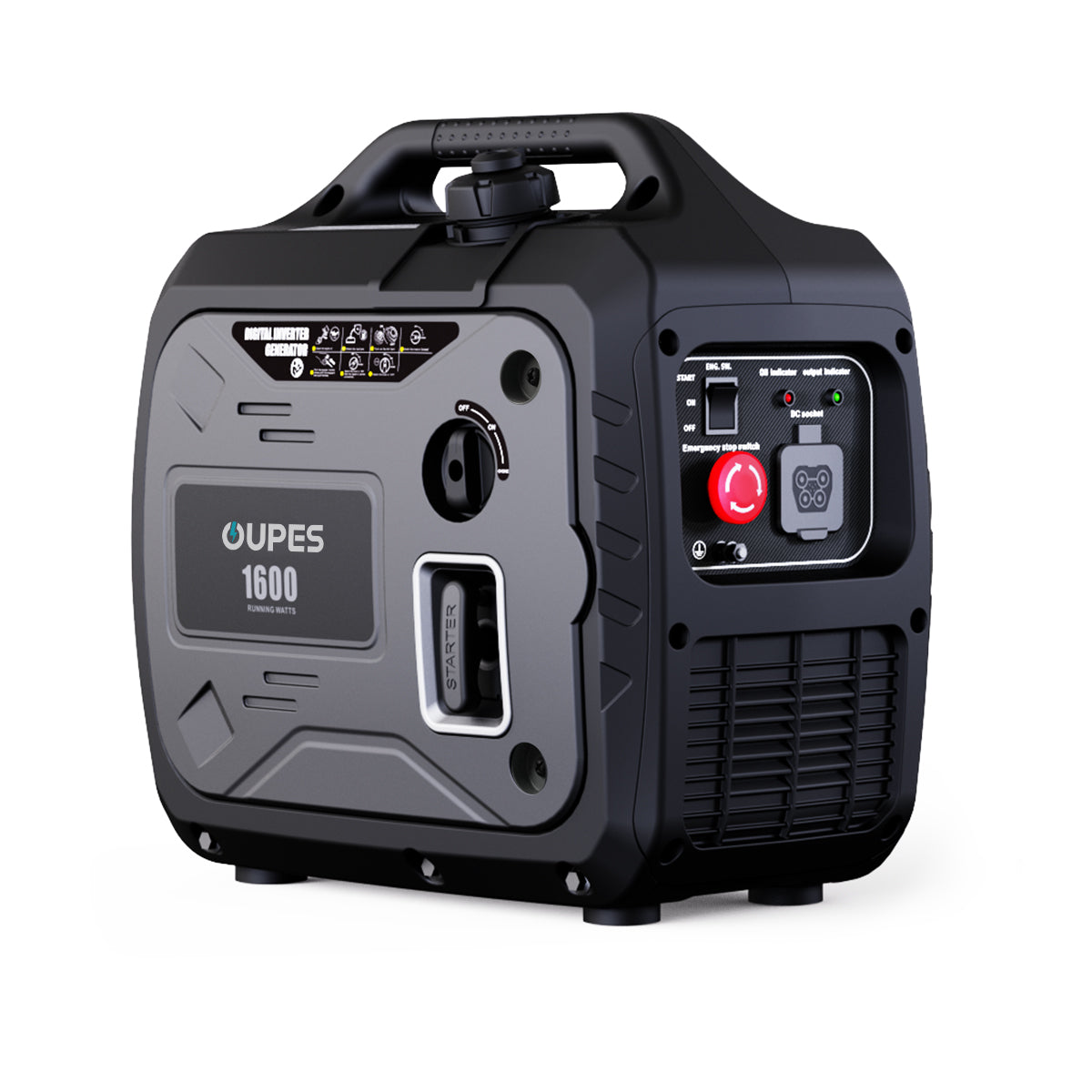
The core specifications of Exodus 1200 are a 992Wh capacity, 1200W AC output, 1500W in Boost mode, and 3600W surge.
It is suitable for light camping not mainly because it is an “entry-level” product, but because its combination of specifications and ports matches the most common group of devices used in light camping: phones, cameras, drones, camp lights, small projectors, and occasionally connected small AC appliances. A 1200W output means it is no longer at the level of only charging phones, while the dual 140W USB-C ports make it more targeted for digital-device scenarios. If your camping is more focused on photography, leisure, and short overnight trips rather than continuous cooking or high-load use, the Exodus 1200 is a good match.
Based on the 80% usable capacity calculation, the usable capacity of Exodus 1200 is about 793.6Wh. Typical runtimes would be approximately 79 hours for a 10W LED light, 15.9 hours for a 50W car refrigerator, and 7.9 hours for a 100W projector. This also shows that it is more suitable for 1- to 2-day light camping and digital device charging.

OUPES EXODUS 1200 Power Station
- 992Wh Capacity | 1,200W AC Pure Sine Wave Inverter
- supporting up to 840W (AC+PV) to fully charge in just 72 minutes
- Exodus 1200 Net Weight: 23.15 lbs
Exodus 1500: Suitable for Family Camping and Medium-Load Scenarios
The core specifications of Exodus 1500 are a 1488Wh capacity, 1500W AC output, 1700W Boost, and 3600W Surge.
Compared with the Exodus 1200, the value of the Exodus 1500 is not just the increase in capacity, but that it becomes more suitable for multi-device parallel scenarios such as “family camping.” As the number of campers increases, the variety of equipment usually increases as well: a refrigerator may need to run continuously, a projector and lighting may be used at night, and phones, tablets, cameras, and drones may all need charging during the day, sometimes along with a coffee maker. In this case, a 1488Wh capacity and 1500W output are more comfortable than the 1200Wh level.
Using the 80% estimate, the usable capacity of Exodus 1500 is about 1190.4Wh. Typical runtimes are approximately 23.8 hours for a 50W car refrigerator, 11.9 hours for a 100W projector, 1.49 hours for an 800W coffee maker, and 119 hours for a 10W LED camp light. It is better suited to family camping for 2 to 4 people, Car Camping, and users who want more comfort and more devices than light camping.

OUPES EXODUS 1500 Power Station
- Exodus 1500: 1,488Wh Capacity | 1,500W AC Pure Sine Wave Inverter
- 1,280W Max. Input charging speed (AC + Solar)
- Exodus 1500 Net Weight: 30.5 lbs
Exodus 2400: Suitable for High-Demand Camping, Van Life, and Outdoor Cooking
The core specifications of Exodus 2400 are a 2232Wh capacity, 2400W AC output, 2600W Boost, and 4500W Surge.
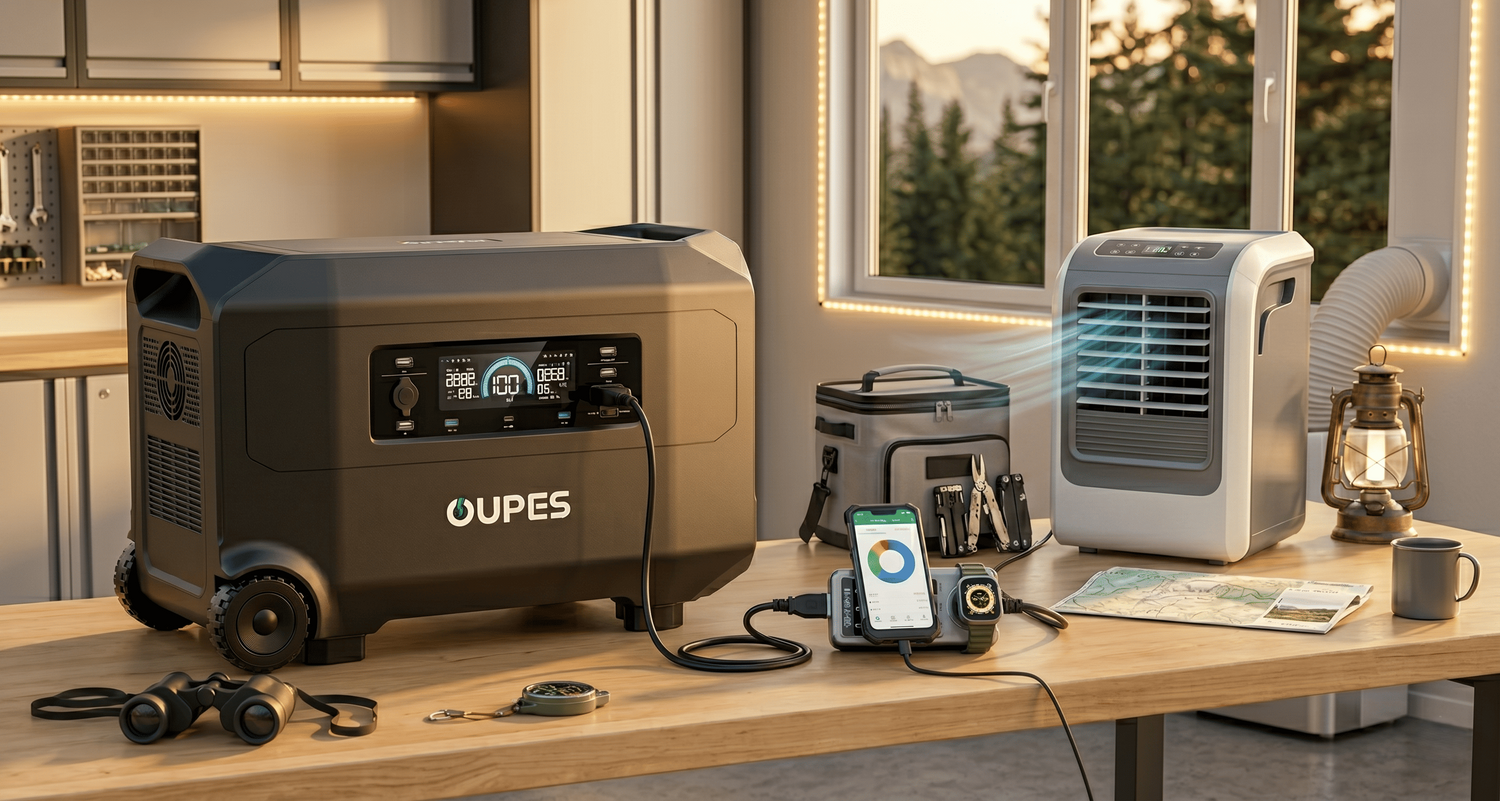
What makes Exodus 2400 more worth paying attention to is its support for “kitchen-level devices.” At this stage, many camping users no longer only need lights and a fridge, but also begin to involve boiling water, simple cooking, working inside the vehicle, and connecting network devices and computers at the same time. A 2400W output means it can cover more high-power AC appliances, and the number of ports is also more suitable for multiple devices running in parallel. For Van Life or multi-day camping users, it is no longer just a backup charging device, but a more complete outdoor power center.
Using the 80% estimate, the usable capacity of Exodus 2400 is about 1785.6Wh. Typical runtimes are approximately 35.7 hours for a 50W car refrigerator, 17.9 hours for a 100W projector, 1.79 hours for a 1000W electric kettle, and 23.8 hours for 75W network equipment. For extended camping, Van Life, and people who need to prepare simple meals or run multiple kinds of equipment at the same time, it is clearly more suitable than the 1200 and 1500.

OUPES EXODUS 2400 Power Station
- Exodus 2400: 2,232Wh Capacity | 2,400W AC Pure Sine Wave Inverter (2,600W Boost Mode)
- 2,200W Max. Input charging speed (AC + Solar)
- Exodus 2400 Net Weight: 45.2 lbs
Mega 1: Suitable for Camping Users Who Care More About Output Power
The key specifications of Mega 1 are a 1024Wh capacity, 2000W continuous output, and 4500W Surge, with support for expansion up to 5120Wh.
The most distinctive thing about Mega 1 is that although its capacity is close to the Exodus 1200, its output power is clearly higher. Many people only look at Wh when choosing a power station, and only discover during actual use that some devices are not limited by “insufficient energy” but by “insufficient power output.” A 2000W output gives Mega 1 a broader range of applications in this compact class, especially for coffee makers, some heating devices, and appliances with relatively high startup power requirements. In other words, if you do not want to start with a larger and heavier unit, but also do not want to be limited by the 1200W class, Mega 1 has a very clear positioning.
Using the 80% estimate, the usable capacity of Mega 1 is about 819.2Wh. Typical runtimes are approximately 16.4 hours for a 50W car refrigerator, 8.2 hours for a 100W projector, 1.02 hours for an 800W coffee maker, and 81.9 hours for a 10W camp light. In terms of runtime, it may not necessarily last longer than the Exodus 1500 or 2400, but it has stronger advantages in output capability and future expansion flexibility.
Mega 1 – Compact and Easy Backup Power
The Mega 1 provides 1024Wh of battery capacity with 2000W AC output, making it suitable for powering essential electronics such as lights, phones, and routers. Its relatively lightweight design makes it easier to move between rooms.
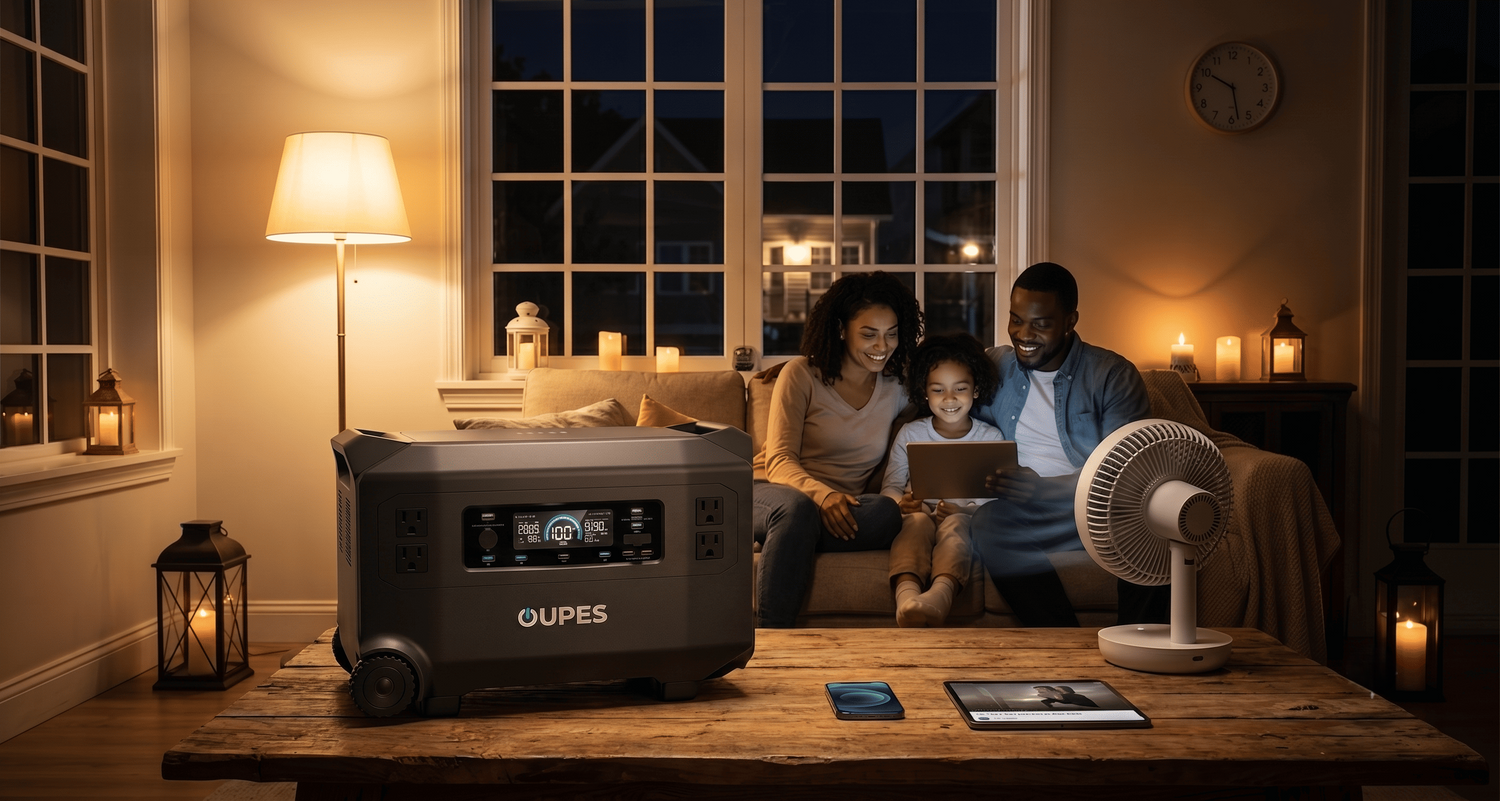
This model is well suited for seniors who mainly need backup power for small electronics and short outages.

OUPES Mega 1 Power Station
- 1024Wh Capacity | 2000W AC Pure Sine Wave Inverter (4500W Surge)
- LiFePO4 Battery with 3,500+ Life Cycles to 80%
- Expandable Up to 5.12kWh with B2*2
- Supports fast charging up to 2200W (AC+PV), fully charging in just 36 minutes.
Why Guardian 6000 Is More Suitable for RVs
Guardian 6000 has a base capacity of 4608Wh and can be expanded up to 41.4kWh. In terms of output, it supports 240V rated 6000W, 7200W Boost, 9000W Surge, and also supports 120V rated 3600W.

OUPES Guardian 6000 Power Station
- 240V/6,000W(Boost 7,200W) & 120V/3600W dual-voltage output
- Basic Capacity 4,608 Wh, Expandable Capacity Up to 41.4 kWh With 8 x G5 batteries
- 240V 3,600W Max for 84 min; 120V 1,800W Max for 3 Hours
It is more suitable for RVs not simply because it has “more capacity,” but because the overall product structure is much closer to an RV power system. In RV scenarios, users are often not running just one device independently. Instead, the air conditioner, refrigerator, kitchen appliances, and interior outlets all exist at the same time. This requires the power solution to have not only a large capacity, but also sufficiently high output power, suitable AC output types, and stronger expansion ability. Guardian 6000’s dual-voltage architecture and high-power NEMA interfaces are clearly designed for RVs and high-load environments, rather than general camping device charging.
Using the 80% estimate, the usable capacity of Guardian 6000 is about 3686.4Wh. For example, a 1500W RV air conditioner can run for about 2.46 hours, 100W network equipment for about 36.9 hours, a 1200W microwave for about 3.07 hours, and a 700W refrigerator or kitchen appliance for about 5.27 hours. In real RV scenarios, multiple devices often run in parallel, so the final runtime still depends on the total load. However, from the product structure alone, Guardian 6000 is much closer to an “RV-grade power solution” rather than a standard portable power station.
Product Comparison
Core Specification Comparison
| Product | Capacity | AC Output | Main Ports | Best-Fit Scenarios |
|---|---|---|---|---|
| Exodus 1200 | 992Wh | 1200W | 3×AC, 2×USB-A, 2×140W USB-C, 2×DC, 1×Car Port | Light camping, digital devices, short trips |
| Exodus 1500 | 1488Wh | 1500W | 3×AC, 2×USB-A, 2×140W USB-C, 2×DC, 1×Car Port | Family camping, Car Camping, multiple devices in parallel |
| Exodus 2400 | 2232Wh | 2400W | 4×AC, 4×USB-A, 2×140W USB-C, 2×DC, 1×Car Port | Extended camping, Van Life, simple cooking |
| Mega 1 | 1024Wh | 2000W | 4×AC, 4×USB-A, 2×100W USB-C, 2×DC, 1×Car Port | High-power camping devices, users needing expansion capability |
| Guardian 6000 | 4608Wh | 240V 6000W / 120V 3600W | Multiple high-power NEMA ports, 4×120V AC, USB-A, 140W USB-C | RVs, high-load, multiple devices in parallel |
Typical Device Runtime Comparison (Estimated by Capacity × 80%)
| Device | Power | Exodus 1200 | Exodus 1500 | Exodus 2400 | Mega 1 | Guardian 6000 |
|---|---|---|---|---|---|---|
| LED Camp Light | 10W | 79h | 119h | 178.6h | 81.9h | 368.6h |
| Headlamp | 5W | 158h | 238h | 357h | 163h | 737h |
| Phone Charging | 12W | 66 times | 99 times | 148 times | 68 times | 307 times |
| Tablet | 30W | 26.5h | 39.7h | 59.5h | 27.3h | 122.8h |
| Laptop | 60W | 13.2h | 19.8h | 29.8h | 13.6h | 61.4h |
| Drone Charging | 90W | 8.8h | 13.2h | 19.8h | 9.1h | 41h |
| Bluetooth Speaker | 20W | 39.7h | 59.5h | 89.3h | 41h | 184.3h |
| Car Refrigerator | 50W | 15.9h | 23.8h | 35.7h | 16.4h | 73.7h |
| Small Fan | 40W | 19.8h | 29.8h | 44.6h | 20.5h | 92.1h |
| Projector | 100W | 7.9h | 11.9h | 17.9h | 8.2h | 36.9h |
| TV (Small) | 120W | 6.6h | 9.9h | 14.9h | 6.8h | 30.7h |
| Starlink | 75W | 10.6h | 15.9h | 23.8h | 10.9h | 49.1h |
| Electric Blanket | 60W | 13.2h | 19.8h | 29.8h | 13.6h | 61.4h |
| Rice Cooker | 700W | 1.13h | 1.7h | 2.55h | 1.17h | 5.27h |
| Coffee Maker | 800W | 0.99h | 1.49h | 2.23h | 1.02h | 4.61h |
| Induction Cooker | 1200W | 0.66h | 0.99h | 1.49h | 0.68h | 3.07h |
| Microwave | 1200W | 0.66h | 0.99h | 1.49h | 0.68h | 3.07h |
| Electric Kettle | 1000W | 0.79h | 1.19h | 1.79h | 0.82h | 3.69h |
| Hair Dryer | 1200W | 0.66h | 0.99h | 1.49h | 0.68h | 3.07h |
| RV Air Conditioner | 1500W | — | — | 1.19h | — | 2.46h |
| Electric Heater | 1500W | — | — | 1.19h | — | 2.46h |
Conclusion
If your scenario is light camping, weekend short trips, and mainly involves phones, cameras, drones, camp lights, and small projectors, the Exodus 1200 can already cover most basic needs.
If you are doing family camping or Car Camping, with a wider variety of devices and more frequent use of a refrigerator and projector, the Exodus 1500 will be more suitable.
If you are moving into Van Life, multi-day camping, and need cooking, work, or the ability to connect multiple kinds of devices at the same time, the Exodus 2400 is a better fit.
If you especially care about output power, want to run more high-power devices while keeping a compact size, and also want to preserve future expansion options, Mega 1 is more targeted.
If your scenario is RVs, long-term off-grid use, and multiple high-power devices running together, Guardian 6000 is much closer to a system-level solution. All of these recommendations are based on the official product specifications, port configurations, and expansion capabilities.
FAQ
1. When choosing a power station for camping or an RV, should you look at capacity or power first?
You need to look at both. Capacity determines how long it can run, while power determines whether it can drive the appliance at all. For light camping, capacity is usually more important; for devices like coffee makers, electric kettles, and air conditioners, output power is equally critical.
2. Why does this article calculate runtime based on capacity × 80%?
Because directly dividing rated capacity by wattage tends to overestimate actual runtime. Using “capacity × 80%” and then dividing by wattage is more suitable as a practical estimate when selecting a product. Actual performance can still be affected by inverter losses, ambient temperature, and appliance startup-stop behavior.
3. Exodus 1200 and Mega 1 have similar capacities. How should you choose?
If you lean more toward digital devices, lighting, and small AC devices, and value the light-camping experience with dual 140W USB-C, Exodus 1200 is more suitable. If you care more about 2000W output, want to power higher-wattage appliances, and want future expandable capacity, Mega 1 is more suitable.
4. What is the core difference between Exodus 1500 and Exodus 2400?
The key difference lies in power level and application tier. Exodus 1500 is more oriented toward family camping and medium-load use, while Exodus 2400 is more suitable for extended camping, Van Life, and outdoor cooking because it has higher 2400W output and more ports.
5. Why is Guardian 6000 more suitable for RVs?
Because it not only has a larger capacity, but also supports 120V / 240V dual voltage, 6000W high output, multiple high-power NEMA interfaces, and expandable capacity up to 41.4kWh. These features are much closer to the actual power structure of an RV.


Leave a comment
This site is protected by hCaptcha and the hCaptcha Privacy Policy and Terms of Service apply.