


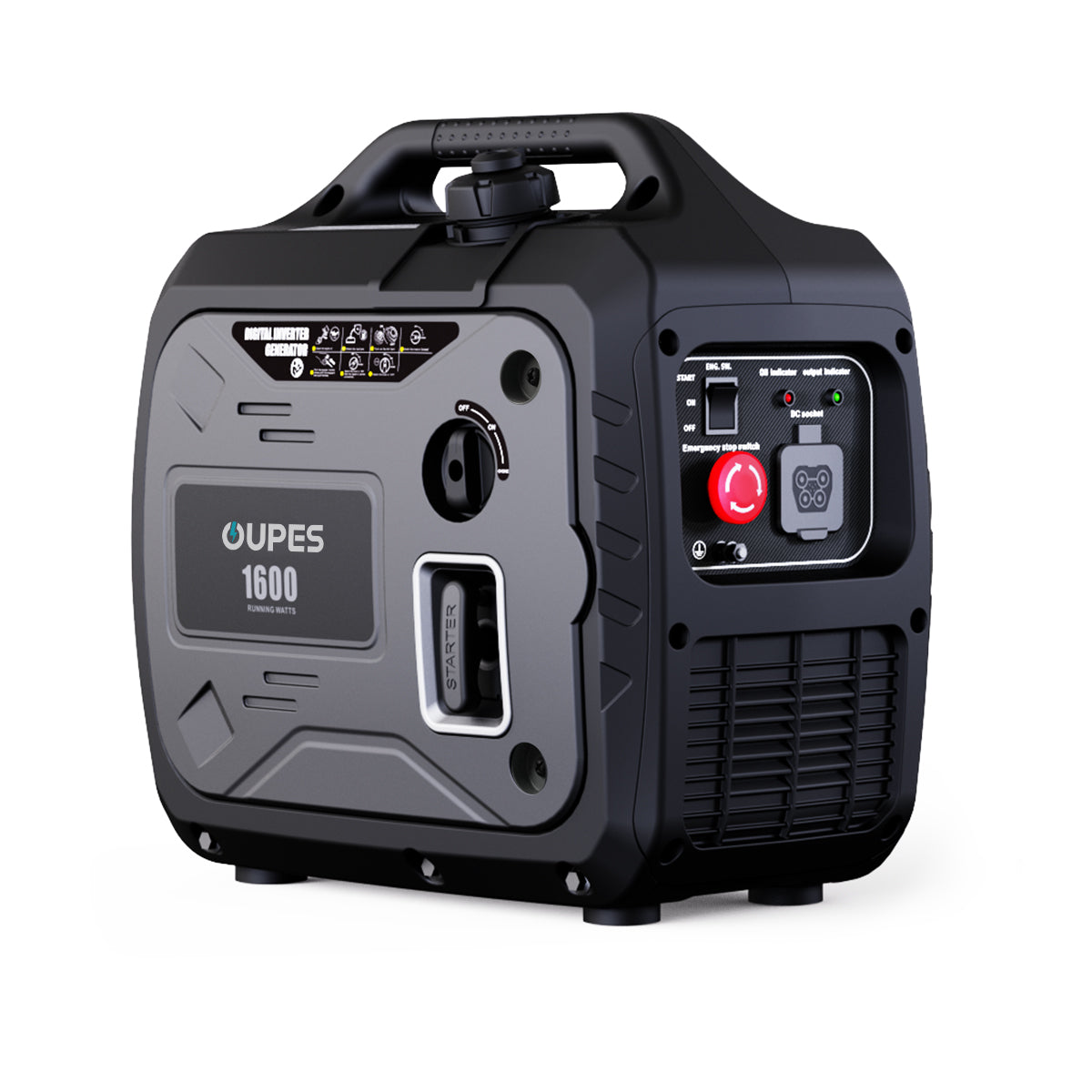


A pure sine wave inverter produces a smooth AC waveform similar in shape to utility power, while a modified sine wave inverter creates a stepped approximation. Many simple loads can operate on either, but sensitive electronics, motor controls, audio equipment and appliances with electronic power supplies are generally better served by a pure sine wave source approved for the device.
Key Takeaways
- Waveform is separate from voltage, wattage and battery capacity.
- Pure sine wave is the safer default for a mixed-device power plan.
- A device turning on does not prove it will run efficiently or without excess heat and noise.
- The appliance manual remains the final compatibility reference.
- All current OUPES examples used in this guide specify pure sine wave AC output.
How the AC Waveforms Differ
Utility AC changes direction smoothly. A pure sine inverter recreates that smooth alternating shape. Modified sine wave designs switch through a smaller number of voltage steps. Both may be labeled 120V AC, yet the waveform seen by connected electronics is different.
Waveform quality does not increase stored energy. A 1,000Wh battery remains a 1,000Wh battery, and a 1,000W inverter remains limited by its continuous rating regardless of waveform.
Which Devices Care About Waveform Quality
| Load type | What to verify |
|---|---|
| Simple resistive load | Voltage, watts and manufacturer permission |
| Motor or compressor | Waveform, startup current, heat and speed control |
| Audio equipment | Hum, interference and power-supply requirements |
| Medical or precision electronics | Exact manufacturer input requirements and backup policy |
| Variable-speed appliance | Controller compatibility and continuous output |
Some devices may buzz, run hotter or behave unpredictably on a stepped waveform. Others may appear to work normally. Do not generalize from one successful test to every model in the category.
Why Pure Sine Wave Is the Practical Default
A mixed emergency kit rarely powers only one simple load. It may include a router, laptop charger, refrigerator, fan and audio equipment. Pure sine wave output reduces one major compatibility uncertainty and makes the station more flexible as equipment changes.
Pure sine output does not guarantee that every appliance will run. The inverter must still meet continuous watts, startup demand, voltage, frequency and outlet limits. Grounding behavior and transfer arrangements can also matter for certain equipment.
When Modified Sine Wave May Be Considered
A modified sine source may be used only where the device manufacturer permits it and the complete electrical ratings match. Simpler loads can be less waveform-sensitive, but cost savings should be weighed against narrower compatibility and possible noise or heat.
Never treat “it has a plug” as proof. If a device manual requires pure sine power, utility-grade AC or a specific UPS topology, follow that requirement.
How to Verify a Power Station Before Buying
- Find “inverter type” or “AC waveform” on the exact product page.
- Confirm 120V/60Hz for U.S. equipment unless the device says otherwise.
- Check continuous output and the limit of the intended receptacle.
- Check motor-start or compressor-start demand separately.
- Ask the appliance manufacturer when its manual does not state acceptable waveform.
Current OUPES portable power stations used as examples in this content specify pure sine wave inverters; verify the exact version before purchase.
Test the Complete Setup Before Depending on It
Run the intended equipment under controlled conditions. Watch for unexpected shutdowns, error messages, audible hum, unstable speed or excess heat. Test startup more than once for cycling loads. Stop if the appliance or station behaves abnormally.
For critical equipment, a portable station should be only one part of a documented backup plan. Confirm the device manufacturer's power requirements and keep an alternative power or relocation option.
Create a Compatibility Record
Keep the appliance model, manual requirement, measured running watts and startup behavior with the power station record. Note whether the test used AC, USB or DC and whether other loads were connected. This prevents a successful test with one small device from becoming an unsupported claim about every appliance.
Recheck compatibility after replacing an appliance or power adapter. Two products with the same advertised watts can use different motor controls, power supplies or grounding checks.
Frequently Asked Questions
Is pure sine wave the same as clean power?
It describes waveform shape. Voltage regulation, frequency stability, grounding and other power-quality factors still matter.
Will modified sine wave damage every appliance?
No, but compatibility varies and some devices can run noisily, inefficiently or not at all.
Can a pure sine inverter run any appliance?
No. Output watts, startup demand, voltage, frequency and outlet limits must also match.
Do laptop chargers need pure sine wave?
Many switching supplies tolerate a range, but the charger's manufacturer requirements control.
Why might a motor buzz on modified sine power?
The stepped waveform can change current and magnetic behavior, which may create noise and heat.
Does waveform affect runtime?
It can affect efficiency for some loads, but runtime also depends on battery capacity, load and conversion losses.
Are solar panels pure sine wave?
Solar panels produce DC. The power station's inverter creates the AC waveform.
Can I identify waveform from the outlet shape?
No. Read the inverter specification.
What is the best default for home backup?
A pure sine wave inverter with adequate output and verified appliance compatibility is the practical default.


Leave a comment
This site is protected by hCaptcha and the hCaptcha Privacy Policy and Terms of Service apply.