




During a power outage, protect health and safety first, then communications, refrigeration and essential household equipment. Lighting, phones and medical or accessibility devices normally belong in the first tier. Refrigerators, freezers, sump pumps and necessary climate support follow according to the immediate risk. Cooking, work and comfort loads should use the remaining energy on a controlled schedule. The right order depends on the people in the home, the weather and what happens if each device loses power.
Key Takeaways
- Build your priority list around consequences, not which appliances are easiest to plug in.
- Medical needs, dangerous temperatures or active flooding can change the normal order immediately.
- Reserve energy for essential loads before adding entertainment or high-power convenience appliances.
- Calculate both simultaneous watts and energy over time; neither number replaces the other.
- Test a safe connection plan before an outage and decide when to recharge, relocate or seek help.
Set the Correct Backup-Power Priorities
Ask what happens if each device stops, how quickly that consequence develops, and whether a safe alternative exists. A phone with nearly a full battery may not need immediate charging; an accessibility device with little charge may. A refrigerator's closed door buys some time; a pump responding to rising water may not have that flexibility.
| Priority | Examples | Operating rule |
|---|---|---|
| Immediate health and safety | Manufacturer-approved medical-device backup, essential mobility equipment, lighting needed for safe movement | Protect the required reserve and maintain an alternative plan |
| Emergency information and contact | Phone charging, a weather radio, modem/router if service is available | Use enough energy to remain reachable and informed |
| Food and household protection | Refrigerator, freezer, necessary water or sump pumping | Monitor the actual risk; urgent flooding or medication storage may move these higher |
| Essential daily tasks | Short food preparation, necessary work equipment, selected cooling or heating support | Schedule around protected loads and remaining energy |
| Optional convenience | Entertainment, laundry and nonessential kitchen appliances | Use only after essential needs and reserve are covered |
Use this as a household operating plan rather than a fixed ranking for every home. Write down the actual device names, required power, expected hours and person responsible for connecting them. Identify any load that should not be interrupted casually, and keep the list available offline.
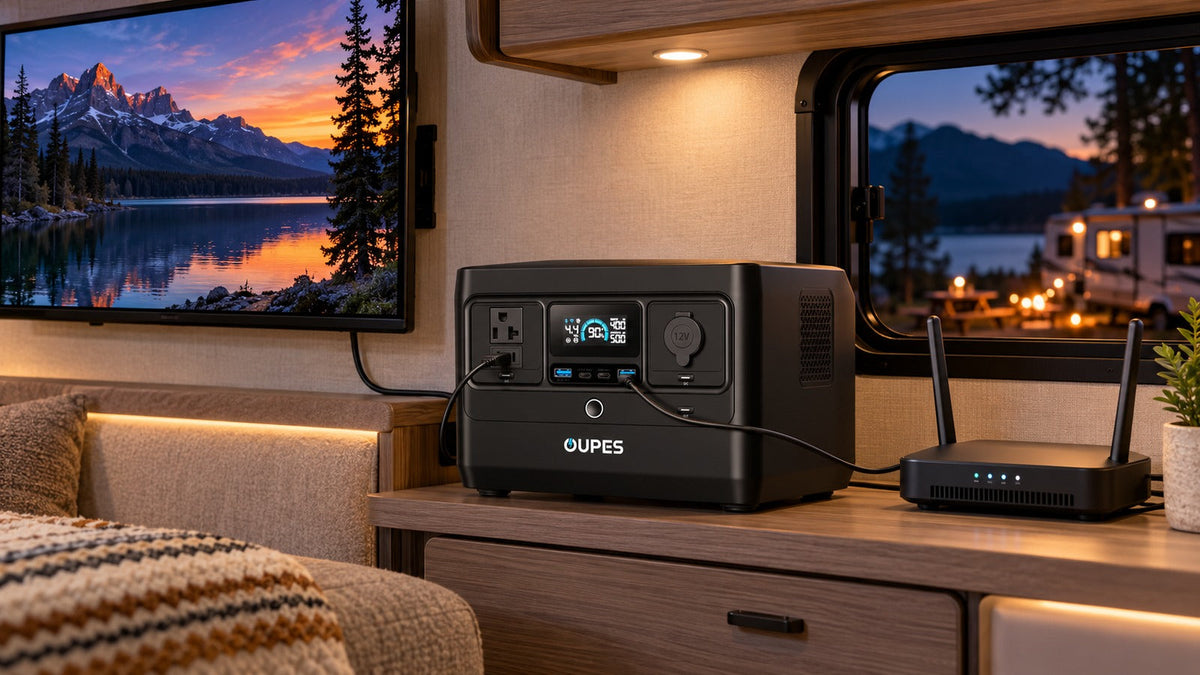
Use independent battery flashlights and a weather radio where practical. That reduces competition for the main power station and provides another option if the station reaches its reserve. Powering a router does not guarantee internet service if the provider's local network has failed.
Adjust the Order for Health, Temperature and Food Safety
Medical and accessibility equipment
Arrange a backup plan with the equipment manufacturer and your care team before an emergency. Confirm the exact device's power requirements, approved adapters, operating modes and acceptable interruption time. Do not assume that a consumer power station's outlet or backup-switching feature makes it suitable for life-sustaining equipment. Include a way to get help or move to a location with appropriate power.
Medication storage also needs a product-specific plan. A food-storage time limit is not a medication-stability rule. Ask a pharmacist about the particular medicine's temperature requirements and what to do if storage conditions cannot be maintained.
Extreme heat, cold or flooding
Cooling or heating support can become a health priority rather than a comfort load. A small battery may not sustain the required equipment, so plan a safe relocation trigger before the stored energy runs low. In extreme heat, fans provide air movement but should not be treated as complete protection from heat illness; keep official power-outage health guidance in the household emergency plan.
Likewise, a sump pump can take priority when water threatens the home. Confirm its voltage and startup demand before relying on a portable supply. Keep people and equipment away from floodwater and damaged electrical installations. Backup electricity does not make a flooded building safe.
Refrigeration
Keep refrigerator and freezer doors closed as much as possible. An unopened refrigerator may keep food cold for about four hours, while a full closed freezer may hold temperature for roughly 48 hours, or about 24 hours when half full. These are planning references, not a reason to delay refrigeration automatically. Use an appliance thermometer and follow current food-safety guidance when deciding what to keep or discard.
A larger amount of stored food is not automatically a higher priority than a person's immediate safety. Plan ice, coolers and safe food alternatives in advance so refrigeration is not your only line of protection.
Build an Eight-Hour Essential-Load Budget
Once you know what matters most, calculate how much energy the planned operating schedule needs. Use measurements from your own devices. For a cycling appliance, record energy over a representative interval rather than multiplying the highest observed watts by the entire outage.
Energy (Wh) = average power (W) × operating hours (h).
| Load | Assumed average power | Planned operation | Energy |
|---|---|---|---|
| Refrigerator, averaged across cycling | 60W | 8 hours | 480Wh |
| Modem and router | 20W | 8 hours | 160Wh |
| Two LED lights together | 10W | 4 hours | 40Wh |
| Phone charging | 15W average during the charging session | 2 hours | 30Wh |
| Small fan | 40W | 4 hours | 160Wh |
| Total | Different devices run for different periods | Eight-hour planning window | 870Wh |
Every load above is an example assumption, not a universal appliance rating. Add your household's medical, pump, refrigeration or other essential loads separately. The fan is included for comfort in this example, not as a guarantee of protection from extreme heat.
To account for losses and reserve, suppose 80% of rated battery energy reaches the connected devices and you keep 20% of that delivered-energy estimate unused for contingencies:
Required nominal capacity ≈ 870Wh ÷ (0.80 × 0.80) ≈ 1,360Wh.
The first factor is an illustrative delivered-energy allowance; the second is a separate operating reserve. They are not measured product efficiencies or mandatory reserve levels. A 1,024Wh battery would budget about 655Wh under these assumptions, so it would not cover the full example. A 2,048Wh battery would budget about 1,311Wh, leaving more room, although actual device behavior still needs testing.
This makes tradeoffs visible. Removing the example fan saves 160Wh. Operating the example network equipment for four hours instead of eight saves another 80Wh, reducing the planned load to 630Wh. That might fit the smaller example budget, but the margin is narrow. Make those changes only if they preserve necessary communication and safe conditions.
Check Output and Connection Requirements
The average 60W refrigerator figure in the example does not tell you its compressor startup demand. Before selecting a station, record the largest simultaneous running load and the startup requirements of any motor that may start while other devices are operating. Check the station's continuous rating, surge behavior, individual outlet limits, voltage and frequency.
A 120V appliance and a 240V appliance require different supplies even if their wattages look similar. A pump, furnace or central air-conditioning system may also require a building connection rather than an ordinary plug. Do not assume a familiar-looking outlet or a large battery makes that installation compatible.
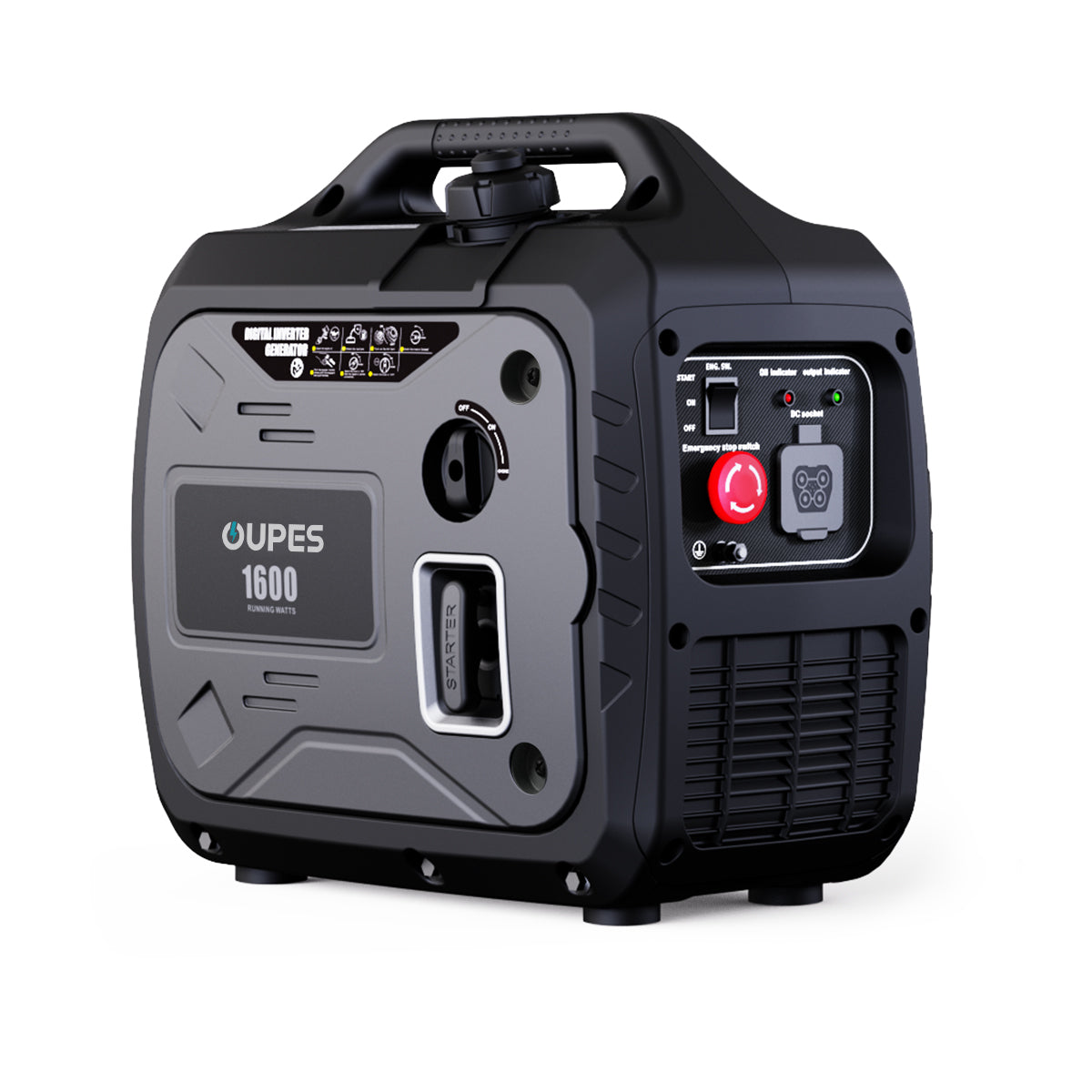
Place a battery power station on a stable, dry surface with clear ventilation and protected cable routes. A battery station is different from a fuel-burning generator. Fuel-burning equipment belongs outdoors, at least 20 feet from doors, windows and vents, and must never operate inside a home or garage.
Create a Practical Outage Operating Plan
- Check immediate risks. Identify anyone needing medical support, unsafe indoor temperatures, flooding or an evacuation route before focusing on appliances.
- Connect the protected loads. Use the tested setup and verify that each device is actually operating. Check total output instead of assuming every plugged-in device is receiving power.
- Note the starting battery level. Compare the rate of energy use with your plan after the first operating period. A changing refrigerator or pump load can invalidate an early runtime estimate.
- Use high-power appliances deliberately. Schedule short tasks without interrupting protected loads or exceeding output limits.
- Set a reserve trigger. Decide in advance when to stop optional loads, seek safe recharging or relocate. Do not base the entire plan on reaching zero charge.
If the outage continues, review the plan whenever the household's needs or weather change. Solar charging can help only when equipment can be placed safely and conditions provide useful output. Do not leave essential devices dependent on an optimistic sunshine forecast or an untested charging arrangement.
Write down support contacts, the next charging opportunity and the location you can reach if power is no longer adequate. Another household member should be able to follow the plan without needing to reconstruct your calculations.
Our Recommended OUPES System for Essential Home Loads
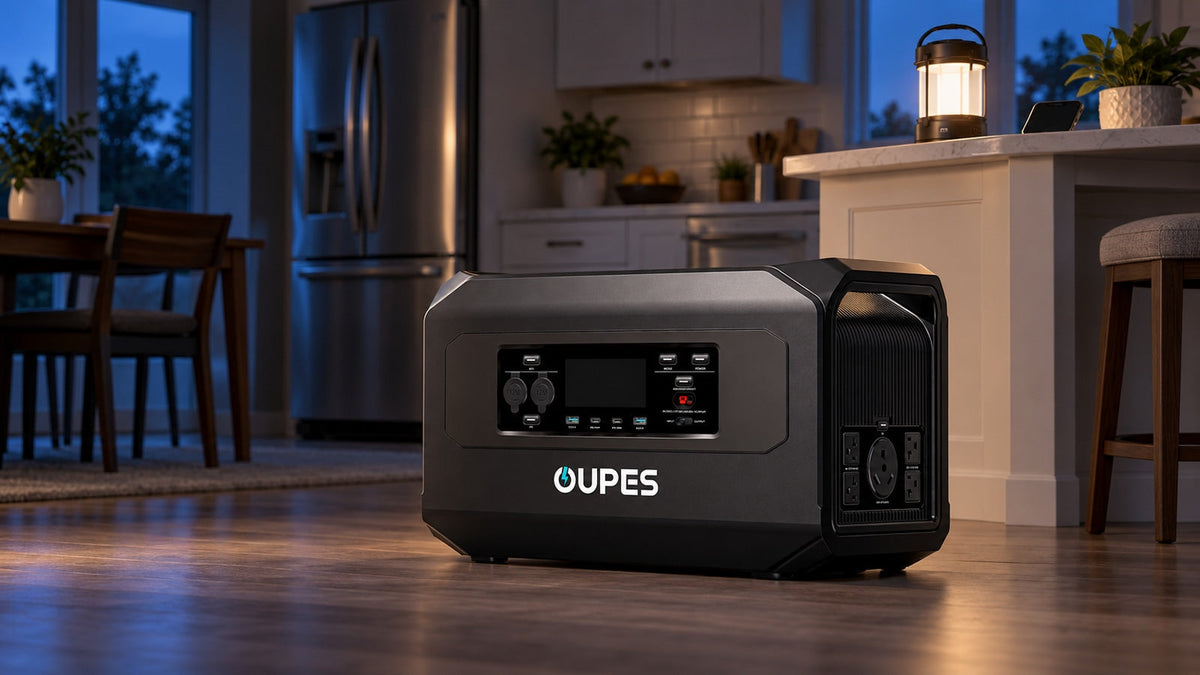
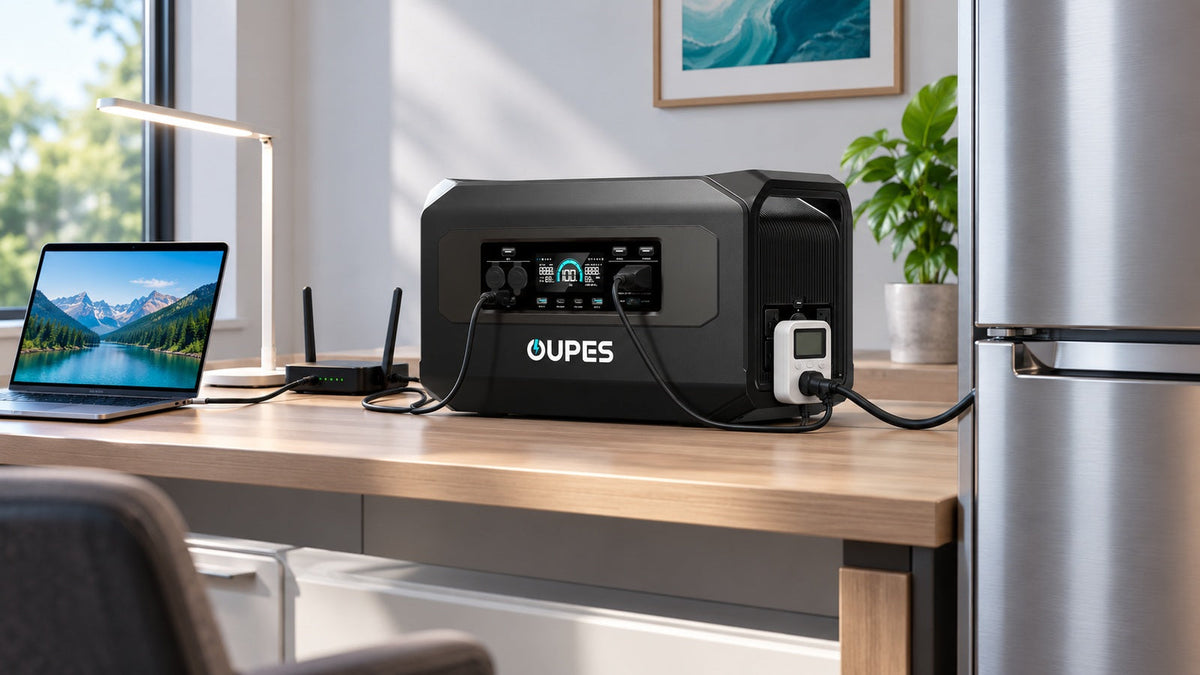
For the example load plan above, a 2kWh-class station provides a more useful reserve than a 1kWh model. Mega 2 Pro is our recommended OUPES starting point for compatible plug-in home essentials because it combines 2,048Wh of base capacity with 2,500W rated AC output. It is well suited to managed refrigeration, communications, lighting, electronics and brief use of compatible higher-power appliances.

OUPES Mega 2 Pro
- 2,048Wh base battery capacity.
- 2,500W rated AC output.
- Up to 1,000W solar charging input.
- Optional expansion with up to four compatible B2 batteries.
This recommendation is for selected plug-in loads. Multiple outlets do not turn the base unit into a whole-home installation. Compatible B2 expansion batteries can extend runtime, but they are separate purchases and do not increase the main inverter's rated output. Homes that need 240V loads, fixed circuits or prolonged medical support require a system plan based on those requirements.
Choose the smallest complete system that supports the verified essential-load list, a meaningful reserve and a realistic recharge strategy. If the backup plan cannot maintain safe conditions, include relocation or outside assistance as part of the plan instead of relying on a larger capacity claim.
Frequently Asked Questions
Should the refrigerator always be first?
No. Immediate health needs or active household hazards may come first. Keep the door closed, monitor temperature and plan refrigeration before food becomes unsafe, without displacing a more urgent need.
Is it better to rotate appliances or run everything together?
Scheduling optional tasks can reduce simultaneous watts, but it does not erase their energy use. Do not interrupt medical equipment or repeatedly switch a compressor contrary to its instructions. Use the device's approved operating pattern.
Can I use the power station's remaining-hours display as my whole plan?
No. It reflects current conditions and can change as appliances cycle or new loads start. Compare it with measured energy use, protected reserve and the next safe charging opportunity.
How much battery capacity does a refrigerator need during an outage?
Calculate from measured energy over the intended backup period rather than one running-watt reading. Refrigerator size, room temperature, door openings and compressor cycling all affect consumption. Verify startup demand separately from total energy.
Should Wi-Fi be treated as an essential load?
It can be important for work, alerts and communication, but the local internet network may also lose service. Keep phones, a weather radio and other communication options available instead of relying on the router alone.
Can a portable power station run a sump pump?
Only when the station supports the pump's voltage, running power and motor startup demand. A pump responding to active flooding can become a high priority, but the power source and connections must be tested before an emergency.
Should I power an electric heater during a winter outage?
Electric heaters draw substantial continuous power and can drain portable batteries quickly. Use one only when the station and wiring are compatible, the energy budget supports it and the operating environment remains safe. Maintain a separate plan for dangerous indoor temperatures.
Can I connect a power station directly to a home wall outlet?
No. Never use a wall receptacle to feed power into household wiring. Power compatible plug-in appliances directly, or use a professionally designed transfer solution that meets applicable local requirements.
How much battery reserve should I keep?
There is no universal percentage for every household. Reserve enough energy for the loads that cannot be postponed, the time needed to reach the next safe charging opportunity and unexpected changes in weather or appliance consumption.
When should I move to a larger backup system?
Move up when the essential-load calculation exceeds the battery budget, when simultaneous or startup loads exceed inverter limits, or when the outage plan depends on frequent load switching with very little reserve. More capacity should solve a measured need, not replace load planning.


Leave a comment
This site is protected by hCaptcha and the hCaptcha Privacy Policy and Terms of Service apply.