




Many van-life setups use about 400–800Wh per day for light electronics and ventilation, around 900–1,500Wh for a practical setup with refrigeration and laptop work, and 2–4kWh or more when electric cooking, frequent high-power appliances or climate control are included. These are planning ranges, not universal consumption figures. Your correct number comes from adding each device's measured watt-hours over a full day.
Key Takeaways
- Build a daily watt-hour budget before choosing battery capacity or solar wattage.
- Refrigeration is a daily energy load; cooking and climate appliances often create the largest peaks.
- Battery watt-hours, inverter watts and charging watts answer different questions.
- Include conversion losses, reserve and poor-sun days in the system plan.
- Test the van's actual equipment before relying on a multi-day estimate.
Build a 24-Hour Watt-Hour Budget
List every load and calculate energy as average watts × hours used. For a device that cycles, measure watt-hours across a representative day. For intermittent loads such as a water pump, estimate actual minutes of operation. Include standby consumption from the power station, inverter and any always-on networking equipment.
Separate essential loads from optional loads. Refrigeration, medical equipment, ventilation and communications may be essential. Induction cooking, a hair dryer or entertainment equipment can often be scheduled around charging conditions. This distinction helps preserve power during bad weather or an unexpected day without driving.
Measure in the same configuration you will use on the road. A refrigerator tested in a cool garage may consume more in a sun-warmed van, and a laptop may draw more while rendering video than while browsing. Record at least one ordinary day and one demanding day. Note the starting and ending battery percentage, energy added from solar or driving, and any load that was skipped. This produces a daily average plus a realistic high-use figure.
Small loads also accumulate. A 3W detector, 5W standby device and 8W network connection running for 24 hours total 384Wh per day. Include always-on equipment instead of rounding it away.
A Practical Daily Van-Life Example
| Load | Assumption | Daily energy |
|---|---|---|
| 12V refrigerator | 20W daily average | 480Wh |
| Roof fan | 20W × 8 hours | 160Wh |
| Laptop | 60W × 4 hours | 240Wh |
| Phones and camera batteries | Daily total | 80Wh |
| LED lighting | 10W × 5 hours | 50Wh |
| Water pump | 60W × 0.25 hour | 15Wh |
| Base daily load | 1,025Wh | |
Add 30 minutes of an 800W cooking appliance and the total becomes 1,425Wh. Actual refrigerator duty cycle changes with insulation, ambient temperature, ventilation and door openings. Measure the installed system rather than treating this table as a product claim.
Use Daily Planning Tiers to Narrow the System
| Daily energy | Routine | Common constraint |
|---|---|---|
| 400–800Wh | Phones, lights, fan, light laptop use and minimal cooling | Little room for electric cooking or poor charging days |
| 900–1,500Wh | Efficient refrigeration, regular laptop work, ventilation and short appliance use | Daily recharge becomes important |
| 2–4kWh+ | Electric cooking, larger refrigeration, extensive work setup or climate loads | Weight, array size and charging-source limits |
Heating and air conditioning can push consumption above these ranges. Avoid assuming a short runtime test represents an entire hot or cold day. For connection and campsite considerations, review the OUPES RV power station guide.
Convert Daily Use Into Battery and Inverter Requirements
If the base example requires 1,025Wh at the loads, use an illustrative 85% delivered-energy factor and 20% reserve: 1,025 ÷ (0.85 × 0.80) ≈ 1,507Wh of rated battery capacity. That calculation suggests looking above 1.5kWh when one full day without recharge is required. Two no-charge days would require more capacity or stricter load management.
Then check inverter output separately. Add devices that may run together and include startup demand. A 1,500W induction cooker can require a much larger inverter than the same day's lights and laptop, even when it operates for only a few minutes. Use DC or USB outputs where they are compatible, and never improvise around voltage or grounding requirements.
Estimate Solar and Driving Recharge
Daily solar harvest can be estimated as array watts × equivalent peak-sun-hours × system factor. A 480W array with four peak-sun-hours and a 75% factor yields about 1,440Wh in the example: 480 × 4 × 0.75. Roof orientation, partial shade, heat, season and charge-controller limits can reduce the result.
Compare harvest with daily consumption. A 1,425Wh day and 1,440Wh modeled harvest leave almost no weather margin. Portable panels can supplement a roof array when parking in shade, while alternator or shore charging may provide another source if the equipment is designed for it. Explore the off-grid power station approach and confirm every input against its manual.
Season changes the calculation. A summer trip in an open campsite may provide several useful solar hours, while a winter route, forested campground or urban parking spot may provide far less. Build the system around the weakest regular season, or plan a dependable secondary charge. If the battery ends each day at a lower state of charge, the setup has an energy deficit even when it survives the first night.
Match OUPES Capacity to the Daily Budget
These models illustrate compact, balanced and larger van-life plans. Specifications were checked on September 22, 2026; confirm the current configuration before purchase.
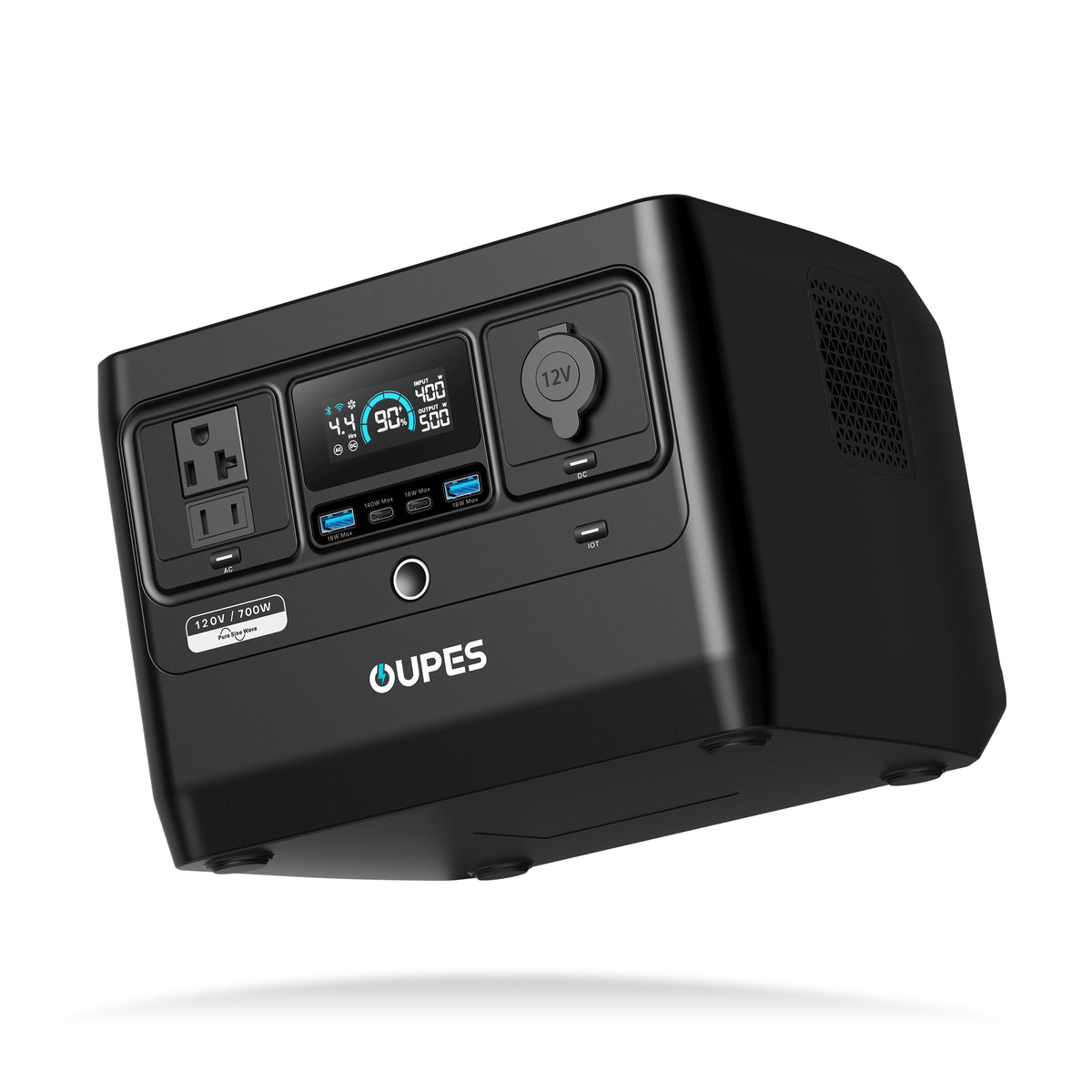
OUPES Exodus 700
- 576Wh rated capacity.
- 700W continuous AC output and 1,200W peak output.
- 13.9 lb with LiFePO4 battery chemistry.
- Best aligned with light loads, short stays or frequent recharging.

OUPES Mega 1 Lite
- 1,024Wh rated capacity.
- 2,000W continuous AC output and 4,500W surge.
- Up to 800W solar input.
- A portable option for moderate daily energy and higher-power appliances used briefly.

OUPES Mega 3
- 3,072Wh base capacity.
- 3,600W continuous AC output and 7,000W surge.
- Expandable up to 15.36kWh with compatible batteries.
- More stored energy and output headroom for demanding van or compatible RV routines.
A station remains portable equipment; secure it for travel, protect it from moisture and heat, maintain ventilation required by the manual, and confirm the vehicle can safely carry the full system weight.
Frequently Asked Questions
Is 1kWh per day enough for van life?
It can support an efficient routine, but refrigeration, laptop use and ventilation may already consume most of it. Measure your setup.
How large should the battery be for two days?
Multiply daily load by two, then divide by the planned delivery factor and reserve. Reduce the result by only the charging you can reliably obtain.
What uses the most electricity in a van?
Electric climate control, water heating and cooking often dominate. Refrigeration can be the largest continuous daily load.
Can solar power cover all daily use?
Yes when actual harvest consistently exceeds loads and losses, but weather and shade require reserve or a second charging source.
How many solar watts do I need?
Divide daily watt-hours by expected peak-sun-hours and a realistic system factor, then check the station's input limits.
Should I calculate from appliance nameplates?
Use labels for compatibility and maximums, but measure watt-hours for cycling or variable loads.
Can I run an induction cooktop?
Only when its input watts and the combined loads remain within the inverter and outlet limits. Runtime may be short at high power.
Does driving automatically recharge a power station?
No. It requires a compatible, properly installed charging method that respects the vehicle and station limits.
How much reserve should I carry?
The example uses 20%. Increase it for medical loads, remote travel, heat, cold or uncertain charging.
Is a bigger battery always better for a van?
No. Balance runtime with weight, storage, securing requirements, cost and the van's payload capacity.

Leave a comment
This site is protected by hCaptcha and the hCaptcha Privacy Policy and Terms of Service apply.