




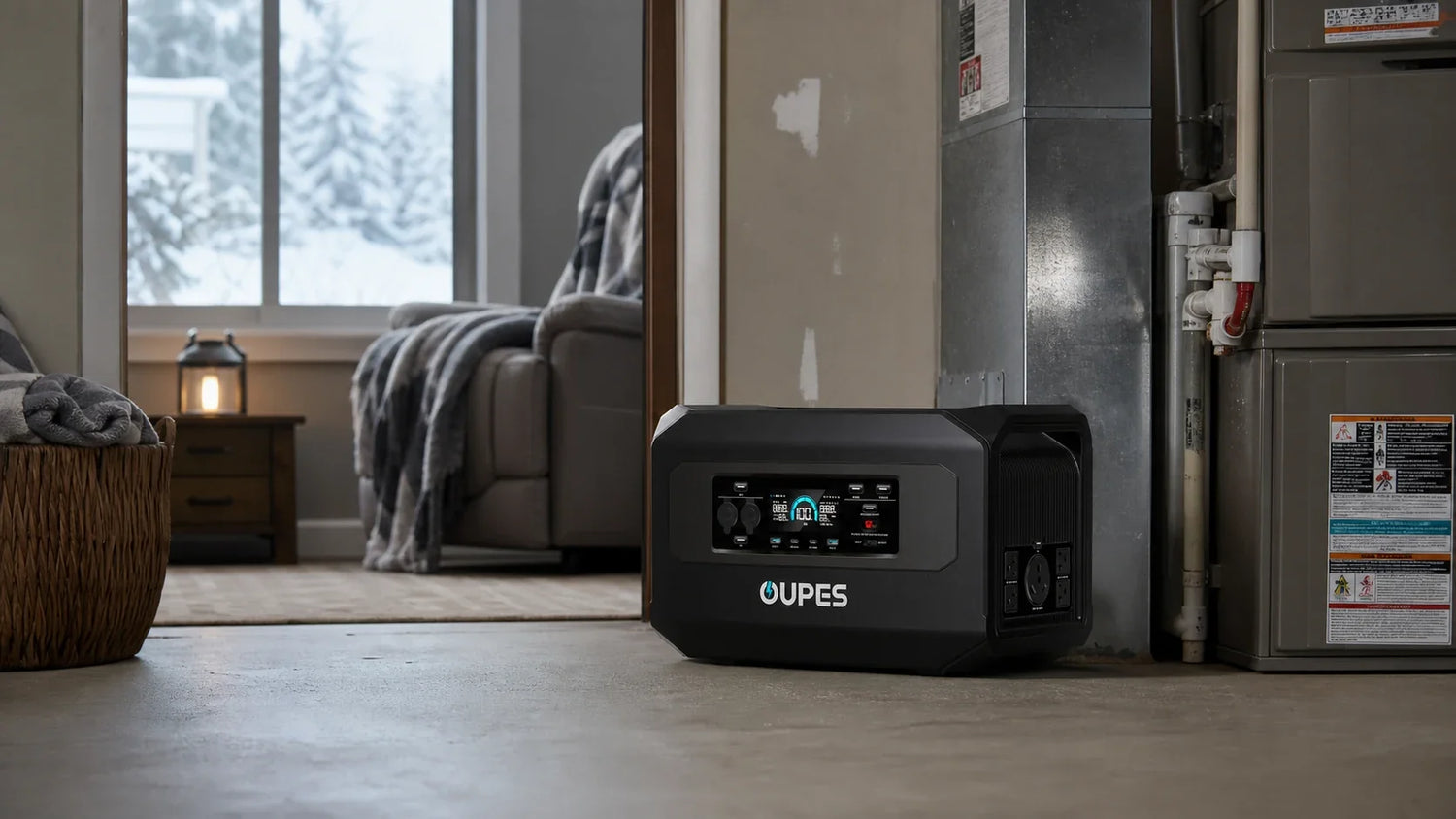
Yes, a portable power station can run many gas furnaces during an outage, but only when its AC output, surge capability, battery capacity, grounding arrangement, and connection method are compatible with the specific furnace. A gas furnace burns fuel for heat, yet its blower motor, ignition system, control board, inducer fan, and safety controls still need electricity. Do not choose a power station from the furnace's heating rating or from a generic online wattage estimate. Start with the furnace nameplate, manual, and manufacturer guidance.
The practical decision has two parts: the power station must handle the furnace's momentary startup demand, and it must store enough energy to support the furnace through the expected outage. The calculations below provide a planning method, not a guarantee for every installation.
Why a Gas Furnace Needs Electricity
A modern gas furnace is not a passive heater. Its control board verifies safe operating conditions, an inducer fan establishes draft, an igniter starts combustion, and a blower distributes heated air. Thermostats, condensate equipment, dampers, and other accessories may add electrical demand. If any required component loses power, the furnace generally cannot complete its normal heating cycle.
Electrical demand also changes during a cycle. A motor may draw more power for a brief moment when it starts than it uses after reaching normal speed. The furnace then cycles on and off according to thermostat settings, outdoor temperature, insulation, and heat loss. That is why a single “furnace wattage” number cannot reliably predict either compatibility or runtime.
Check Running and Startup Power
First, locate the furnace nameplate and manual. Record voltage, amperage, motor ratings, and any stated minimum circuit or startup requirements. If the furnace manufacturer provides a backup-power procedure, follow it. A qualified HVAC or electrical professional can measure actual demand when the documentation is incomplete.
For a basic estimate, watts equal volts multiplied by amps. For example, a 120-volt load drawing 6 amps represents about 720 watts while operating. This arithmetic is only a starting point: motors and power-factor effects can make actual behavior more complicated, and the startup peak may be higher than the steady draw.
Compare three items before use:
- Continuous AC output: it must exceed the combined running demand of the furnace and every other connected load.
- Startup demand: the power station must tolerate the motor's brief starting requirement without shutting down.
- Output compatibility: voltage, frequency, receptacles, grounding behavior, and any manufacturer requirements must suit the installation.
Leave operating margin rather than planning to hold an inverter at its maximum rating. Also account for a condensate pump, powered thermostat, zone equipment, or other components that must operate with the furnace.
Estimate Battery Runtime
Output power is measured in watts, while stored energy is measured in watt-hours. Runtime depends primarily on energy capacity and average load, not merely on the inverter's maximum watt rating. A useful planning formula is:
Estimated runtime in hours = battery capacity in Wh × planning efficiency ÷ average load in W
Suppose a power station stores 2,048Wh. Using an illustrative 85% planning factor leaves about 1,741Wh for the estimate. If the furnace and required controls averaged 700W while actively running, the continuous-load estimate would be about 2.5 hours. A cycling furnace may span a longer clock period because it does not run every minute, while very cold weather may increase its duty cycle. Conversion losses, temperature, battery condition, and accessory loads can reduce the result.
Do not turn this example into a promised runtime. A better method is to measure or document the actual load, estimate how many minutes per hour the furnace operates under expected conditions, and include a reserve. During a severe winter outage, indoor heat loss and furnace cycling can differ substantially from a mild-day test.
Connection, Grounding, and Safety
The connection method is often the decisive issue. Many furnaces are hardwired rather than fitted with an ordinary plug. Do not improvise a cord, backfeed a household circuit, bypass furnace safety controls, or attempt a panel modification from a generic tutorial. Any fixed wiring, transfer equipment, or conversion should be evaluated and installed by a qualified professional in accordance with the furnace instructions and local requirements.
Some heating equipment may also be sensitive to grounding or neutral configuration. A furnace that works from utility power may display a fault when connected to an incompatible source. Ask the furnace manufacturer or a qualified professional what the equipment requires, and confirm that the proposed power station and connection method meet it.
Place the power station in a dry, stable, ventilated location within its specified operating conditions. Keep vents clear, protect cables from damage, and keep the unit away from furnace heat, condensate, snow, and water. A battery power station produces no combustion exhaust, but it still must be used according to its manual. Never place a fuel-burning generator indoors as a substitute.
Choose a Practical Capacity
Choose capacity around the outage plan, not around the furnace alone. For short heating intervals, calculate one or two expected cycles plus a safety reserve. For overnight planning, estimate the furnace duty cycle across the coldest likely period. If the same power station will also support a refrigerator, lights, communications, or medical equipment, calculate simultaneous watts and total watt-hours for every priority load.
A sensible plan separates loads into three groups:
- Essential: furnace controls and blower, required health equipment, and critical communications.
- Scheduled: refrigerator, freezer, device charging, and lights that can operate at different times.
- Deferred: resistance heaters, cooking appliances, and other high-demand devices that can quickly consume the energy reserve.
Load scheduling can be as useful as buying more capacity. Avoid running a high-watt appliance while the blower starts, and monitor the power station's display instead of assuming the original estimate remains accurate.
A Local OUPES Option
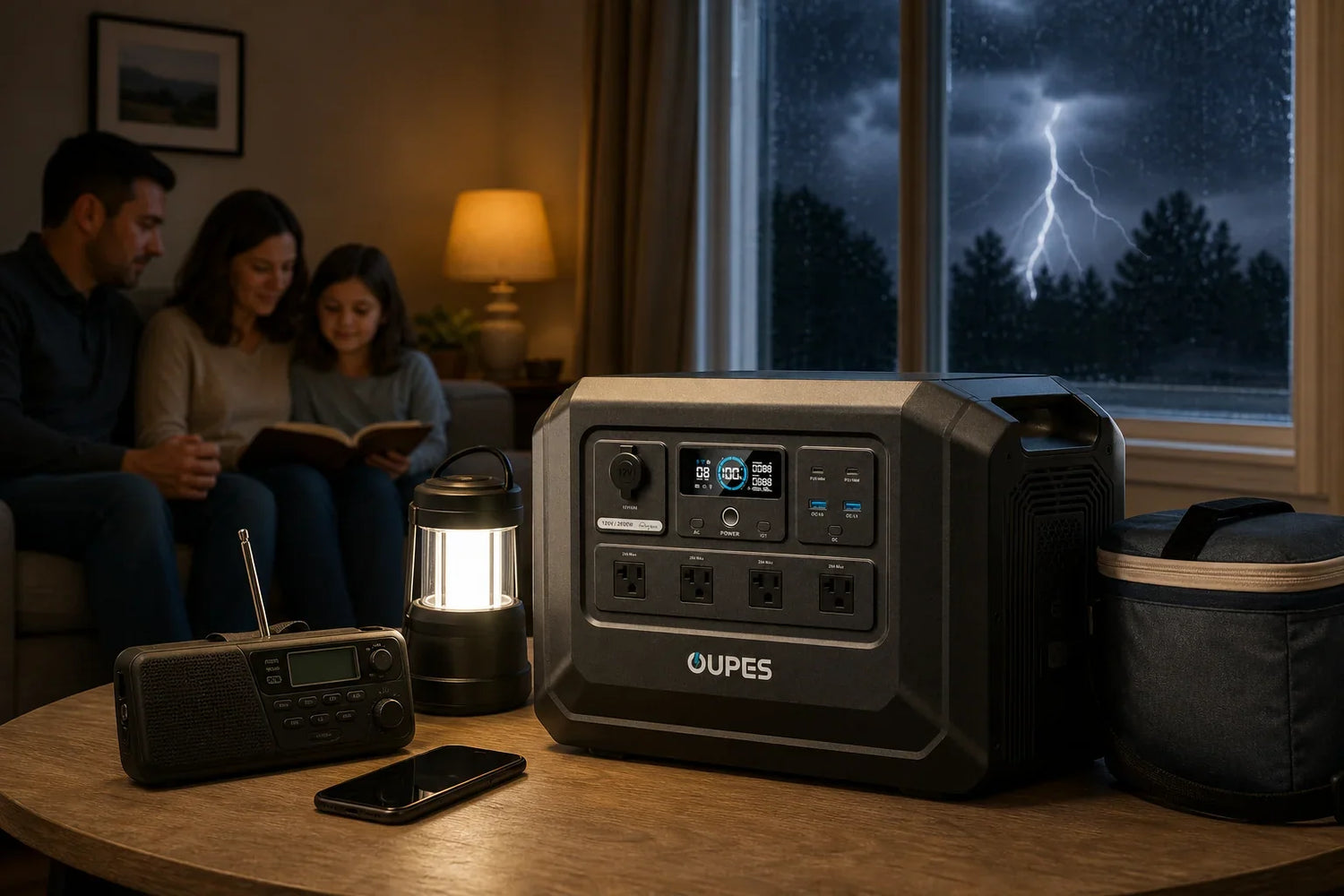
For a furnace whose verified electrical requirements fit within its limits, the OUPES Mega 2 Pro Portable Power Station provides 2,500W of rated AC output and 2,048Wh of stored capacity. Those figures create useful planning room for many household backup scenarios, but they do not establish compatibility with a particular furnace. The nameplate, startup behavior, grounding requirements, connection method, and combined load still control the decision.
The product data also lists up to 2,100W of solar input. That input rating is not a promise of constant solar production, and the power station is sold here as a standalone unit without a solar panel. Actual solar replenishment depends on connected panels, sunlight, angle, shading, weather, and system limits. In a winter outage, reliable access to utility charging before the event may be more predictable than assuming daily solar recovery.
Pre-Outage Checklist
- Photograph the furnace nameplate and save the manual.
- Confirm continuous demand, startup demand, voltage, frequency, grounding, and connection requirements.
- Have any fixed connection or transfer equipment handled by a qualified professional.
- Test the approved setup before severe weather while utility power and professional help are available.
- Calculate essential watt-hours, add a reserve, and plan which secondary loads will be scheduled.
- Fully charge the power station before forecast winter storms and store it within specified conditions.
- During use, monitor remaining charge, load, temperature, cables, and furnace behavior.
Frequently Asked Questions
How many watts does a gas furnace use?
There is no dependable universal figure. Blower size, inducer motor, accessories, voltage, design, and operating stage all matter. Read the furnace nameplate and manual, then obtain actual measurements or professional guidance when needed. Plan for both steady demand and the brief startup requirement rather than selecting from an online average.
Will a 2,000Wh battery run a furnace all night?
It might cover part or all of an overnight period, but capacity alone cannot answer the question. Runtime depends on active wattage, cycling frequency, inverter losses, temperature, battery condition, and other loads. Calculate usable watt-hours against the furnace's measured average demand and retain a reserve for colder-than-expected conditions.
Can I plug a hardwired furnace directly into a power station?
Not unless the furnace manufacturer and a qualified professional approve a compliant connection method. Do not add a makeshift plug, backfeed wiring, or bypass safety equipment. Fixed wiring, transfer equipment, neutral configuration, and grounding require installation-specific review under applicable instructions and local requirements.
Should I run a space heater from the same power station?
Usually that would consume the battery much faster and could leave less output margin for the furnace motor. Resistance heaters are high, sustained loads. Compare the combined wattage with the inverter rating and the total watt-hours with your outage plan; prioritize the furnace and other essential loads when energy is limited.
Can solar panels recharge the battery during a winter outage?
Solar can extend a backup plan, but winter output varies with daylight, cloud cover, panel angle, shade, snow, and temperature. A product's solar-input rating is a maximum input specification, not guaranteed daily energy. Base the plan on realistic local conditions and treat favorable solar production as variable.
What should I test before the next outage?
After the connection method has been professionally approved, test furnace startup, a full heating cycle, thermostat response, error codes, cable temperature, and the power station's displayed load. Record energy used over a representative period. Repeat the check periodically and after changes to the furnace or backup equipment.
Conclusion
A portable power station can be a practical gas-furnace backup when its continuous output, startup handling, capacity, grounding behavior, and approved connection method all match the real installation. Verify the furnace data first, calculate watt-hours with losses and cycling in mind, and leave fixed electrical work to a qualified professional. That disciplined approach is more reliable than choosing a battery from a generic furnace wattage estimate.
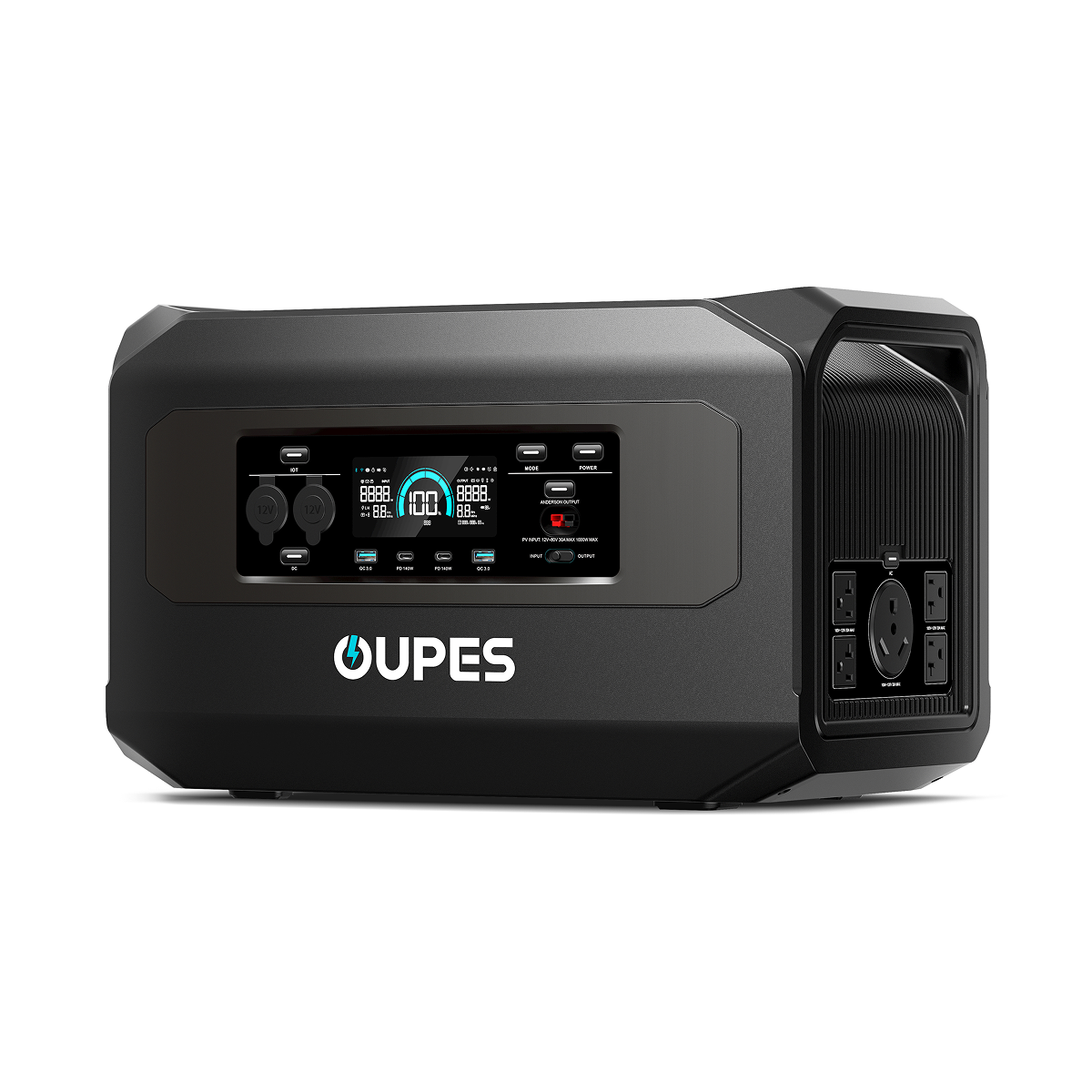
OUPES Mega 2 Pro Portable Power Station
- 2,048Wh battery capacity for planned household backup loads
- 2,500W rated output for compatible appliances and equipment
- Up to 2,100W solar input supported by the power station
- Expandable design for longer backup planning


Leave a comment
This site is protected by hCaptcha and the hCaptcha Privacy Policy and Terms of Service apply.