




Table of Contents
Introduction
Portable power stations have become essential tools for camping, emergency backup, outdoor work, and off-grid living. But what happens when the weather turns rainy or stormy? Many users wonder whether it’s safe—or even possible—to use a portable power station in wet conditions.
This guide explains the risks, best practices, real-world scenarios, and how OUPES portable power stations can safely support you during rainy-day emergencies. Following the right precautions will not only protect your device but also ensure personal safety and uninterrupted power supply when you need it most.
Is It Safe to Use a Portable Power Station in the Rain?
Unlike gas generators, portable power stations do not produce exhaust fumes and can safely operate indoors. However, they still rely on electrical components that must remain dry to prevent shock, short circuits, or internal damage.
The Key Issue: Water and Electricity Don’t Mix
Even with modern safety designs, most portable power stations are not waterproof. Exposure to rain can:
- Cause short circuits inside the battery management system
- Damage USB, DC, and AC output ports
- Trigger safety shutdowns that prevent charging and output
- Reduce long-term battery health and lifespan
IP Ratings Matter
Most power stations are not IP-rated for direct water exposure. While they may resist minor splashes, consistent rainfall or pooling water can cause device failure.
Indirect Rain Exposure Is Sometimes Possible—With Protection
Using a portable power station outdoors during rain is possible if it’s properly shielded under a covered location, waterproof housing, or protected environment. The next section explains how.
| Condition | Risk Level | Safe? |
|---|---|---|
| Direct rain exposure | High | No |
| Light splashes | Medium | Not recommended |
| Fully sheltered outdoor use | Low | Yes |
| Indoor use during rain | Very low | Yes |
Important Safety Precautions for Rainy Conditions
If you plan to use your portable power station outdoors when it’s raining, here are essential precautions:
1. Keep the Power Station Fully Covered
Use a waterproof canopy, tent, or awning that prevents direct rainfall from hitting the device.
2. Elevate the Power Station Above Ground
Place it on a table, stand, or dry platform. Never let it sit on wet grass, mud, or concrete where water can pool.
3. Use Waterproof Outlet Covers
Cover AC and DC ports when not in use. Moisture inside an outlet can cause dangerous malfunction.
4. Avoid Wet Hands When Handling the Device
Always dry your hands before plugging in or unplugging devices.
5. Protect Charging Inputs
Solar and AC charging ports should never be exposed to rain. Ensure connectors and cables stay fully dry.
6. Do Not Store the Power Station in Damp Locations
Humidity can corrode metal terminals and degrade internal components over time.
7. Use Proper Ventilation
Even though power stations do not produce fumes, they generate heat. Keep them sheltered but well ventilated.
Real-Life Usage Scenarios During Wet Weather
Scenario 1: Camping During a Rainstorm
A portable power station can still run lights, charge phones, or power cooking gear under a rainfly or canopy. Ensure the device stays completely covered while cables extend under the tent safely.
Scenario 2: Emergency Power Outage in Heavy Rain
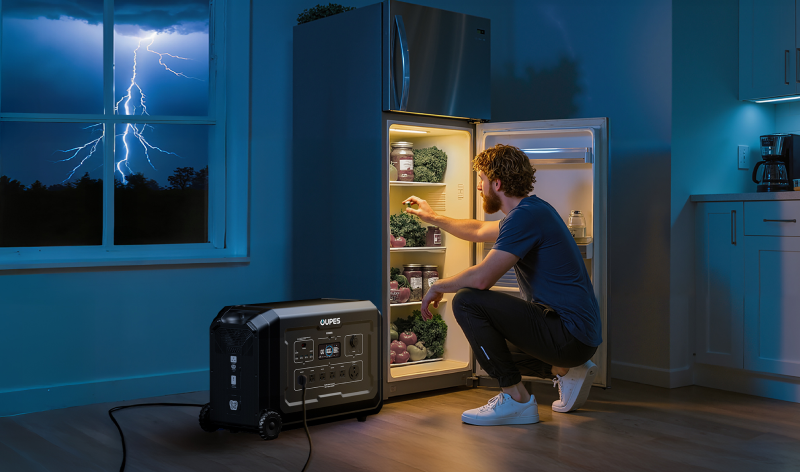
Storms often knock out grid power. Since OUPES portable power stations are safe indoors, you can run essential devices (medical equipment, routers, lights, and fans) without worrying about carbon monoxide.
Scenario 3: Outdoor Work During Wet Conditions
If you're using tools outside, place the power station in a waterproof toolbox shelter and keep cords dry. Never expose the power station directly to rainfall.
Scenario 4: Vehicle Use in Bad Weather
Charging devices from your car via a portable power station can be done safely inside the vehicle cabin—away from direct rain.
How OUPES Portable Power Stations Perform in Rainy Situations
OUPES power stations are built with protective battery management systems, rugged housing, and stable output designs. While not designed for direct rain exposure, they operate exceptionally well when properly sheltered.
Advantages of Using OUPES in Rainy Weather
- Indoor Safe – No fumes or emissions; safe during storms
- Multiple Output Ports – AC, DC, and USB provide flexibility
- Solar Compatibility – Charge after storms when sunlight returns
- High-Capacity Options – Mega Series can power refrigerators, heaters, and more
- Lightweight Options – Exodus Series ideal for camping or travel
| Model | Capacity | AC Output | Best Use Case |
|---|---|---|---|
| Exodus 600 | 256 Wh | 600W | Outdoor camping under shelter |
| Exodus 1200 | 992 Wh | 1200W | Home backup for rainy storms |
| Mega 5 | 5040 Wh | 4000W | Whole-home power during prolonged outages |
FAQ
Can a portable power station get wet?
No. Water can damage internal circuits and cause safety issues. Always keep it dry.
Is it safe to charge a portable power station in the rain?
Only if both the device and cables are completely sheltered from moisture.
Can I use a portable power station in a tent?
Yes, as long as it has ventilation and stays completely dry.
Do portable power stations have waterproof versions?
Most are not waterproof; protective shelters are required.
Are portable power stations safer than gas generators in rainy weather?
Yes. They produce no fumes and can operate indoors, unlike gas generators.
Can I leave a portable power station outside overnight?
Not recommended unless fully protected from moisture.
What happens if my power station accidentally gets wet?
Turn it off immediately, dry it thoroughly, and avoid using until fully inspected.
Conclusion
Portable power stations are extremely useful during rainstorms and outages, but like all electrical devices, they must be protected from moisture. With proper precautions—such as sheltering the unit, elevating it above wet ground, and keeping all ports dry—you can safely use a portable power station in challenging weather conditions.
OUPES portable power stations, especially the high-capacity Mega and versatile Exodus series, offer safe indoor operation and reliable backup power, making them excellent choices for rainy-day emergencies.