




Introduction
One of the most common questions people ask when considering an alternative backup system is: “Can a portable power station be used indoors?” With an increasing number of homes relying on electric appliances, smart devices, and emergency-ready equipment, understanding how indoor power solutions work has become more important than ever. Fortunately, today’s portable power stations—especially modern lithium-based models—are designed to be safe, quiet, and fully compatible with indoor use.
This article explains everything you need to know about using portable power stations safely and effectively inside your home. We’ll break down real-life scenarios, safety considerations, power recommendations, and how OUPES power stations can support your daily indoor needs as well as emergency situations.
Are Portable Power Stations Safe Indoors?
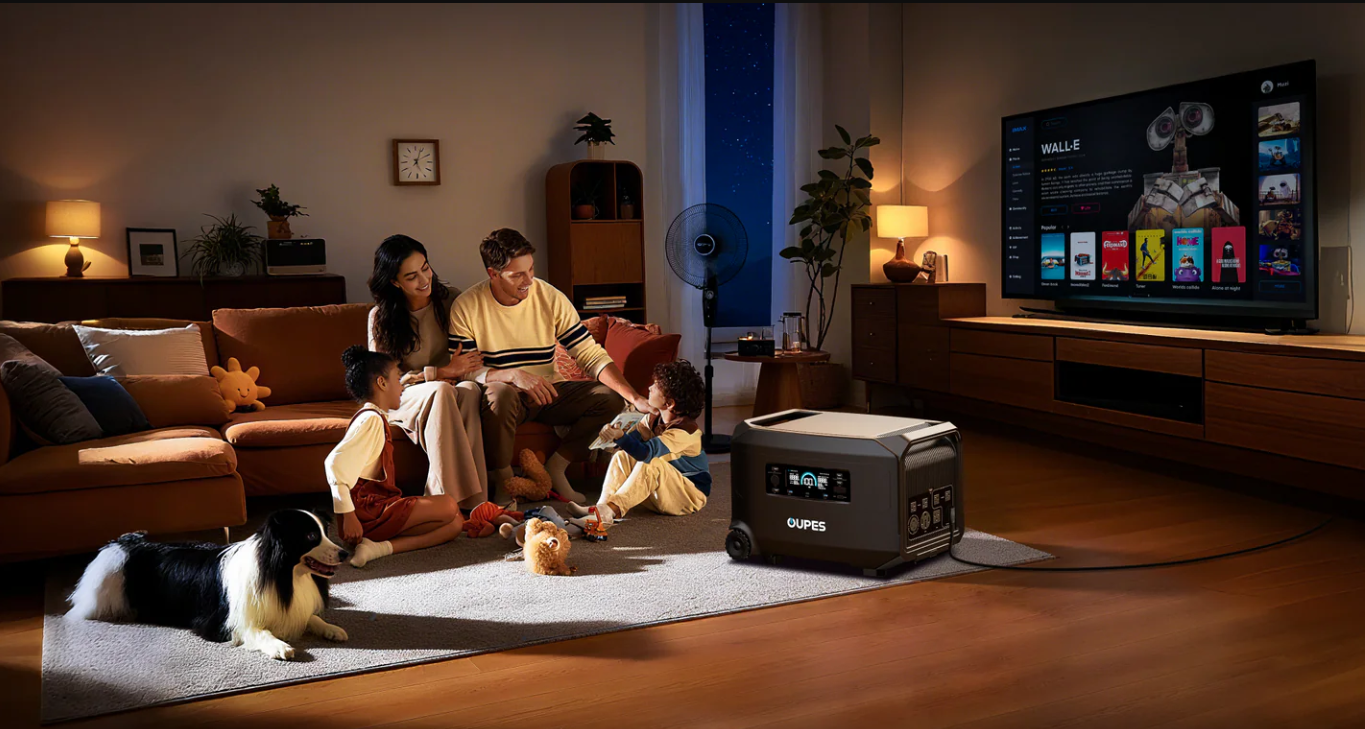
The short answer is yes. Unlike gas generators, which emit carbon monoxide and must never be used inside a house or garage, portable power stations run on rechargeable lithium batteries and produce zero fumes, zero noise, and zero emissions. This makes them inherently safe for use in bedrooms, living rooms, apartments, RV interiors, dorms, and offices.
Why Battery Power Stations Are Indoor-Safe
- No combustion — no gasoline or diesel eliminates fire and CO risks.
- Built-in Battery Management Systems (BMS) to protect against overcharging, overheating, and overcurrent.
- Silent operation ideal for night use, small rooms, and apartments.
- Stable electrical output protects sensitive electronics such as routers, CPAP machines, or computers.
Safety Tips When Using Indoors
- Keep the unit on a stable, dry, and ventilated surface.
- Avoid covering the vents; airflow prevents heat buildup.
- Use only manufacturer-approved charging cables.
- Do not expose the station to moisture, kitchens with high steam, or bathrooms.
- Charge the unit in a cool area to extend battery lifespan.
With proper use, portable power stations—especially OUPES models—are among the safest indoor backup solutions available today.
Indoor Scenarios Where Portable Power Stations Excel
Portable power stations are becoming essential in modern homes due to their versatility. Whether you live in an apartment that cannot support a gas generator, or you need reliable backup power during severe weather, these systems offer efficient energy whenever and wherever you need it.
1. Emergency Backup During Power Outages
Storms, freezing temperatures, and unexpected grid failures can leave homes without power for hours or even days. Portable power stations provide a dependable source of electricity for key indoor devices such as:
- Refrigerators and mini-fridges
- Wi-Fi routers for communication
- LED lights and lamps
- Medical devices like CPAP machines
- Charging phones, tablets, and laptops
2. Indoor Workspaces & Home Offices
If you work remotely, an outage—even a short one—can disrupt meetings, deadlines, and productivity. A portable power station can keep your workflow uninterrupted by powering your computer, monitor, modem, router, and lighting for several hours.
3. Apartments & Condos Without Generator Access
Many residential buildings prohibit gas generators due to noise and safety risks. Portable power stations offer a quiet, indoor-friendly alternative capable of powering everyday appliances without violating building rules.
4. Indoor Events & Entertainment
Hosting parties, holiday gatherings, or movie nights? A portable power station can run projectors, speakers, lighting, and food warmers—all without overloading wall outlets.
5. Nighttime & Bedroom Use
Because OUPES power stations operate silently, they are suitable for running nighttime devices such as CPAP machines, fans, phone chargers, baby monitors, and low-wattage heaters.
Benefits of Using Portable Power Stations Indoors
Indoor power stations offer multiple advantages over gas generators and traditional backup systems. Below are the most relevant benefits for real-world home use.
1. Zero Emissions & Safe Operation
Battery energy storage produces no fumes, no smoke, and no carbon monoxide—making it fully safe for indoor environments.
2. Whisper-Quiet Performance
No combustion engine means no noise. This makes portable power stations ideal for bedrooms, nurseries, hospitals, and offices.
3. High Portability & Easy Setup
No fuel, no maintenance, and no pull-start mechanism. Just plug in your devices and turn on the unit.
4. Can Power Sensitive Electronics
Modern inverter output delivers clean, stable power—protecting laptops, gaming systems, routers, smart TVs, and medical devices.
5. Renewable Charging Options
Many OUPES power stations can recharge using portable solar panels, creating a sustainable off-grid power supply during long outages.
How to Choose the Best OUPES Portable Power Station for Indoor Use
Your ideal power station depends on the appliances you want to operate and the duration of use. Consider these factors before choosing a model.
1. Power Output (Wattage)
The station must exceed the highest wattage of the device you want to run. For example:
- Laptop: 60–100W
- CPAP machine: 40–60W
- Mini fridge: 60–120W
- Microwave: 800–1200W
- Heater (low-mode): 300–600W
2. Battery Capacity (Wh)
Capacity determines how long your devices will run. For example, a 500Wh unit can run a 50W device for about 8–10 hours.
3. Number of Output Ports
Look for a variety of AC, DC, USB, and PD ports to support multiple devices simultaneously.
4. Indoor-Friendly Features
- Silent cooling fans
- High-quality BMS
- Pure sine wave inverter
- Expandable battery options
5. OUPES Model Recommendations
For indoor use, the following OUPES models perform exceptionally well:
- Mega 5 – Best for whole-home backup
- Mega 3 – Ideal for refrigerators and high-power indoor appliances
- Mega 2 – Great for home offices and emergency essentials
- Exodus 1200 – Lightweight, compact, perfect for small devices or apartment use
OUPES Indoor Power Station Comparison Table
| Model | Capacity (Wh) | Rated Output | Best Indoor Applications |
|---|---|---|---|
| Mega 5 | 5040Wh | 4000W | Whole-home backup, fridges, heaters, cooking appliances |
| Mega 3 | 3072Wh | 3600W | Refrigerators, microwaves, entertainment systems |
| Mega 2 | 2048Wh | 2500W | Computers, routers, CPAP machines, small heaters |
| Exodus 1200 | 992Wh | 1200W | Phones, laptops, LED lights, mini appliances |
FAQ
Can portable power stations replace indoor gas generators?
Absolutely. For indoor use, portable power stations are safer and more versatile than gas generators, which should never be used indoors due to carbon monoxide risks.
How long can a portable power station power home appliances?
Runtime depends on capacity and device wattage. For example, a 200W appliance on a 2,000Wh station may run 8–10 hours.
Can I keep my power station plugged in indoors?
Yes, most models support safe float-charging and can stay connected for emergency readiness.
Is it safe to use power stations in bedrooms?
Yes. They are silent and emission-free, making them ideal for nighttime medical devices and chargers.
Do portable power stations get hot indoors?
Minimal heat is produced. Built-in BMS ensures safe temperature regulation during charging and operation.
Are power stations allowed in apartments?
Yes. They comply with strict indoor guidelines and do not violate building safety policies.
Can I use the power station while it's charging?
Many OUPES models support pass-through charging, allowing simultaneous use and recharge.
Conclusion
Portable power stations are a safe, reliable, and highly flexible solution for indoor power needs. Whether you’re preparing for outages, powering home offices, supporting medical devices, or managing daily indoor appliances, OUPES portable power stations provide clean, silent, and dependable energy.
By choosing the right OUPES model, you can ensure comfort, safety, and uninterrupted power throughout your home—day or night.