




Table of Contents
- Introduction
- What Is a Solar Whole House Generator?
- How Solar Backup Systems Work
- Why Choose Solar for Emergency Power
- Limitations You Should Understand
- How to Choose the Right System
- OUPES Guardian 6000 Solar Backup Solution
- Solar Panels and Expansion Batteries
- Final Thoughts
- FAQ
Introduction
As power outages become more frequent due to storms, grid failures, and extreme weather, more homeowners are turning to solar-powered backup systems. Instead of relying on fuel-based generators, many now prefer a cleaner, quieter, and more sustainable solution. This has led to growing interest in one key question: how do you choose a solar whole house emergency generator?
A solar backup system is not just a single device. It is a complete energy solution that combines solar panels, battery storage, and power conversion technology. When designed correctly, it can keep essential home systems running during outages and even support longer-term off-grid operation. In this guide, we will break down how these systems work, what to look for, and how OUPES provides a practical solution through its Guardian 6000 ecosystem.
What Is a Solar Whole House Generator?
A solar whole house generator is an integrated system that captures sunlight, stores it in batteries, and delivers usable electricity to your home during outages. It typically consists of three main components: solar panels, a battery storage unit, and an inverter that converts stored energy into usable power.
Unlike traditional generators that rely on gasoline or diesel, solar generators use renewable energy. They operate silently, produce no emissions, and can provide continuous power as long as energy is stored or solar charging is available.
In a whole-house setup, the goal is not always to power every device simultaneously. Instead, most systems are designed to prioritize critical circuits such as refrigeration, lighting, communication, and essential appliances.
How Solar Backup Systems Work
Understanding how a solar generator works helps you make a better buying decision. The process is relatively straightforward:
- Solar panels capture sunlight and convert it into electricity
- The electricity is stored in a battery system
- An inverter converts stored energy into usable AC power
- Your home uses this stored power during outages
Battery storage plays a critical role. Without it, solar panels alone cannot power your home during a blackout because most grid-tied systems shut down for safety reasons.
With a battery system in place, excess solar energy generated during the day can be stored and used at night or during outages.
Why Choose Solar for Emergency Power
1. Clean and Quiet Operation
Solar generators operate without fuel, meaning no noise, fumes, or emissions. This makes them safe for indoor use and more comfortable for daily living.
2. Renewable and Sustainable Energy
Solar energy is free and renewable. Once your system is installed, you can generate electricity without ongoing fuel costs.
3. Long-Term Cost Efficiency
While the initial investment may be higher, solar systems reduce reliance on fuel and can lower long-term energy costs by using stored solar power.
4. Continuous Charging Capability
Unlike fuel generators that stop when fuel runs out, solar systems can recharge continuously during daylight hours, providing extended backup during long outages.
Limitations You Should Understand
Despite their advantages, solar whole house generators are not without limitations. Understanding these helps set realistic expectations.
- Weather dependency: Solar output decreases during cloudy or rainy conditions
- Battery capacity limits: Stored energy determines how long your home can run
- System sizing matters: Undersized systems may not support all appliances
In practice, most homeowners design their systems around essential loads rather than full-home operation at all times. This approach balances performance, cost, and reliability.
How to Choose the Right Solar Generator System
Choosing a solar whole house emergency generator requires evaluating several key factors:
- Power output: Can it support your essential appliances?
- Battery capacity: How long can it run during an outage?
- Expandability: Can you add more batteries later?
- Solar input: How quickly can it recharge from sunlight?
- Flexibility: Can it work for both emergencies and daily use?
The best systems are scalable. You may start with a base unit and expand it over time as your needs grow.
OUPES Guardian 6000 Solar Backup Solution
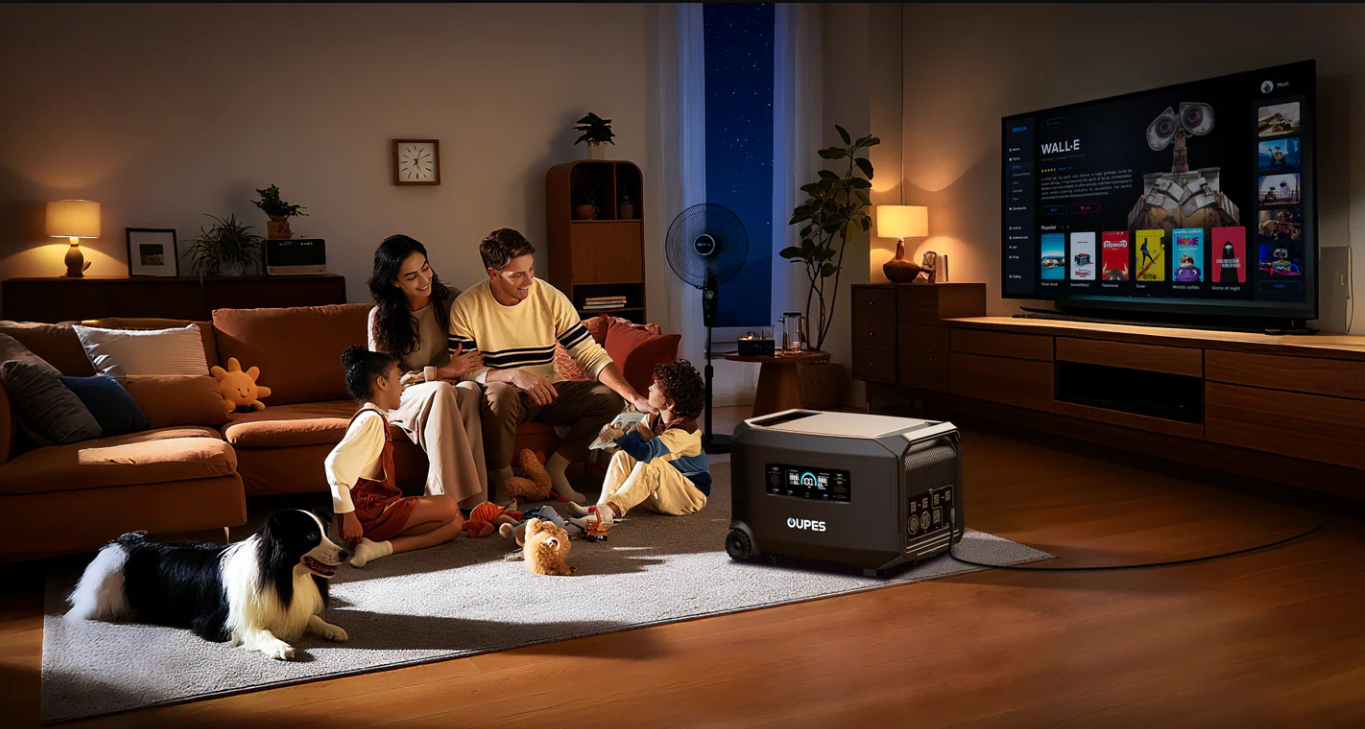
The OUPES Guardian 6000 is designed as a high-capacity portable power station suitable for home emergency backup scenarios. It offers 6144Wh capacity and 6000W output, allowing it to support a wide range of essential household devices.
This level of output makes it suitable for running multiple appliances simultaneously, including refrigerators, lighting systems, communication devices, and selected kitchen equipment. For many households, this represents a strong balance between portability and whole-home capability.
Another key advantage is flexibility. Unlike permanently installed systems, the Guardian 6000 can be used for home backup, outdoor applications, and general energy needs, making it a versatile investment rather than a single-purpose solution.
Solar Panels and Expansion Batteries
A solar generator is only as effective as its ecosystem. That is why pairing the Guardian 6000 with solar panels and expansion batteries is essential for maximizing performance.
Solar Panels
Solar panels provide the energy input needed to recharge the system. By connecting portable or fixed solar panels, you can continuously generate electricity during daylight hours. This is especially important during extended outages, where grid charging is not available.
Solar charging allows the system to operate independently of fuel, making it a sustainable and long-term backup solution.
Expansion Batteries
One of the most important features of a whole-house solar generator is scalability. Expansion batteries allow you to increase total energy storage, extending runtime during outages.
This is particularly useful in scenarios such as:
- Multi-day outages
- High energy consumption households
- Winter storms or severe weather events
By combining the Guardian 6000 with additional battery capacity, homeowners can build a more resilient and adaptable backup system.
Final Thoughts
Choosing a solar whole house emergency generator is about more than just buying a device. It is about building a reliable energy system that supports your home when the grid fails. Solar generators offer a clean, quiet, and flexible alternative to traditional fuel-based solutions, making them increasingly popular among modern homeowners.
The key is to focus on real needs: essential loads, outage duration, and system scalability. A well-designed setup combines solar panels, battery storage, and sufficient output capacity to handle everyday emergencies.
The OUPES Guardian 6000 stands out as a practical solution because it combines high capacity, strong output, and expandability into a single system. When paired with solar panels and additional batteries, it becomes a flexible and reliable foundation for home backup planning.
In the end, the best solar generator is not necessarily the largest one, but the one that fits your home, your usage habits, and your preparedness goals.
FAQ
1. Can a solar generator power an entire house?
Yes, but it depends on the system size. Larger systems can support most home appliances, while smaller ones focus on essential loads.
2. Do solar panels work during a power outage?
Only if paired with a battery system. Standard grid-tied systems shut down during outages for safety.
3. How long can a solar generator run a home?
Runtime depends on battery capacity and energy usage. Larger systems with expansion batteries can support longer outages.
4. Is solar backup better than gas generators?
Solar systems are quieter, cleaner, and require less maintenance, but may need proper sizing and sunlight to perform at their best.
5. Why is battery storage important?
It stores excess solar energy so it can be used at night or during outages.
6. Can I expand my system later?
Yes, many systems—including the Guardian 6000—support expansion batteries for increased capacity.
7. What appliances can a solar generator run?
Most systems can run lights, refrigerators, communication devices, and small appliances. Larger systems can support more demanding loads.
8. Is a solar generator worth it for emergencies?
Yes, especially for homeowners seeking a reliable, low-maintenance, and renewable backup power solution.