




Table of Contents
- Introduction
- Why Generator Size Matters
- Running Watts vs Starting Watts
- Common Appliance Power Needs
- Emergency Generator Size Ranges
- How to Calculate the Right Size
- Portable Power Stations for Home Emergencies
- Recommended OUPES Models
- Final Thoughts
- FAQ
Introduction
When the power goes out, one of the first questions homeowners ask is simple: what size emergency generator do I need for my home? The answer depends on what you want to keep running during an outage. Some households only want enough backup power for lights, a refrigerator, phone charging, and internet. Others want to support more of the home, including cooking appliances, sump pumps, heating equipment, or even larger comfort loads.
The most important thing to understand is that there is no one perfect size for every home. The best generator size depends on your daily habits, the appliances you consider essential, and how long outages usually last in your area. Choosing too small a unit may leave you without enough usable power when you need it most. Choosing too large a system can increase cost and complexity without providing much extra value for your actual situation.
This guide explains how to think about emergency generator sizing in a practical way. We will cover running watts, starting watts, typical appliance needs, and how to match different backup sizes to different home scenarios. The article focuses on user education first, with product discussion kept secondary. We will also briefly introduce several OUPES models that can fit different levels of home emergency backup planning.
Why Generator Size Matters
Generator size matters because emergency backup is really about balancing three things: what you need to power, how long you need to power it, and how much flexibility you want during the outage. A backup unit that is too small may be able to run one or two devices, but not enough to support a real household emergency plan. On the other hand, a much larger system may provide more power than you actually need, making it harder to justify from a cost and portability perspective.
For most homeowners, the goal is not to power everything at once. It is to keep the most important parts of daily life working. That often means refrigeration, lighting, phones, internet, medical devices, and a few small appliances. Once you think in those terms, sizing becomes easier. You stop asking “What is the biggest generator I can get?” and start asking “What do I actually need this backup system to do?”
This shift in thinking is important because the best home emergency solution is usually the one that matches your actual outage pattern. A household that mainly faces short storm outages has different needs than one dealing with winter blackouts, heat-related failures, or multi-day disruptions.
Running Watts vs Starting Watts
Before choosing a generator, you need to understand the difference between running watts and starting watts. Running watts are the amount of power an appliance needs to keep operating. Starting watts are the extra surge of power some appliances need when they first turn on.
This matters because many household devices do not start and run at the same power level. A refrigerator is a classic example. It may use a moderate amount of electricity while running, but it can require a higher surge when the compressor starts. The same can be true for sump pumps, freezers, air conditioners, and some other motor-driven appliances.
If you size your backup system using only running watts, you may underestimate what the system needs to start those devices reliably. That is why good generator planning always includes both the steady operating load and the highest likely startup demand.
Common Appliance Power Needs
Every home is different, but looking at common appliance categories helps create a practical starting point. In an emergency, homeowners often prioritize the following:
- Refrigerator
- Freezer
- Lights
- Wi-Fi router and modem
- Phone charging
- Laptop or tablet
- Television or radio
- Microwave
- Coffee maker
- Sump pump
- Portable fan
- Space heater or selected heating support
Not all of these need to run at the same time. That is one of the biggest mistakes people make when estimating backup size. A good emergency setup often works by prioritizing essential loads instead of trying to operate the entire house exactly as usual. For example, you may only need your refrigerator cycling on and off, your router powered continuously, a few lights at night, and occasional use of a small kitchen appliance.
Thinking this way can reduce the required size dramatically. It also helps you choose a backup system that is more practical, more affordable, and easier to manage during real outages.
Emergency Generator Size Ranges
1. Small Backup: Basic Emergency Support
A smaller emergency generator or power station is best for households that only want to cover the basics. This usually means lighting, phone charging, Wi-Fi, and maybe a refrigerator or a few small devices. These systems are useful when your main goal is communication, safety, and food protection rather than full-home comfort.
This category is often the right fit for apartments, smaller homes, or households that experience shorter outages and want a simple backup solution. It is also a practical starting point for homeowners who are building preparedness gradually.
2. Medium Backup: Everyday Essentials Plus More Flexibility
A medium backup range is often the most practical choice for homeowners. It can support more devices at once and provides more flexibility for longer outages. In this category, households are usually not only covering lights and phones, but also refrigeration, internet, selected kitchen use, and a broader set of home essentials.
This level often feels more realistic for families because it allows for a more normal routine during an outage. Instead of just surviving the blackout, the household can continue working, staying connected, and managing daily needs more comfortably.
3. Large Backup: Higher-Capacity Emergency Planning
A larger backup system is more suitable for households that want extended runtime, support for more demanding appliances, or a stronger emergency plan for severe weather seasons. This category may be relevant if you experience longer outages, live in an area with frequent grid disruptions, or want to support more of the home at one time.
It is also where backup planning starts to shift from “essential survival” toward “greater continuity of daily life.” That can make a big difference in families with children, work-from-home needs, or temperature-sensitive situations.
How to Calculate the Right Size
The best way to calculate the right emergency generator size is to make a realistic list of the devices you want to support during an outage. Start with the most important ones, then estimate whether they need to run continuously or only occasionally.
A practical process looks like this:
- List your essential devices and appliances.
- Identify their running watt needs.
- Note which appliances have higher startup demands.
- Add the running loads you expect to use at the same time.
- Include the highest starting surge you may need.
- Leave extra margin so the system is not always pushed to its limit.
For example, if your outage plan includes a refrigerator, router, several lights, phone charging, and occasional microwave use, your required size will be very different from a home that also wants to support pumps, larger kitchen appliances, or high-demand heating and cooling equipment. This is why personal load planning matters more than generic advertising claims.
It also helps to separate your needs into two categories: must-have loads and nice-to-have loads. That way, if the outage lasts longer than expected, you already know how to prioritize your available power.
Portable Power Stations for Home Emergencies
Traditional generators are not the only emergency backup option. For many households, portable power stations have become a more practical and user-friendly choice. Instead of relying on fuel, these systems store electricity in batteries and provide ready-to-use backup power when the grid goes down.
This approach has several advantages for home emergency use. Portable power stations are quieter, easier to operate, and simpler to integrate into daily preparedness. They are also versatile. The same system can support home outages, road trips, outdoor use, and general backup needs throughout the year.
For users who want a cleaner, more straightforward backup experience, this makes a lot of sense. Rather than managing fuel and startup routines, you can focus on keeping essential devices powered and maintaining household continuity during outages.
Recommended OUPES Models
OUPES Mega 1: Basic Home Emergency Backup
The OUPES Mega 1 is a practical entry point for lighter emergency needs. With 1024Wh capacity and 2000W output, it is well suited for phones, lights, routers, and other smaller essentials. For apartments, smaller homes, or users who mainly want to cover short outages, it offers a solid and approachable backup option.
OUPES Mega 2: More Capacity for Daily Essential Loads
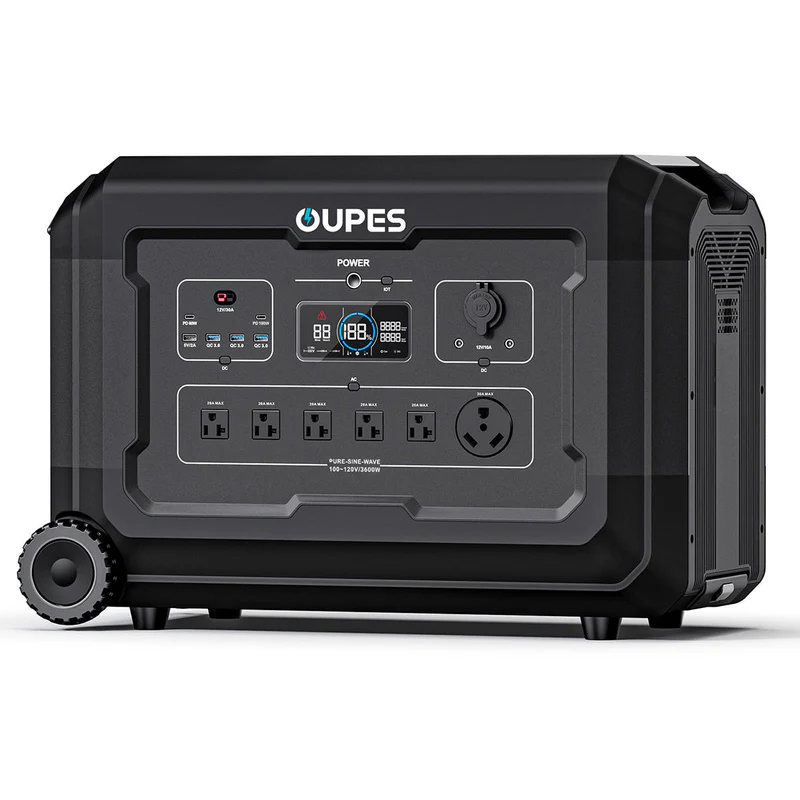
The OUPES Mega 2 provides 2048Wh capacity and 2500W output. This makes it a stronger fit for households that want more runtime and more flexibility. It is a practical option for families who want to cover a broader range of outage needs without moving into a much larger backup category.
OUPES Guardian 6000: Higher-Capacity Emergency Planning
For more demanding backup scenarios, the OUPES Guardian 6000 offers 6144Wh capacity and 6000W output. This type of system is better suited to households that want a more robust emergency setup, longer outage support, or greater appliance flexibility during severe conditions.
These models show an important principle: the right backup size depends on the role you want the system to play. A smaller system may be enough for communication and essentials. A larger one may be better for broader home resilience.
Final Thoughts
So, what size emergency generator is right for the home? The answer depends on what you need to power, how long you expect outages to last, and how much of your normal routine you want to preserve during an emergency. For some households, a smaller backup system is enough to support communication, lighting, and food safety. For others, a medium or larger solution makes more sense because it supports more devices and more daily comfort.
The key is to size your backup around real use, not around the biggest number available. A practical emergency plan starts with understanding your essential loads, your outage risks, and your comfort expectations. Once you understand those, choosing the right system becomes much easier.
For homeowners who want a simple and flexible backup solution, OUPES offers a useful range of options. Whether you start with the Mega 1, step up to the Mega 2, or choose a higher-capacity model like the Guardian 6000, the best choice is the one that matches your household’s actual emergency needs.
FAQ
1. What size generator is enough for basic home emergencies?
A basic emergency backup size is often enough for lights, phones, internet, and a refrigerator. The exact amount depends on how many devices you want running at once.
2. Why do starting watts matter?
Some appliances need extra power when they first turn on. If your backup system cannot handle that startup surge, the device may not operate properly.
3. Do I need to power my whole house during an outage?
No. Many homeowners focus only on essential loads, which reduces the amount of backup power needed and makes the system more practical.
4. What is the difference between a small and medium backup setup?
A small backup usually covers communication, lighting, and basic food protection. A medium backup supports more devices and provides more flexibility during longer outages.
5. Is a portable power station suitable for home emergency use?
Yes. For many households, it is a practical solution because it is easy to use, flexible, and well suited to essential backup needs.
6. Which OUPES model is best for lighter outage needs?
The OUPES Mega 1 is a strong choice for lighter needs such as phones, lights, routers, and smaller home essentials.
7. Which OUPES model is better for larger backup needs?
The OUPES Guardian 6000 is more suitable for households that want higher capacity and broader emergency support.
8. What is the best way to choose the right generator size?
Start by listing the appliances you consider essential, estimate what must run at the same time, and choose a system that can support those loads with some extra margin.