




Table of Contents
- Why Severe Weather Preparedness Matters
- Assessing Your Risk by Scenario
- How to Prepare Before Severe Weather
- What to Do During Severe Weather
- What to Do After Severe Weather
- Why Backup Power Is Critical
- OUPES Power Solutions (Detailed Guide)
- Real-World Runtime Planning (80% Rule)
- FAQ
Why Severe Weather Preparedness Matters
Severe weather events—including hurricanes, floods, winter storms, and tornadoes—are becoming more frequent and more costly. According to the National Oceanic and Atmospheric Administration (NOAA), the U.S. has experienced a sharp increase in billion-dollar weather disasters over the past decade, with multiple events occurring each year.
The Federal Emergency Management Agency (FEMA) reports that natural disasters disrupt critical infrastructure, including power grids, water systems, and communication networks. In many cases, households are expected to be self-sufficient for at least 72 hours, but real-world recovery timelines often extend far beyond that.
Additionally, the U.S. Department of Energy highlights that severe weather is the leading cause of power outages. This means that in nearly every major weather emergency, loss of electricity is not a possibility—it is an expectation.
This is why modern preparedness is not just about storing food and water. It is about maintaining operational capability—keeping your home functional, your devices powered, and your communication channels open.
Assessing Your Risk by Scenario
Effective preparation begins with understanding your local weather risks. Each type of severe weather creates different challenges:
| Weather Type | Primary Risk | Power Impact |
|---|---|---|
| Hurricanes | Flooding, wind damage | Multi-day outages |
| Floods | Infrastructure damage | Grid failure, unsafe electricity |
| Winter Storms | Freezing temperatures | Heating system dependency |
| Tornadoes | Sudden destruction | Immediate power loss |
| Thunderstorms | Lightning, surges | Short-term outages |
FEMA data also indicates that more than 20% of disaster claims come from areas not considered high-risk, meaning preparation should not be limited to specific regions.
How to Prepare Before Severe Weather
1. Build a Multi-Scenario Emergency Plan
Your plan should account for evacuation, shelter-in-place, and communication failure scenarios. According to Ready.gov, every household should have:
- Two evacuation routes
- Emergency contact list (offline)
- Designated meeting points
- Plans for pets, elderly, and medical needs
2. Prepare a 5–7 Day Emergency Kit
While the official recommendation is 72 hours, real-world severe weather events often disrupt supply chains longer than expected.
| Category | Details |
|---|---|
| Water | 1 gallon/person/day (minimum 5 days) |
| Food | High-calorie, non-perishable foods |
| Medical | First aid kit, medications, hygiene |
| Lighting | LED lights, flashlights |
| Power | Portable power station + backup charging |
3. Harden Your Home Against Weather Damage
- Install surge protection (important for thunderstorms)
- Elevate appliances in flood-prone areas
- Reinforce doors/windows for high winds
- Clean drainage systems before storms
4. Plan for Power Continuity (Critical Step)
The most overlooked part of preparedness is energy planning. Without power:
- Food spoils within hours
- Phones lose connectivity
- Medical devices stop working
- Lighting becomes limited
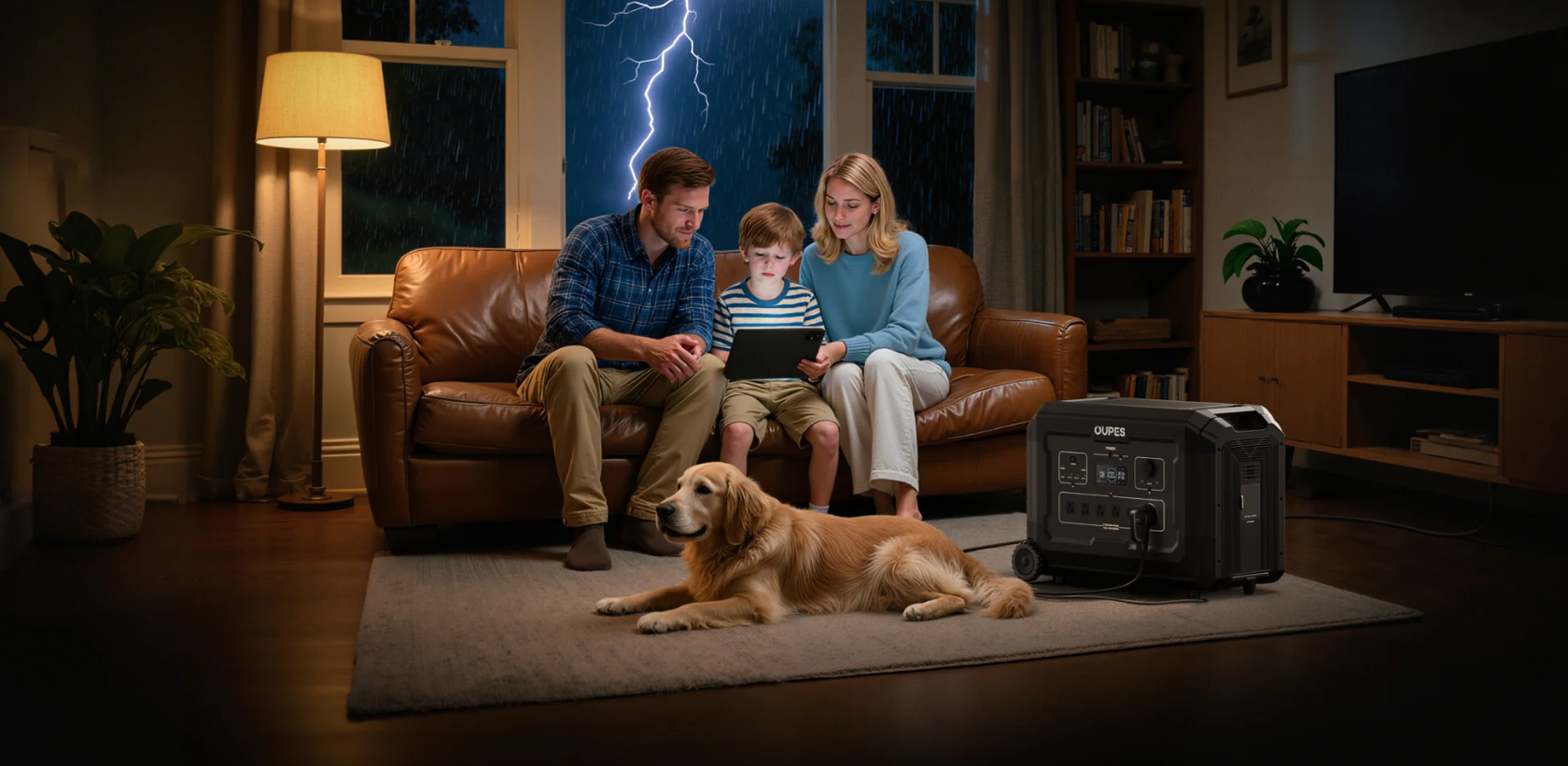
Portable power stations solve this problem by providing stable, indoor-safe electricity.
What to Do During Severe Weather
1. Follow Official Guidance
Monitor updates from the National Weather Service and local authorities. Conditions change rapidly.
2. Shelter Strategically
- Interior rooms for tornadoes
- Higher ground for floods
- Insulated areas during winter storms
3. Avoid Electrical Risks
The CDC warns against using electrical devices near water during floods. Disconnect power if needed.
4. Maintain Critical Systems
Use backup power to maintain:
- Communication (phones, radios)
- Medical devices
- Refrigeration
What to Do After Severe Weather
1. Safety First
Check for structural damage and hazards before entering your home.
2. Document Damage
FEMA recommends documenting all damage before cleanup for insurance claims.
3. Restore Living Conditions
Power restoration may take days. Backup systems help bridge this gap.
4. Sanitize and Rebuild
Follow CDC guidelines to clean and disinfect affected areas.
Why Backup Power Is Critical
Backup power is the difference between inconvenience and crisis.
Portable power stations offer:
- Zero emissions (safe indoors)
- Silent operation
- Solar recharge capability
- Reliable long-duration output
OUPES Power Solutions (Detailed Guide)
Product Comparison
| Model | Capacity | Output | Best Use |
|---|---|---|---|
| Exodus 1200 | 992Wh | 1200W | Emergency kit |
| Mega 2 | 2048Wh | 2500W | Essential home backup |
| Mega 5 | 5040Wh | 4000W | Multi-day outages |
| Guardian 6000 | 4608Wh | 6000W (240V) | Whole-home backup |
Scenario-Based Breakdown
Exodus 1200: Compact and portable, ideal for keeping phones, lights, and small devices running.
Mega 2: Balanced capacity for refrigerators, routers, and essential appliances.
Mega 5: High-capacity solution capable of supporting multi-day outages for families.
Guardian 6000: Advanced system supporting 240V appliances and high-demand home backup.
Real-World Runtime Planning (80% Rule)
Runtime calculations use 80% usable capacity to reflect real-world efficiency.
| Device | Power | Mega 2 | Mega 5 |
|---|---|---|---|
| Refrigerator | 150W | ~10.9 hrs | ~26.8 hrs |
| Router | 10W | ~163 hrs | ~400 hrs |
| CPAP | 40W | ~41 hrs | ~100 hrs |
These estimates allow users to plan energy usage realistically during emergencies.
FAQ
1. What is the most important part of severe weather preparation?
Planning and backup power are equally critical.
2. How long should I prepare for?
At least 3 days, ideally up to 7 days.
3. Why is power so important?
It supports communication, safety, and essential appliances.
4. Can a power station run a refrigerator?
Yes, models like Mega 2 and above can support refrigerators.
5. Are portable power stations safe indoors?
Yes, they produce no emissions.
6. Can I recharge without grid power?
Yes, using solar panels or vehicle charging.
7. What devices should I prioritize?
Medical devices, communication, and refrigeration.
8. What is the biggest mistake people make?
Underestimating outage duration and not preparing enough power.