




Why Winter Preparation for RV Living is Critical
Winter RV life has its own charm — snow-covered forests, quiet lake campsites, and crisp morning air. But low temperatures can turn this dream into a survival challenge if you aren’t fully prepared. Frozen plumbing, drained batteries, moisture buildup, fuel shortages, and interior heat loss happen quickly in cold environments. A sudden power outage or heater failure can turn dangerous in just hours.
Proper preparation ensures safety, comfort, and reliability throughout the season. Insulation, heating, energy storage, and plumbing protection matter most — and each step can be built into a sustainable and long-lasting winter setup.
Upgrade RV Insulation to Prevent Heat Loss
Heat escapes faster through RV walls than residential buildings. Preparing insulation early significantly reduces heating costs and prevents interior chill during snowstorms.
Recommended Winter Insulation Improvements
- Use foam board insulation around wheel wells, underbelly & storage compartments.
- Add thermal curtains or insulated window film.
- Seal door & window gaps with weather stripping.
- Lay down thick floor rugs or carpet pads to block cold rising from the floor.
- Skirt the RV — reduces heat loss and protects pipes underneath.
RV skirting alone can improve interior heat retention by up to 40% during sub-freezing temperatures.
Choosing and Managing Heating Systems for RV Winter
Heating is the core of RV winter living. A good setup balances comfort, safety, and fuel efficiency.
| Heating Method | Advantages | Considerations |
|---|---|---|
| Propane Furnaces | Strong heating power, built-in system | High fuel consumption, requires ventilation |
| Electric Space Heaters | Silent & efficient | Requires reliable power supply |
| Diesel Heater | Fuel-efficient for long-term | Installation required |
| Portable Power Station + Electric Heater | No fumes, safe for indoor use | Must match heater wattage |
For stable heating, many RV owners combine two energy sources — fuel heat for severe cold and electric heat for mild days. A portable power station provides backup when hookups fail or during off-grid winter camping.
Protecting Water Tank, Pipes & Plumbing from Freezing
Frozen water lines are one of the most expensive winter RV failures. Water expands into ice and can burst fittings or crack tanks. Prevention is far cheaper than repair.
Anti-Freeze Plumbing Recommendations
- Use heated water hoses or wrap hoses in insulation + heat cable.
- Apply foam insulation to exposed pipes.
- Keep grey/black tanks slightly warm with insulated wraps.
- Let faucets drip slowly during extreme cold to maintain water movement.
- Store freshwater tanks inside the RV when possible.
If you expect weeks of below-zero temperatures, winterize plumbing entirely and use bottled or jug-water systems instead.
Reliable Power Supply — Solar + Portable Power System Setup
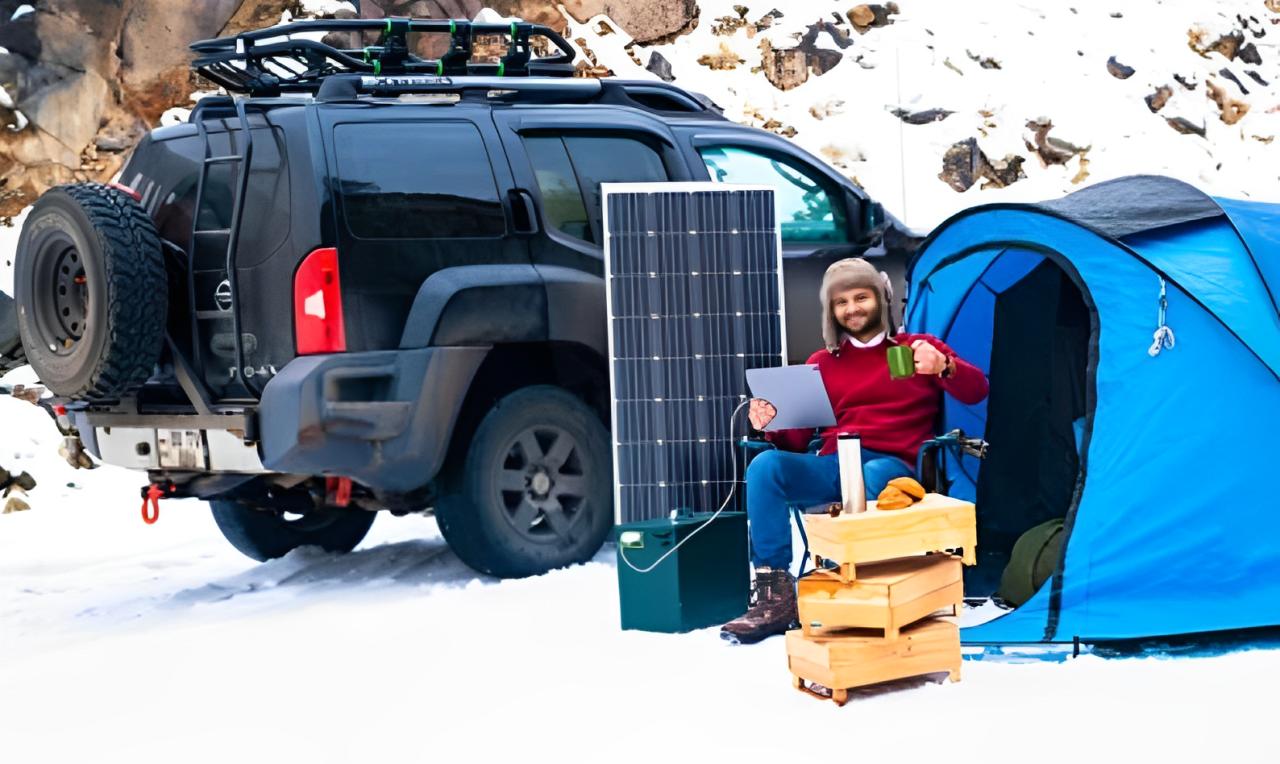
Winter solar output is lower due to shorter daylight and cloudy conditions, so a hybrid power setup is recommended. Portable power stations supply electricity for heating pads, cooking devices, lighting, and electronics.
Recommended Energy Values for Winter RV Use
| Appliance | Typical Wattage | Daily Energy Consumption (Avg.) |
|---|---|---|
| Electric blanket | 80–200W | 200–600Wh/day |
| Mini heater | 500–1500W | 1–3kWh/day |
| Water pump | 60–120W | 100–300Wh/day |
| 12V fridge | 50–90W | 500–800Wh/day |
| LED lighting | 10–30W | 50–200Wh/day |
For extended winter boondocking, choose a power station around 2kWh–5kWh with expandable battery options and solar recharge compatibility. Cold weather reduces battery efficiency, so power reserves matter.
Portable energy systems provide silent and fume-free heat pad use — critical for indoor safety compared to fuel-based generators.
Battery Efficiency & Cold Weather Charging Practices
Lithium batteries lose discharge efficiency in freezing temperatures. Protecting them increases power availability dramatically.
Best Practices for Winter Battery Care
- Keep batteries insulated inside heated cabin or battery box.
- Avoid charging below 0°C (32°F) unless low-temperature charging protection exists.
- Use solar during daylight and charge early before temperature drops.
- Store batteries at 40–60% if not in use for weeks.
- Reduce inverter load to improve runtime.
Temperature-stable battery environments can extend winter performance by 20–40%.
RV Winter Survival Checklist (Food, Safety & Tools)
Beyond power and insulation, core survival supplies ensure comfort during storms, road closures, and grid failure.
Must-Have Winter RV Equipment
- Non-perishable food & water for 10–30 days
- Portable power station for electricity backup
- Shovel, tire chains & traction sand
- Thermal clothing + down blankets
- Carbon monoxide alarm
- Ice scraper, windshield heater, de-icer
- Emergency medical + road assistance kit
Having redundancies for heat, water, and electricity eliminates the biggest winter risks.
FAQ — Winter RV Camping
- Can you live in an RV full-time during winter?
Yes, if properly insulated and powered. - What temperature will freeze pipes?
0°C (32°F) or lower — freezing can occur within hours. - Does solar work well in winter?
Yes, but expect lower output — backup power recommended. - How warm should an RV stay?
Keep interior above 45°F–55°F to protect plumbing. - Are heated hoses necessary?
Strongly recommended for sub-freezing climates. - Is a portable power station better than fuel generators indoors?
Yes — silent, no fumes, safer inside. - How do I store my RV battery when parked?
50–60% charge, dry cool place, recharge every 2–3 months.