




Table of Contents
- TL;DR / Key Takeaways
- Introduction
- What Is Solar Power?
- Residential Solar Power Systems
- Commercial Solar Power Systems
- Key Differences Between Residential and Commercial Solar Power
- The Role of Portable Solar Generators
- Benefits of Solar Energy for Homeowners and Businesses
- The Future of Solar Power
- FAQ
TL;DR / Key Takeaways
- Residential solar systems are smaller, typically between 3–10 kW, designed for individual households.
- Commercial solar systems are larger (50 kW to several MW) and designed to meet business-scale energy needs.
- While both systems rely on the same solar technology, they differ in size, installation, cost, and return on investment.
- Portable solar generators, like those from OUPES, bridge the gap by providing mobile, off-grid power for both home and business applications.
- According to the U.S. Energy Information Administration (EIA), solar energy accounted for over 5% of U.S. electricity generation in 2024 — and continues to grow.
Introduction
Solar power has rapidly become one of the most promising renewable energy solutions worldwide. From rooftop panels on suburban homes to massive solar farms powering factories, the applications of solar technology are vast. Yet, residential and commercial solar systems differ in more ways than just size — they vary in design, purpose, and financial benefits.
Understanding these distinctions helps homeowners, business owners, and even off-grid enthusiasts decide which system best fits their needs. In addition, smaller systems like portable solar generators offer flexibility and resilience, making solar energy accessible to everyone.
What Is Solar Power?
Solar power is the conversion of sunlight into electricity, typically through photovoltaic (PV) panels. These panels capture solar energy and transform it into direct current (DC), which is then converted into alternating current (AC) by an inverter — the same type of power used by household appliances.
There are two main applications:
- Residential solar systems: Installed on homes to reduce or eliminate electricity bills.
- Commercial solar systems: Large-scale installations on offices, warehouses, or manufacturing facilities.
Both contribute to reducing carbon emissions and improving energy independence.
Residential Solar Power Systems
1. Purpose and Scale
Residential solar systems are typically designed to meet the energy needs of a single household. According to the Solar Energy Industries Association (SEIA), the average home solar system in the U.S. is between 6–8 kW and produces 7,000–10,000 kWh per year.
2. System Components
- Solar panels (usually 15–25 units)
- Inverter to convert DC to AC power
- Battery storage (optional, for backup or off-grid use)
- Net metering connection to the utility grid
3. Installation and Appearance
These systems are commonly installed on rooftops, carports, or ground mounts, emphasizing aesthetics and integration with home design. Homeowners often choose black-framed panels for minimal visual impact.
4. Cost and Payback
Residential systems cost between $2.50 and $3.50 per watt before incentives. With tax credits such as the 30% federal solar investment tax credit (ITC), the average homeowner recoups costs within 6–10 years.
Commercial Solar Power Systems
1. Purpose and Scale
Commercial solar installations are significantly larger, ranging from 50 kW to multiple megawatts. They are designed to reduce a company’s operational expenses and carbon footprint, often powering offices, factories, or warehouses.
2. Installation Design
These systems are typically installed on large flat rooftops, parking structures, or open land. Unlike residential systems that prioritize aesthetics, commercial setups focus on performance and scalability.
3. Financing Options
Businesses often leverage:
- Power Purchase Agreements (PPAs)
- Solar leases
- Corporate renewable energy credits (RECs)
This allows companies to install solar power without upfront capital while locking in lower electricity rates for decades.
4. Performance and ROI
Commercial systems have economies of scale — lower per-watt costs and faster payback (often 4–7 years). They also enhance a company’s sustainability reputation, which increasingly influences consumers and investors alike.
Key Differences Between Residential and Commercial Solar Power
| Category | Residential Solar Power | Commercial Solar Power |
|---|---|---|
| System Size | 3–10 kW | 50 kW–5 MW+ |
| Installation Area | Home rooftops, carports, small yards | Flat roofs, parking lots, open land |
| Cost (Before Incentives) | $2.50–$3.50 per watt | $1.50–$2.00 per watt (economies of scale) |
| Payback Period | 6–10 years | 4–7 years |
| Purpose | Reduce household electricity bills | Cut business costs and carbon footprint |
| Battery Backup | Optional; smaller storage systems | Recommended; higher-capacity storage |
| Regulatory Complexity | Low – residential building codes | High – permitting and grid compliance |
| Maintenance | Minimal; annual cleaning and inspection | Regular professional maintenance |
| Integration With Portable Power | High – works with portable solar generators | Moderate – supports off-grid redundancy |
The Role of Portable Solar Generators
While large systems power homes and businesses continuously, portable solar generators serve as flexible, small-scale alternatives. They are particularly useful for:
- Providing backup power during outages
- Running essential devices off-grid
- Reducing grid dependence during peak hours
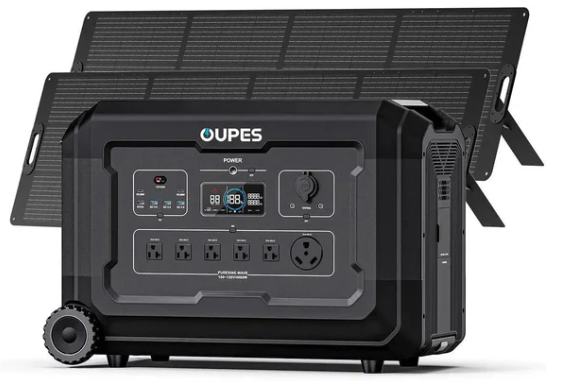
Modern models from companies such as OUPES use advanced LiFePO₄ batteries, offering high efficiency, safety, and over 3500 charge cycles. Paired with foldable solar panels, they allow homeowners and small businesses to perform mini “energy arbitrage” — storing solar energy for use during expensive peak-rate periods.
This portability makes them ideal for hybrid energy strategies that blend permanent solar installations with mobile energy resilience.
Benefits of Solar Energy for Homeowners and Businesses
1. Lower Electricity Costs
Both sectors can save significantly on energy bills. The National Renewable Energy Laboratory (NREL) estimates that solar can reduce utility expenses by 50–90% over the system’s lifespan.
2. Energy Independence
Solar power reduces reliance on grid electricity, which is vulnerable to outages and price fluctuations. With battery storage or portable generators, users can maintain power even during blackouts.
3. Environmental Sustainability
According to the Environmental Protection Agency (EPA), switching to solar power can reduce a household’s carbon emissions by over 3 tons annually — equivalent to planting 100 trees each year.
4. Government Incentives
Both residential and commercial users benefit from tax credits, rebates, and state-specific programs. For instance, the Inflation Reduction Act (IRA) continues to provide a 30% tax credit for solar installations through 2032.
The Future of Solar Power
As solar technology advances, efficiency continues to rise while costs decline. Emerging trends include:
- Perovskite solar cells with higher efficiency potential
- Hybrid energy systems combining solar, wind, and battery storage
- AI-based energy management optimizing power distribution
For homeowners and small businesses, portable and modular systems like those from OUPES represent the next step in accessible, flexible solar power — bridging the gap between residential simplicity and commercial performance.
FAQ
1. What’s the main difference between residential and commercial solar systems?
Residential systems are smaller and designed for individual homes, while commercial systems are larger, more powerful, and built for businesses or industrial use.
2. Can a residential solar system power an entire home?
Yes. A properly sized system with battery backup can cover 100% of a home’s energy needs, depending on location and consumption.
3. Do businesses get better financial returns from solar?
Generally, yes. Commercial systems benefit from economies of scale, faster ROI, and additional tax incentives for corporate sustainability.
4. How can portable solar generators help households or businesses?
Portable solar generators provide backup power during outages and allow users to store solar energy for later use, promoting greater energy independence.
5. Why are OUPES power stations suitable for both homes and small businesses?
OUPES portable power stations use durable LiFePO₄ batteries, support solar charging, and provide stable, silent energy — ideal for both residential backup and mobile business operations.