




Table of Contents
- TL;DR / Key Takeaways
- What Is Energy Arbitrage?
- How Does Energy Arbitrage Work?
- The Role of Battery Energy Storage Systems (BESS)
- How Portable Solar Generators Enable Small-Scale Arbitrage
- Benefits of Energy Arbitrage
- Challenges and Limitations
- Energy Arbitrage vs. Traditional Energy Use
- The Future of Energy Arbitrage
- FAQ
TL;DR / Key Takeaways
- Energy arbitrage involves buying (or storing) electricity when prices are low and using or selling it when prices are high.
- Battery Energy Storage Systems (BESS) and solar generators make this process practical for both grid-scale and household use.
- Homeowners can benefit indirectly from energy arbitrage through time-of-use electricity plans or self-consumption of stored solar energy.
- Portable power stations from brands like OUPES allow small-scale, personal participation in energy savings and resilience.
- According to the U.S. Energy Information Administration (EIA), energy storage can lower peak demand and enhance grid stability.
What Is Energy Arbitrage?
Energy arbitrage is the practice of exploiting differences in electricity prices across time periods. Simply put, it means storing energy when it’s cheap and using or selling it when it’s expensive. This concept applies to both large-scale utilities and individual consumers who use home battery systems or portable solar generators.
The term “arbitrage” originates from finance, where traders profit from price differences in markets. In energy, the commodity is electricity — which fluctuates in cost throughout the day due to demand and supply changes.
For example, in many regions, electricity prices are lower at night (off-peak) and higher during daytime peaks. Energy arbitrage enables users to shift consumption or discharge stored energy during those high-rate hours.
How Does Energy Arbitrage Work?
1. The Time-of-Use Pricing Model
Most energy markets operate under time-of-use (TOU) pricing. During off-peak hours — typically at night — electricity is cheaper because demand is low. Conversely, during the afternoon and early evening, prices rise as homes and businesses draw more power. Energy storage systems allow users to buy (or generate) energy when it’s inexpensive and discharge it during expensive hours.
2. The Energy Storage Process
- Charge: The battery or solar generator stores energy from the grid or solar panels during off-peak hours.
- Hold: The energy remains stored in the battery system until it’s needed.
- Discharge: The battery releases the stored power during peak demand when electricity is costly.
3. Real-World Example
Imagine electricity costs $0.10 per kWh at night and $0.30 per kWh in the evening. A 5 kWh battery charged overnight could discharge in the evening, saving $1.00 per day — or about $365 annually. For commercial or grid-scale operations, these savings scale significantly, making energy arbitrage a critical component of modern energy economics.
The Role of Battery Energy Storage Systems (BESS)
Battery Energy Storage Systems are the cornerstone of energy arbitrage. They allow electricity to be stored efficiently and dispatched when required. According to the U.S. Department of Energy, modern lithium iron phosphate (LiFePO₄) batteries can achieve over 90% round-trip efficiency, making them ideal for energy storage applications.
1. How BESS Integrates with the Grid
- Grid-Scale Storage: Utilities deploy large BESS to stabilize energy supply, reduce peak demand, and support renewable integration.
- Commercial Use: Businesses use storage to reduce peak charges and maintain energy continuity.
- Residential Use: Homeowners can install battery systems to manage TOU rates or provide backup during outages.
2. Key Components
- Battery Cells: Store electrical energy chemically.
- Inverter: Converts stored DC power into usable AC power.
- Battery Management System (BMS): Ensures safety, efficiency, and optimal charge/discharge cycles.
How Portable Solar Generators Enable Small-Scale Arbitrage
While large-scale BESS participate directly in electricity markets, individuals can apply the same principle at home using portable power stations and solar generators.
For example, during the day, solar panels can charge a portable power station. The stored energy can then be used at night or during high-rate periods, effectively reducing electricity bills and providing energy independence.
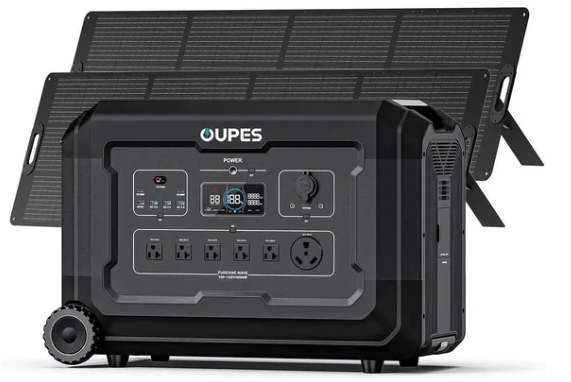
Portable systems from brands such as OUPES combine LiFePO₄ battery technology, solar compatibility, and multiple output ports — making them reliable tools for small-scale energy arbitrage and off-grid resilience.
Benefits of Energy Arbitrage
1. Cost Savings
By purchasing or storing electricity during low-rate hours, both consumers and utilities can save significantly. According to the National Renewable Energy Laboratory (NREL), energy storage can reduce peak-time electricity costs by 20–40%.
2. Grid Stability
Energy arbitrage supports grid stability by smoothing demand peaks and integrating renewable energy sources like wind and solar, which produce intermittently.
3. Renewable Energy Utilization
Excess solar energy generated during the day can be stored for later use instead of being wasted, promoting a cleaner, more sustainable energy ecosystem.
4. Emergency Preparedness
During blackouts or natural disasters, stored energy ensures households remain powered, keeping critical devices like medical equipment, communication tools, and refrigerators running safely.
Challenges and Limitations
1. Initial Cost
Battery systems can be expensive upfront. However, with government incentives such as the 30% Residential Clean Energy Credit (IRS.gov), the cost barrier is gradually lowering for homeowners.
2. Degradation Over Time
Batteries have finite charge cycles. LiFePO₄ technology — used in many high-end portable power stations — offers around 3500+ cycles, far superior to older lithium-ion chemistries.
3. Regulatory Complexity
For large-scale operators, participation in energy markets requires compliance with grid rules and dynamic pricing systems, which vary by state or country.
Energy Arbitrage vs. Traditional Energy Use
| Aspect | Traditional Energy Use | Energy Arbitrage |
|---|---|---|
| Energy Source | Direct grid consumption | Stored or self-generated (solar + battery) |
| Pricing Strategy | Pay standard rate regardless of demand | Buy low, use or sell high |
| Environmental Impact | Higher emissions (grid-dependent) | Supports renewable integration and emission reduction |
| Resilience During Outages | No backup | Energy storage ensures backup and continuity |
| System Example | Grid electricity only | Battery + solar generator setup (e.g., OUPES systems) |
The Future of Energy Arbitrage
As renewable energy penetration increases, the demand for flexible energy storage and arbitrage mechanisms will grow. The International Energy Agency (IEA) projects global battery storage capacity to increase sixfold by 2030.
For homeowners, the proliferation of affordable solar panels and portable energy storage — like those offered by OUPES — will democratize energy arbitrage, allowing everyday consumers to benefit from smarter, greener, and cheaper power use.
FAQ
1. Is energy arbitrage only for large companies?
No. While utility-scale arbitrage dominates the market, individuals can also benefit through smart home systems, solar panels, and portable energy storage.
2. Can portable power stations perform energy arbitrage?
Yes. By charging from solar panels or during off-peak grid hours and discharging during high-cost periods, portable stations effectively perform small-scale energy arbitrage.
3. How much can homeowners save with energy arbitrage?
Savings depend on electricity rate structures and battery capacity, but households on TOU plans can cut 15–30% from annual bills using smart storage systems.
4. What battery technology is best for energy arbitrage?
LiFePO₄ (Lithium Iron Phosphate) batteries are ideal — they’re efficient, long-lasting, and thermally stable, used in most modern solar and portable systems.
5. Do brands like OUPES support energy arbitrage use?
Yes. OUPES portable power stations integrate with solar panels and support timed charging/discharging, aligning well with household energy arbitrage practices.