




Table of Contents
- Introduction
- What Is a Lithium Iron Phosphate (LiFePO₄) Battery?
- The Importance of Safety in Home Energy Storage
- Advantages of LiFePO₄ Batteries
- Comparison: LiFePO₄ vs. Other Lithium Batteries
- Applications of LiFePO₄ in Home and Portable Energy Storage
- Lifespan and Cost Efficiency
- Environmental Impact and Sustainability
- How OUPES Portable Power Stations Use LiFePO₄ Technology
- FAQ
Introduction
As households increasingly adopt renewable energy systems like solar power, reliable and safe energy storage has become a critical need. Among various battery technologies available today, Lithium Iron Phosphate (LiFePO₄) batteries stand out for their exceptional safety, longevity, and efficiency.
This article explores why LiFePO₄ batteries are widely regarded as the best safe choice for home energy storage systems and portable solar generators — including those made by trusted brands like OUPES.
What Is a Lithium Iron Phosphate (LiFePO₄) Battery?
A LiFePO₄ battery is a type of lithium-ion battery that uses lithium iron phosphate as the cathode material. Unlike conventional lithium-ion chemistries such as lithium cobalt oxide (LiCoO₂), LiFePO₄ offers improved safety, chemical stability, and durability.
The U.S. Department of Energy notes that LiFePO₄ batteries have become a leading choice for residential and off-grid energy storage because of their thermal stability and long cycle life.
Key Technical Characteristics
- Nominal Voltage: 3.2V per cell
- Cycle Life: 3,000–5,000+ cycles
- Operating Temperature Range: -20°C to 60°C
- Energy Density: 90–160 Wh/kg
- Chemical Composition: Lithium, iron, and phosphate — no cobalt or nickel
The Importance of Safety in Home Energy Storage
When storing large amounts of energy at home — especially in enclosed spaces — safety is paramount. Conventional lithium-ion batteries, while powerful, can pose risks such as overheating or thermal runaway if damaged or improperly managed.
In contrast, LiFePO₄ batteries have a naturally stable chemistry that resists combustion even under extreme conditions. According to research from the National Renewable Energy Laboratory (NREL), LiFePO₄ is one of the safest lithium chemistries available for residential use.
Why Safety Matters
- Home batteries operate near flammable materials and electronics.
- Off-grid systems often run unattended for long periods.
- Extreme weather or poor ventilation can stress battery systems.
Advantages of LiFePO₄ Batteries
1. Exceptional Thermal and Chemical Stability
LiFePO₄ batteries have strong chemical bonds between iron, phosphate, and lithium, making them highly resistant to overheating or ignition. This stability allows them to maintain structural integrity even when overcharged or exposed to high temperatures.
2. Long Cycle Life
A well-maintained LiFePO₄ battery can last up to 10 years or more. It typically endures over 3,500–5,000 charge cycles — significantly outperforming traditional lithium-ion or lead-acid batteries.
3. Consistent Voltage Output
LiFePO₄ provides a stable discharge curve, maintaining nearly full voltage until the battery is nearly depleted. This ensures consistent performance for household appliances, solar systems, and portable power stations.
4. Lightweight and Compact
Despite their high energy density, LiFePO₄ batteries are lighter than equivalent-capacity lead-acid batteries, making them perfect for portable solar generators and RV applications.
5. Environmentally Friendly Composition
Unlike lithium cobalt oxide batteries, LiFePO₄ contains no toxic heavy metals or rare earth materials, reducing environmental impact during manufacturing and recycling.
Comparison: LiFePO₄ vs. Other Lithium Batteries
| Feature | LiFePO₄ (LFP) | Lithium-ion (LiCoO₂ / NMC) | Lead-Acid |
|---|---|---|---|
| Cycle Life | 3,500–5,000+ | 800–1,500 | 300–500 |
| Thermal Stability | Excellent (No fire risk) | Moderate (Fire risk at high temp) | Good |
| Energy Density | 90–160 Wh/kg | 150–250 Wh/kg | 30–50 Wh/kg |
| Safety | Very High | Moderate | High |
| Maintenance | Low | Moderate | High |
| Environmental Impact | Low (Non-toxic) | High (Cobalt/Nickel) | High (Lead & Acid) |
| Cost per Cycle | Lowest | Medium | High |
This comparison clearly shows that LiFePO₄ batteries offer an optimal balance of safety, performance, and sustainability, making them the best choice for long-term home energy storage.
Applications of LiFePO₄ in Home and Portable Energy Storage
1. Residential Energy Storage Systems
LiFePO₄ batteries are commonly integrated into solar-plus-storage systems, allowing homeowners to store daytime solar energy for nighttime use. They provide reliable power backup during grid outages and reduce dependency on fossil fuel-based energy sources.
2. Off-Grid and Cabin Power
In remote locations without access to the grid, LiFePO₄ batteries paired with solar panels offer sustainable, maintenance-free power. Their long life and resilience make them ideal for cabins, farms, or disaster-preparedness setups.
3. Portable Solar Generators
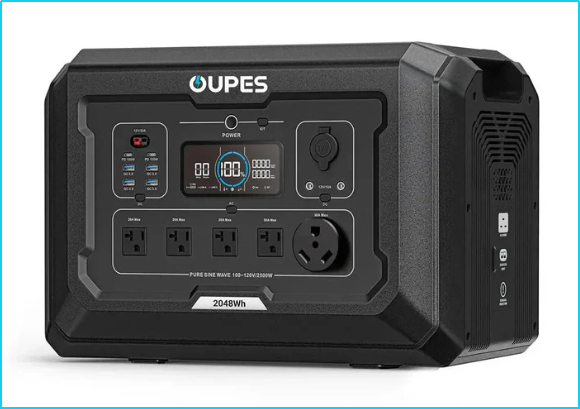
Portable power stations — such as those from OUPES — leverage LiFePO₄ technology to deliver safe, quiet, and reliable energy for outdoor activities, RV living, and emergency use. These systems provide AC, DC, and USB outputs to charge various devices simultaneously.
Lifespan and Cost Efficiency
While LiFePO₄ batteries may have a higher upfront cost compared to traditional lithium-ion or lead-acid batteries, their cost per cycle is significantly lower. This means that over their lifetime, they provide far greater value for money.
According to BloombergNEF, the price of lithium iron phosphate batteries has decreased by more than 70% in the past decade, making them increasingly accessible for residential storage and portable applications.
Economic Benefits
- Reduced replacement frequency due to longer lifespan.
- High charge/discharge efficiency (>95%), minimizing energy loss.
- Low maintenance requirements — no need for periodic topping up or balancing.
Environmental Impact and Sustainability
LiFePO₄ batteries are among the most eco-friendly energy storage technologies available. They contain no cobalt or lead, two of the most environmentally damaging materials used in other battery types.
Key Sustainability Benefits
- Recyclability: Iron and phosphate materials are easily recoverable.
- Low Carbon Footprint: Fewer toxic emissions during production and disposal.
- Ethical Supply Chain: No cobalt mining, which often raises human rights concerns.
This eco-friendly profile aligns with the global transition to sustainable energy solutions and complements renewable systems like solar and wind power.
How OUPES Portable Power Stations Use LiFePO₄ Technology
OUPES integrates LiFePO₄ battery systems in its portable power stations to ensure maximum safety, stability, and performance. These power stations are ideal for both indoor and outdoor use — from home backup to camping or field operations.
Advantages of OUPES LiFePO₄ Systems
- Up to 3,500+ charge cycles for a 10-year lifespan.
- Built-in BMS (Battery Management System) to prevent overcharge, overheat, or short-circuiting.
- Quiet, emission-free, and environmentally friendly operation.
- Multiple recharging options: solar panels, wall outlets, or car ports.
These features make OUPES systems an excellent example of how LiFePO₄ batteries empower safe, sustainable energy independence.
FAQ
1. Why are LiFePO₄ batteries considered safer than other lithium batteries?
LiFePO₄ chemistry is inherently stable and resistant to overheating, combustion, and thermal runaway, even under mechanical stress or overcharging.
2. How long do LiFePO₄ batteries last?
Typically, LiFePO₄ batteries last between 10–15 years with proper maintenance, supporting 3,500 to 5,000+ charge cycles.
3. Can LiFePO₄ batteries be used with solar systems?
Yes, they are fully compatible with solar charging systems and are ideal for off-grid, hybrid, and portable solar setups.
4. Are LiFePO₄ batteries environmentally friendly?
Yes, they contain no toxic heavy metals and are recyclable, making them one of the most sustainable energy storage solutions.
5. What is the main advantage of LiFePO₄ for portable solar generators?
They offer enhanced safety, lightweight design, and long cycle life, ensuring dependable power for travel, emergencies, or home backup.