




TL;DR / Key Takeaways
- High electric bills often result from inefficient appliances, excessive standby power, and seasonal usage changes.
- Calculating your electric bill involves understanding kWh usage and rate charges from your utility provider.
- Tracking your devices’ wattage can help identify the biggest contributors to energy costs.
- Using renewable energy solutions, such as OUPES solar generators, can reduce long-term electricity expenses.
Introduction
Are you shocked every month when you open your electricity bill? You’re not alone. Many homeowners experience unexpectedly high energy costs, often without realizing where their power consumption is going. The good news is that understanding how to calculate and monitor your electricity usage can reveal the hidden culprits behind the expense. In this guide, we’ll explore the key factors contributing to high bills, show you how to calculate your electricity costs, and explain how OUPES solar generators can help lower your overall spending.
Understanding Your Electric Bill
Electric bills are based on your household’s total energy consumption, measured in kilowatt-hours (kWh). Your utility company charges you a specific rate per kWh, which can vary by location, provider, and time of year.
The basic formula for calculating your bill is:
Total Bill = (Total kWh Used × Rate per kWh) + Service Fees
For example, if you use 1,200 kWh in a month and your electricity rate is $0.15 per kWh, your total cost will be:
1,200 × 0.15 = $180
Some regions also include tiered pricing, meaning the more electricity you use, the higher your rate becomes.
Common Reasons for High Electricity Bills
- Standby Power: Devices plugged in but not in use still draw electricity, known as phantom loads.
- Inefficient Appliances: Older refrigerators, HVAC systems, and lighting consume more power.
- Seasonal Usage: Air conditioners and heaters can dramatically increase energy consumption.
- Extended Device Usage: TVs, computers, and gaming systems left on for hours each day.
- Electric Water Heating: Hot water systems often account for a significant portion of energy costs.
How to Calculate Your Electric Bill
Calculating your electricity usage allows you to pinpoint where energy is going. The formula is straightforward:
Power (W) × Hours Used ÷ 1,000 = kWh
Once you know your total kWh for each appliance, multiply it by your local electricity rate to determine the cost.
| Appliance | Power (Watts) | Daily Usage (Hours) | Daily kWh | Monthly Cost ($0.15/kWh) |
|---|---|---|---|---|
| Refrigerator | 150 | 24 | 3.6 | $16.20 |
| Air Conditioner | 1,000 | 8 | 8 | $36.00 |
| TV | 120 | 5 | 0.6 | $2.70 |
| Laptop | 60 | 6 | 0.36 | $1.62 |
Identifying Power-Hungry Appliances
Some household devices consume much more power than others. Heating and cooling equipment typically make up 40–50% of the average household’s energy consumption.
- Air Conditioners: 1,000–2,500W
- Electric Water Heaters: 3,000–4,500W
- Clothes Dryers: 1,800–5,000W
- Space Heaters: 1,500W
- Refrigerators: 100–250W (running average)
Monitoring these devices and reducing unnecessary usage can significantly cut your monthly bill.
Practical Ways to Reduce Electricity Costs
- Switch to LED Lighting: Uses up to 75% less energy than traditional bulbs.
- Unplug Idle Devices: Eliminates standby power draw.
- Optimize Thermostat Settings: Set heating to 68°F and cooling to 78°F for efficiency.
- Use Smart Power Strips: Automatically cut off idle power usage.
- Incorporate Renewable Energy: Use solar-powered systems or generators to offset grid energy use.
How OUPES Products Help Lower Energy Bills
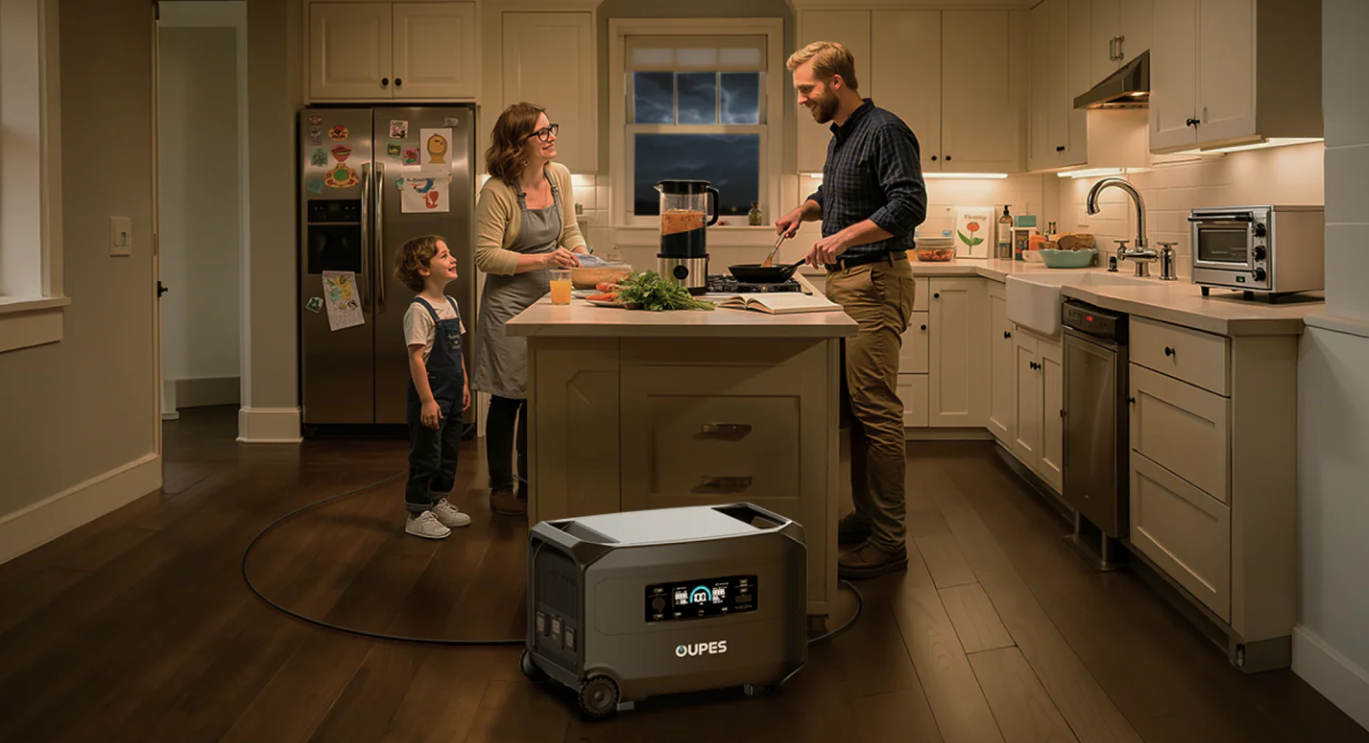
OUPES offers high-efficiency portable solar generators and energy storage systems that can power essential appliances, reduce grid dependence, and provide backup power during outages. By integrating solar charging with smart battery technology, users can store free solar energy during the day and use it when electricity rates are highest—saving money while maintaining convenience and sustainability.
FAQ
How do I know which appliances use the most electricity?
Check your devices’ wattage labels or use an energy monitor to measure real-time consumption.
Why is my bill higher in summer or winter?
Seasonal temperature control, such as air conditioning or heating, increases energy demand significantly.
Can old appliances raise my electric bill?
Yes, older appliances are often less energy-efficient and consume more power.
What is phantom load?
Phantom load is the small amount of electricity devices use even when turned off but still plugged in.
Does using solar energy reduce electric bills?
Yes, solar systems and generators reduce reliance on the grid, lowering monthly costs.
Is it expensive to switch to renewable energy?
Upfront costs exist, but long-term savings and environmental benefits outweigh them.
Can a portable solar generator power my home?
Yes, a high-capacity generator can power essential household appliances during outages or peak hours.
Conclusion
High electricity bills are often the result of inefficient usage habits and power-hungry appliances. By learning how to calculate energy consumption and using renewable solutions like OUPES solar generators, homeowners can gain control over their electricity expenses. Energy awareness, combined with smart technology, paves the way toward a more affordable and sustainable lifestyle.