




Table of Contents
- Introduction: Why Do Homes Need Backup Power More Than Ever?
- Portable Traditional Fuel Generators: Where Do They Still Have an Edge?
- The Hidden Costs and Risks of Traditional Fuel Generators
- Guardian 6000: A New “Solar + Lithium” Way to Power Your Home
- Real-Life Scenarios: Traditional Fuel Generator vs. Guardian 6000
- Comparison Table: Traditional Fuel Generator vs. Guardian 6000
- FAQ
- Conclusion
1. Introduction: Why Do Homes Need Backup Power More Than Ever?
In recent years, extreme weather, aging grid infrastructure, and the rise of remote work have turned “home backup power” from a nice-to-have into a must-have.
Traditionally, the first choice for home backup power has been the portable Traditional Fuel Generator. But with technological progress, high-capacity solar + lithium energy storage systems (such as the upcoming OUPES Guardian 6000) are becoming the new standard for modern homes.
So the real question is no longer:
- “Do I need backup power?”
but rather:
- “Should I keep relying on a Traditional Fuel Generator, or upgrade to the quieter, cleaner, more sustainable Guardian 6000?”
2. Portable Traditional Fuel Generators: Where Do They Still Have an Edge?
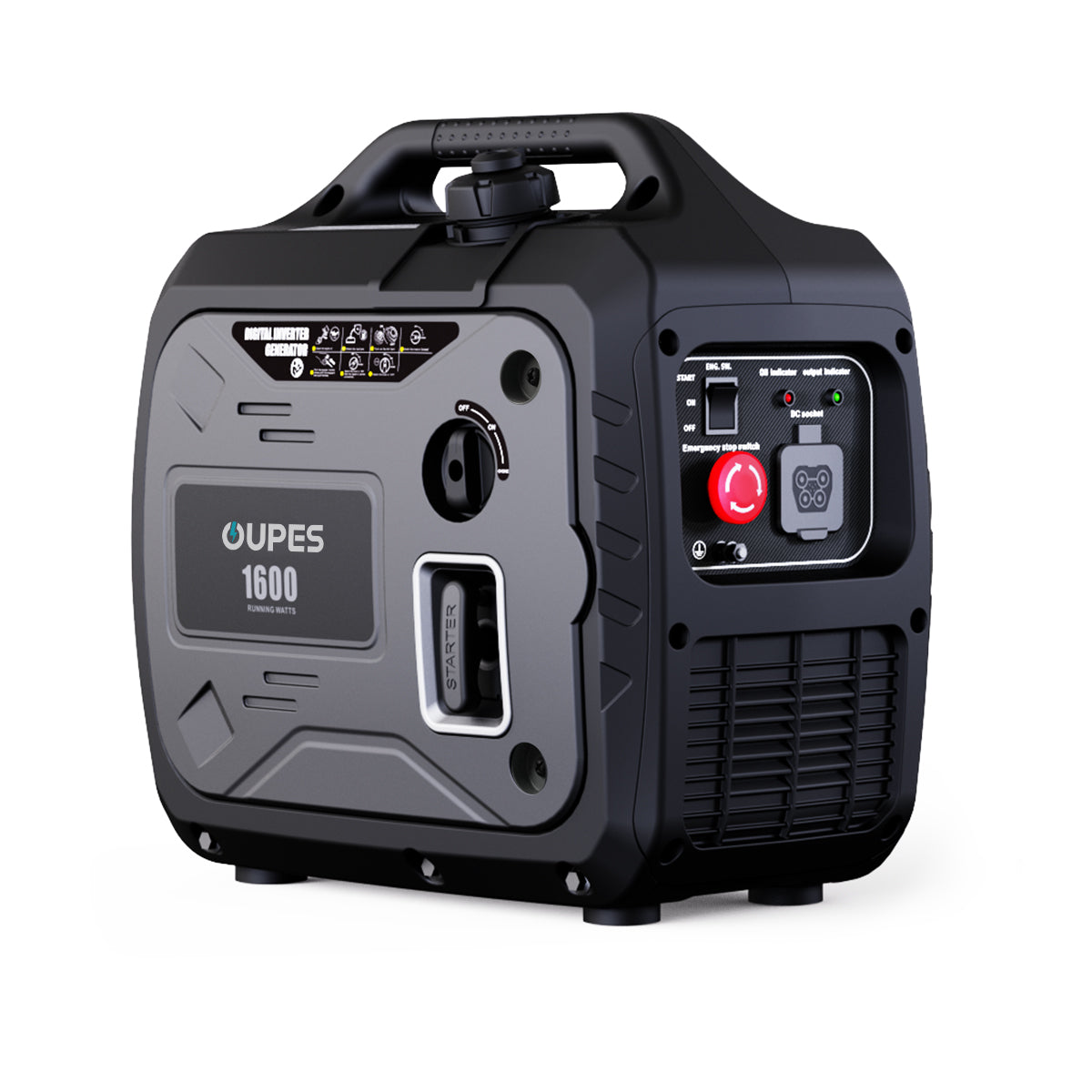
A Traditional Fuel Generator is essentially a small internal combustion engine that generates electricity by burning fuel. They have been used for decades and are seen by many households as standard emergency equipment.
Advantages of Traditional Fuel Generators
-
Strong instant high-power output
Capable of running refrigerators, well pumps, HVAC systems, air conditioners, and other high-wattage appliances. -
Lower upfront purchase price
Compared with high-capacity energy storage systems, Traditional Fuel Generators usually have a lower sticker price. -
Fuel is easy to obtain (in normal times)
Gas stations are everywhere in normal conditions, so refueling is convenient.
For occasional, short power outages, a Traditional Fuel Generator can indeed get the job done.
3. The Hidden Costs and Risks of Traditional Fuel Generators
However, once outages become frequent, long, and multi-day, the downsides of Traditional Fuel Generators start to show.
Safety Risks
-
High risk of carbon monoxide poisoning
Must be used outdoors, far away from doors and windows. Every year, there are tragedies caused by CO poisoning. -
Flammability and storage risks
Storing gasoline at home is inherently risky, especially in hot seasons.
Noise Issues
- Very loud; using it day and night disturbs both your household and your neighbors.
- Cannot be used indoors at night; the noise makes it particularly hard to sleep.
Fuel Dependence
-
Fuel supply easily disrupted in disasters
After hurricanes, blizzards, or other extreme events, gas stations often lose power or run out of fuel. Without fuel, your generator becomes “a piece of scrap metal.” -
High maintenance costs
Requires regular maintenance: oil changes, carburetor care, fuel stabilizers, etc. - If left unused for long periods, the generator may fail to start when you need it.
Environmental Impact
- Emits exhaust and noise; long-term use has a clear impact on the environment and quality of life.
The conclusion is clear:
Traditional Fuel Generators are suitable for short, occasional outages, but they are not ideal as a long-term backup solution for modern households.
4. Guardian 6000: A New “Solar + Lithium” Home Backup Power Solution
The OUPES Guardian 6000 does not rely on fuel. It is a high-energy-density lithium battery + inverter system that can be recharged repeatedly via solar panels, household AC power, or car charging.
It is a “next-generation home generator” — but with no noise, no fuel, and no exhaust.
Key Specs at a Glance
- Capacity: 4608Wh (expandable up to 41.4kWh)
- Output: 6000W (7200W surge), supports 120V / 240V
- Battery life: 4000 cycles to about 80% (EV-grade LiFePO₄)
- Solar input: up to 1200W (wide voltage range 18–140V)
- Rich ports: L14-30, 14-50, TT-30, 6-20 and other home & RV interfaces
- High mobility: large wheels + pull handle design
- Indoor-friendly: zero emissions + low noise
It’s not just another portable power station; it’s more like a “mobile mini energy hub” for your home.
5. Real-Life Scenarios: Traditional Fuel Generator vs. Guardian 6000
Let’s compare the two through real household scenarios.
Scenario 1: Short Outages (a Few Hours)
Traditional Fuel Generator
- Requires going outside to start it up.
- Loud noise; poor experience at night.
- Extension cords must be run into the house.
Guardian 6000
- Can be placed and used indoors.
- Instant power, with almost no noise and no exhaust smell.
- Keeps Wi-Fi, lights, fridge, computer, and CPAP running smoothly.
Winner: Guardian 6000, especially in terms of comfort for nighttime and indoor use.
Scenario 2: Multi-Day Blackouts (Hurricanes, Blizzards, Heatwave Rolling Outages)
Traditional Fuel Generator
- The biggest problem: fuel supply is hard to sustain.
- Expensive to run for several days; noise becomes unbearable.
- When fuel is scarce, power can be cut off at any moment.
Guardian 6000
- Battery capacity expandable up to 41.4kWh.
- During the day, solar panels provide continuous energy, enabling long-term use.
- No need to worry about fuel shortages.
- Safe, quiet, and stable power supply.
Winner: Guardian 6000, the best solution for long-term outages.
Scenario 3: Off-Grid Living / Cabin / RV
Traditional Fuel Generator
- Starting it up every day quickly becomes noisy and expensive due to fuel costs.
- High maintenance burden.
- Not suitable as a long-term primary energy source.
Guardian 6000
- Supports high-wattage solar input.
- With expanded battery packs, it can cover full-house needs in a cabin or RV.
- Can power air conditioners, microwaves, induction cooktops, refrigerators, and more.
- Quiet, reliable, and fuel-free.
Winner: Guardian 6000, with an overwhelming advantage in off-grid scenarios.
Scenario 4: Nighttime, Indoor Use & Medical Devices (e.g., CPAP)
Traditional Fuel Generator
- Cannot be used indoors (CO can be fatal).
- Very noisy, unsuitable for sleep environments.
- Voltage fluctuations may damage sensitive medical equipment.
Guardian 6000
- Safe for indoor use.
- Pure sine wave output, ideal for sensitive devices.
- Low noise, very suitable for bedrooms.
- Provides stable power throughout the night.
Winner: No contest — Guardian 6000.
6. Why choose OUPES Guardian 6000? Compared To The Traditional Fuel Generator
| Item | OUPES Guardian 6000 | Traditional Fuel Generator |
|---|---|---|
| Power Source | Electricity(Battery) | Gasoline/Diesel |
| Peak Power | 6KW(240v)+3.6KW (120V)Dual Voltage |
Typically single Voltage output |
| Noise | Quiet (≈45 DB) | Very Loud (70-100 DB) |
| Safety | Safe (No Emissions, Indoor Use) |
Risky(CO Fumes, Fire Hazard) |
| Maintenance | Low (Almost None) | High (Regular Upkeep Needed) |
| Lifespan | Long(10+Years,4000+ Cycles) |
Short(Years, Wears with Use) |
| Price | Limited-Time Launch: $1,699(With Gifts) |
Initial Price May Be Lower |
| Long-Term Cost |
Very Low (only Electricity Cost) |
High Fuel & Maintenance Costs |
| Smart Features |
Yes(App control, Scheduling) |
No(Manual operation only) |
| Emergency Reliability |
Unaffected By Fuel Shortages, 20ms switchover |
Dependent On Fuel Supply, May Fail in Disasters |
| Eco-Friendly | Yes (Zero Emissions) | No (Produces Pollution) |

7. FAQ
Can the Guardian 6000 replace a Traditional Fuel Generator as a whole-home backup power solution?
Yes, the Guardian 6000 is a superior replacement for a traditional fuel generator. With its 6KW output, expandable 41.4kWh capacity, and quiet, zero-emission operation, it doesn't just match a generator—it outperforms it, providing cleaner, safer, and more intelligent whole-home power.
What happens on cloudy or stormy days?
The Guardian 6000 can still be recharged via grid AC (when restored) plus solar. Even if solar efficiency drops, the large battery capacity can bridge the gap.
Is it safe to use indoors?
Yes. It is very safe to use indoors, with no carbon monoxide, no exhaust, and low noise.
How long will the battery last?
The LiFePO₄ battery supports 4000 cycles to about 80% capacity, which translates to roughly 8–10+ years of typical use.
Can I start small and expand later?
Yes. The Guardian 6000 supports expansion from a single unit up to 41.4kWh through modular configurations.
Which is cheaper in the long run?
Gas generators may cost less upfront, but fuel and maintenance add up quickly.
For a typical 5kW generator running 100 hours per year:
- Fuel: ~600 gallons/year × $3.5 ≈ $2,100/year → $10,500 in 5 years
- Maintenance: ~$1,250 over 5 years
- Total 5-year cost: ≈ $11,750
In comparison, the Guardian 6000 is $1,699, and when paired with solar panels, it provides power at extremely low ongoing cost — with no fuel purchases and minimal maintenance required.
8. Conclusion
Traditional Fuel Generators can still handle short, occasional power outages, but their:
- Noise
- Safety risks
- Fuel dependence
- Maintenance burden
- Inability to be used indoors
make them less and less suitable for the power needs of modern households.
The OUPES Guardian 6000 brings a completely new home backup power experience:
- Quiet, safe indoor operation
- High power output (6000W)
- Huge expandable storage up to 41.4kWh
- Efficient solar recharging capability
- More eco-friendly, long-term, and sustainable
For homeowners who want a backup power system that is truly reassuring, comfortable, and future-ready, the Guardian 6000 is not just a replacement for a Traditional Fuel Generator — it is the next evolution of home energy.


Leave a comment
This site is protected by hCaptcha and the hCaptcha Privacy Policy and Terms of Service apply.