




Table of Contents
- Introduction
- What Is the 3-3-3 Rule?
- Breaking Down Each “3”
- Why the 3-3-3 Rule Works
- Common Mistakes RVers Make
- Power Planning Under the 3-3-3 Rule
- OUPES Solar Backup for RV Living
- Final Thoughts
- FAQ
Introduction
RV living promises freedom, flexibility, and adventure—but many beginners quickly discover that poor planning can turn a dream trip into a stressful experience. Driving too far, arriving too late, and moving too frequently are among the most common mistakes.
To solve this, experienced RVers follow a simple but powerful guideline known as the 3-3-3 rule. This rule is not official, but it has become widely accepted as a practical framework for safe and enjoyable RV travel. In this article, we will explain what the 3-3-3 rule is, why it works, and how to apply it—especially when it comes to energy planning and modern RV living.
What Is the 3-3-3 Rule?
The 3-3-3 rule is a simple travel guideline designed to reduce fatigue and improve the RV experience. It consists of three principles:
- Drive no more than 300 miles per day
- Arrive at your destination by 3:00 PM
- Stay at least 3 nights in each location
This rule helps RV travelers maintain a balanced pace, avoiding burnout while allowing enough time to enjoy each destination.
Breaking Down Each “3”
1. Drive No More Than 300 Miles
Driving an RV is very different from driving a car. Larger size, slower speeds, and frequent stops make long-distance travel more exhausting. While 300 miles may seem manageable on paper, it often translates into a full 6–7 hour day when factoring in breaks and road conditions.
Limiting your daily mileage helps reduce fatigue, improves safety, and ensures you arrive with enough energy to set up and relax.
2. Arrive by 3 PM
Arriving early in the afternoon gives you daylight to park, connect utilities, and troubleshoot issues. It also provides time to explore your surroundings or simply unwind.
Late arrivals, especially in unfamiliar campgrounds, often lead to stress and poor setup conditions. The 3 PM guideline helps avoid these issues.
3. Stay for 3 Nights
This is often the most overlooked part of the rule. Constant movement can turn RV travel into a repetitive cycle of packing, driving, and setting up.
Staying at least three nights allows you to:
- Fully explore your destination
- Recover from travel fatigue
- Reduce fuel costs and wear on your vehicle
It shifts RV living from “traveling fast” to “living on the road.”
Why the 3-3-3 Rule Works
The popularity of the 3-3-3 rule comes from how well it aligns with real-world RV challenges:
- Safety: Shorter driving distances reduce fatigue-related risks
- Comfort: Early arrivals eliminate rushed setups
- Enjoyment: Longer stays create meaningful experiences
- Cost efficiency: Less driving reduces fuel consumption
Ultimately, the rule encourages a mindset shift: RV living is not about covering distance—it is about enjoying the journey.
Common Mistakes RVers Make
Even with this rule, many travelers make avoidable mistakes:
- Trying to visit too many destinations in a short time
- Driving long hours without breaks
- Arriving late at unfamiliar campsites
- Ignoring energy and power planning
Among these, power management is often underestimated—yet it plays a critical role in modern RV living.
Power Planning Under the 3-3-3 Rule
When you follow the 3-3-3 rule, especially the “stay 3 nights” principle, your power needs become more important. Unlike quick overnight stops, longer stays require a reliable energy system.
Typical RV power usage includes:
- Lighting and charging devices
- Refrigeration
- Cooking appliances
- Fans or climate control
Without proper planning, you may run out of power before your stay is complete. This is where portable power stations and solar systems become essential.
OUPES Solar Backup for RV Living
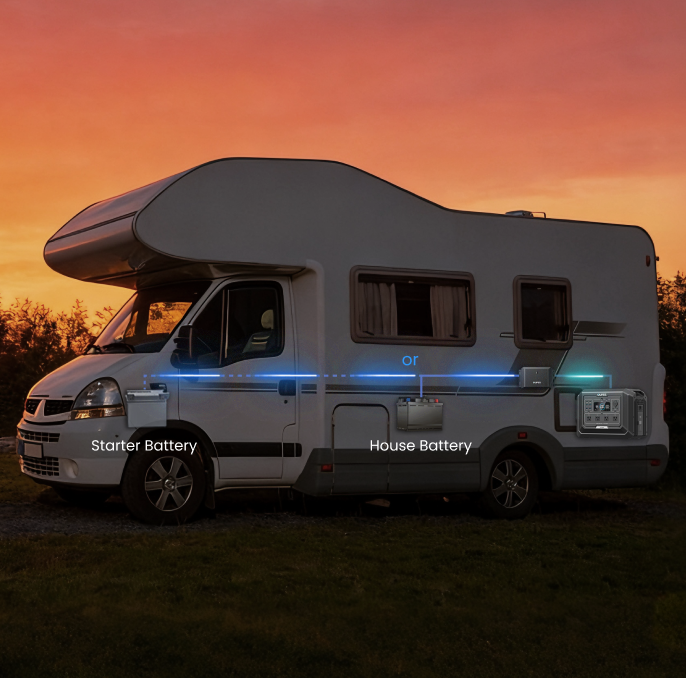
For RVers following the 3-3-3 rule, having a scalable and reliable energy system is critical. The OUPES Guardian 6000 is designed to meet these needs.
High Output for RV Appliances
With up to 6000W output, it can power multiple devices simultaneously, including refrigerators, cooking equipment, and essential electronics.
Expandable Capacity for Multi-Day Stays
The system supports expansion batteries, allowing you to increase total capacity for longer stays. This aligns perfectly with the “3 nights” rule, ensuring you have enough energy without needing constant recharging.
Solar Charging for Off-Grid Freedom
When paired with solar panels, the system can recharge during the day, extending your stay without relying on external power sources.
This combination allows RV travelers to:
- Stay longer in remote locations
- Reduce reliance on campgrounds with hookups
- Maintain comfort and convenience during extended stops
In essence, it supports the lifestyle that the 3-3-3 rule is designed to promote—slower, more intentional travel.
Final Thoughts
The 3-3-3 rule is one of the simplest yet most effective strategies for improving RV travel. By limiting driving distance, arriving early, and staying longer, it creates a balanced rhythm that prioritizes safety, comfort, and enjoyment.
However, following this rule also requires proper preparation—especially when it comes to power. Modern RV living depends on electricity, and having a reliable energy solution ensures you can fully enjoy each destination without limitations.
By combining smart travel planning with scalable power solutions like the OUPES Guardian 6000 and solar setup, RVers can create a more sustainable and enjoyable lifestyle on the road.
FAQ
1. Is the 3-3-3 rule mandatory for RV travel?
No, it is a guideline, not a strict rule. You can adjust it based on your travel style.
2. Can I drive more than 300 miles in a day?
Yes, but it may increase fatigue and reduce overall enjoyment.
3. Why is arriving by 3 PM important?
It ensures daylight for setup and allows time to handle unexpected issues.
4. What if I can only stay one night?
Short stays are fine occasionally, but frequent one-night stops can become exhausting.
5. How much power do I need for RV living?
It depends on your appliances and stay duration, but multi-day stays require higher capacity systems.
6. Can solar power support full RV living?
Yes, especially when combined with battery storage and efficient energy usage.
7. Is the 3-3-3 rule good for beginners?
Yes, it is one of the easiest ways to avoid common RV travel mistakes.
8. Are there alternatives to the 3-3-3 rule?
Yes, some travelers follow the 2-2-2 rule for an even slower pace.




Leave a comment
This site is protected by hCaptcha and the hCaptcha Privacy Policy and Terms of Service apply.