


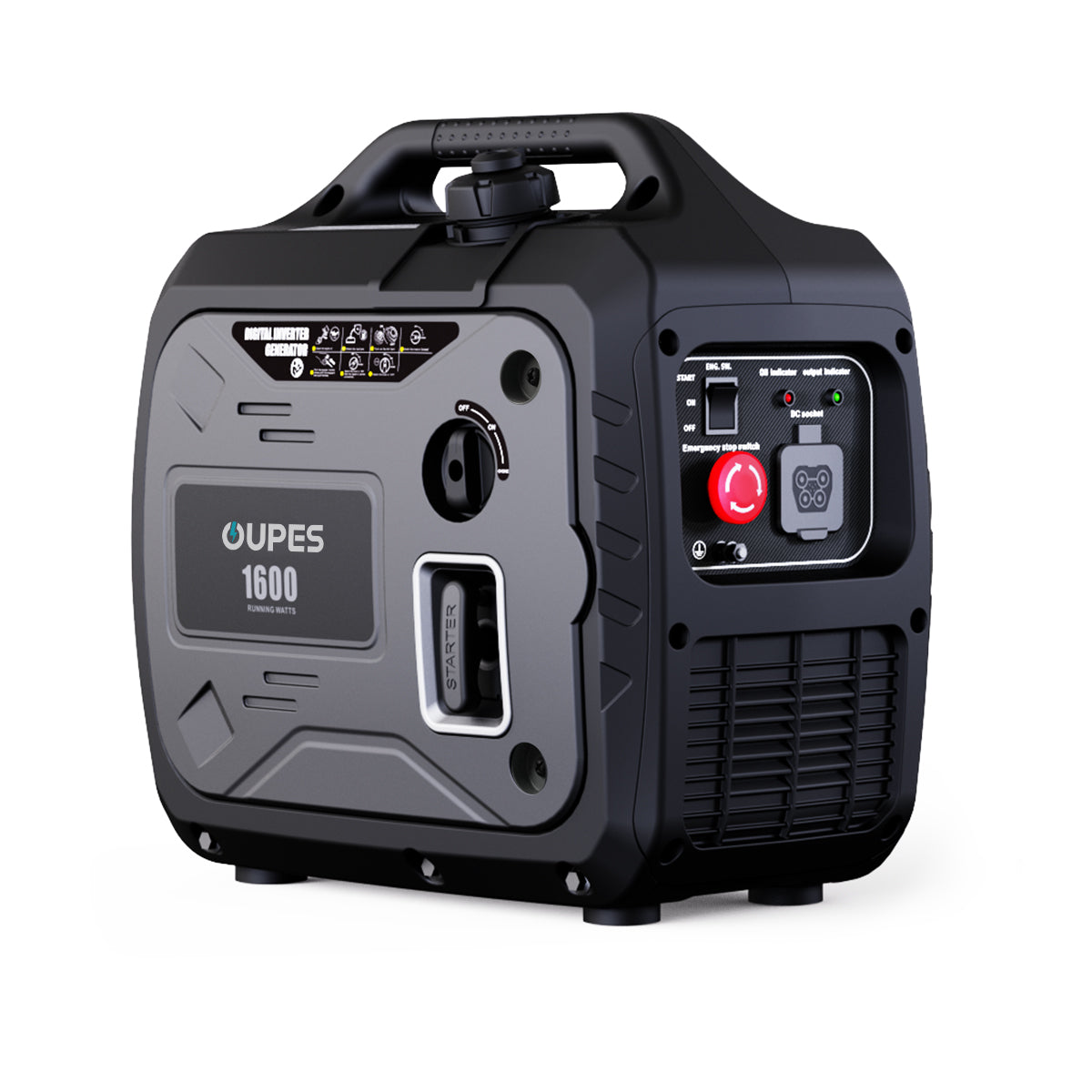


As RV travel and van life keep growing in popularity, more campers are choosing a solar generator (portable power station + solar panels) to power their rigs. Compared with traditional gas generators, solar generators are:
- Quiet and campground-friendly
- Emission-free and cleaner to use
- Rechargeable via solar for extended off-grid stays
- Simple to operate—no fuel to carry
The most common question new RV users ask is:
What size solar generator do I need for my RV?
If the capacity is too small, you’ll run out of power quickly. If it’s too large, you may overpay and carry unnecessary weight. This guide explains how to estimate your RV power needs, how to choose the right capacity, and how to match the setup to real usage—while referencing the OUPES Mega series as practical options.
How Much Power Does an RV Usually Use?
Your RV’s daily energy use depends on what you run and how long you run it. Common RV appliances include:
- LED lights
- Phone/camera charging
- Laptop
- 12V fridge
- Coffee maker
- Microwave
- RV air conditioner
Here are typical power references:
| Appliance | Typical Power | Typical Daily Energy Use |
|---|---|---|
| LED lighting | 5–20W | ~50Wh |
| Phone charging | 10–20W | ~30Wh |
| Laptop | 60–100W | ~200Wh |
| 12V RV fridge | 40–60W | ~400–600Wh |
| TV | 80–120W | ~200Wh |
| Coffee maker | ~800W | ~100Wh |
| Microwave | ~1000W | ~150Wh |
| RV air conditioner | 1200–1800W | High (varies widely) |
In practice, many camping-oriented RV users typically fall into these ranges:
| Usage Type | Estimated Daily Energy |
|---|---|
| Light camping | 800Wh – 1500Wh |
| Standard RV travel | 1500Wh – 3000Wh |
| Full-time / heavier use | 3000Wh+ |
For many RV campers (without constant AC use), a realistic target is often ~800Wh to 2000Wh per day.
How to Calculate the Right Solar Generator Size for Your RV
A simple and practical sizing formula is:
Recommended battery capacity = Daily energy use × 1.5
The extra 50% buffer helps cover real-world variables like cloudy weather, longer appliance runtime, and conversion losses.
Example daily usage:
| Appliance | Estimated Daily Energy |
|---|---|
| 12V fridge | 500Wh |
| Lights | 80Wh |
| Laptop | 200Wh |
| Phone charging | 50Wh |
Total: ~830Wh/day
830 × 1.5 ≈ 1250Wh → Choose a 1500Wh–2000Wh class solar generator.
Solar Generator Capacity Guide by RV Scenario
| Battery Capacity | Best For |
|---|---|
| ~1000Wh | Weekend camping |
| ~2000Wh | Short RV trips |
| ~3000Wh | Longer RV travel |
| 5000Wh+ | Extended off-grid stays / heavier loads |
For most RV campers, 2000Wh–3000Wh is the sweet spot for comfort, flexibility, and weight/cost balance.
Realistic RV Runtime: OUPES Mega Series (Typical Camping Use)
Because inverter and system losses exist, a portable power station’s usable energy is typically around ~85% of the rated capacity. Below is a practical reference based on a typical camping day (~800Wh/day):
| Model | Rated Capacity | Estimated Usable Energy | Typical Runtime (≈800Wh/day) |
|---|---|---|---|
| OUPES Mega 1 | 1024Wh | ≈870Wh | ~1 day |
| OUPES Mega 2 | 2048Wh | ≈1740Wh | ~2 days |
| OUPES Mega 3 | 3072Wh | ≈2610Wh | ~3 days |
| OUPES Mega 5 | 5040Wh | ≈4280Wh | ~4–5 days |
Tip: Adding solar panels lets you recharge during the day, extending off-grid use significantly.
Appliance Runtime Table (Example: OUPES Mega 2)
Here’s a simple runtime reference for OUPES Mega 2 (2048Wh) using ~85% usable energy:
| Appliance | Typical Power | Estimated Runtime |
|---|---|---|
| LED light | 10W | ~170 hours |
| 12V fridge | 50W | ~30–35 hours |
| TV | 100W | ~15 hours |
| Laptop | 60W | ~25 hours |
| Coffee maker | 800W | ~2 hours |
| Microwave | 1000W | ~1.7 hours |
Important: High-wattage appliances like a coffee maker or microwave are usually used for short periods, so they often don’t dominate daily energy use. The biggest “always-on” loads tend to be fridges, AC, and heating.
OUPES Solar Generator Recommendations for RV Camping
For RV travel, most users want a power station that combines high output, practical capacity, and solar recharging capability. The OUPES Mega series covers a wide range of RV needs:
| Model | Capacity | AC Output | Best For |
|---|---|---|---|
| OUPES Mega 1 | 1024Wh | 2000W | Weekend camping basics |
| OUPES Mega 2 | 2048Wh | 2500W | Standard RV trips |
| OUPES Mega 3 | 3072Wh | 3600W | Longer RV travel / more appliances |
| OUPES Mega 5 | 5040Wh | 4000W | Extended off-grid stays / heavier loads |
How Many Solar Panels Do You Need for an RV?
Solar panel sizing depends on your battery capacity and how much you want to replenish during the day. A simple guideline:
| Battery Capacity | Suggested Solar Input |
|---|---|
| ~1000Wh | ~200W solar |
| ~2000Wh | ~400W solar |
| ~3000Wh | ~600W solar |
| ~5000Wh | ~800W+ solar |
Most RV campers find a 400W–800W solar setup covers day-to-day needs well, especially when paired with a 2000Wh–3000Wh class power station.
Final Thoughts
If you’re choosing a solar generator for RV camping, keep it simple:
- Estimate your daily energy use (Wh/day).
- Multiply by 1.5 for a practical buffer.
- Match the capacity to your typical travel style.
For most RV users, 2000Wh–3000Wh is the ideal capacity range. If you plan to run more appliances or stay off-grid longer, a larger option like OUPES Mega 5 offers more flexibility.
FAQ
How many watts should an RV solar generator have?
Most RV campers do well with 1500W–3000W of AC output, which covers common loads like a fridge and small appliances.
Is a 2000Wh power station enough for RV camping?
Yes. For typical camping loads (lights, fridge, charging devices), a 2000Wh class unit often supports about 1–2 days, and even longer with solar recharging.
Can a solar generator run an RV air conditioner?
It can, but you generally need 3000W+ output and enough battery capacity. AC is one of the highest continuous loads in an RV.
How many solar panels do I need for my RV?
Many RV setups use 400W–800W of solar, depending on battery size and daily energy needs.
Is a solar generator better than a gas generator for RVs?
For most camping scenarios, yes—solar generators are quiet, emission-free, and fuel-free, making them more campground-friendly and easier to use.


Leave a comment
This site is protected by hCaptcha and the hCaptcha Privacy Policy and Terms of Service apply.