




A 500Wh-class portable power station is best suited to phones, laptops, cameras, lights, networking equipment, CPAP use after verification, and measured short-duration operation of efficient coolers or small refrigerators. It is a strong size for day trips, overnight camping, mobile work and a communications-focused emergency kit. It is usually too small for sustained space heating, electric cooking, air conditioning or broad home backup.
Key Takeaways
- A 500Wh rating describes stored energy; inverter watts determine which loads can operate.
- Plan from delivered energy rather than treating every rated watt-hour as available at an AC outlet.
- Low and moderate loads make better use of this size than heat-producing appliances.
- Measure refrigerators and medical devices instead of relying on generic runtime claims.
- A practical recharge plan matters on multi-day trips.
What “500Wh-Class” Means
Manufacturers offer capacities above and below exactly 500Wh, so it is useful to treat roughly 450–650Wh as a practical class. Watt-hours measure stored energy. Watts measure the rate at which a device uses energy and the inverter output available at one time. A station can have enough energy for a task but still lack the required output, voltage or port.
For planning, a 576Wh battery with an illustrative 85% delivery factor and a 20% reserve provides about 392Wh: 576 × 0.85 × 0.80. The reserve protects the rest of the day and the delivery factor allows for conversion and operating losses. Actual delivered energy varies with the load, connection method, temperature and battery condition.
Also check how the station behaves at very low loads. An AC inverter consumes some energy simply by remaining on, so a 5W device may not achieve the runtime suggested by dividing watt-hours by 5W. Where the equipment supports it, a compatible DC or USB connection can reduce conversion steps. Keep the AC inverter off when it is not needed, but never substitute a cable that does not meet the device's voltage and charging protocol.
Port count matters only after port capability. Two USB-C ports may have different maximum outputs, and AC receptacles generally share the inverter's total rating. Read the port-level specifications rather than counting openings on the front panel.
Estimate Runtime With Your Own Device Watts
Divide the planning energy budget by average load watts. The examples below use 392Wh and assume a steady load; cycling equipment and devices that change power draw must be measured over time.
| Average load | Approximate runtime | Possible use |
|---|---|---|
| 10W | 39 hours | Small light or efficient electronics |
| 25W | 15.7 hours | Router or low-power fan |
| 60W | 6.5 hours | Laptop workload or measured medical device |
| 100W | 3.9 hours | Combined electronics |
| 300W | 1.3 hours | Short, compatible appliance use |
These are calculation examples, not runtime promises. Check the device label, measure actual energy when possible, and include startup demand for compressors and motors.
Scenarios That Fit a 500Wh Portable Power Station
Day trips and overnight camping
Phones, cameras, LED lighting, a laptop and a small fan create a manageable load when high-heat cooking stays off the battery. For trip-specific planning, see the solar generator for camping guide.
Mobile work and content production
A 500Wh-class station can support laptop charging, camera batteries, a small monitor or a hotspot. Direct USB-C power may avoid some AC conversion, but confirm port wattage and device requirements.
Communications during a short outage
Routers, phones, radios and efficient lights can often run much longer than high-power appliances. This makes the class useful as a focused emergency layer even when it is not intended to back up an entire home.
CPAP use after an exact compatibility check
Operating time changes materially with pressure, humidification, heated tubing and the selected power connection. Verify the CPAP manufacturer requirements and test the complete setup before relying on it. The OUPES CPAP power station guide provides a starting point.
Portable cooling after measurement
An efficient cooler or compact refrigerator may fit, but compressor startup and daily energy use must be measured. Ambient heat and frequent opening increase consumption. Compare options intended for refrigerator backup if cooling is the primary job.
When a 500Wh Class Is Too Small
Space heaters, kettles, hair dryers, induction cooktops and air conditioners turn electricity into heat or move large amounts of heat. Even if a station's inverter can briefly support one device, a 500Wh battery can be depleted quickly. A 1,200W load would consume a theoretical 500Wh in only 25 minutes before losses and reserve.
Size up when the measured daily load exceeds the planning budget, several devices must run together, a motor's startup demand exceeds the inverter limit, or recharging will not be available. Also size up when a critical load needs a larger safety margin. Capacity cannot correct an incompatible voltage or outlet.
Plan the Next Recharge
For a one-day outing, charging from AC before departure may be sufficient. Multi-day use needs a daily energy balance. Solar harvest can be estimated as panel watts × equivalent peak-sun-hours × a system factor. A 100W panel, four peak-sun-hours and a 75% factor produce an illustrative 300Wh per day. Shade, clouds, heat, angle and cable losses can reduce production.
Confirm solar voltage, current, connector and maximum input against the station. Browse compatible portable solar panels, then design around the product limits rather than connector appearance.
When charging from a vehicle, use only the supported input method and consider the vehicle's operating instructions. Do not assume a 12V socket can safely deliver its maximum rating for hours. Record how many watt-hours are restored during a normal drive so the next trip plan reflects the source you actually have.
A Current OUPES 500Wh-Class Option
The Exodus 700 sits slightly above the nominal 500Wh point and shows how this class can combine useful USB-C charging with portable weight. Specifications were checked on September 22, 2026.
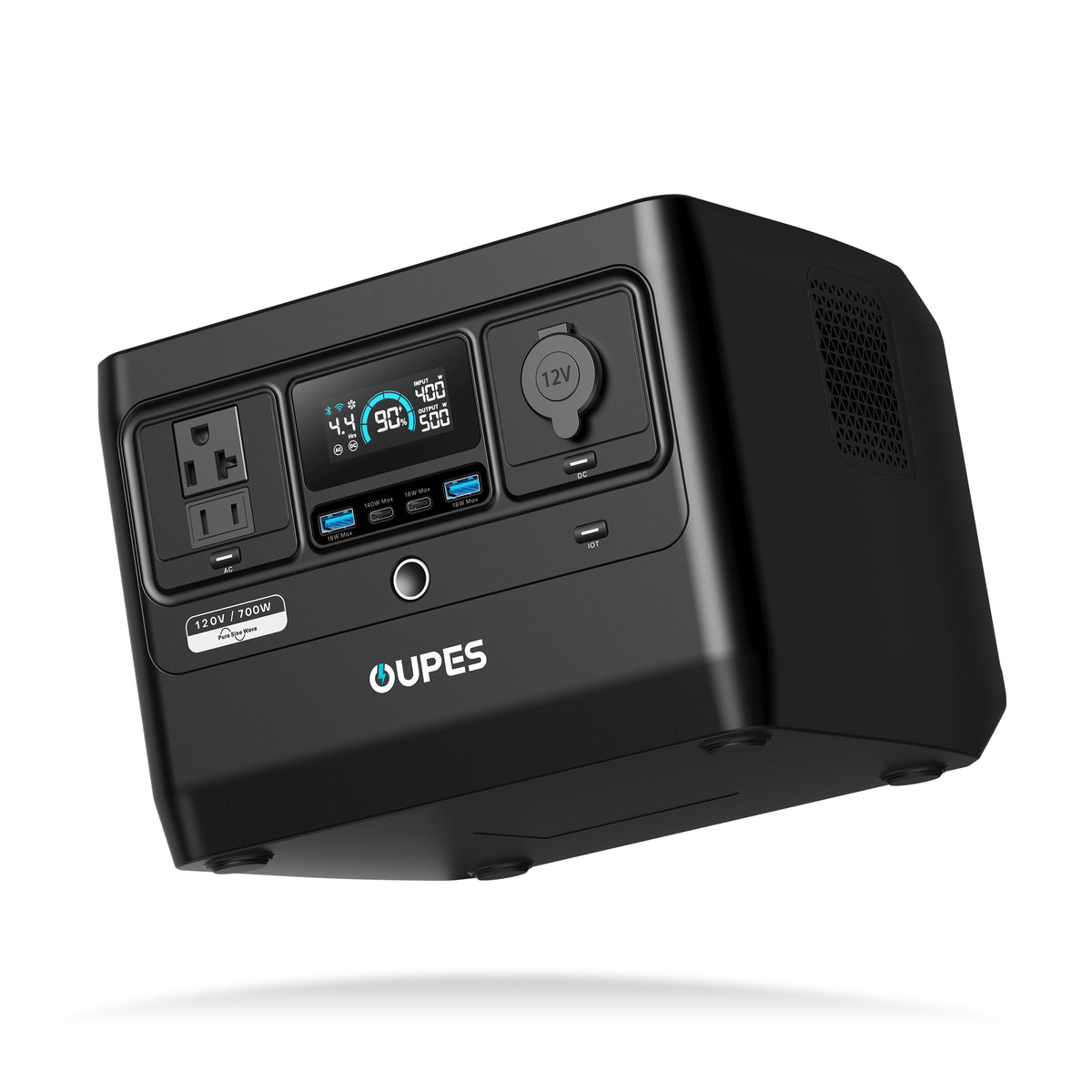
OUPES Exodus 700
- 576Wh rated capacity.
- 700W continuous AC output and 1,200W peak output.
- 13.9 lb with LiFePO4 battery chemistry.
- A focused choice for short trips, mobile work and measured light backup loads.
Frequently Asked Questions
Can a 500Wh power station run a refrigerator?
Sometimes, but confirm startup watts and measured energy. Full-size refrigerators vary widely and may justify a larger system.
Can it run a CPAP all night?
It may, depending on the exact device, settings and connection. Test the prescribed setup and retain a reserve.
How many laptop charges can I expect?
Divide planning watt-hours by the laptop battery capacity, then allow for charging losses. Laptop batteries and workloads vary.
Can it power a microwave?
Many microwaves exceed compact inverter limits, and their input watts can be higher than the cooking watts on the front. Check the input label and station rating.
Will a 100W solar panel recharge it in five hours?
Usually not in real conditions. Panel nameplate output is a laboratory rating, and daily harvest depends on sun, angle, temperature and system losses.
Is 500Wh enough for a weekend?
It can be for electronics and lights, especially with recharging. It may be inadequate for continuous refrigeration or electric cooking.
Can I take it on an airplane?
Airline battery limits are far below 500Wh for ordinary passenger baggage. Verify current airline and regulator rules before travel.
Does a 700W output mean it stores 700Wh?
No. Output watts and stored watt-hours are separate specifications.
Should I use AC or USB-C for a laptop?
Use a supported connection that meets the laptop's requirements. Direct USB-C may reduce conversion steps when both devices support the needed profile.
What is the clearest reason to choose a larger unit?
Choose a larger unit when measured energy, simultaneous output, startup demand or reserve exceeds the compact system's limits.


Leave a comment
This site is protected by hCaptcha and the hCaptcha Privacy Policy and Terms of Service apply.