




A 300Wh-class portable power station is best for day trips, mobile work, photography, light camping and a communications-focused emergency kit. It can recharge phones, laptops, cameras and lights, but it has limited runtime for refrigeration and is generally unsuitable for sustained heating, cooking, air conditioning or broad home backup.
Key Takeaways
- Treat roughly 250–350Wh as the practical 300Wh class.
- Output watts determine which devices can run; Wh estimates how long.
- A realistic AC energy budget is lower than the nameplate capacity.
- This class works best when low weight matters and recharging is frequent.
- Measure cycling or medical equipment before relying on runtime.
Calculate a Realistic Energy Budget
Using a 288Wh battery, a 90% usable fraction and 85% AC conversion efficiency gives about 220Wh at the load: 288 × 0.90 × 0.85. Direct USB or DC use may have a different efficiency, and inverter idle power matters at very low loads.
Runtime is planning Wh divided by average load W. A 20W load would be about 11 hours; a 60W load about 3.7 hours; a 200W load about 1.1 hours. These are illustrative steady-load calculations.
The Best-Fit Users and Activities
- Photographers charging camera batteries and a laptop.
- Day campers running lights, phones and a small fan.
- Remote workers needing a short bridge for a laptop and hotspot.
- Drivers keeping electronics charged during a road trip.
- Households building a lightweight communications and lighting kit.
For outdoor planning, see OUPES guidance for a camping solar generator.
Match Devices to Both Energy and Output
| Average load | Approximate time | Important check |
|---|---|---|
| 10W light | 22 hours | Inverter idle use at low load |
| 35W laptop | 6.3 hours | USB-C profile or AC adapter |
| 60W combined electronics | 3.7 hours | All ports and shared limits |
| 200W appliance | 1.1 hours | Continuous output and heat |
Know When 300Wh Is Too Small
Kettles, space heaters, hair dryers, microwaves and induction cooktops can exceed the inverter or empty the battery quickly. A compressor refrigerator may start within a peak rating yet consume more daily energy than the battery can provide.
Move up when the daily load exceeds the delivered-energy budget, multiple devices must run together, startup power is too high, or the next recharge is uncertain.
Plan Frequent, Compatible Recharging
A compact battery is easier to refill, but actual solar time depends on panel output and weather. A 100W panel with four peak-sun-hours and a 75% factor yields about 300Wh in an illustrative day. The station's voltage, current and watt limits must still match.
Vehicle charging should use the supported cable and input. Do not assume a vehicle socket can supply its maximum indefinitely.
A Current OUPES 300Wh-Class Option
The Exodus 350 is designed around the lightweight use case. Specifications were checked on the official U.S. page on September 30, 2026; confirm the selected configuration before ordering.
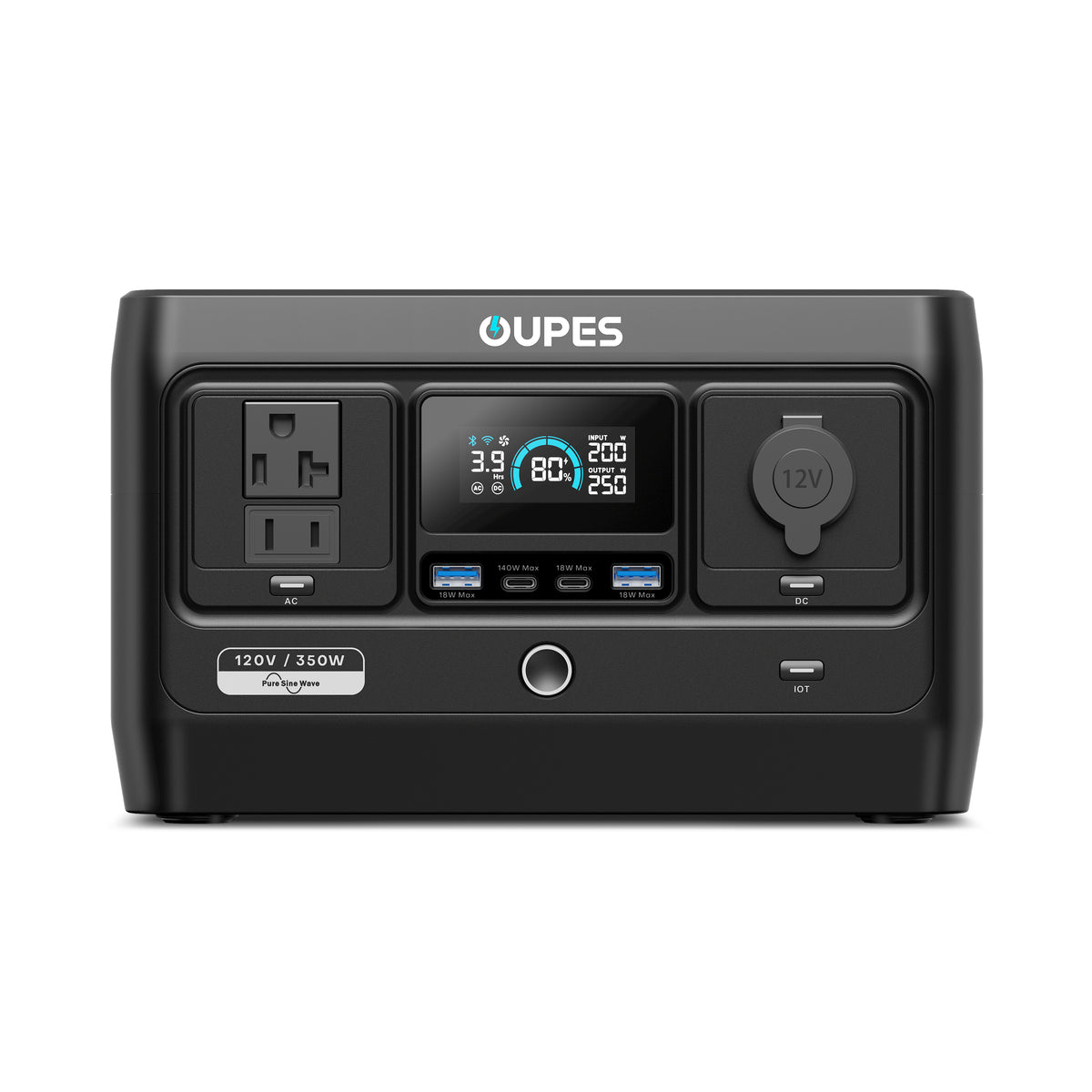
OUPES Exodus 350
- 288Wh rated capacity.
- 350W continuous AC output and 600W peak.
- 9.15 lb with LiFePO4 battery chemistry.
- A practical fit for day trips, mobile electronics and short emergency bridge loads.
Build a Lightweight Power Kit
Pack only the cables actually required, protect ports from dirt and moisture, and place the station where air can circulate. Precharge devices before departure so the station serves as reserve rather than the only source.
Test the complete kit for one normal day. If the remaining charge is consistently low, remove optional loads, add a compatible recharge method or move to a larger capacity class. The goal is a repeatable routine, not the most optimistic runtime estimate.
Frequently Asked Questions
Can 300Wh run a refrigerator?
Possibly for a limited period, but compressor startup and measured daily Wh must both fit.
Can it run a CPAP?
Only after checking the exact device, humidifier, heated tube, connection and prescribed backup guidance.
How many phone charges can it provide?
Divide delivered Wh by the phone battery Wh and include charging losses.
Can it power a microwave?
Most microwaves exceed this class's continuous output and would deplete it quickly.
Is it enough for one night of camping?
Often for electronics, lights and a fan; refrigeration or cooking changes the answer.
Can a 100W panel recharge it in three hours?
That is an idealized calculation. Real output and taper normally make it longer.
Is 350W output the same as 350Wh capacity?
No. One is power; the other is stored energy.
Can I carry it on a plane?
Passenger aviation battery limits are generally far below 300Wh; verify current airline rules.
When should I choose 500Wh or more?
Choose more capacity for longer trips, refrigeration, larger reserve or fewer recharge opportunities.


Leave a comment
This site is protected by hCaptcha and the hCaptcha Privacy Policy and Terms of Service apply.