




A home emergency power supply should be sized around essential loads and a realistic outage window. Start with refrigeration, communications, lighting, approved medical equipment, and any critical heating-system controls or pumps. Then calculate simultaneous watts, startup demand, and daily watt-hours. “Best backup power for home” has no universal answer because households, climates, appliances, and outage durations differ.
This guide compares a standalone portable power station with an expandable home-backup package. Neither should be treated as automatic whole-home service or connected to fixed wiring without professional assessment.
Prioritize What Must Stay Powered
Divide loads into critical, useful, and deferrable groups. Critical loads may include medically necessary equipment approved for the chosen backup method, a refrigerator, communications, safety lighting, and required pumps or controls. Useful loads include laptops, television, fans, and device charging. Electric cooking, laundry, and large climate-control equipment may need to wait or use another plan.
Record the actual nameplate or manual rating for every critical device. FEMA’s Ready.gov outage guidance recommends planning alternative charging and determining how electricity-dependent medical devices will be handled; review the official power outage preparedness sheet. A battery product choice does not replace a care plan with the device manufacturer and medical professional.
Keep the broader emergency kit separate from the energy calculation. Water, medication, lighting, communication, temperature safety, and evacuation may remain critical even when a battery is available. The OUPES disaster preparedness page can act as an internal planning hub.
Calculate Simultaneous and Startup Watts
Add the running watts of critical devices that may overlap. Then identify refrigerators, freezers, pumps, furnace blowers, and other motor loads with startup demand. Rated output must cover the planned combination and supported surge behavior. A device that fits by itself may not fit while another motor starts.
Reduce overlap before increasing system size. Schedule a microwave or coffee maker when other high-power loads are quiet. Charge laptops and power banks during lower-demand periods. Do not interrupt required medical or food-safety equipment merely to accommodate a convenience appliance.
Portable plug-in operation is easier to verify than a whole-home claim. The portable power station collection includes standalone units, but a product’s rated output does not establish permission to backfeed a home receptacle or connect to a breaker panel.
Calculate Watt-Hours and Runtime Conservatively
Multiply each load’s watts by expected hours. A 100W load for ten hours represents 1,000Wh, while a 1,200W appliance for ten minutes represents about 200Wh. Cycling changes the calculation, so measured consumption is preferred for refrigerators and pumps.
Add the loads and reserve for AC conversion, standby use, battery condition, temperature, and uncertainty. Nominal capacity divided by load is a starting estimate, not a guarantee. A 2,048Wh battery running a 200W average load will not necessarily deliver exactly 10.24 hours at the outlet.
Choose the interval the system must cover before reliable recharging. A short scheduled outage, an overnight storm, and a multi-day regional event require different storage. Solar can replenish energy, but weather and panel placement vary. If solar is part of the plan, the home solar generator page provides relevant context.
Build Normal, Conservation, and Critical-Only Modes
A normal outage mode may support refrigeration, internet, phones, several lights, and limited entertainment. Conservation mode reduces lighting, turns off standby devices, schedules charging, and avoids high-power cooking. Critical-only mode protects the few loads that affect health, safety, food, or essential communication.
Calculate all three. If the normal mode needs 3,500Wh per day but the critical-only mode needs 1,400Wh, an expandable battery can provide flexibility while disciplined load shedding extends duration. Write the sequence down so household members do not make conflicting decisions during an outage.
Review the plan seasonally. Summer may add fans or refrigeration demand; winter may add furnace controls or the need to relocate if electric heating cannot be supported. Do not assume a portable battery can maintain safe indoor temperatures through every event.
Compare a Standalone Unit and Expandable Package
| Configuration | Capacity | Rated Output | Solar Input Limit | Planning Role |
|---|---|---|---|---|
| OUPES Mega 2 Pro | 2,048Wh | 2,500W | 2,100W | Managed essential loads and shorter outages |
| Mega 3 + B2 Extra Battery | 5,120Wh | 3,600W | 2,100W | Longer duration and higher simultaneous demand |
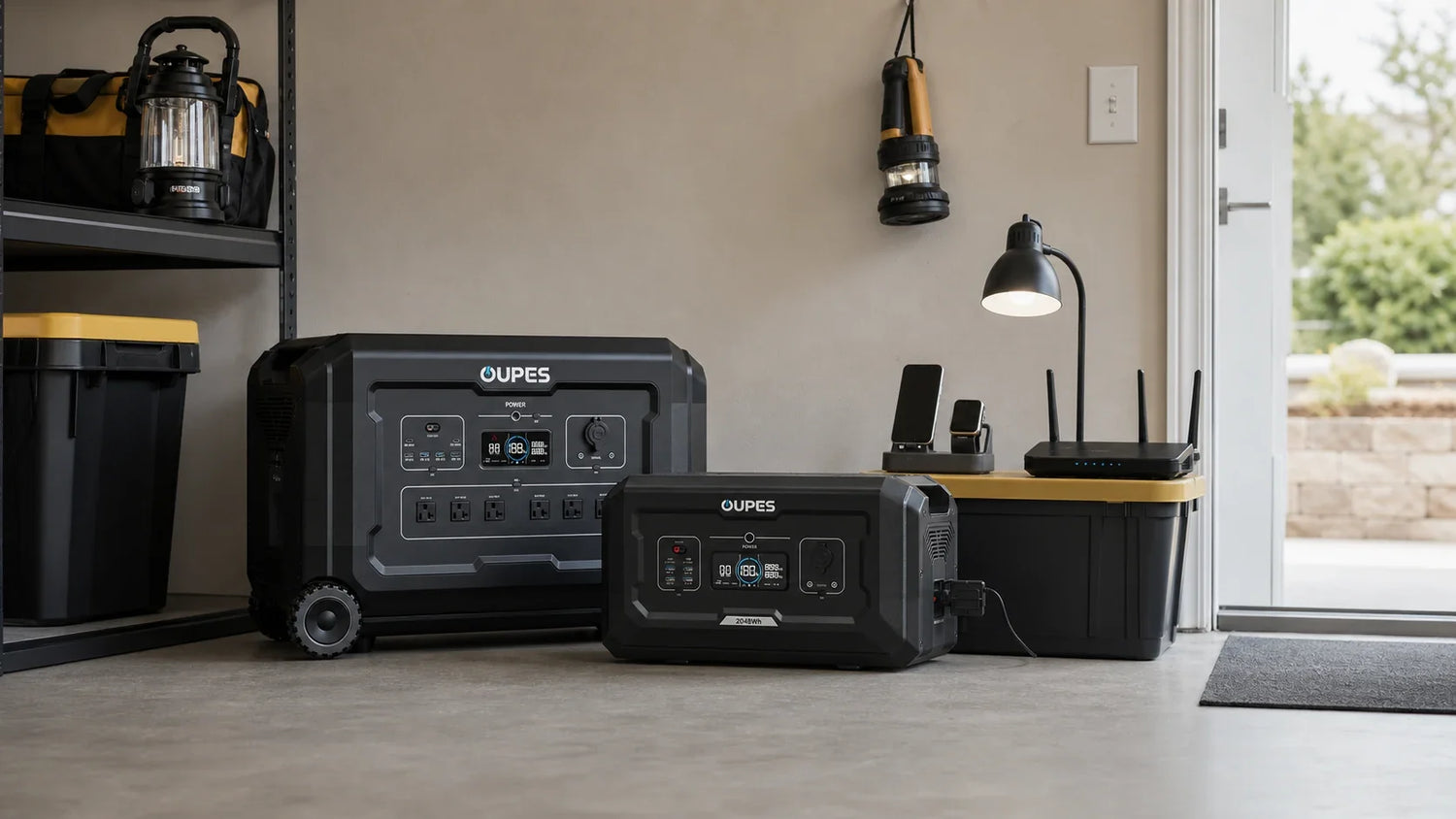
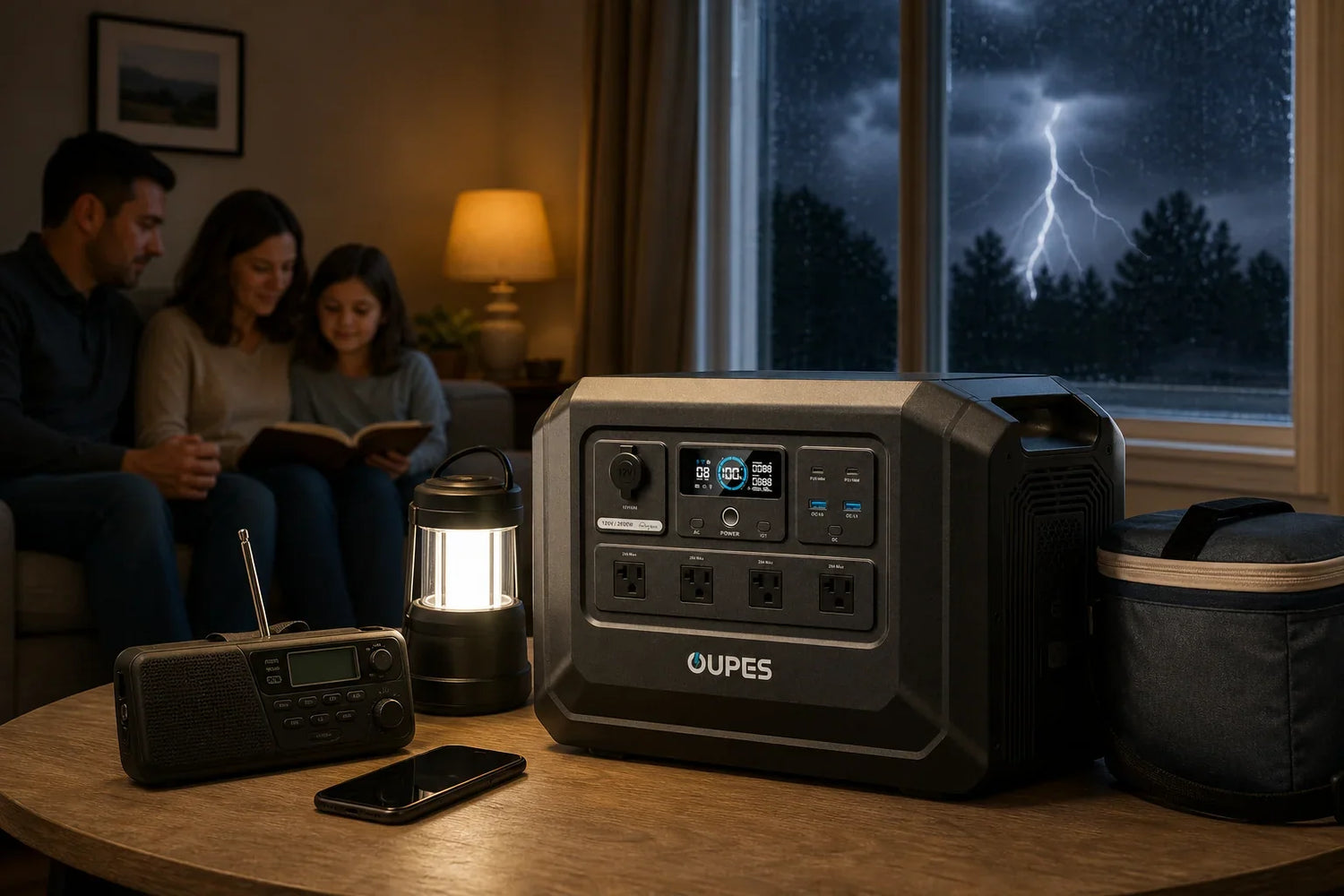
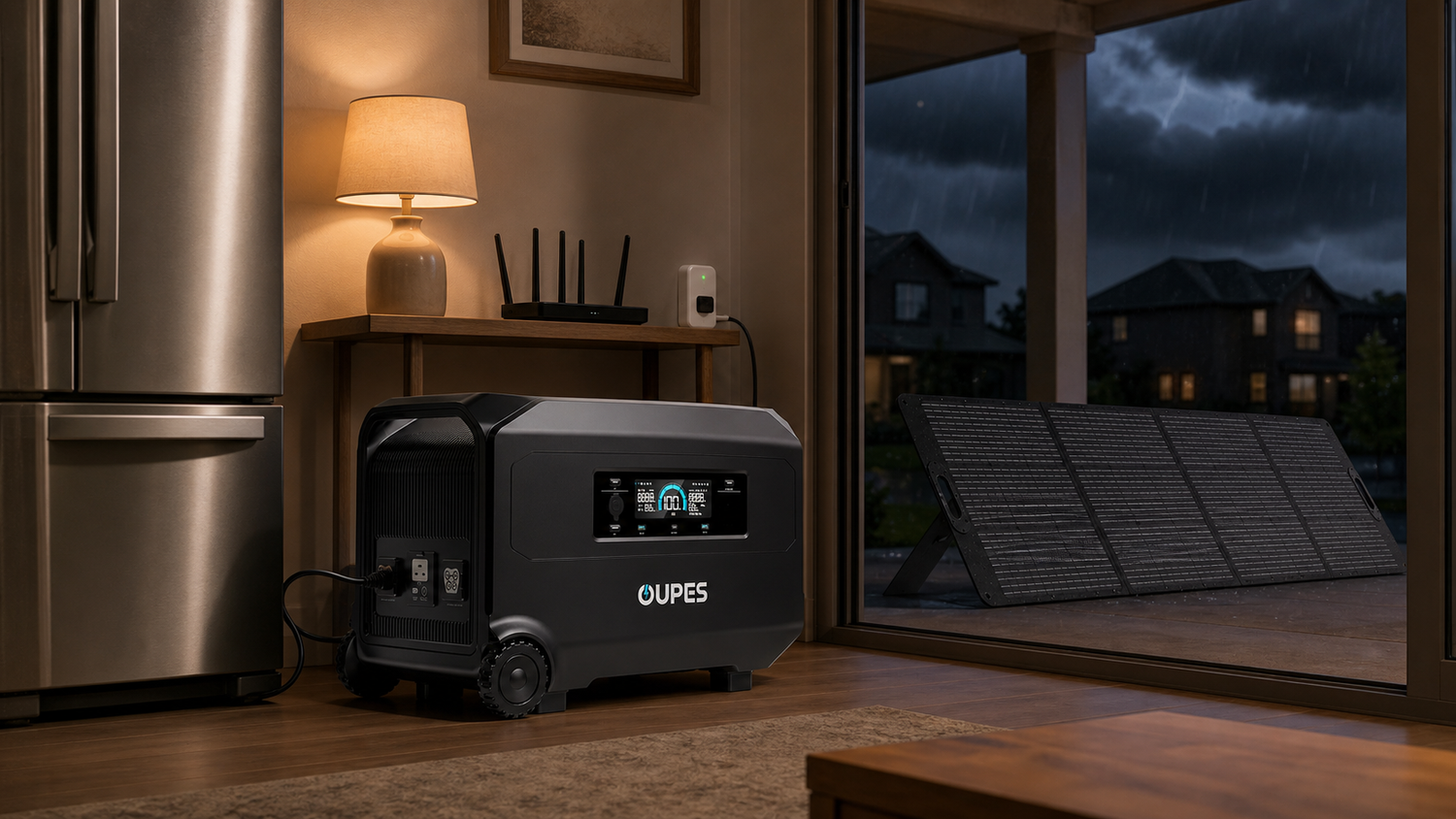
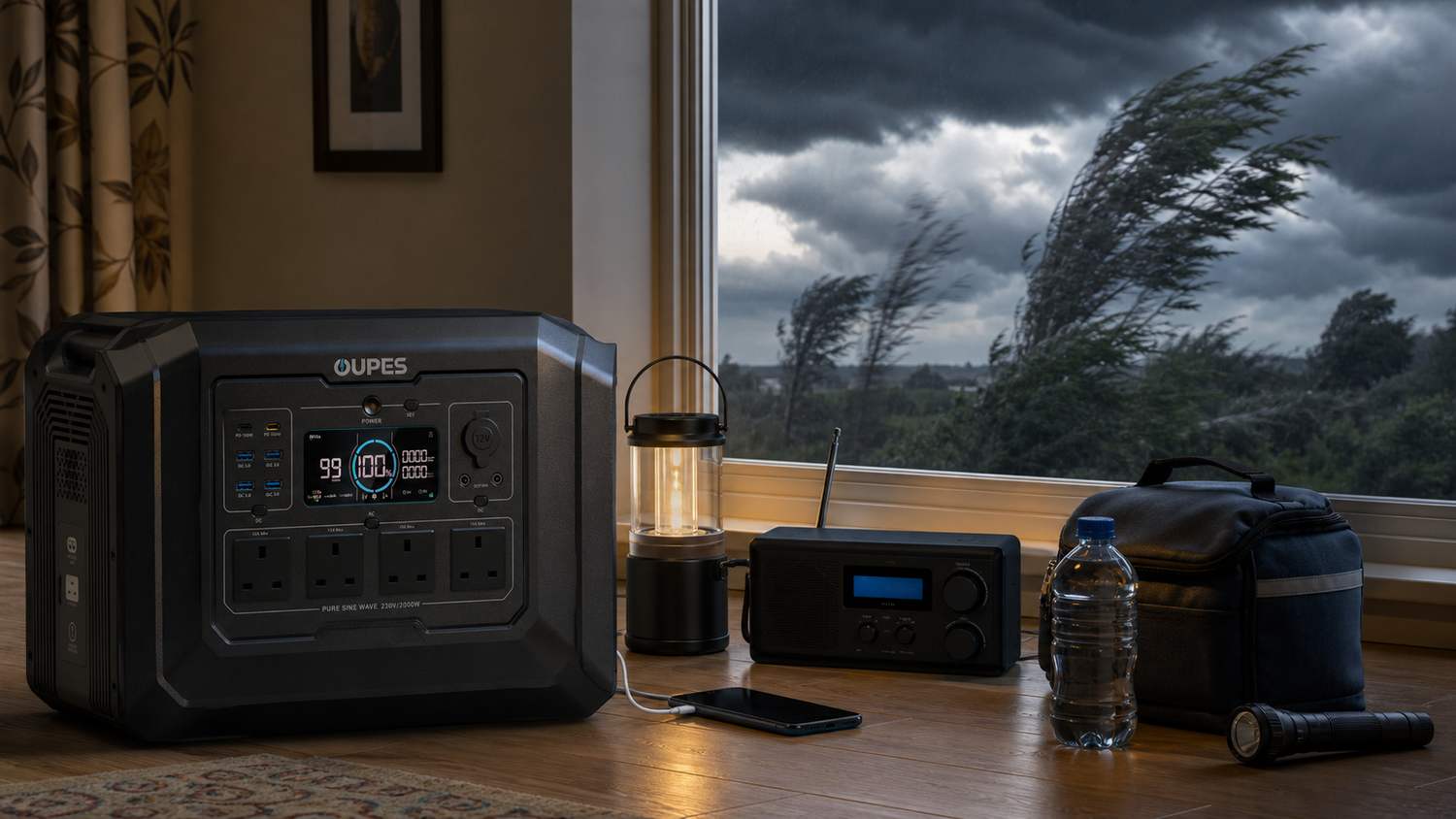
Mega 2 Pro is a standalone power station without a panel or expansion battery. It offers 2,048Wh and 2,500W for a selected set of plug-in loads. The Mega 3 + B2 package combines one Mega 3 with one expansion battery for 5,120Wh while retaining 3,600W rated output. Added capacity extends potential runtime; it does not remove the need to check each device.
The expandable package belongs to the home backup power collection, but “home backup” should not be read as automatic whole-home integration. Fixed transfer equipment, grounding, permits, and circuit selection require professional evaluation. The refrigerator backup collection is relevant when cold storage is a core load.
Operate and Store the System Safely
Make the plan usable under stress. Label cords for critical appliances, keep a printed connection order, and note which loads must not overlap. Household members should know where the unit is stored, how to read its display, and when optional equipment must stop. A plan understood by only one person is fragile during travel, illness, or evacuation.
Test the portable-load plan while the grid is available. Run the intended plug-in devices for a supervised period and compare observed watts with the worksheet. Do not test fixed wiring or life-support assumptions. Update estimates when appliances change or observed battery performance differs.
Recharging priority matters during long outages. Restore reserve before adding convenience loads. If compatible solar is used, expect variable input and position panels safely. If utility power returns intermittently, recharge essential backup first and retain energy for an orderly shutdown.
Place the unit on a stable, dry surface with ventilation and within documented temperature limits. Keep cords visible and protected from doors, pets, water, and foot traffic. Connect critical loads first, watch the displayed load, and stop if equipment behaves abnormally.
Never backfeed household wiring with a male-to-male cord or improvised connection. If household circuits must be powered, use a qualified electrician and approved transfer or interconnection equipment. Medical devices need a manufacturer- and clinician-approved contingency plan; do not rely on a generalized runtime estimate.
Maintain readiness by checking charge, cables, and stored equipment on a schedule. An uncharged battery is not an emergency supply. Record which family member is responsible for inspection before storm seasons and after every use.
Prepare for communication failures as well as electrical loss. Keep printed appliance ratings, contact details for utilities and professionals, and instructions for family members who may not have internet access. If the backup plan changes with season, mark the winter and summer load lists clearly. Review them after purchasing a new refrigerator, pump, furnace, router, or medical device.
Do not wait for the battery to reach zero before changing modes. Set charge thresholds for moving from normal to conservation and from conservation to critical-only operation. Early load reduction preserves options when restoration time is unknown and prevents convenience loads from consuming energy reserved for refrigeration, communication, or a safe shutdown.
Keep the plan with the emergency kit, not only on a phone.
Frequently Asked Questions
How much backup battery does a home need?
Add critical daily watt-hours, multiply by the desired outage duration, and include losses and reserve. A critical-load plan may be much smaller than whole-house consumption, so calculate appliances rather than using home size.
Can a battery run a refrigerator overnight?
Often, if startup watts and measured energy fit. Ambient temperature, door openings, thermostat setting, and compressor cycling affect consumption. Keep food-safety decisions aligned with official guidance.
Can it run a gas furnace?
A gas furnace still needs electricity for controls and the blower. Verify nameplate and startup requirements, grounding, and manufacturer instructions. Fixed furnace connections should be evaluated by a qualified professional.
Is more output the same as more runtime?
No. Watts govern simultaneous load; watt-hours govern stored energy. A higher-output inverter may run larger equipment but can drain the same battery faster under a heavy load.
Should I buy a single unit or expandable system?
Choose a single unit for a defined modest load list and reliable recharging. Expansion is useful when longer autonomy is needed, but first reduce avoidable loads and confirm the base inverter supports peak demand.
Can solar keep the battery running indefinitely?
No. Solar output changes with season, weather, angle, shade, and temperature. Compare conservative daily production with consumption and maintain a plan for low-production days.
Conclusion
A reliable home emergency power plan protects essential loads first, uses watts for simultaneous demand, and uses watt-hours for duration. Mega 2 Pro suits a managed shorter-outage plan, while Mega 3 with B2 provides more capacity and output for extended priorities. Neither removes the need for safe connections and professional assessment of fixed wiring.
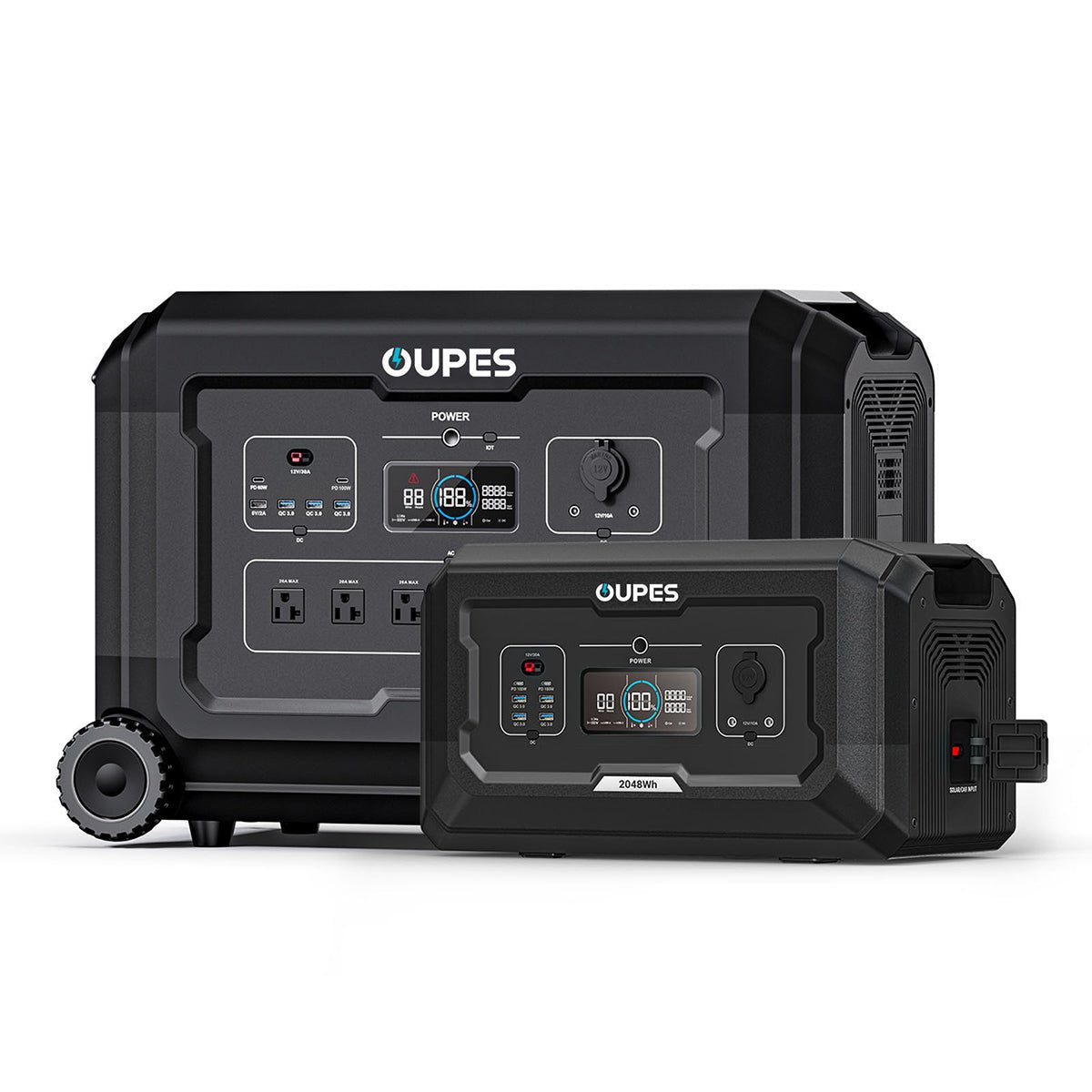
Mega 3 + B2 Extra Battery Home Backup
- Mega 3 with one B2 expansion battery
- 5,120Wh combined capacity
- 3,600W rated output
- Up to 2,100W solar input

Leave a comment
This site is protected by hCaptcha and the hCaptcha Privacy Policy and Terms of Service apply.