




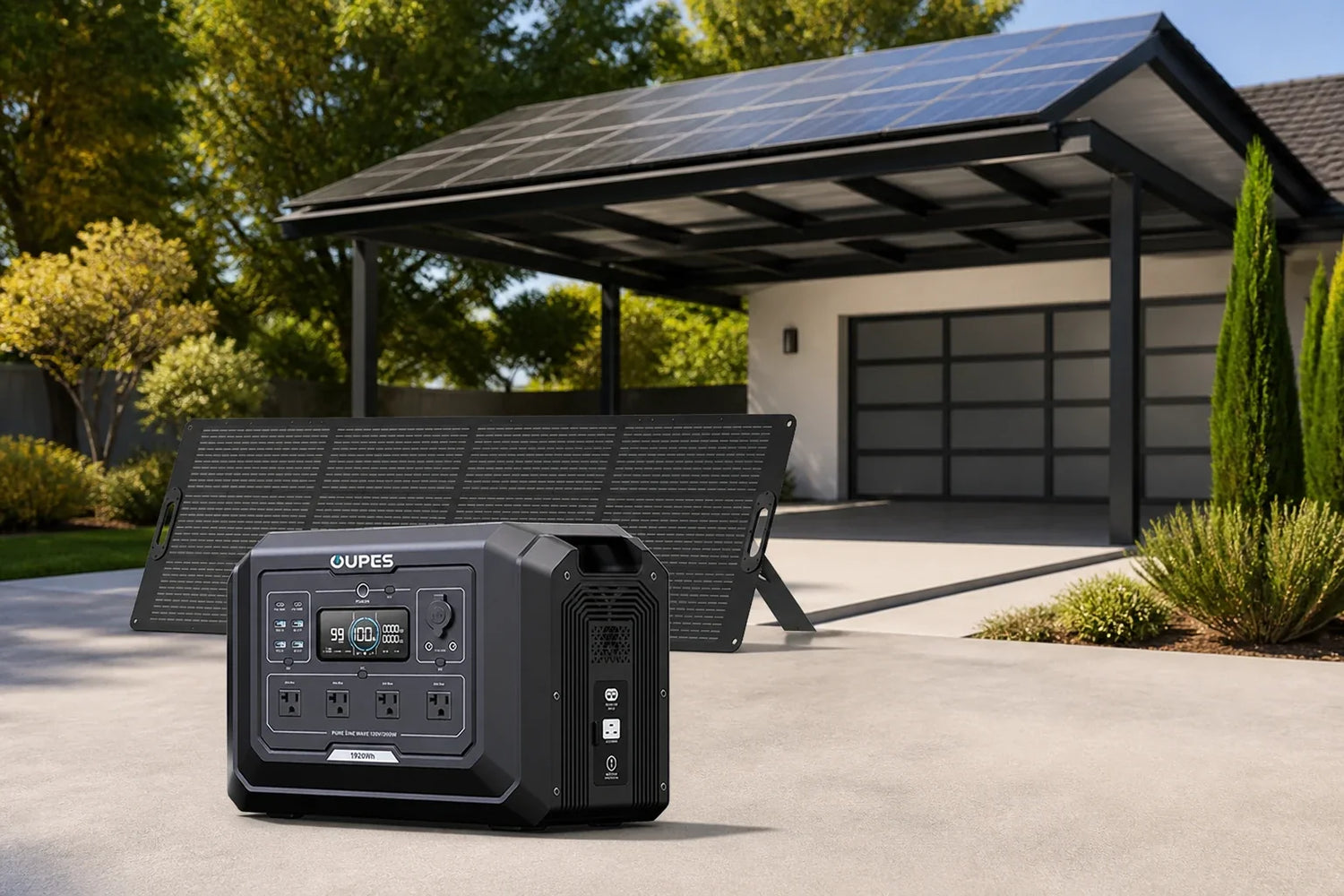
A solar panel carport can turn parking area into a generation surface, but it is first a structure exposed to wind, snow, rain, vehicles, and people. Energy estimates matter only after the foundation, framing, clearances, drainage, fire access, and electrical pathway are shown to be suitable. Treat the project as coordinated structural and electrical work, then decide whether a battery belongs in the fixed system, as a portable backup layer, or both.
This guide uses American English and separates permanent solar or building work from portable backup. Product ratings come from the current US regional product table; local permits, contracts, site conditions, and equipment manuals still control the final decision.
Start With Site and Structure
Measure the parking footprint, vehicle clearance, property setbacks, drainage paths, shade, and the direction available for the array. A carport roof can be more flexible than an existing house roof, but its posts and foundations must carry dead load plus local wind, snow, seismic, and uplift demands. A structural professional should specify the frame and attachment details for the actual site.
Plan how rainwater leaves the array and where snow or debris may fall. Protect posts from vehicle impact and keep electrical equipment away from splash zones. If the carport will support EV charging later, reserve conduit space and panel capacity now without assuming the future charger’s load.
Permits and Interconnection Are Local
The Department of Energy’s consumer solar installation guide explains that projects commonly move through structural suitability, permits, inspections, and utility coordination. A carport may also trigger zoning, accessory-structure, fire-access, or stormwater questions that differ from rooftop solar.
Ask the local authority having jurisdiction which drawings, engineering stamps, product listings, setbacks, and inspections are required. Ask the serving utility about interconnection before equipment is ordered. A seller’s generic design or an installation accepted elsewhere does not replace local approval.
Define the Battery’s Role
A grid-tied carport array does not necessarily provide power during an outage. Backup operation depends on the inverter, isolation controls, storage, protected-load design, and approved installation. Decide which circuits matter during an outage and size the system around those loads rather than around total panel area alone.
Portable storage is a different layer. A portable power station or solar generator can support compatible plug-in loads and travel away from the carport. It is not automatically connected to the carport array or breaker panel. Any shared charging path must be documented and code-compliant.
Carport Decision Checklist
- Survey, setbacks, vehicle clearance, drainage, and impact protection
- Site-specific wind, snow, seismic, uplift, and foundation design
- Solar access by month, not just at noon on one clear day
- Electrical routing, disconnects, grounding, equipment location, and inspection
- Utility interconnection and a separate outage-backup plan
- Maintenance access without climbing over vehicles or energized equipment
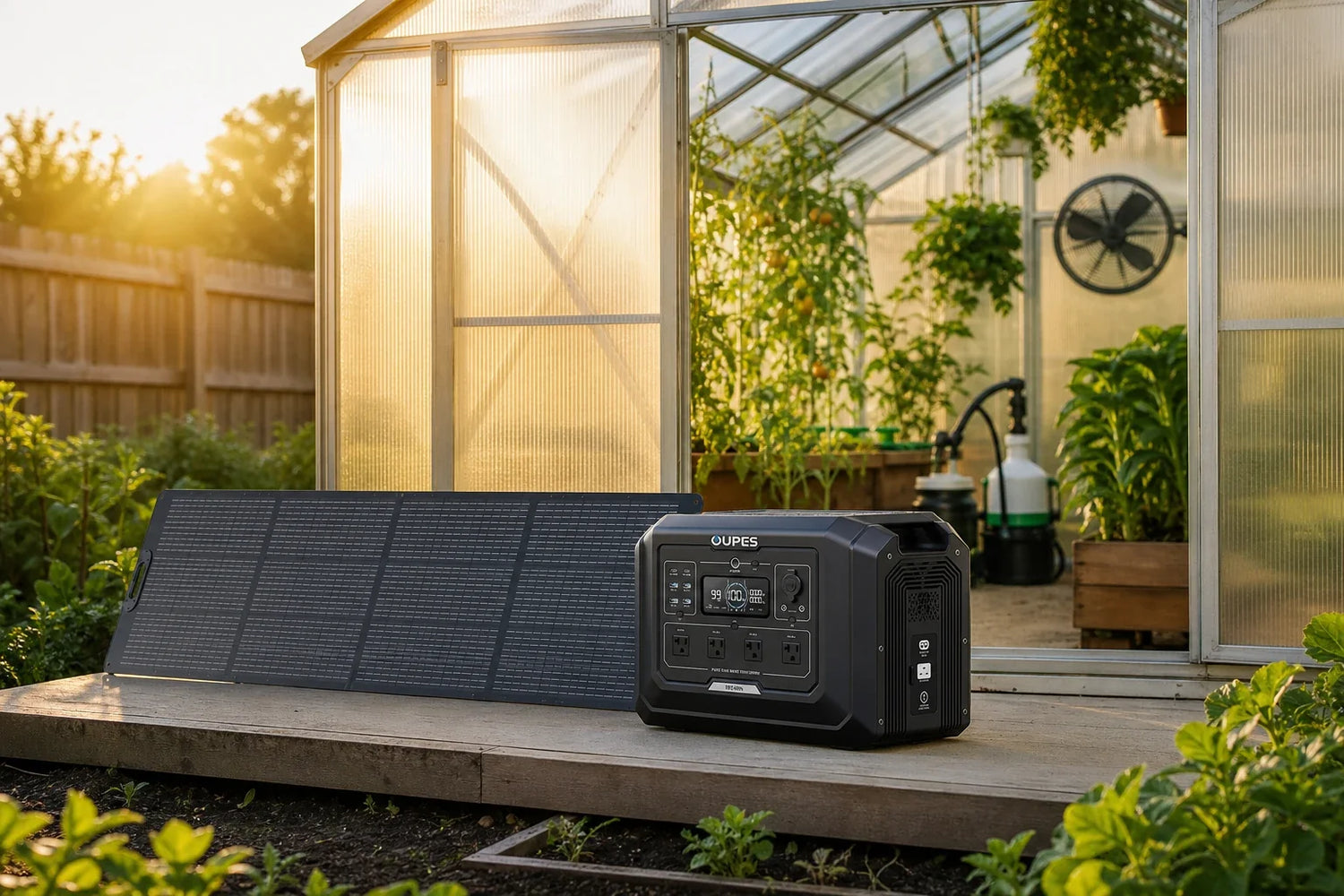
The Mega 1 + 240W Solar Panel kit is relevant as a portable backup example after these fixed-system questions are resolved. It provides 1,024Wh capacity and 2,000W rated output with one portable 240W panel; it should not be represented as the carport’s grid-tied inverter or permanent battery system.
Estimate Carport Production Conservatively
Model the exact proposed plane rather than borrowing a rooftop estimate. Nearby buildings, trees, utility poles, and the house itself can shade a carport at different hours and seasons. Vehicle height does not affect sunlight, but the structural height and tilt needed for clearance can change wind exposure and array orientation. Review monthly energy, not only an annual total.
Separate production from value. Energy used on site, exported energy, demand charges, and EV charging schedules can have different economic effects under the local utility tariff. If an EV is expected, model its actual miles and charging window. A large array does not guarantee useful backup during an outage unless storage and isolation are designed for it.
Maintenance Around Vehicles
Design access so technicians do not have to climb on vehicles or block the driveway unnecessarily. Provide safe routes to modules, wiring, disconnects, gutters, and drainage. Falling tools, snow, ice, and runoff should not endanger people or damage vehicles. Bollards or other impact protection may be appropriate around posts and electrical cabinets.
Keep landscaping from shading the array or restricting service. Inspect after severe storms and vehicle impacts. Clean only according to module and structure instructions, without standing on panels or spraying electrical equipment improperly. Document torque, inspection, and maintenance responsibilities in the installation contract.
Compare Three Project Paths
A basic path is a structure designed for future solar, with conduit and clearances planned but panels installed later. A grid-tied path adds generation for normal utility-connected operation. A resilience path adds compatible storage, controls, and protected loads. Pricing and complexity rise at each step, so request proposals that state exactly which path is included.
A portable OUPES kit can sit beside any of these paths as independent plug-in backup. That may be useful during construction, travel, or a short outage, but it should not be counted as the fixed carport battery unless an approved design explicitly integrates it. This distinction keeps the structural project, utility agreement, and portable equipment easy to audit.
Power, Capacity, and Solar Production Are Different
Watts describe the rate at which equipment uses or produces power. Watt-hours describe stored or consumed energy over time. A system can have enough energy for a day and still fail to start a motor if its inverter cannot handle the momentary demand. It can also have ample rated output but run for only a short period if the battery is small relative to the load. List continuous watts, possible startup watts, and daily watt-hours separately.
Solar-panel nameplate power is a test-condition rating, not a promise of identical output every hour. Shade, orientation, temperature, clouds, cable losses, controller limits, and season all matter. Use a range for expected production and leave reserve energy for poor weather. When portable panels charge a power station, the station’s documented solar-input limits remain the controlling boundary even if more panel wattage is physically available.
Keep Fixed Solar and Portable Backup in the Right Categories
A roof, carport, greenhouse array, or permanent tiny-house electrical system may involve structural engineering, electrical permits, utility interconnection, grounding, overcurrent protection, and code-compliant wiring. A portable OUPES solar generator is a power station packaged with portable solar charging. It can support compatible plug-in loads, but it should not be described as a grid-tied array, an automatic whole-home system, or a substitute for professional fixed wiring.
That boundary is useful rather than limiting. A fixed array can serve the building’s long-term energy plan, while portable storage can cover selected loads, travel, maintenance outages, or locations where permanent work is not appropriate. Review the US solar generator collection, portable solar panels, and home backup packages as distinct categories instead of assuming that every product solves the same problem.
Use a Repeatable Sizing Workflow
Start with a load inventory. For each item, record rated watts, hours per day, startup behavior, and whether it must run at the same time as another device. Multiply watts by hours to estimate daily watt-hours, then add a reserve rather than planning to empty a battery completely. For thermostatically controlled loads, measure real cycling when practical because a simple nameplate-times-hours estimate may be too high or too low.
Next, compare three constraints in order: connection compatibility, simultaneous output, and energy duration. A connection that does not match cannot be fixed by extra battery capacity. An inverter that is too small cannot be fixed by extra solar panels. A battery that is too small cannot be made dependable by assuming perfect sun. Document each constraint independently and confirm uncertain specifications with the equipment manufacturer.
Plan for Weather, Placement, and Maintenance
Keep portable power equipment dry, ventilated, stable, and within the manufacturer’s temperature limits. Route cables where they will not be pinched, crushed, tripped over, or left in standing water. Inspect connectors for damage and contamination before use. Never disconnect energized DC connectors casually, improvise adapters, or mix components merely because they appear to fit.
Production and load both change with weather. Winter can reduce solar hours while heating-related demand rises; summer heat can increase ventilation or cooling loads. Recheck the energy budget for the hardest relevant season. Store manuals, cable identification, load calculations, and a simple shutdown procedure with the equipment so another household member can operate the setup without guessing.
Frequently Asked Questions
Do solar carports need permits?
Often yes, but requirements vary by jurisdiction. Ask about zoning, structural, building, electrical, fire, and utility approvals before ordering equipment or excavating foundations.
Can a solar carport power a home during an outage?
Not automatically. Outage operation requires compatible storage, isolation, controls, protected circuits, and an approved design. Ordinary grid-tied solar commonly shuts down when the grid is out.
Is a carport better than rooftop solar?
It can provide new usable area and easier orientation, but it adds a standalone structure, foundations, drainage, vehicle-clearance, and impact-protection requirements. Compare complete projects.
Can I charge a portable power station from carport panels?
Only through a documented compatible charging path whose voltage, current, polarity, connectors, and protection match the power station. Do not improvise a connection to a grid-tied string.
How much energy will the carport make?
Estimate from array size, orientation, tilt, shade, local solar resource, temperature, and system losses. Use monthly ranges and installer modeling rather than panel watts times daylight hours.
Where should the battery be located?
Follow the battery and inverter documentation plus local code. Consider temperature, ventilation, moisture, impact, service access, cable length, and separation from vehicle traffic.
Conclusion
A successful solar panel carport begins with safe structure and local approvals, then moves to production, loads, interconnection, and storage. Keep permanent solar design separate from portable backup claims. Once the fixed project is defined, an OUPES solar generator can be considered for selected plug-in loads and mobile resilience within its documented limits.
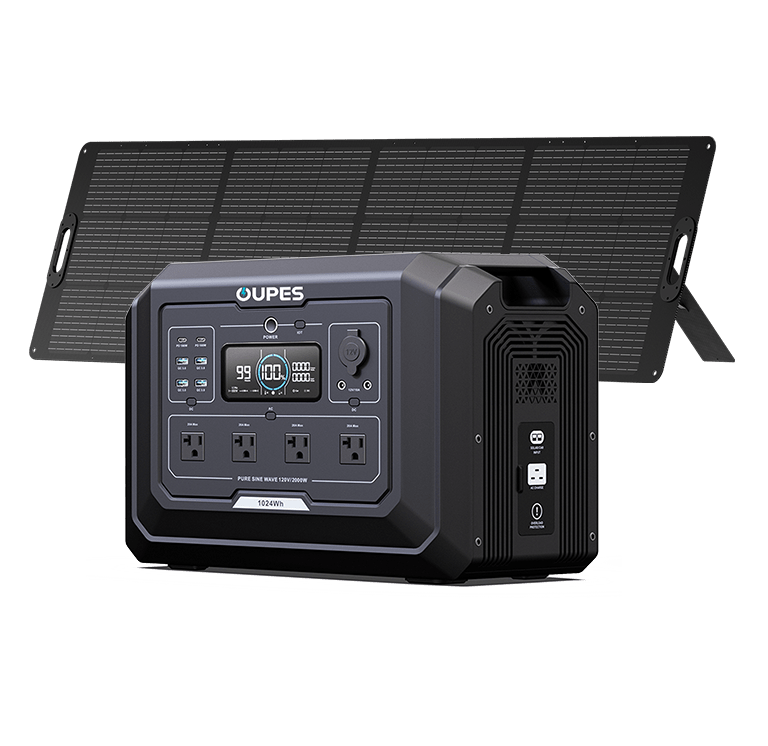
Mega 1 + 240W Solar Panel Solar Generator Kit
- Mega 1 with one 240W portable solar panel
- 1,024Wh capacity
- 2,000W rated output
- Up to 800W solar input


Leave a comment
This site is protected by hCaptcha and the hCaptcha Privacy Policy and Terms of Service apply.