




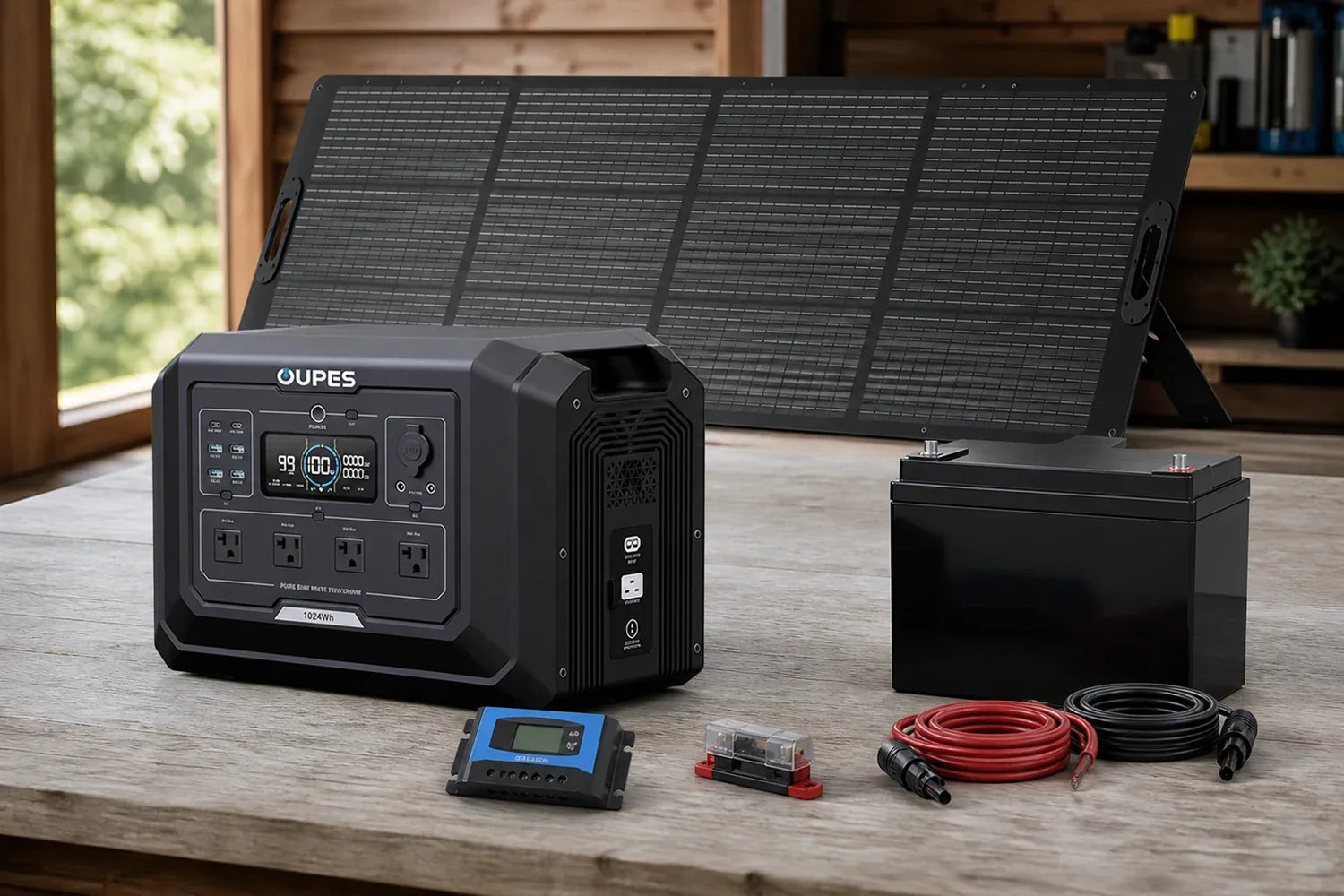
Do not connect a typical solar panel directly to a 12V battery. Use a charge controller configured for the battery chemistry and matched to the panel voltage, array current, wiring, and required protection. “12V” is a nominal system label; panel voltage, battery charging voltage, and controller limits are different numbers. The safest route is a documented kit or a design reviewed by a qualified technician, not trial-and-error wiring.
This guide uses American English and separates permanent solar or building work from portable backup. Product ratings come from the current US regional product table; local permits, contracts, site conditions, and equipment manuals still control the final decision.
Why a Charge Controller Is Required
A solar module’s voltage and current change with sunlight, temperature, and load. A charge controller regulates energy into the battery, applies a charging profile, and helps prevent overcharge or reverse current. The controller must explicitly support the battery chemistry and nominal voltage. Lead-acid, lithium iron phosphate, and other chemistries do not share one universal charging profile.
Some controllers use pulse-width modulation; others use maximum power point tracking. The choice affects allowable panel voltage and conversion behavior, but neither type excuses mismatched ratings. Follow the controller manual for array sizing, wire order, settings, and disconnect sequence.
Match Panel, Controller, and Battery
Record the panel’s open-circuit voltage and short-circuit current, including the effect of series or parallel wiring. Confirm that cold-weather voltage remains below the controller maximum and that array current fits its rating. Then verify the controller’s output current and charging profile against the battery manufacturer’s limits.
Battery capacity in amp-hours cannot be compared without voltage. A nominal 12V, 100Ah battery represents roughly 1,200Wh before allowable depth of discharge and losses, but actual usable energy depends on chemistry, condition, temperature, and manufacturer guidance. Use watt-hours for an energy comparison.
Wiring, Fusing, and Sequence
Use conductor size, terminals, disconnects, overcurrent protection, strain relief, and enclosures suited to the current and environment. Keep polarity consistent and protect exposed battery terminals from short circuits. A battery can deliver damaging fault current even when the solar panel is small.
Many controllers specify connecting the battery before the panel so the controller can identify system voltage, but procedures differ. Follow the exact manual. Do not assume a generic online sequence applies to every controller. Stop if a cable heats, a connector discolors, a battery swells, or the controller reports an error.
A Documented Portable Alternative
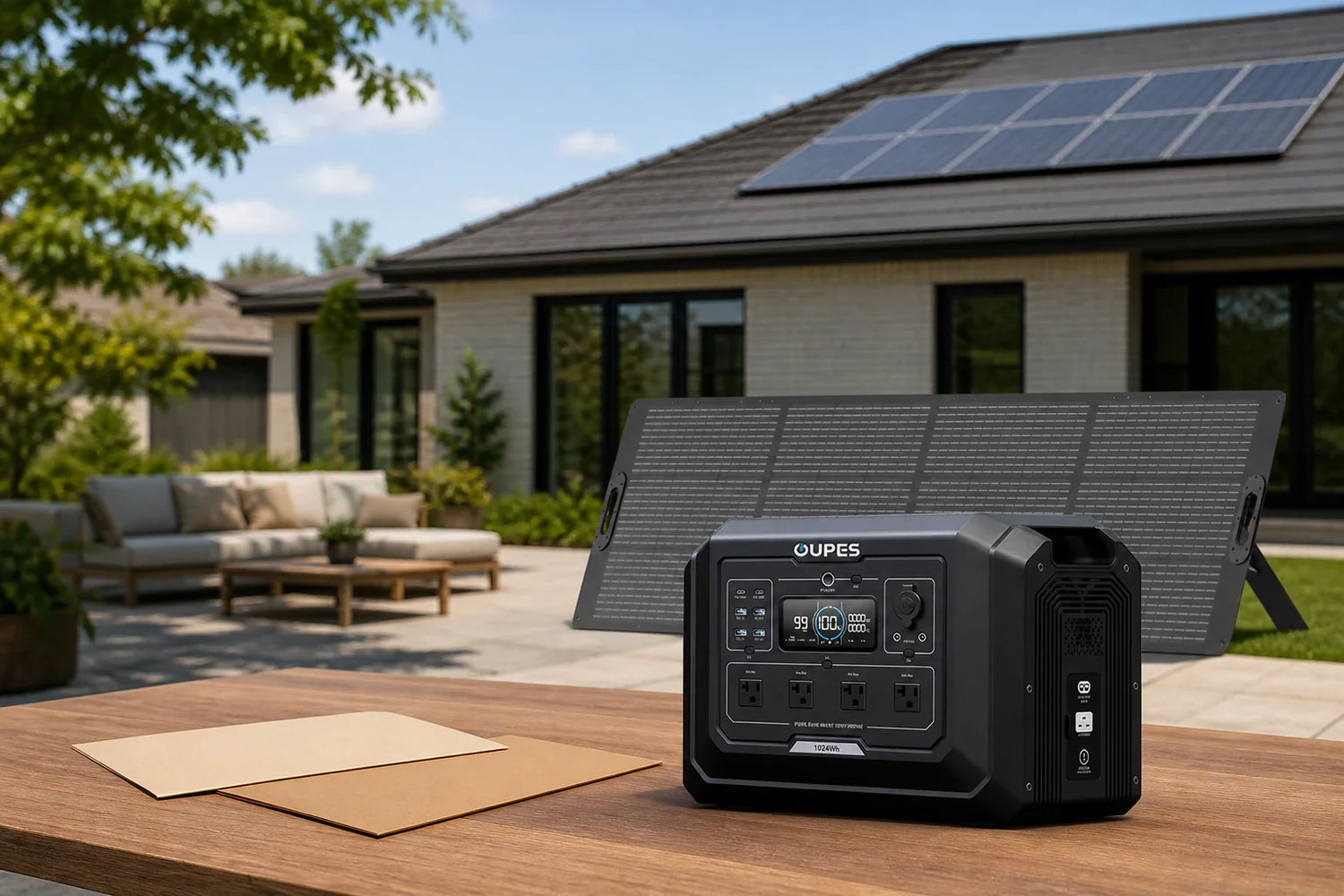
A solar generator integrates battery storage, charge control, inverter, and protected outputs in one portable product. The Mega 1 + 240W Solar Panel kit provides 1,024Wh capacity, 2,000W rated AC output, and one 240W portable panel. This avoids designing a separate 12V battery charging system when the real goal is portable AC or USB power.
It does not make every 12V charging task interchangeable. Use only documented outputs and cables for an external battery or DC appliance. Compare the portable power station collection with the solar generator collection to decide whether you need a standalone unit or a panel bundle.
Estimate Charging Time Without Overpromising
Convert battery capacity to watt-hours, then divide by realistic charging watts for a rough minimum time. A nominal 12V 100Ah battery is roughly 1,200Wh, but charging is not perfectly efficient and the controller may reduce current as the battery approaches full. Sunlight varies throughout the day, so panel nameplate watts are not constant charging watts.
Use seasonal solar hours and measured harvest for planning. A larger panel may shorten charging only until the controller or battery charge-current limit is reached. If the battery powers a daily load while charging, subtract that consumption before estimating net recovery.
Battery Chemistry and Condition Matter
Lead-acid batteries may require ventilation, maintenance, and limits on depth of discharge; sealed variants still require their specified charging profile. Lithium batteries may include a battery-management system and temperature restrictions, particularly for cold charging. Do not choose settings from nominal voltage alone.
Inspect for swelling, cracks, leaks, corrosion, loose terminals, and unusual temperature. Confirm the battery manufacturer’s maximum charge current and storage instructions. An old or damaged battery can behave differently from its label, so capacity testing by a qualified service provider may be appropriate.
Commissioning Checklist
- Confirm battery chemistry, nominal voltage, capacity, condition, and manufacturer limits.
- Confirm controller type, input voltage, current, output rating, profile, and temperature sensing.
- Calculate the panel array’s cold open-circuit voltage and maximum current.
- Install correct conductors, terminals, disconnects, and overcurrent protection.
- Follow the documented connection sequence and verify polarity before energizing.
- Observe the first charge cycle and record voltage, current, controller status, and temperature.
Label the shutdown sequence near the equipment. If the system will be unattended, add appropriate monitoring rather than assuming the controller will correct every wiring or battery problem.
Power, Capacity, and Solar Production Are Different
Watts describe the rate at which equipment uses or produces power. Watt-hours describe stored or consumed energy over time. A system can have enough energy for a day and still fail to start a motor if its inverter cannot handle the momentary demand. It can also have ample rated output but run for only a short period if the battery is small relative to the load. List continuous watts, possible startup watts, and daily watt-hours separately.
Solar-panel nameplate power is a test-condition rating, not a promise of identical output every hour. Shade, orientation, temperature, clouds, cable losses, controller limits, and season all matter. Use a range for expected production and leave reserve energy for poor weather. When portable panels charge a power station, the station’s documented solar-input limits remain the controlling boundary even if more panel wattage is physically available.
Keep Fixed Solar and Portable Backup in the Right Categories
A roof, carport, greenhouse array, or permanent tiny-house electrical system may involve structural engineering, electrical permits, utility interconnection, grounding, overcurrent protection, and code-compliant wiring. A portable OUPES solar generator is a power station packaged with portable solar charging. It can support compatible plug-in loads, but it should not be described as a grid-tied array, an automatic whole-home system, or a substitute for professional fixed wiring.
That boundary is useful rather than limiting. A fixed array can serve the building’s long-term energy plan, while portable storage can cover selected loads, travel, maintenance outages, or locations where permanent work is not appropriate. Review the US solar generator collection, portable solar panels, and home backup packages as distinct categories instead of assuming that every product solves the same problem.
Use a Repeatable Sizing Workflow
Start with a load inventory. For each item, record rated watts, hours per day, startup behavior, and whether it must run at the same time as another device. Multiply watts by hours to estimate daily watt-hours, then add a reserve rather than planning to empty a battery completely. For thermostatically controlled loads, measure real cycling when practical because a simple nameplate-times-hours estimate may be too high or too low.
Next, compare three constraints in order: connection compatibility, simultaneous output, and energy duration. A connection that does not match cannot be fixed by extra battery capacity. An inverter that is too small cannot be fixed by extra solar panels. A battery that is too small cannot be made dependable by assuming perfect sun. Document each constraint independently and confirm uncertain specifications with the equipment manufacturer.
Plan for Weather, Placement, and Maintenance
Keep portable power equipment dry, ventilated, stable, and within the manufacturer’s temperature limits. Route cables where they will not be pinched, crushed, tripped over, or left in standing water. Inspect connectors for damage and contamination before use. Never disconnect energized DC connectors casually, improvise adapters, or mix components merely because they appear to fit.
Production and load both change with weather. Winter can reduce solar hours while heating-related demand rises; summer heat can increase ventilation or cooling loads. Recheck the energy budget for the hardest relevant season. Store manuals, cable identification, load calculations, and a simple shutdown procedure with the equipment so another household member can operate the setup without guessing.
Frequently Asked Questions
Can I connect a solar panel directly to a 12V battery?
Not as a general practice. Use a compatible charge controller and required protection. Direct connection can overcharge the battery or expose wiring and equipment to unsafe conditions.
What size solar panel charges a 12V battery?
Size it from battery watt-hours, desired charging time, seasonal solar production, controller limits, and allowable charge current. A single wattage answer is not reliable.
Does a 100W panel provide 100W all day?
No. Nameplate output is measured under test conditions. Weather, angle, shade, temperature, cable loss, and controller behavior reduce or vary actual production.
Can one controller charge any battery chemistry?
Only if its documentation supports that chemistry and the correct charging profile is selected. Confirm voltage limits and settings with the battery manufacturer.
Should I connect the battery or panel first?
Follow the controller manual. Many systems require the battery first, but the correct connection and disconnection order is product-specific.
Is a solar generator the same as a 12V battery system?
No. A solar generator is an integrated portable battery and power-conversion product. It may provide DC outputs, but its internal battery and charging system are not a generic external 12V battery charger.
Conclusion
Charging a 12V battery from solar requires a compatible controller, chemistry-specific settings, verified array limits, correct conductors, protection, and the manufacturer’s connection sequence. If the actual goal is portable household power, an integrated OUPES solar generator may simplify the system, but it must still be used only through documented inputs and outputs.
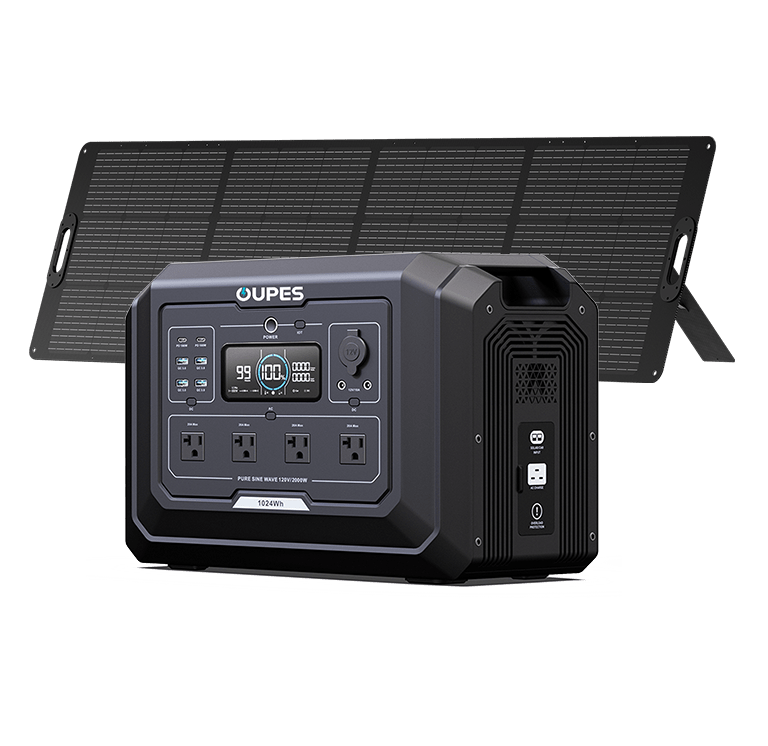
Mega 1 + 240W Solar Panel Solar Generator Kit
- Mega 1 with one 240W portable solar panel
- 1,024Wh capacity
- 2,000W rated output
- Up to 800W solar input


Leave a comment
This site is protected by hCaptcha and the hCaptcha Privacy Policy and Terms of Service apply.