


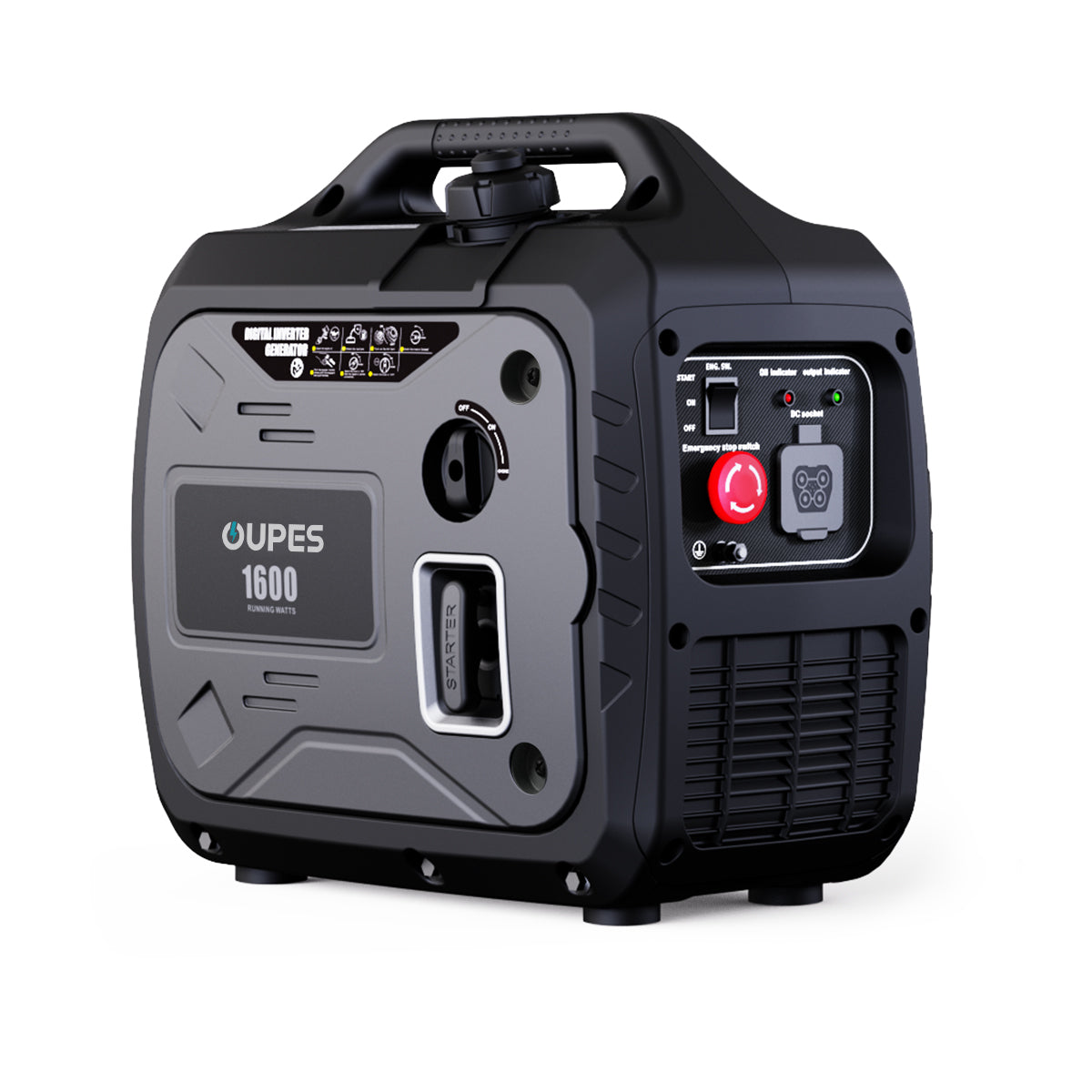


With a budget under $1,000, choose the smallest complete configuration that meets your measured output, energy and recharging needs. Current OUPES base units in this range span compact 288Wh models through 2,048Wh home-backup models, but panels, batteries, taxes and delivery can change the total. Compare same-day checkout configurations rather than headline discounts.
Key Takeaways
- Set aside money for required panels, cables or accessories before comparing base units.
- Pass voltage, continuous output and startup checks before scoring price.
- Estimate delivered Wh and keep a reserve.
- Weight and charging speed may matter more than maximum capacity for frequent travel.
- Prices below were checked September 30, 2026 and can change.
Define What the $1,000 Must Include
Decide whether the limit covers only the station or the complete working system. A $700 station plus a panel, extension cable, tax and storage case can exceed the budget. Record the exact variant and included items.
Current official U.S. pages showed base-unit prices of $299 for Exodus 350, $399 for Exodus 700, $599 for Mega 1 Lite and $699 for Mega 2 Pro when checked. Discount codes, preorder status and bundles can change; verify checkout and shipping.
Calculate Output and Energy Before Shopping
Add simultaneous watts and the largest startup event. Calculate Wh for the required hours. If a 900Wh daily load uses a 90% usable fraction and 85% efficiency, nominal capacity is about 1,176Wh before contingency.
This immediately separates a lightweight electronics plan from a refrigerator-and-kitchen plan. Do not buy by price per Wh until compatibility passes.
Match the Budget to a Size Class
| Class | Best fit | Main limitation |
|---|---|---|
| About 300Wh | Day trips, electronics, light emergency kit | Short runtime and low inverter output |
| About 500–600Wh | Weekend mobility and broader electronics | Limited high-power appliance use |
| About 1kWh | Higher-output short loads and measured backup | One-day energy may still be tight |
| About 2kWh | Broader home/RV loads | Higher weight and longer recharge planning |
Current OUPES Options to Compare
Specifications and current page prices were checked September 30, 2026. The right choice still depends on the load sheet.
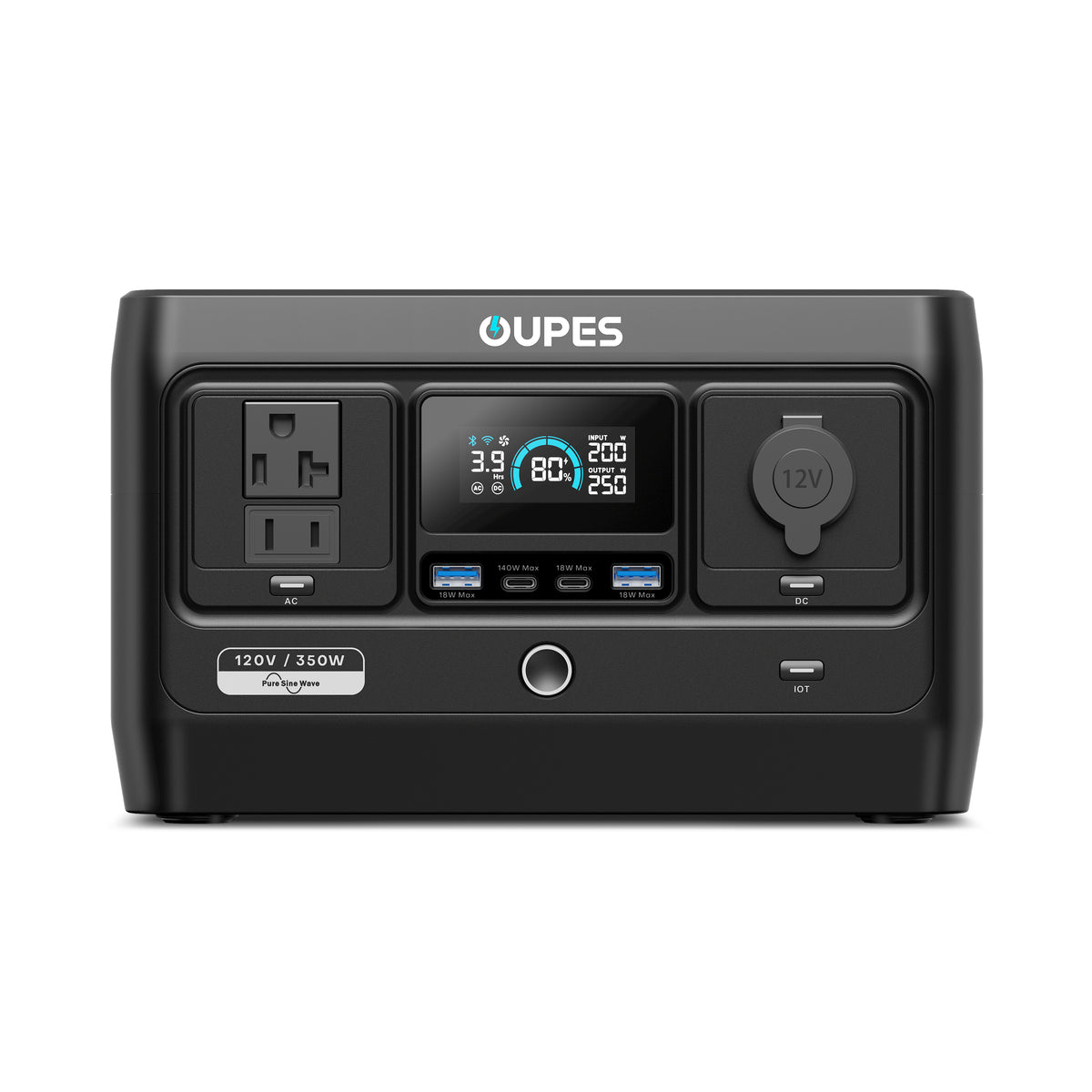
OUPES Exodus 350
- 288Wh rated capacity.
- 350W continuous AC output and 600W peak.
- 9.15 lb with LiFePO4 battery chemistry.
- Lowest weight and cost of these examples for light mobile loads.
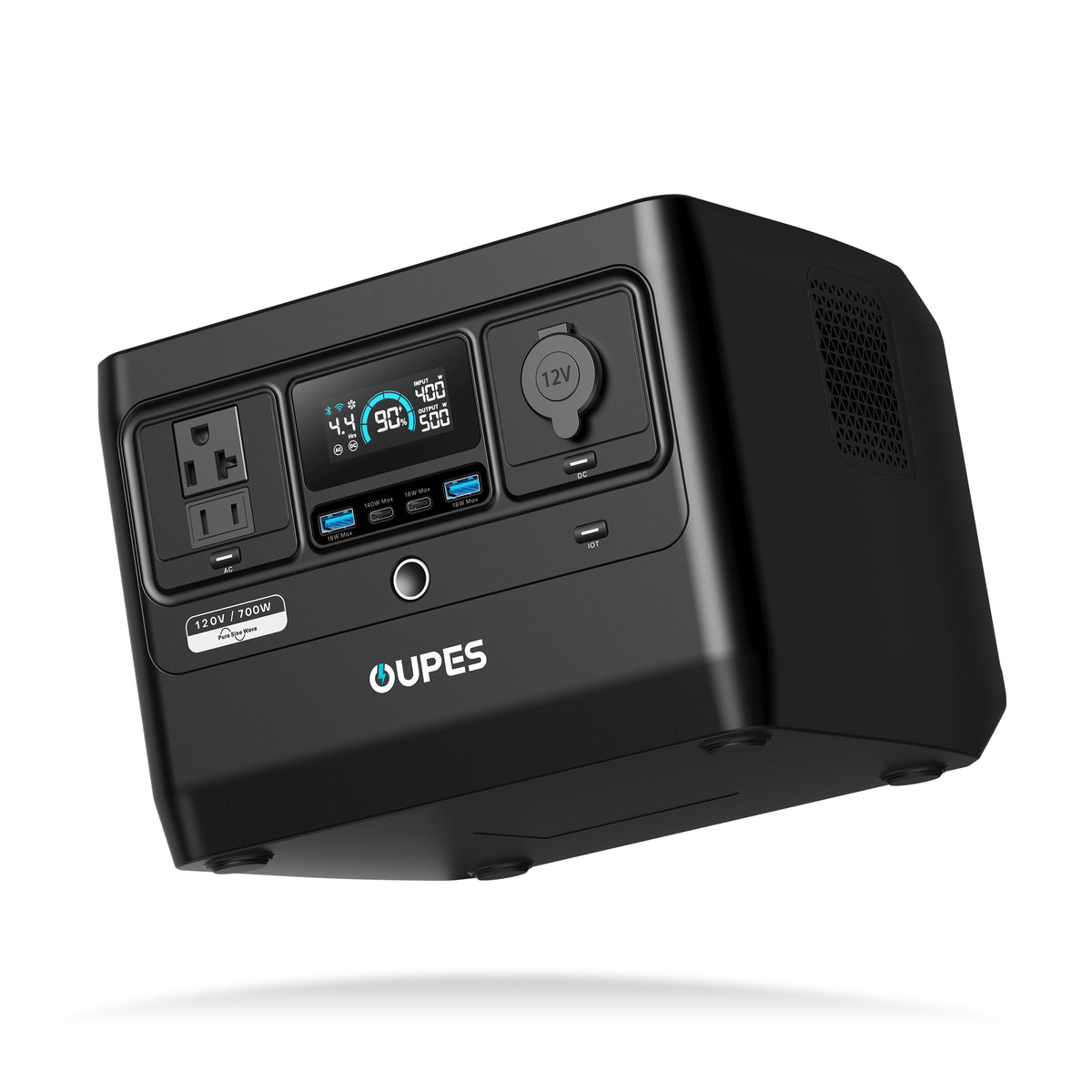
OUPES Exodus 700
- 576Wh rated capacity.
- 700W continuous AC output and 1,200W peak.
- 13.9 lb with LiFePO4 battery chemistry.
- More runtime and output while remaining easy to carry.

OUPES Mega 1 Lite
- 1,024Wh rated capacity.
- 2,000W continuous AC output and 4,500W surge.
- Up to 800W solar input.
- Higher inverter output for appliances that exceed compact-station limits.
Keep the Recharge Plan Inside the Budget
Solar is valuable only when the compatible panel, cable and deployment space fit the budget. Model daily harvest as panel W × peak-sun-hours × system factor. A 240W panel with four peak-sun-hours and 75% factor yields about 720Wh in an illustrative day.
If AC charging is available nightly, spending more on battery and less on panels may fit. For off-grid use, the complete solar generator configuration is the relevant price.
Use a Final Buying Checklist
- Complete checkout price and included components.
- Continuous and startup output for the actual loads.
- Delivered-energy budget and reserve.
- AC and solar input limits.
- Weight, dimensions and lifting plan.
- Battery chemistry, cycle specification, warranty and support.
- Availability or preorder shipping date.
A cheaper model that fails the job is poor value; a larger model with unused capacity can also be poor value.
Test Value Before the Return Window Closes
Charge the station, run the intended device combinations, verify motor starts, measure delivered energy and time each charging method. Check handle comfort, fan noise, screen readability and whether every required cable was included.
Keep packaging and document serial numbers until the setup is proven. If the system misses a hard requirement, changing operating assumptions is not the same as fixing incompatibility.
Frequently Asked Questions
Can I get home backup under $1,000?
Yes for selected essential loads, but not automatically for every household circuit or 24-hour plan.
Should I spend the full budget on capacity?
No. Reserve funds for required panels, cables, transfer equipment or shipping.
Which size is most portable?
The compact Exodus class is lighter; compare exact weights with your carrying needs.
Can a $600 station run a high-power appliance?
Price does not determine compatibility. Check continuous watts, startup and voltage.
Are sale prices permanent?
No. Verify current product and checkout prices.
Should I buy a solar bundle?
Only when solar is part of the recharge plan and the included panel fits the daily energy need.
Is more Wh always better?
No. More capacity adds weight and charging requirements.
Can I expand later?
Only on models that explicitly support compatible expansion batteries.
What is the first number to calculate?
Start with simultaneous running watts and daily Wh; both are necessary.


Leave a comment
This site is protected by hCaptcha and the hCaptcha Privacy Policy and Terms of Service apply.